Thunderbolts*—Punch the Dark Away

It’s been a while since I came out of a Marvel movie with anything more than a feeling of having been adequately amused. Like a lot of other nerds and comics fans, I got caught up in the initial rush of not only comic book movies done right, but a comic book universe splashed across the big screen in release after release. We had a roller coaster ride for ten years, with the payoff of Avengers: Endgame to complete it all, and then… it kept going.

(Spoilers for Thunderbolts* below.)

That it kept going wasn’t in itself the problem. The problem was that there didn’t seem to be a solid reason for it to keep going. The success of telling an increasingly coherent story over the first three “phases” of the “Marvel Cinematic Universe” necessitated some sort of structure to what came next, but the MCU as such had started with only the vaguest hints of an endgame, whereas the next saga was instantly anticipated but largely left hanging in the movies and television shows, outside of a nebulous concern with the multiverse, a concept broad enough to cover any potential stories but hardly one to stir audience interest.

With a mix of tentative new stars and second-stringers stepping up to prime time, the MCU went on struggling to fill its sizeable shoes, usually managing to deliver that adequate entertainment but increasingly losing the buzz it once had. In this growth-obsessed world, holding steady (or worse, slight declines) don’t cut it. To audiences and studio bosses, the MCU was starting to look a little shabby.

This is the ground that Thunderbolts* steps into. Presenting a collection of Marvel’s broken toys in a story of betrayal and despair, it’s a surprisingly bleak little offering. Yet in contrast to what I’ve heard of the preceding MCU movie (Captain America: Brave New World) it does seem that Thunderbolts* at least knows what it’s about and how to stick to its guns. Because I came out of a showing last weekend not only adequately amused but wholly charmed.

Much of this, of course, is down to Florence Pugh. Playing Yelena Belova, the grieving, self-loathing sister of Scarlet Johansson’s Black Widow, she’s rightly kept at the core of the film, her path towards acceptance and her growing awareness of the suffering of others as important as the occasional beatdowns she inflicts on anyone unlucky enough to get in her way. She’s a magnetic presence, nakedly emotional against the Marvel tendency to be ironically cool.

Along the way, Pugh gets to pinball off (both literally and figuratively) some of those aforementioned broken toys: Wyatt Russell’s U.S. Agent, a similarly self-loathing replacement for Captain America; Sebastian Stan’s Bucky Barnes, stuck in a job he can’t stand and desperate to punch someone; Hannah John-Kamen’s Ghost, a mercenary with phasing powers (and the one character underserved by the story); and especially David Harbour’s Red Guardian, Yelena’s bombastic but failure-addled super soldier father.

And then there’s Bob. Now, I have to admit some bias here. Bob Reynolds, aka the Sentry, is one of the more divisive Marvel characters among fans. Created as a Marvel mirror image of Superman and often used to explore the terror of godlike powers in the hands of an unstable personality, the Sentry rubs some people up the wrong way, especially as his origin retconned him into decades of Marvel continuity. Here, that isn’t a problem, but I have a lingering affection for a character I’ve followed since his creation, and I was fascinated to see how the MCU would treat him.

As it turns out, Thunderbolts*, in the hands of director Jake Schreier and writers Eric Pearson and Joanna Calo, very much knows what it’s about with Bob and his terrifying alter ego. From the very first moments, when he appears amnesiac and confused in the middle of a fight to the death between Yelena and some of the other broken toys, to Yelena’s quickness to ascertain that things aren’t quite right with him and her first instinct being to help, we’re clued into the notion that Bob is important, not just for what he is, but simply for who he is.

So when we get to the grand confrontation with the villain and ensuing punch up that normally marks the denouement of a Marvel movie, Thunderbolts* is ready to start twisting the script. First of all, it’s not much of a fight. The broken toys are hopelessly, hideously outclassed by the Sentry, who even saves their lives during the fight when he might have accidentally killed them instead. Bob, it seems, doesn’t want to kill people he knows, even if the only way some of them know to get through to him is punching.

There’s an oft-quoted Terry Pratchett line that I’m going to mangle here: “Sin, young man, is when you treat people like things.” That theme seems to run through the background of the movie—I can’t imagine that at least one of the writers didn’t know that line. The broken toys are treated as things to be discarded by Julia Louis-Dreyfus’ Valentina, then Bob is treated as a prize to be used (to save her ass) and then discarded when he turns dangerous. It’s treatment that causes only hurt and makes the world worse, and it unleashes the dark flip side of the Sentry, the Void.

This kind of broad-strokes storytelling of the light and dark side of a personality can fall very flat if not handled right, but the movie stays on target. As the Thunderbolts were outmatched before, so they are now. All they can do is try to save people from the Void’s wrathful self hatred (did we forget that the fantasy of the super hero is that someone is coming to save us?), and ultimately try to save Bob from himself.

There is only a little punching at the end of Thunderbolts*, and it’s a terrible thing. The victory of the climax is that we get to a point where punching isn’t necessary. Where the characters realise that it doesn’t help, and that what they are there for is to help. It’s a surprisingly uplifting, lighthearted turn for a movie that spends so long looking at self loathing and despair, but it’s all the more earned for that.

I’m not saying it’s a perfect movie. There’s more than a bit of clunky exposition, certainly more than I was comfortable with, and one or two characters were poorly served by the script, but overall this is one of the bigger Marvel successes in a while. The series as a whole may yet get sucked back down into the maw of chasing those post-Endgame highs, but for now it’s shown that it can still make good use of its broken toys.
Five Years, Five Months On

Well, it’s been a year. Or 13 months, to be more accurate. I kept meaning to write, but every time I did, I would look out at the world around me and feel that my words, whatever they were, would be inconsequential and inadequate to the moment. And it’s not like things have been getting better, has it? Everywhere, from every front, the walls seem to be closing in.

I wish I had a more cheerful way to start this post. For me at least, things aren’t too bad. I’m still employed, I’m still as healthy as I was at the time of my last post (plus a couple of stone lighter, for reasons I may get into later), and I’ve even started travelling properly again, slowly filling out that map of Europe to the point where one more trip should more or less finish it. Even so, with the moral void of Trump on one side and the utter absence of guiding principles of Starmer on the other, it’s been a little uncomfortable to be viewing the world from Ireland in the past year. Layer on top of that the continued disgrace to the world that is the treatment of Gaza and the feeling that the still-there threat of global environmental collapse has gone onto the back burner, and it’s not a recipe for a settled state of mind.

So, the world around me is not supportive of optimism right now. When I started writing this (early, to give a bit of time for editing) I was sitting at home with my mum, at the beginning of an Easter weekend when I was hoping to get to see all the members of my family, one week shy of the five-years anniversary of dad’s passing, almost five and a half years into my own treatment for a cancer that ten years ago almost certainly would have killed me by now … well, there are still good things in the world. Good people are everywhere, and the ties that bind are also the ties that hold us up when things get hard.

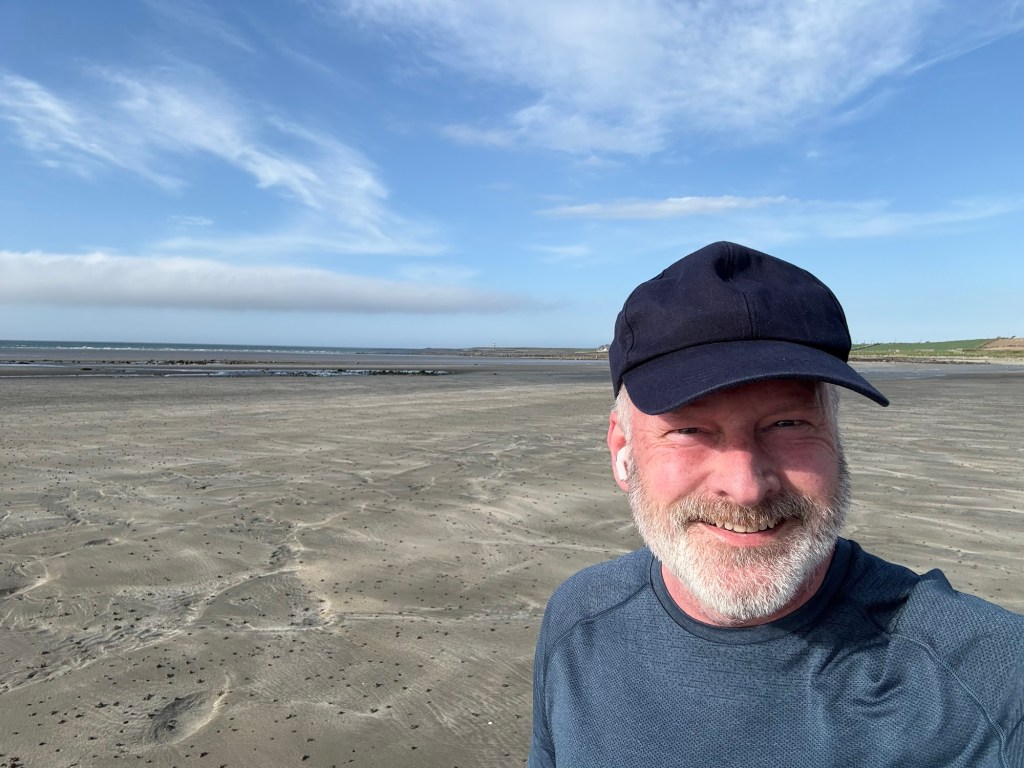
A selfie of the author, a smiling man with a short grey beard and a baseball cap. Behind him is a sandy beach stretching to the horizon, where it meets a blue, cloud-speckled sky.
Out on the shore, trying to run.

To start at the beginning then, home is home. I’ve lived in Dublin more than half my life, but the eastern end of Dundrum Bay, the southeast corner of Lecale, is and always will be where I’m from. I didn’t get a car until around two decades after I moved away, but now that I have one, it’s easier by far to get back for the weekend. There’s powerful healing in being around one’s loved ones, to be by the sea and shore, to sit in familiar seats and let the day fade over the evening without needing to turn the lights on. I bring friends here when I can, because it’s something of value I have that deserves sharing. And I lose nothing in the sharing of it.

Mum remains the heart of the family, as always. A steady presence, even when pulled one way and the other by the need to help out with grandkids, whether it’s homework, lifts to and from home, and impromptu meals. I’ve never been the best at saying “I love you,” so I started to say it at the end of every video call to mum and dad a few years back. I still keep that habit. It’s worth saying it, even if it’s a known thing. Hearing it can be even more important.

Easter’s an odd time, of course. I stepped away from the Catholic Church almost as soon as I hit Dublin, and from religion in general some years after. Not angrily, though some of the causes for that departure were causes for anger too. Over time, I found my balance. Religion provides something for some that it never did for me. The why of it, I never succeeded in dissecting, and I’m not sure of the benefit had I managed it. I listened and learned and built myself an outlook that works for me, and I hope for those around me too. All those nieces and nephews are part of the school system up here, of course, so they’ll go through the same rituals I did. Who knows where they’ll end up?

I still miss dad, of course. I wanted to do something to mark his fifth anniversary, but there’s reluctance to pull people out of the new shape of their lives when so much time has passed. Wakes are for the immediate moment of grief, a gathering of the living around the sudden absence in their lives. These days, the absence is there, but it’s not a gaping hole, it’s a green patch of good memories and faded regrets. I’ll visit his grave at some point over the weekend, stare out over the bay and tell him how I’ve been and what the news is. What I miss is talking to him, but I can still fill in my half of the conversation.

A view down a country path, which is made a tunnel by the gorse bushes that stretch over it from both sides, covered in yellow flowers.
Would you believe me if I said there was a stone circle at the end of this? Probably.

As for myself and my health, that remains, as I said, as positive as could be hoped. Last year I’d had a bit of a thyroid downturn, but things seem to have balanced out now, with my new array of pills and dosages keeping me on an even keel. My doctor’s visits have crept out to six weeks, and I’ve even tried running a few times (laziness is a factor here). As mentioned, I have succeeded in losing a chunk of weight, which has a lot to do with feeling better about myself and was a direct result of being told I was on the verge of diabetes given how much sweet stuff I was cramming in every day. So—sugary foods minimised, and as a result, the pounds fell off. Who knew it was so easy?

Truth be told, I’d let my health and fitness drift a bit, after the dual blows of cancer and Covid lockdowns. Hermitry isn’t an aid to a healthy life. I’m clawing it back inch by inch, still hoping to hang around long enough to avail of an eventual miracle cure. That’s assuming Trump doesn’t shut down all the research labs or sell them off to Elon to research hair replacement medications. I mean, I could do with that too, but I know where my priorities lie.

The corner of a building in Split, Croatia, with painted decorations in the form of a coin and scroll that tell the story of Julius Nepos.
Not Diocletian, but his less august successor, Julius Nepos, the last surviving emperor of the Roman west.

Anyway, having ensured that this post will get picked up by some lowly spook somewhere, I may have come to the end of things I wanted to say. I would promise to write more often, but without looking I’m pretty sure I made that promise last time, and look how that turned out.

Oh! There is one last thing to talk about. Travel! More specifically, the two trips I’ve been on since I last wrote. Actually, I tell a lie, it’s three: thirteen months, after all. I meant to post proper descriptions up to the travel section of this site, and I still do, but in the interim some brief descriptions.

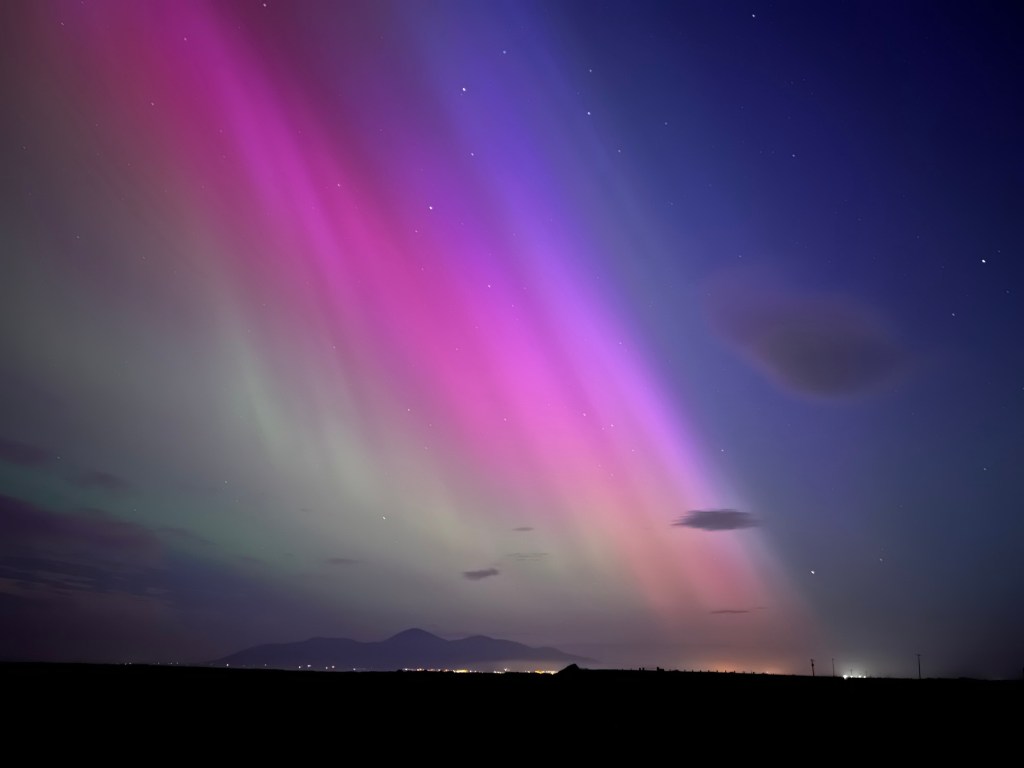
A night sky, with the Mourne Mountains on the horizon, silhouetted by an auroral curtain.
Oh, and I got to see the aurora borealis. Forgot to mention that.

Trip one, in March 2024, was to a city, a state, a site, and whatever else came after. More specifically, Barcelona, Andorra, Carcassonne, and Marseilles. It was the first proper trip I’d been on post-Covid and post-cancer, and I was a bit wary. It wasn’t easy at times, especially given my thyroid-affected tendency to sweat way too much when exerting myself (and being a bit overweight at the time) but it was hugely freeing. Barcelona was a pleasure to wander around, Andorra a fascinating oddity (with an excellent city centre spa), Carcassonne every bit as impressive as its reputation, and Marseilles a character-filled coda to a trip that outdid my expectations.

Trip two, in September 2024, was occasioned by a wedding. My cousin getting married in a Tuscan villa, and myself with an invite (mum was supposed to come but was unwell and unable to travel). The wedding was a delight, and I span the trip out into nearly two weeks of travelling: to Venice via a few hours in Florence, a day in Padua, a few days in Trieste, then over the hills into Slovenia and lovely Ljubljana, and from there into Croatia, for stays in both Zagreb and Split. The latter was a particular highlight, the centre of town being built in and around the remnants of the palace of Diocletian, one of the more storied Roman emperors. I splashed out a little more cash than usual and made sure my hotel was in the walls of that palace. In fact, if I may offer a little advice, if you’re doing a city-hopping trip like those I favour, it’s a good idea to save a little spending money to make the last stop more plush, so that you return home rested, refreshed, and positive. It seems to work for me anyhow.

A view of the citadel of Carcassonne at night, the medieval walls lit up with orange light.
Carcassonne by night. Because by day is not enough.

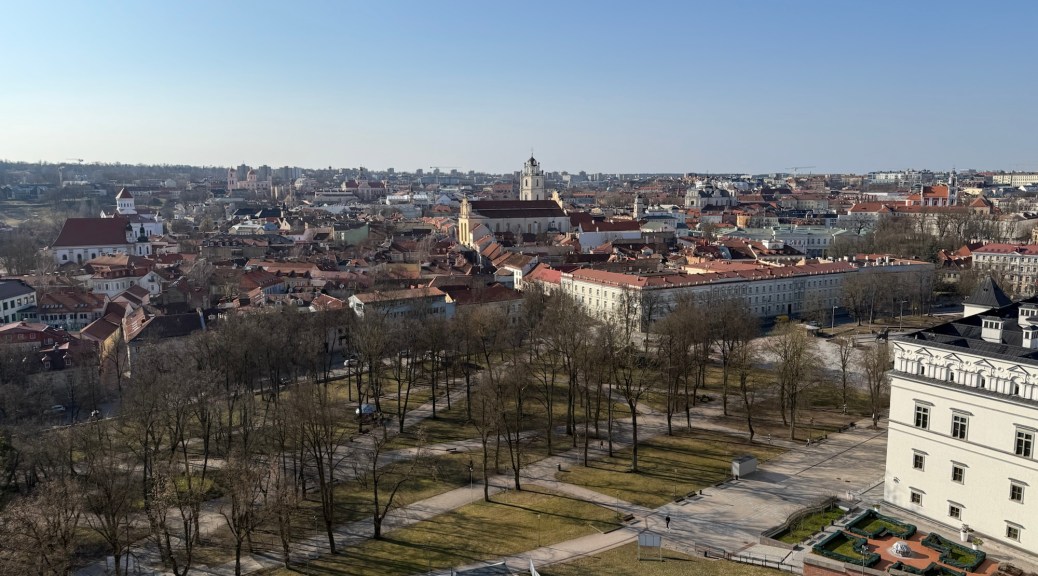
This year’s trip, again in March, was one of the two trips left to mainland European countries I haven’t visited. (Ukraine and Belarus being out of reach for the moment.) In this case, it was a tour of the Baltic states and Finland, which I dubbed a “Last Chance to See” tour in a moment of black humour. I started off in Helsinki, still in the grips of the fading chill of winter but with a population already dreaming of summer and willing to take any opportunity to stroll in the sun. Across the Gulf of Finland lies Tallinn, a return visit from more than a decade before, where I had a lot of fun wandering around one of Europe’s most intact medieval cities. After that it was railways all the way, first to Riga by the banks of the Daugava River, where wandering through Soviet-era architecture brought me to a trio of museums: a rickety collection of fire engines and fire brigade memorabilia, a paean to a brand of chocolates that once delighted the children of the USSR, and a tour through the cells and depravities of the KGB’s effort to keep the people of Riga down. Last of all was Vilnius, where I roamed forested hills, independent districts, and restored palaces as I learned about the history of Lithuania and the determination of its people not to lose their identity.

If you’re still here, thank you for allowing me to ramble on about my trips. Getting to venture out and see more of the world has been one of the big wins of the modern era of technological advancement and no wars between major powers. For me, Covid and cancer conspired to take it away for a few years, but the past 13 months have given it back. So that’s a victory I don’t take lightly. I hope to get back to writing properly again too, so that’s a task for the next 13 months. Will see you there, with any luck.