5 Go Mad in the Balkans

A bit of a stretch in the title here. The trip I’ve just returned from involved only myself (though I did visit a family of four at the outset), and the primary “5” involved is the number of countries visited: Bulgaria, North Macedonia, Kosovo, Albania, and Montenegro. Two weeks passing the time in a leisurely fashion outside the confines of the European Union, connected by multiple bus trips and border crossings of varying sophistication.
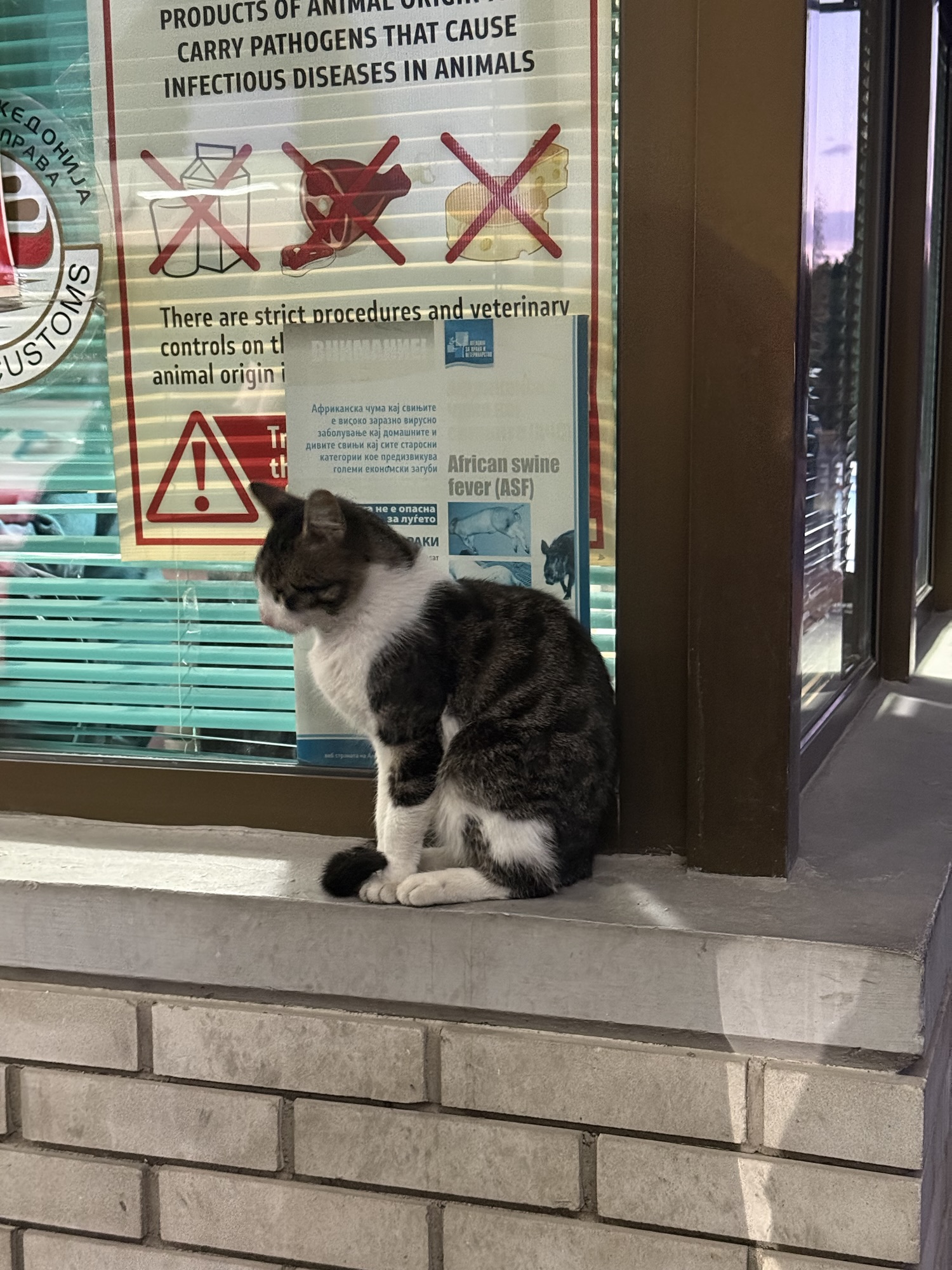
img_8418
A border crossing cat, caught between Bulgaria and North Macedonia.

I had two main reasons for taking this trip. First off, four out of the five countries were ones I’d never visited before, and visiting them gets me within touching difference of completing my European scorecard (leaving some exceptions aside until less warlike times arrive). Secondly and more importantly, I’d promised, both eleven years ago and earlier this year, to visit my cousin, whom I grew up next door to, a visit to his family in Bulgaria. Making the second of those promises provided me with the impetus to make the booking and a starting point for the trip as a whole.

Bulgaria is For Family

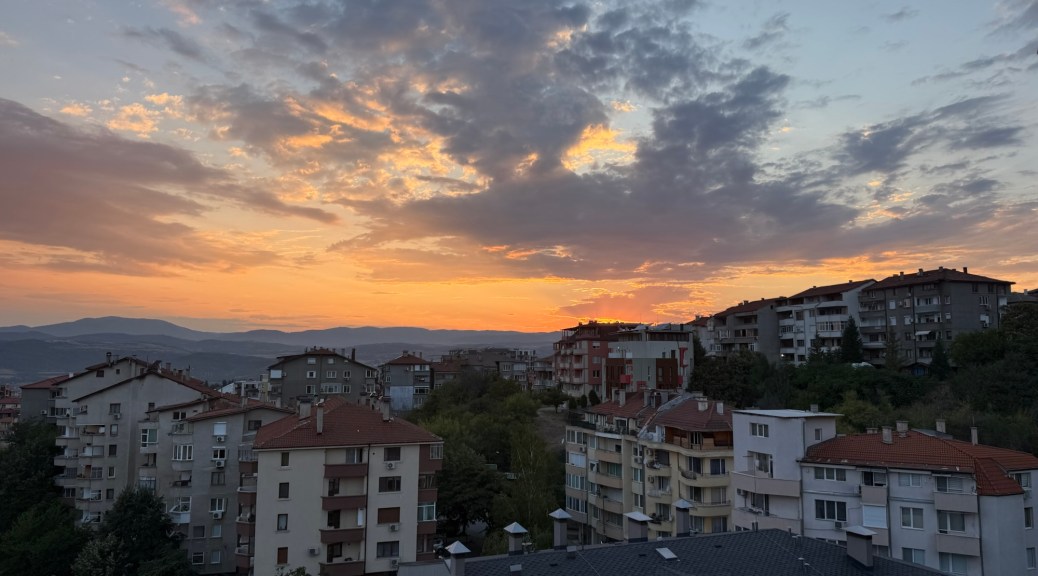
Unlike most of my trips, which focus heavily on capital cities and their attendant museums and attractions, this one started in the town of Blagoevgrad, nestled deep in the valleys of southwest Bulgaria. It’s here that my cousin now lives and where he and his wife arranged for me to be hosted in Kristo Hotel, a rambling, old-fashioned site tucked well back from the main street and featuring decent size if somewhat spartan rooms. Though a balcony with views across the city and a wakeup call in the form of church bells from next door counted for a lot. The weather was gorgeous, even above what had been an worryingly good summer in Ireland, and Blagoevgrad proved compact enough to make walking around and beyond it a pleasure.
img_8346
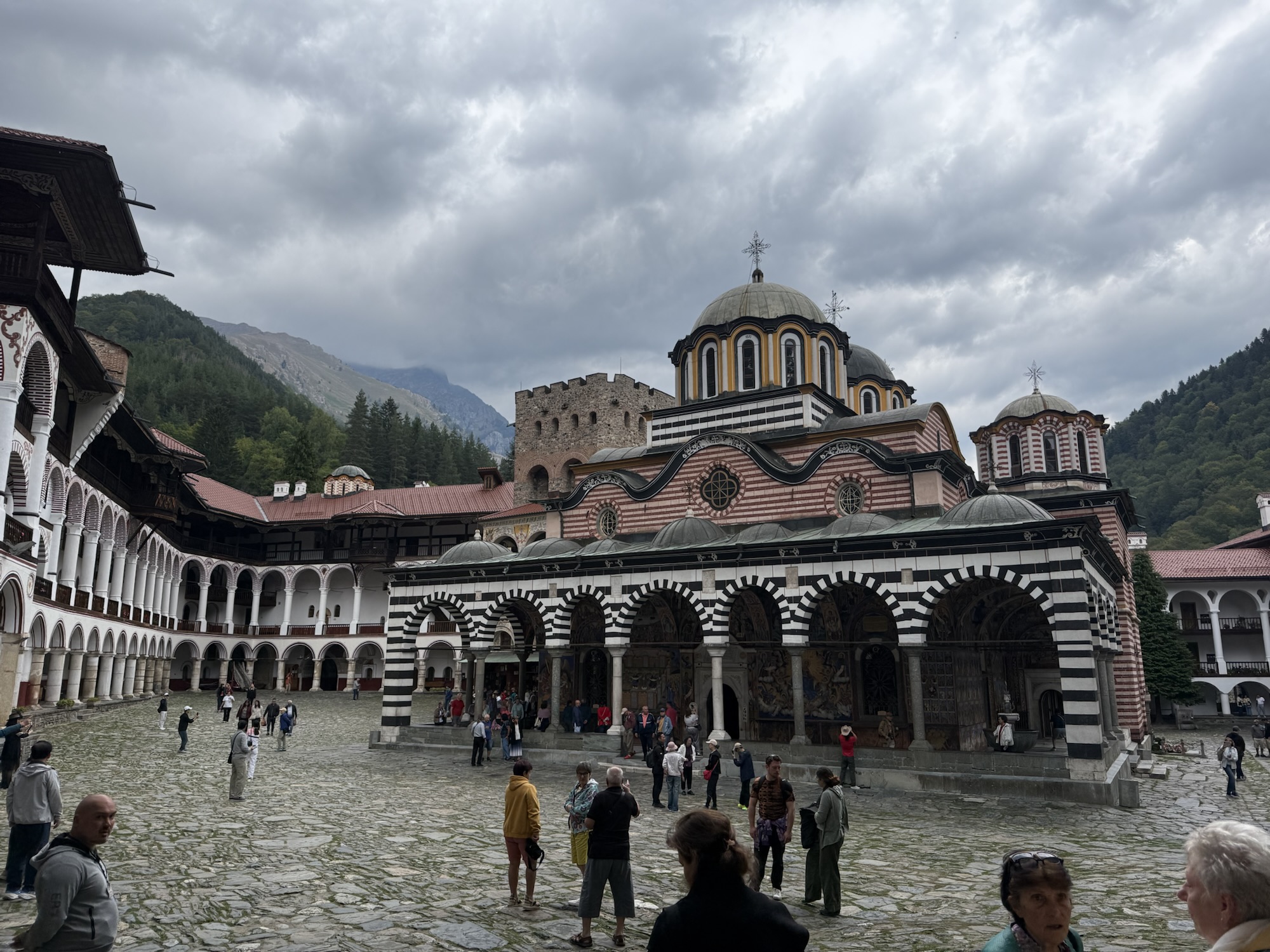
Inside the fortifications of Rila Monastery, with the mountains of southwest Bulgaria beyond.

For the three days I spent there, I was shown around some of the best sites in that part of Bulgaria: the recently discovered ruins of Heraclea Sintica, which are still being uncovered. The wine growing region to the east, with Villa Melnik and its estimable vintages deserving a special stop. The town of Melnik itself, tucked into a crumbling valley but full of the rebuilt houses of the trading families who dwelt there for centuries. The magnificent and magnificently decorated Rila Monastery, near which is buried Irish journalist James Bourchier, and above which is its founding saint’s retreat, complete with his dark cave, the passage of which guarantees a pilgrim’s sanctity (just call me Saint Ciaran from now on).
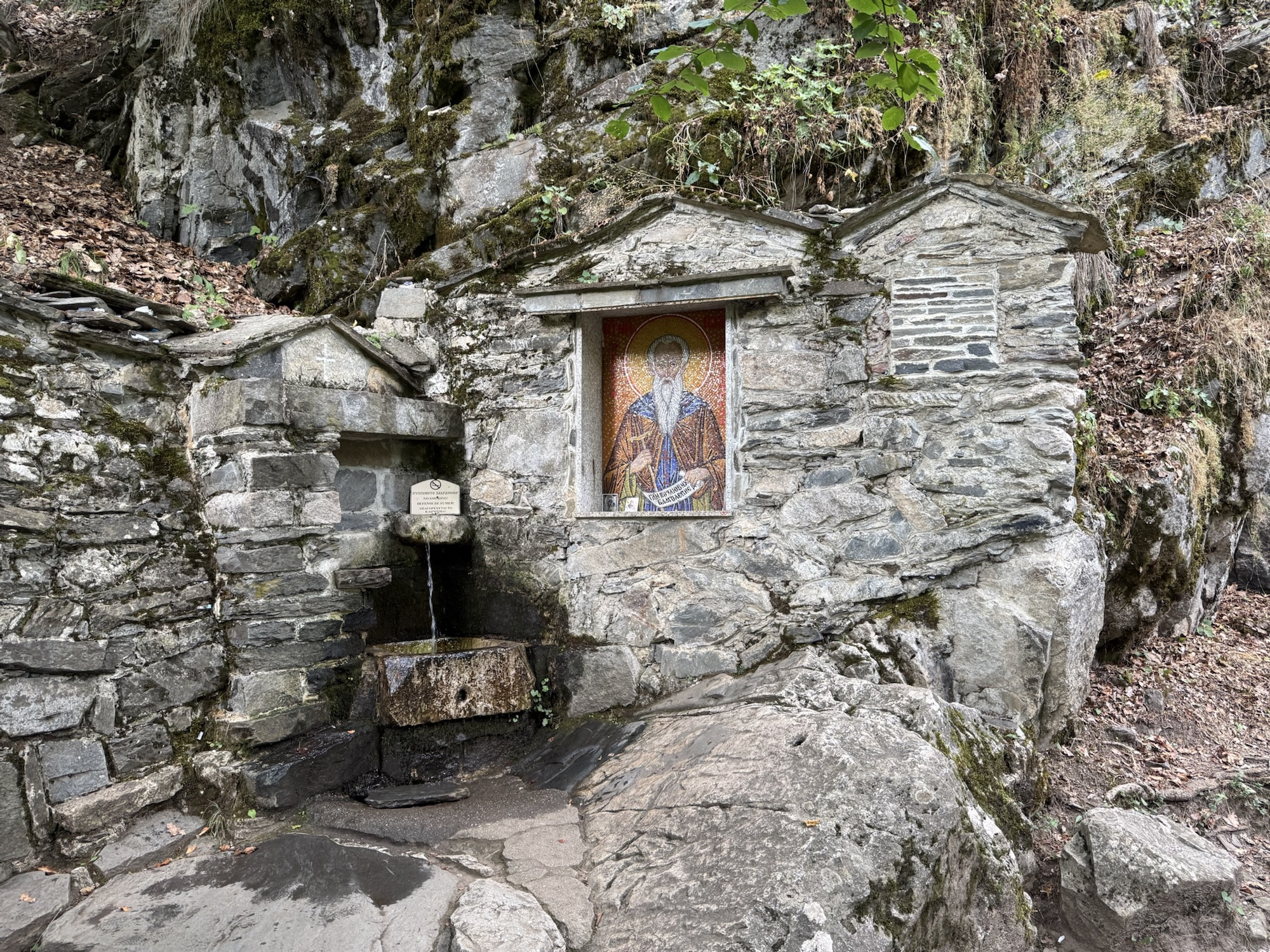
img_8369
High in the mountains where nobody goes, until they hear that a holy man lives there.

That particular day ended in the high meadows above even the saint’s retreat, where a picnic was the reward for a day of exploration. In fact, the general pleasures of Blagoevgrad and the company of family were as good an advertisement for the country as I could have found. It was easy to stay and hard to leave, but back to Sofia I went, for a bus onwards to Macedonia.

Macedonia Has a Point To Make

Or should I say, North Macedonia. I probably should, since getting to this point in history has been problematic for the nation and those around them. Quarrels with Greece and Bulgaria have kept them out of the EU (according to the various stories I was told), and it was here that I first came across the legend of Marshall Tito, the only man in history who managed to keep the Balkans free of quarrels for any noteworthy length of time. In any case, I landed in Skopje, Macedonia’s capital, late in the day and had little chance to see any of the city other than the building site that surrounded my apartment rental.
img_8440
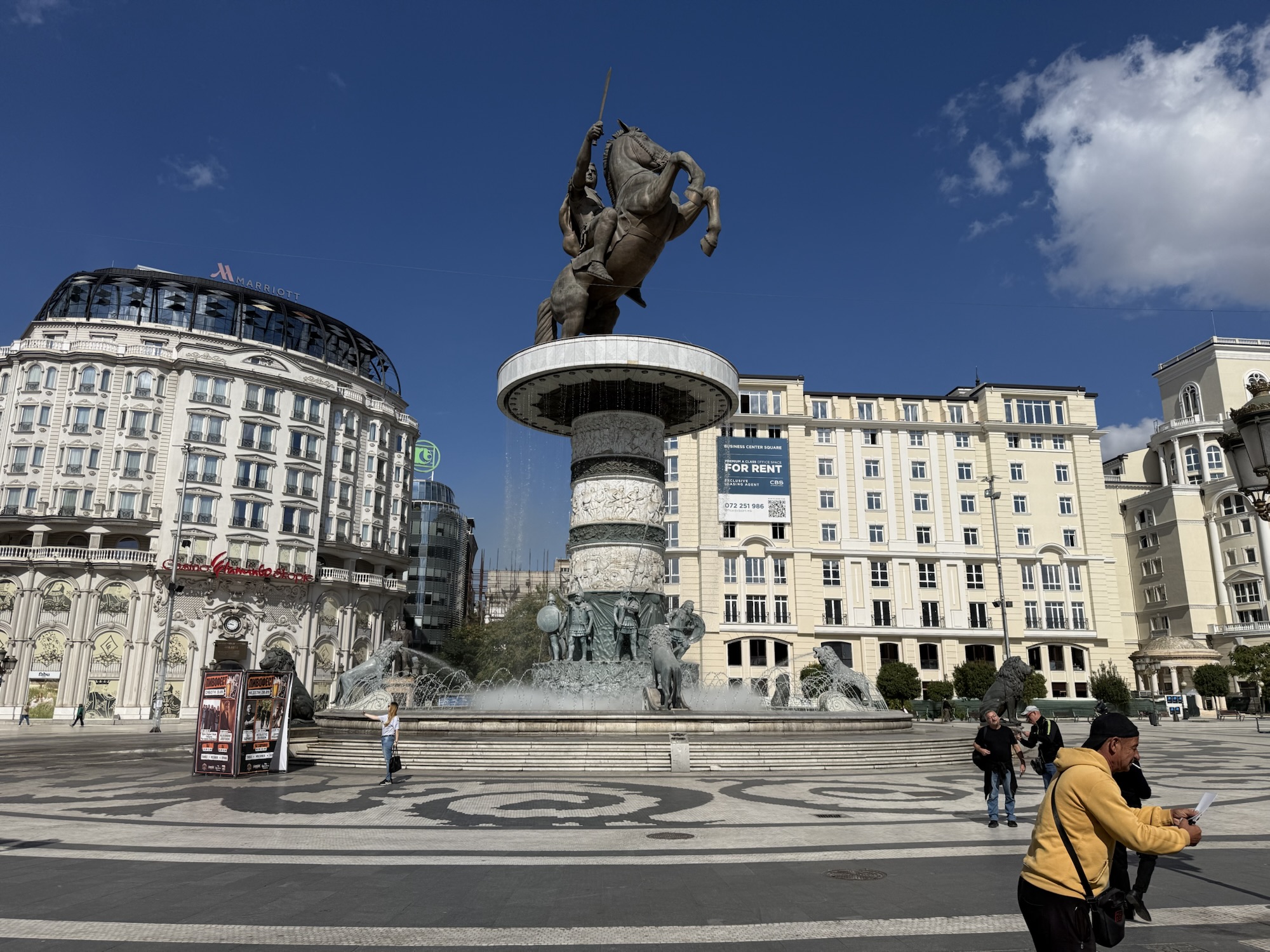
Alexander the Great dominates the scene, but he’s far from alone.

When I did emerge to explore, what I came across were statues. Lots of statues. Wander around the centre of Skopje, especially near the river, and you’ll see statues on every available flat surface, regardless of visibility. Yes, the absurdly oversized equestrian monument to Alexander the Great, which faces his almost equally massive father across the river, steals the show, but he’s surrounded by a cast of thousands in a city determined to make its point.

But it would be a shame to stop at the statues. The citadel looming above the city may be an overgrown, abandoned mess, but the bazaar below is the real thing, with paving stones worn smooth by centuries of footfall and ample opportunities to window shop or sit in a cafe and people watch. I spent plenty of time there, when I wasn’t delving into museums, exploring the city’s history (the devastating earthquake of 1963 is a slice of history likely little known beyond this country), or catching my first glimpses of Mother Theresa’s presence, which would be a recurring theme on this trip. (Although Albanian by heritage, she was born in Skopje, then a part of the Ottoman Empire.)
img_8563
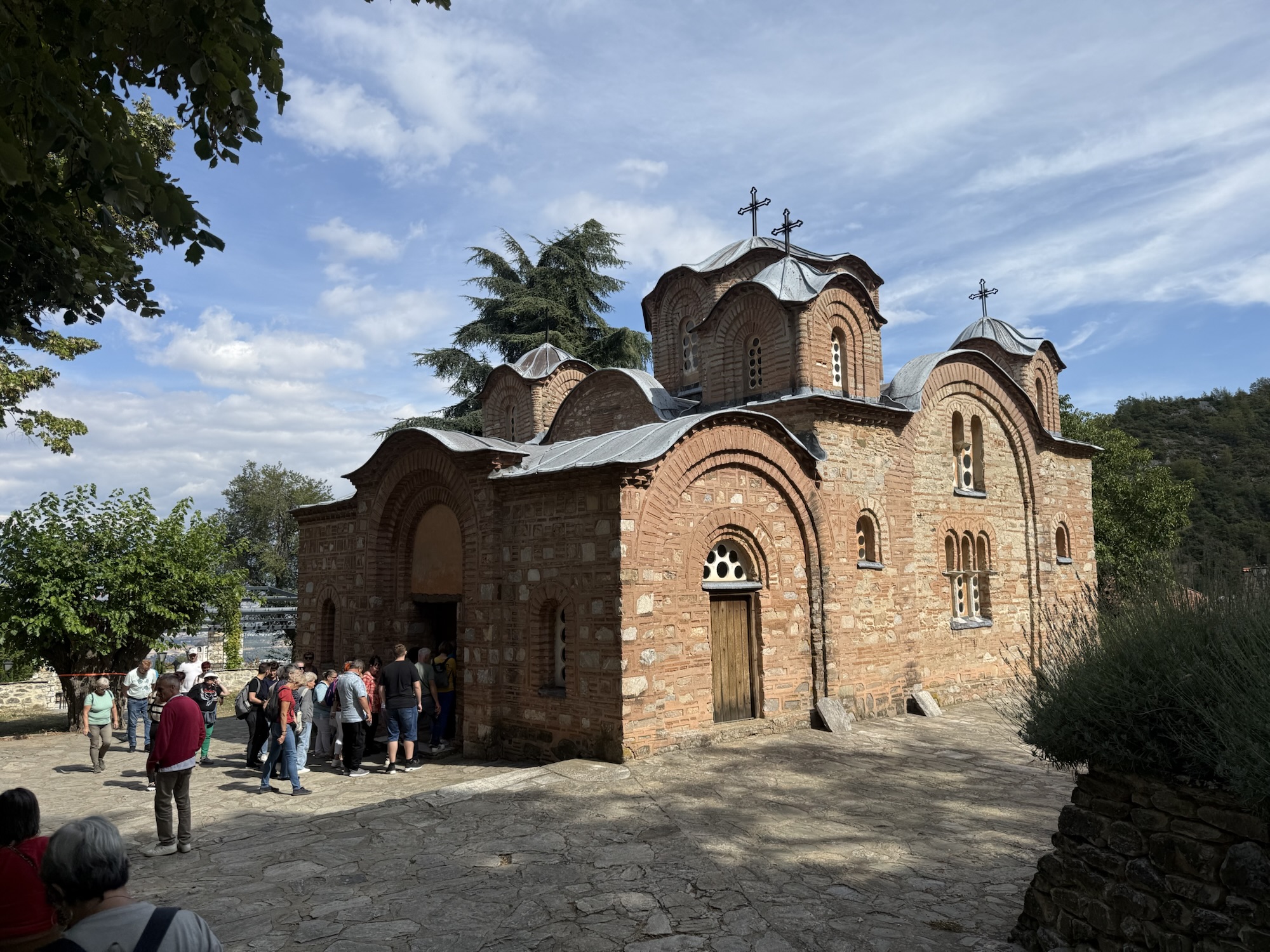
An old Byzantine/Greek chapel in the hills above Skopje.

A bus tour, involving a trio of minibuses, took me out of Skopje itself and into the mountains above—Skopje’s horizon is dominated by the bulk of Mount Vodno, with its cross (bigger than Jesus (of Rio) the tour guide said). Matka Canyon featured a boat trip along a reservoir lake to some caves, and around the mountain past some millionaire abodes was an ancient Byzantine chapel with paintings on the lower walls that had survived the greater earthquakes the city endured. The last stop would have been the mountain top, but health and safety held sway, so instead we had an impromptu picnic and a quick lecture on the evils done to Macedonia by its neighbours (as mentioned above) and the virtues of the good Tito.

Kosovo is Still There

Two days for Kosovo, based in Pristina, following a somewhat ad-hoc bus trip across the border from North Macedonia. Arriving from the south seemed wisest, seeing as Serbia to the north is the main dissenting voice when it comes to Kosovo’s nationhood. Kosovo itself consists of one broad valley, forming a wide, fertile plain in the middle of the Balkans. A fine spot for farming, and an even better spot for fighting, the two Battles of Kosovo (1389 and 1448) being key lynchpins in the history of the region. Right now though, the plain is mainly the site of a huge amount of construction work, likely funded by the EU and U.S. following the conflict of the late 1990s.
img_8700
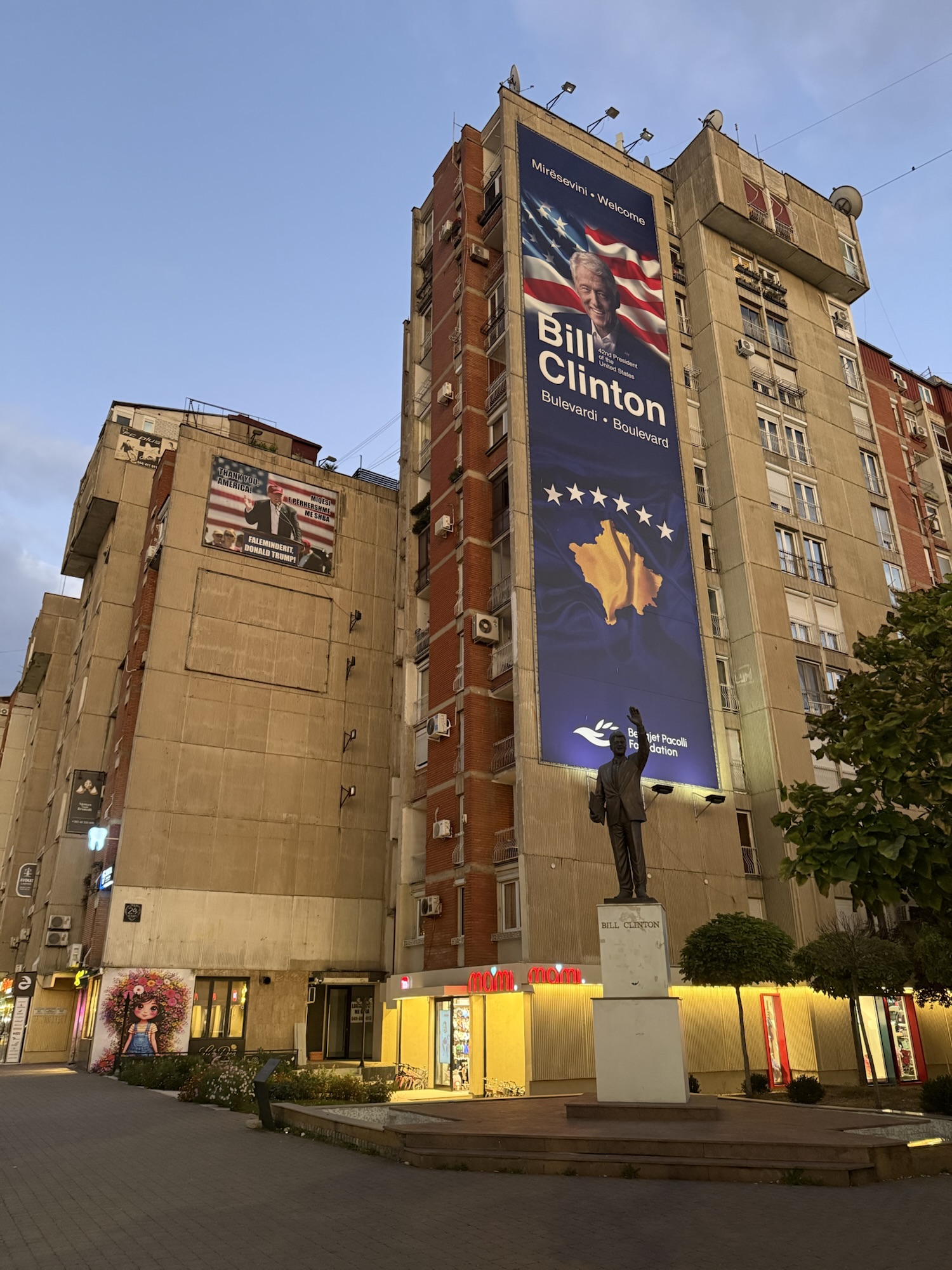
Kosovo has its favourites. I imagine the size differential would be taken amiss by some.

It’s that conflict that has left its mark on Pristina, with memorials to foreign soldiers and Bill Clinton, a seemingly positive image of Trump high up on an office block, and lots of rebuilding and public support for the UÇK (Kosovo Liberation Army) while I was there. There’s not a huge amount for the tourist in the city itself right now, though the central pedestrian promenade makes it a pleasant place to linger. Instead, I jumped on a bus to Prizren for the day, a smaller town in the Kosovo’s southwest, tucked into the hills, with a lung-burstingly steep (your lungs may vary) walk to a castle above and lots more for the tourist, including a few more stops on the Mother Teresa trail and some very pretty old mosques.

Albania is Not Just Tirana

Having had decent luck with my day trips in previous countries, I decided to get ambitious in Albania. The bus from Pristina (passing Prizren, where maybe I should have been based) had passed through steep wooded valleys and picturesque rivers only a little denuded of their waters by the droughts of 2026. So while I liked Tirana itself a lot—it’s a lively city, very walkable—I decided I wanted to see more of the country, following advice I’d been given both online and off. I spent a day exploring Tirana in the heat of late September, then signed up for an all-day bus trip to southern Albania the next day.

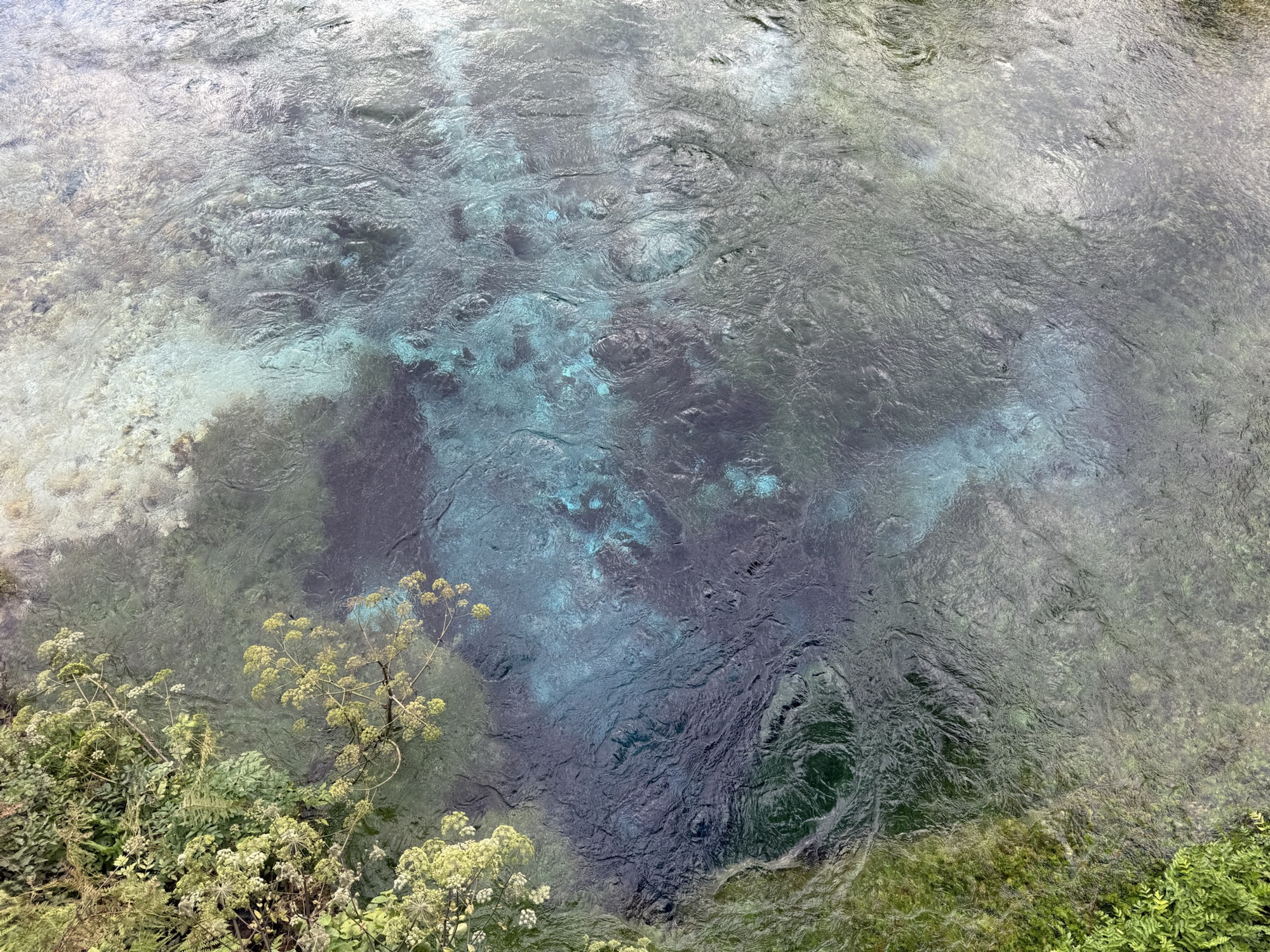
It was a trip that delivered in terms of different experiences: first up were the Adriatic resorts of Ksamil and Saranda, where the heat and sunshine forced me to turtle up under hat, shades, and jacket slung over my shoulders while walking around, though I did manage to find a quiet place by the beach to sit in the shade for an hour and enjoy the blue sea and bluer sky. After that, we drove deep into the hills for the highlight of the day: the Blue Eye, a deep-welling spring that rises in the limestone mountains of southern Albania, cooling and watering the valley around it and making it a haven of nature in the midst of the mountains.
img_8840
The clear, deep waters of the Blue Eye.

All fun, all a bit exhausting. The day had started before 6am and it ended after 11pm. Whereas Kosovo is small enough to be tackled from a single base, Albania is big enough to need more than one. Tirana has plenty to recommend itself, but there’s a lot more out there to be seen, and if I’m ever back I’d try to see more of the south and east. For now I’ll content myself with the hills and valleys as seen by sunset through tired eyes on the way back.

Montenegro is the End of the Line

I’ll admit that I was pretty tired before I even crossed the border into Montenegro. For the first time on the trip (somewhat disappointingly given that I’d been dancing through non-EU countries all the way), I actually got a stamp in my passport. Something of a rarity in these digital days. The road to Podgorica (formerly known as Titograd, for a recurrence of that theme too) showed that part of Montenegro to be far from the “Black Mountain” of the name, being more of a broad plain stretching from the mountains, around the lakes to the coast. The trip from Tirana was relatively short though, and before long I was settled in my first hotel of the trip, Hotel Kerber, just around the corner from Independence Square.
img_8910
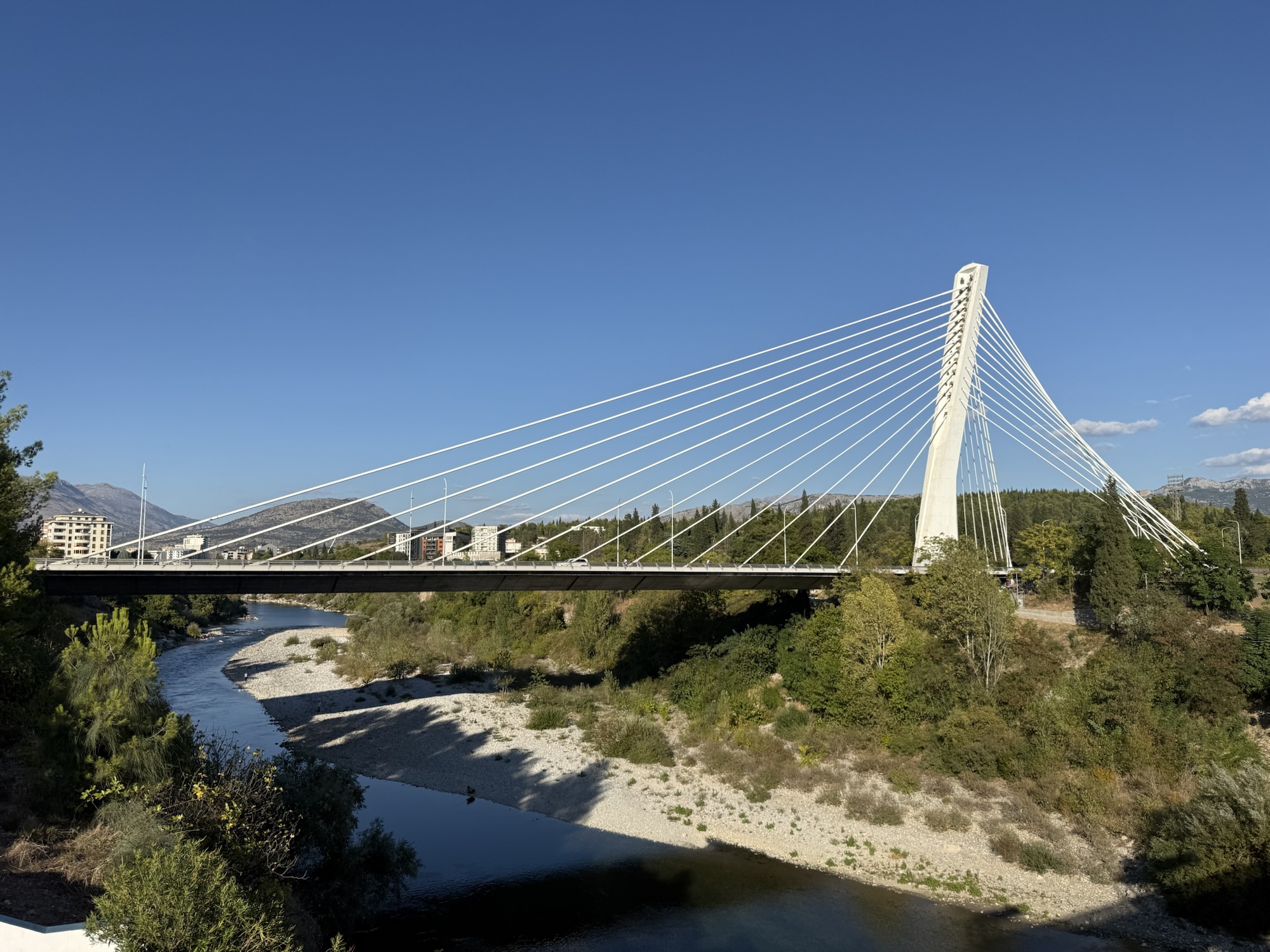
Podgorica is split by a river gorge, with plenty of pedestrian bridges to connect the north and south sides of the city.

I didn’t plan to take any tours from here, having burned myself out on my Albania excursion, so Podgorica was explored on foot. Luckily it’s well suited for that. A city centre made for walking, with cafes for street side dining, and plenty of parks both near the deep river gorge and to east and west. The park beyond the national stadium just east of the city centre, in particular, makes for a great walk or cycle, being well paved and forested, and signposted with maps for more distant walking and cycling trails to boot. In short, I really enjoyed my time in Podgorica, relaxed and pedestrian as it may have been.

So that was the tale, in shortened form, of my Southern Balkans sojourn. Sweeping from east to west, more or less, and touching the Adriatic Sea before ending quietly in the shadow of the Black Mountain. More detailed notes may be transcribed at the usual place before long, but here and now we call an end.
In a Mythic Register—Nolan’s “The Odyssey”

Tom Holland, Zendaya, and Jon Bernthal walk into a bar. Is this an Odyssey joke or a Spider-Man joke? Probably the latter, as the three don’t share any scenes in the former. Nevertheless, it was an odd experience to see two films sharing so many actors in common over one weekend.

Spider-Man: Brand New Day, to breeze quickly over it, is something of an unusual success for a Marvel release these days. With a solid emotional core and its themes carefully threaded throughout its plot, it didn’t even need a surprise cameo to spice things up. Though it may have done so anyway. Or not. (Spoilers) Two thumbs up from this occasional reviewer of all things Marvel, and I’m at least 5% less despondent than I was about the prospect of Avengers: Doomsday later this year.

As for the meat of the matter and the subject of this article, let’s get on to it. In the blue corner we have Homer’s Odyssey, one half of a tag team with The Iliad standing at the base of Western literature and culture, hailing from parts unknown or at least heavily obscured by the passage of centuries and the death of the oral tradition it arose from. In the red corner we have Christopher Nolan, perhaps the most consistently successful blockbuster filmmaker of recent times, and one whose oeuvre has held onto an intellectual edge that has elevated both it and him above the spangly lights of most contemporary CGI-heavy cinematic fare.

Having had a go at black holes, dreamscapes, time travel, atom bombs, magic, and Batman, Nolan has at last come around to the the sword and sandal epic, albeit in the form of the aforementioned foundational myth, which Nolan seems to have been thinking about for years. It shows. This is a film into which Nolan has poured a great deal of thought, both in terms of what the story means and how it relates to the modern world. That effort and engagement with the text has been amply rewarded, both in terms of the box office and the response of the rest of the world to his film, even if some of that response has been a bit tetchy at times.

Within the confines of a three hour film, Nolan has been impressively faithful to his subject material. While removing some sections and simplifying others, the structure remains the same: Odysseus (Matt Damon), hero of the Trojan War, has been absent from his kingdom of Ithaca for almost two decades. In that time, his hall has become infested with parasitic guests that his wife, Penelope (Anne Hathaway), must keep at bay. His son, Telemachus (Tom Holland), aspires to find his missing father, even as Odysseus languishes in the arms of Calypso. And the gods … well, the gods in this version of the story mostly keep their own counsel.

I’m not an academic, let alone a Homeric expert in the mould of Emily Wilson, and this isn’t going to be a thorough analysis of The Odyssey with regards to where it stands among other adaptations of Homer’s original (I’d put it behind James Joyce’s Ulysses and Jean Chalopin’s Ulysses 31, myself.) For a true appreciation of Nolan’s efforts, the best solution is to go see the film itself—I’d consider it well worth the price of admission, especially so if you see it on the biggest screen you can. My first viewing was via a 70mm projector, and I hope to grab an IMAX screening to compare, contrast, and solidify my thoughts. In the meantime, this will be a few quick thoughts on Nolan as a filmmaker and what he brings to this ancient tale, for good and for ill.

From hereon, there will be SPOILERS. Consider yourself warned.

Continue reading In a Mythic Register—Nolan’s “The Odyssey” →

Six Years, Six Months On

The more I write these status updates, the more and the less ridiculous it gets. More ridiculous because they amount to “I’m still here” messages sent out to the very small audience of people who read this blog and are not in regular contact with me, and there’s only so many times you can do that without feeling at least a little self conscious. I suppose I can manage one more time, at least: still here, still writing. At the very least, I’ve managed to post a few other times over the last 13 months, so that this hopefully doesn’t come across as an entirely self-absorbed exercise.

It’s less ridiculous, of course, because I’ve now hit six and a half years. When I was diagnosed with lung cancer, way back in December 2019, the doctors were, reasonably enough, not keen on talking about survivability, but everything I read suggested that I’d be lucky to reach 50 (I’d just turned 44 a couple of months before). Well, I turned 50 nine months ago, and so far my semi-whimsical strategy of sticking around long enough for medical science to figure out how to cure me is working surprisingly well. Stick around a few more years and it might prove even more successful. In the meantime, Lorlatinib serves me well, as it has for the last three years-plus.

As for happenings over the past 13 months, while the medical side of things has remained blissfully routine (given my regime of regular scans and doctor’s visits, uneventful is hardly accurate), there have been a few changes. Work, for one thing. Halfway through 2025, I took voluntary redundancy from what had been at the start a dream job in the games industry. It was absolutely an experience worth doing, and I’m not ruling out working in games again, but for the moment that seems a dream on hold: the games industry is in turmoil, spinning through a series of massive layoffs, and there’s a huge field of people with more experience than me looking for the same kinds of jobs I would be up for. Still, I’ve managed to get myself employed again, and in the current climate, I’m happy enough to be so.

In terms of travel, I had planned to take another long trip around my 50th birthday in September 2025, but being unemployed at the time (I let my redundancy package bankroll me for a few months), I decided that would be a bit extravagant. So I stuck closer to home for the most part, though I did venture to the Baltic nations in March 2026, touring from Finland south through Estonia and Latvia to Lithuania. Ticking off a few more countries on my European list and enjoying more rail travel in the hopes of longer trips to come. Up next is Bulgaria (visiting my cousin there) and the southern Balkans (ticking off a few more blank boxes) this September. Hopefully without any untoward political events intruding—some of the countries I’d most like to visit seem to be either currently or permanently embroiled in the kind of troubles that lead governments to advise avoiding them.

I do get sent abroad for work sometimes, which isn’t something I’ve run across too often in the past. Writers are not commonly required to be on the spot for content retrieval. No complaints though. I’m even hoping to get out for a run or two on my next trip. As mentioned here recently, I’ve gotten back into running, and I do feel like it’s slowly getting easier, though it’s not getting any easier to persuade myself on any given evening or morning to put on the shoes and go out into the fresh air. If the life of a hermit is one that has a perilous appeal for me, then hermits are not people who venture out from their caves (or huts, or poles) readily. I am making a serious effort not to let my social circles dwindle into nothing, but motivation, as so often, is the issue.

That question of motivation has been much on my mind lately. How do people persuade themselves to do the things they do, to make it from one day to the next in the face of a world that can vary from discouraging to actively hostile? What impetus do I use to get myself up from my chair to go for a run, or to sit down and write these words? I’m not getting paid for either, which wipes out a large chunk of the ambient motivation floating around the modern world, and while running may be good for my health and writing good for my mental health, those are pretty slender reeds to rest most of an evening on. Especially when a side effect of my medication is that I tend to sweat a lot when I’m hot or exert myself, and this evening counted for both, meaning that I was stuck in a towelling robe for an hour after my run, gently dripping into the fabric.

Having dropped that edifying image into your brain, let me pursue this thread. It would be cheaper for me to stay home, to do only enough exercise needed to keep healthy, to eat as frugally as possible. Avoid the stress of meeting new people and potentially suffering embarrassment (introvert here, most definitely). A hermit’s life, in other words. An uncomplicated life; so why do I feel the urge to mix that up? To socialise where possible, to travel now and then, to buy books I’ll only read once and games I probably won’t finish? To hook myself into the information services of the world (news, social media, podcasts, etc.) simply to learn a bit more about subjects that interest me and subjects I might not have thought about except by following a thread that started somewhere distantly connected.

All those activities are ones that bring me pleasure, in various forms. Does pursuing pleasure make me selfish? Probably a little. Is it a bad thing? Epicurus would disagree. Taking care of your own happiness is an important part of creating a life worth living. Which isn’t to say that others’ happiness should be neglected. When young, we look to our parents and try to make them happy too, a desire that never really fades away. When older, we might think of the happiness of our children and the social circle we build up, in addition to our own. There’s god too, for some, or whatever groups we sign up to. The point being that our own happiness is always involved in the happiness of others, or ought to be. If we end up serving someone else’s drives at a cost to our own happiness, that’s far from healthy.

So my main motivation in dragging myself off the couch and into the day (or night, as the case may be), is to make my life better, through indulging my own desires and engaging with the society I’ve chosen, as well as seeking out sheer novelty and education. Pleasure is a spark to make us move, and Epicurus knew that a life engaged in pleasures both simple and simple to obtain was one of the best to be had.

Which is, to take this meander to its point, one of the main reasons I remain suspicious of the current hype around “AI”. (It goes in quotation marks because while it may be artificial, it’s in no way intelligent.) Its boosters are engaged in a full-throated effort to persuade us that the various iterations of “AI” are capable of doing all sorts of things for us. Not the tedious and repetitive tasks that we’ve always been promised would one day be handed over to robotic assistants, but the creative and problem-solving tasks that make up a large part of both work and non-work life. Travel planning, e-mail composition, prototyping, etc. The idea seems to be that we should let the “AI” companies provide a rough draft of our tasks and relegate ourselves to tidying up the draft’s rough edges.

To which, two responses: first, I have no interest in further training a plagiarism machine already replete with stolen information. Second, the act of creation, whether of a work of art or a solution to a problem, is part of the experience. It’s how we express ourselves and how we learn. If I felt that “AI” was a good solution to all the ills of the world, I’d have little impetus to leave my couch, much less my apartment. The underlying technology is interesting enough, and I expect it will find its niche eventually, though it looks set to do a huge amount of damage to the economy in the process. Until then, it remains a hydra that needs to be decapitated regularly (and we need to learn how to cauterise the stumps).

As long as I’m still around, I want to keep experiencing new things, and to keep exercising this brain of mine both creatively and technically. Having been required to use “AI” via work, I don’t find much in the way of experience or expression in tweaking the parameters of a mimicry machine or smoothing the rough edges of its output, which never quite seems to get things just right. I don’t know what that implies for my long-term employment prospects, but if it’s not that good, then maybe it’s time to re-train.

So there you have it. Not only an assurance of my continued existence, but a quick peek into the issues tickling my brainstem at the moment. The odd thing is that despite (or maybe because of?) the intrusion of “AI” into every part of our lives, I’ve been more creative recently than I have in a while. Maintaining enough focus to make something more than scribbled notes of these ideas can be a bit tricky, given some of the mild side effects of my cancer medication, but I might get over that hump too. Something to look forward to over the next 13 months.

Return to the Alien – Disclosure Day

When it comes to Steven Spielberg, you know you’re generally getting one of two things: a crowd-pleasing blockbuster or some worthy Oscar-bait. Disclosure Day, a return to the alien-centric plots of such classics as E.T. and Close Encounters of the Third Kind, is firmly in the former camp, and seeing as I was in the mood for some of that, I picked up a couple of tickets to the Dublin IFI’s 70mm screening and dragged a friend along for a viewing. After all, Spielberg had already delivered two alien classics. I might have been well off to remember that both of those were delivered at the other end of his career, and his last really good crowd-pleasing blockbuster was 2002’s Minority Report (not a classic, but a very solid blockbuster).

My thoughts below, with more than a few spoilers.

Continue reading Return to the Alien – Disclosure Day →

The Heart (and Lungs) of a Runner

I’m about six weeks into getting back to running. This has come as something of a surprise to me. Ever since my lungs took it into their heads to try killing me, running has been a distant dream. Occasionally I’d try, but either the constant gasping or the sudden muscle spasms tended to ruin the experience, and I gave up pretty quickly. Not this time though.

To put things into perspective, I used to enjoy running a lot. Cycling and swimming too, but running was something I could do at the drop of a hat, and I was good enough at it to keep on trying to do a little better. An hour and 33 minutes for the half marathon on my 43rd birthday being a high point that will stick with me. Partially because it felt for a long time that it would be my last one.

I first found it hard to run a few months later, in early 2019. Reaching for breaths that used to come easily. Fast forward to December and I learned the reason why, putting an end to running, potentially for good. As the drugs did their work, I felt better and tried now and then to run, even short little bursts, but it never stuck. Part of the reason for that was certainly fear: I knew I would never run the way I had done, but what if I couldn’t run at all? What if I learned for certain it was gone forever?

I can’t point to anything in particular that made me start again in April this year. Which is to say that there were a multitude of small things: dissatisfactions, desires, discomforts. Realising that I had better things to do with my life than lock part of it away because I was afraid of what I might see when I faced it head on. I didn’t have to try too hard, or run too far. Not at first anyway.

I tried to be as gentle as I could. Jogged as slow as I could bear to, walked when I needed to, went no further than 3km that first time out. Even so, I was gasping the whole way, my legs feeling like water. It was nothing like I remembered, yet the route was still the same. Down to the park, along the river, around the pond. And as bad as running felt, I felt good having run. (As a writer, it’s a familiar contradiction.)

The usual two-day aches and pains aside, nothing seemed broken. So I went out again. Tried to go a little further, started putting entries back in my Runkeeper log. Maybe I felt a little better, though I was still gasping and no faster. Next time, a little further still.

That’s been the story of the past month and a bit. Pushing on a little further, until I was under the bridge and into the next part of the park, around another pond. Building up until I reached 5km. Still haven’t managed a run without at least one walk, but I’ve come close. And I’m being patient. There are moments, a few kilometres into each run, where it doesn’t feel like a chore. Not like something I’m doing because I need to do something. Like the faintest ghost of how it used to feel.

Maybe that’s all it will ever be. Maybe I’ll manage no more than 5km runs for the rest of my span, or maybe I’ll stretch it a little further yet. Maybe to the end of the park, or up the hill to the canal. From there, I could turn home, or I could turn into the west and keep on running.

I suppose I’ll see when I get there.

Apropos of Nothing

This is not an important post. It doesn’t speak to the the great things swirling in the world, the clashes and concerns that buffet us all. I keep trying to write about those, but I find I have so much to say that the fear of saying it poorly gets in the way of saying anything at all. So this is just an effort to write something, ad hoc. Nothing more.

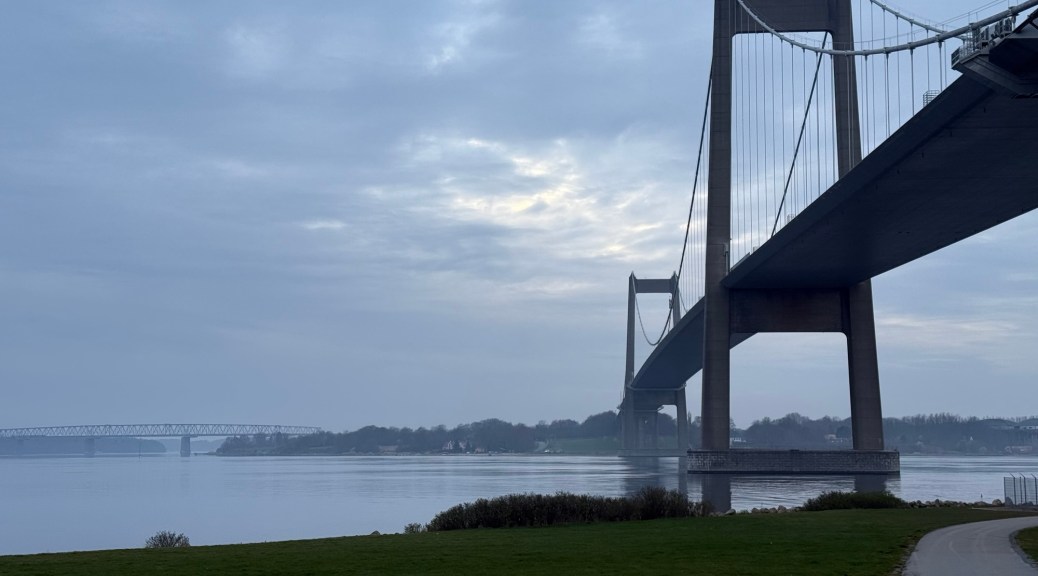
I’m in Denmark at the moment. It’s a country I like, with people who are as welcoming as any I’ve met. Like most of the countries I’ve been to, I haven’t seen enough of it, but on this trip and my last, I’ve been driving across its islands and bridges, and sometimes walking under them too. So maybe I’m getting to see a little more of Denmark than I would otherwise.

It’s a work trip, which is unusual. Writers don’t generally get sent on work travel, but for this job it turns out that the things they want me to write about are in Denmark. So I go, I get a car, and hotel rooms of varying sizes. The last one was big enough to have a bath, which I was happy to make use of. For all the slow pace of my life, soaking in the heat isn’t something I’ve enjoyed since maybe Andorra?

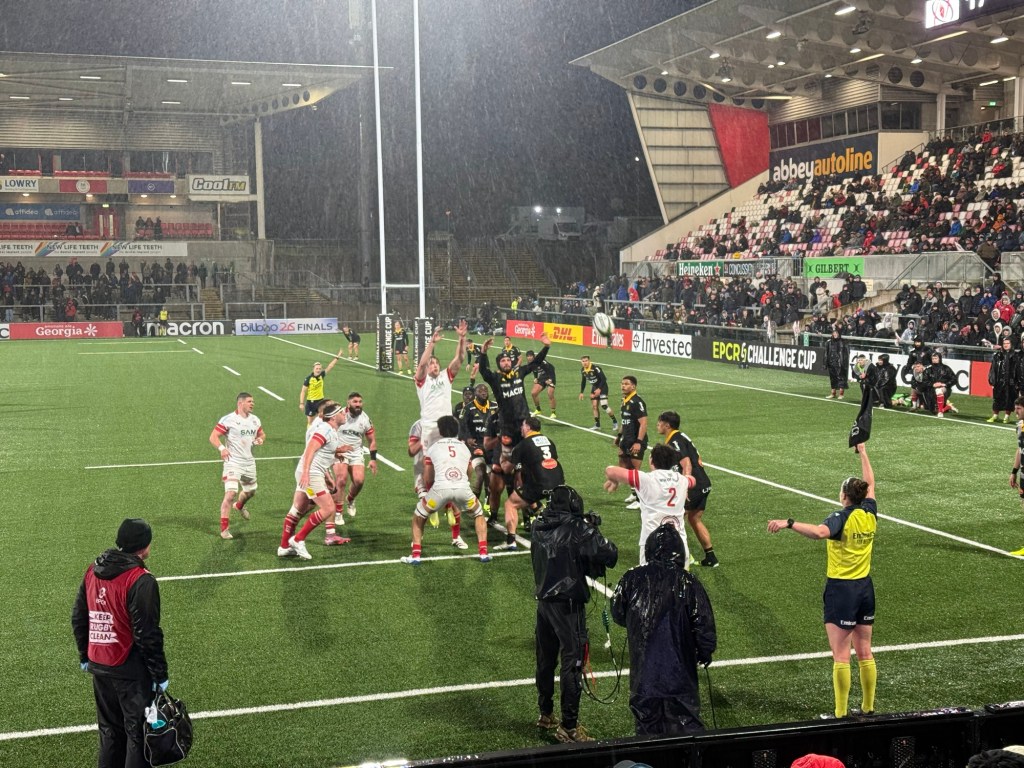
Many wet rugby players.

No travels this year yet. Other than work trips. But having missed out on a big trip when I turned 50 (instead of travelling, I foolishly had a party, where my friends were nice to me and gave me wonderful, thoughtful presents), I think I’ll make up for it this year. Even avoiding those parts of the world being ruined by belligerent idiocy (can’t ignore those events entirely) there are still plenty of places to see and share.

For the moment though, travel means work and family. Last weekend, I did something that I haven’t done in a few years and travelled to Belfast to watch the Ulster rugby team play a European game. Met up with my brothers and braved the pouring rain, getting finely soaked, as they tussled their way past ROG’s La Rochelle. A certain poignancy to the occasion: the last time I was there was with my dad. It’s good to be with family, especially when the rain is pouring.

So that’s the writing effort revealed: a few thoughts and a few recent memories shared. The ingredients of much of human interaction. Something that I’m doing my best to get more of. Might be easier as the hours of daylight grow longer, but we’ll see.

One Odyssey After Another

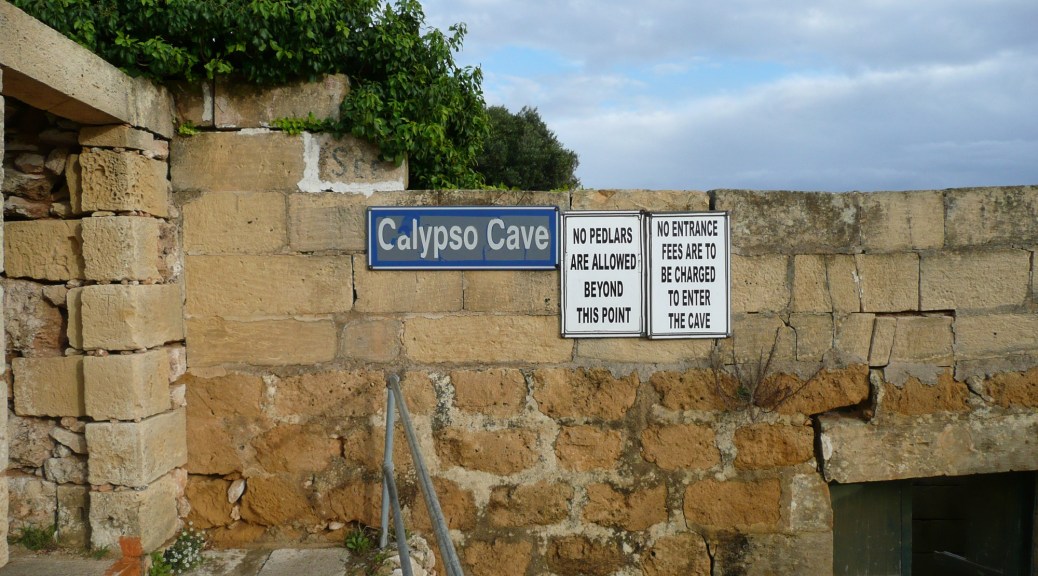
Why do we travel? A comment at a movie outing today got me thinking. Mention of Christopher Nolan’s upcoming The Odyssey brought to mind my own far-off encounter with that ancient epic, and coincidences being what they are, it turned out to be almost 15 years to the day since I trekked across the muddy fields and dusty lanes of Gozo in search of Calypso’s Cave.

That trip to Malta and Gozo, thrown together towards the end of 2010, sticks in my mind as something of a personal turning point. Prior to that, holidays had been sporadic, taken with friends, family, or loved ones, arranged whenever and however suited them (always seeking to please, never comprehending that understanding what I wanted might be something they wanted). That winter, reeling from as painful a breakup as I’ve had, I wanted to be somewhere else, even if it was alone.

A stone arch on Gozo. Collapsed now. Possibly an omen.

Why Malta? The substantial part of me that’s a frustrated historian and archaeologist is eternally fascinated by points in history where legend and myth take on solid reality. Not so much The Odyssey in this case as Malta’s Stone Age past. The ancient Ġgantija megalithic temples I knew of, and a little extra research revealed the wonders of the Ħal Saflieni Hypogeum (allowing me to book a last-minute place on the waiting list). It was also a manageable destination. Having never travelled anywhere for long on my own, going to a small island where most people spoke English was about as safe I was going to get.

I didn’t have high expectations, starting out. A week in Malta, an itinerary that was mostly self-arranged (apart from the Hypogeum date), a chance to simply walk, enjoy the winter sun, and be somewhere other than back in Dublin, working and treading the usual routes. Whatever came of wallowing in Malta’s millennia of history, I’d take it.

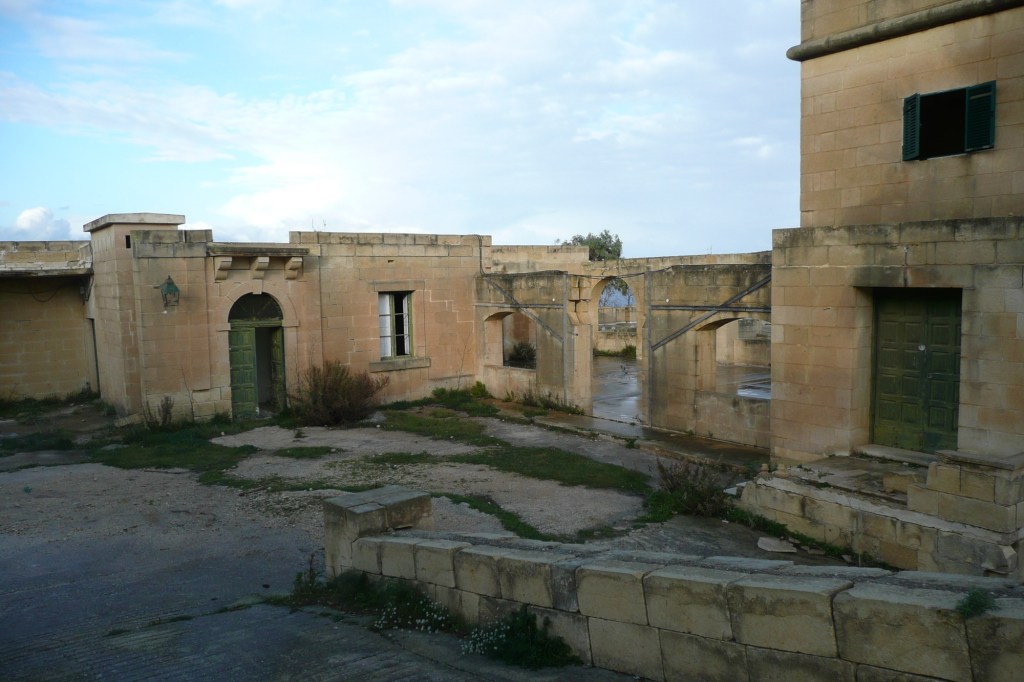
A deserted and half-finished villa on Gozo. Hopefully not an omen.

Off-season Malta wasn’t impressive at first glance. I’d booked a cheap room in Sliema, the island’s party capital in the summer but dead in December. That just meant it was quiet though. I could grab a beer at a deserted bar if I wanted, but mostly I wandered. Up to Valletta and its museums and beyond to the harbours where the billionaires’ yachts lay tied up, waiting to spring to life at a jolt of funds. I visited every site the guidebook directed me to within walking distance of the city centre, and I descended into the underworld of Ħal Saflieni, glimpsed the distant past by flickering lights, then emerged into the day again.

Small as Malta was, my feet wouldn’t take me everywhere I wanted to go. For a few days, the bus terminal in front of Valletta’s city gate was my key to the island and beyond. Out to the temples of Ħaġar Qim and Mnajdra and their stunning views over the Mediterranean towards Africa. The cliffside roads I walked along, watching the birds scuffle in the dust and sheep graze far below me. Stopping for lunch at a mostly empty cafe, then catching the bus to the next site. I’ve a lot of photos but my use of GPS doesn’t reach back so far, so where each one was taken, I can but guess.

Mud- and sand-encrusted shoes on a red sand beach. Ominous.

I remember Gozo though. That was a day trip in and of itself. Up early to catch the bus to Victoria, across the narrow strait on the ferry, past Comino, island of the blue lagoon. It looks larger on the maps, but I headed north when I arrived and walked all the way to Calypso’s Cave, only to find a rubble-choked and deserted site. No one in the villa next door either, half-finished despite the promising aspect, with a view over the red sand of Ramla Bay below. I clomped over fields and onto the beach, shucking shoes clogged with mud and red sand, enjoying for a moment my natural state: on the shore, neither on land nor at sea.

I have, of course, lied in the above. The walk along the cliffs came the day after the trip to Gozo, not before. But it suits me better to bring the story to an end there, on the shore below Calypso’s Cave, facing the journey home rather than the cold comforts of stillness. Thinking of my state of mind on the sunset ferry back to Malta, into night. Thinking of the wish to share the experience and the desire to remember it.

Yours truly with a stronger Northern accent than he currently has. Ominous by some measures.

We travel for all sorts of reasons. To please others and to please ourselves. To learn more about the world, and about ourselves. To experience something new. To enjoy the journey home once more.

I have my own reasons. Some time after my trip to the islands, I came across the poem Ithaka by C.P. Cafavy. You might know it. Calypso doesn’t get a mention, but she’s there in spirit. I think of that poem often when I travel. Whatever weathered stones may harbour me, it’s only for a time. Ithaka awaits, and the tide is changing.

Pluribus: Anhedonia and the Hive Mind

What does it mean to be happy? Is it being free of cares, or does that merely grant calm and contentment? Is it losing yourself in the moment, enraptured by music or art, or is that mere euphoria? Or is true happiness only found in the love we bear for others, whether family, friends, or partners?

Vince Gilligan’s new series, Pluribus, seems to be digging into this question, among many others, and I’ll admit that I’m fascinated. Both on a personal level, as someone who finds happiness hard to define and achieve, and as a writer who enjoys fiction that engages with knotty questions about human nature.

(Naturally, there will be spoilers below the cut. Pluribus, though not quite finished with its first season, is well worth knowing as little as possible about before tackling.)

Continue reading Pluribus: Anhedonia and the Hive Mind →

July 2025 Reviews

I’m going to start trying to write again, so a regular blogging habit might help with that. Reviews won’t be all of it, but I’m fond of my old three-sentence review format. Let’s see if we can get some more mileage out of that.

The Surfer (2024 film, Lorcan Finnegan)

The Surfer is an Irish-Australian production from director Lorcan Finnegan that provides a vehicle for Nicolas Cage as a man who views buying his childhood home as a potential solution to a life falling apart at the seams, only to face hostility to an absurd degree from the locals. That’s an incomplete, if not to say entirely misleading, description of a film that has clever and interesting things to say about the pressures that men face and the maladapted ways that many choose to cope with them. However, for me at least, the film gets off to the wrong start by making Cage’s character completely unlikeable, rendering the first two thirds of the movie a depressing slog, no matter how well thought out it is.

Ithaya: Magic Studies (2025 PC game, Blue Turtle)

Ithaya: Magic Studies is less a game than it is a study or work aid, but it’s so well put together by blueturtle that it’s both entirely enchanting and well able to perform its chosen task. The “narrative” sees you, as Ithaya, arriving at an ancient city to study magic, and the systems of the game slowly unlock the world surrounding the city as you devote tasks and time to the underlying organiser. The lack of pressure from the mechanics and the appealing nature of the art and audio means that there’s plenty to appreciate and explore, and I’ve already devoted more work to it than I’ve managed in multiple months beforehand.

Andor (2025 TV show, Disney+)

Of the various spin-offs of Star Wars that have appeared in recent years, none have received the same acclaim as Andor, a two-series show from Tony Gilroy, which serves both as a prequel to his film Rogue One and as a deep dive into the mindset of people making the decision to resist an authoritarian state (hmm, wonder why that feels relevant). As someone who wasn’t a huge fan of Rogue One, I’ve enjoyed Andor to a much greater degree, with its longer format providing the chance to dig into its characters, their troubles, and the inevitable costs that raising a rebellion incurs. There can be few countries around the world that don’t have some revolutionary history of their own to speak of, and for all that it feels distant from the mainline Star Wars offerings, Andor speaks to a broader human experience and may well endure all the better for it.

Blue Prince (2025 PC game, Dogubomb)

I gave up on Blue Prince not long after starting it: Dogubomb’s puzzle game is structured in such a way that it requires an investment of effort and thought to get over the initial hurdle of bafflement. As someone who tends to solve puzzles by brute force (or ignoring them for extended periods of time), this isn’t a puzzle game exactly suited to me, no matter how much I might enjoy taking notes as I progress through an ever-changing mansion of rooms with multiple meanings, hidden treasures, and unguessed-at secrets. I don’t want to spoil too much, as this is one of the deepest games and the most carefully crafted titles that I’ve come across in many years, but if you have the patience (and an ability to think laterally), you might just have a lot of fun digging into the foundations of this mansion of madness.

A City on Mars (2023 book, Kelly & Zach Weinersmith)

Fans of Zach Weinersmith’s webcomic Saturday Morning Breakfast Cereal will already know of his deep interest in science of various flavours, and A City on Mars stands as an excellent follow-up to his and his wife’s Soon-ish, a review of the reality or unreality of various upcoming technologies. In A City on Mars, the Weinersmiths pick apart the various arguments in favour of settling Mars (or space in general) and try to get to the reality of the new life that often gets hyped up by over-promising tech bros. The result is a highly entertaining and gently chastening book for anyone with the vaguest interest in space or the future of humanity, at the same time offering solid proof that humorous is not the opposite of serious.

Thunderbolts*—Punch the Dark Away

It’s been a while since I came out of a Marvel movie with anything more than a feeling of having been adequately amused. Like a lot of other nerds and comics fans, I got caught up in the initial rush of not only comic book movies done right, but a comic book universe splashed across the big screen in release after release. We had a roller coaster ride for ten years, with the payoff of Avengers: Endgame to complete it all, and then… it kept going.

(Spoilers for Thunderbolts* below.)

That it kept going wasn’t in itself the problem. The problem was that there didn’t seem to be a solid reason for it to keep going. The success of telling an increasingly coherent story over the first three “phases” of the “Marvel Cinematic Universe” necessitated some sort of structure to what came next, but the MCU as such had started with only the vaguest hints of an endgame, whereas the next saga was instantly anticipated but largely left hanging in the movies and television shows, outside of a nebulous concern with the multiverse, a concept broad enough to cover any potential stories but hardly one to stir audience interest.

With a mix of tentative new stars and second-stringers stepping up to prime time, the MCU went on struggling to fill its sizeable shoes, usually managing to deliver that adequate entertainment but increasingly losing the buzz it once had. In this growth-obsessed world, holding steady (or worse, slight declines) don’t cut it. To audiences and studio bosses, the MCU was starting to look a little shabby.

This is the ground that Thunderbolts* steps into. Presenting a collection of Marvel’s broken toys in a story of betrayal and despair, it’s a surprisingly bleak little offering. Yet in contrast to what I’ve heard of the preceding MCU movie (Captain America: Brave New World) it does seem that Thunderbolts* at least knows what it’s about and how to stick to its guns. Because I came out of a showing last weekend not only adequately amused but wholly charmed.

Much of this, of course, is down to Florence Pugh. Playing Yelena Belova, the grieving, self-loathing sister of Scarlet Johansson’s Black Widow, she’s rightly kept at the core of the film, her path towards acceptance and her growing awareness of the suffering of others as important as the occasional beatdowns she inflicts on anyone unlucky enough to get in her way. She’s a magnetic presence, nakedly emotional against the Marvel tendency to be ironically cool.

Along the way, Pugh gets to pinball off (both literally and figuratively) some of those aforementioned broken toys: Wyatt Russell’s U.S. Agent, a similarly self-loathing replacement for Captain America; Sebastian Stan’s Bucky Barnes, stuck in a job he can’t stand and desperate to punch someone; Hannah John-Kamen’s Ghost, a mercenary with phasing powers (and the one character underserved by the story); and especially David Harbour’s Red Guardian, Yelena’s bombastic but failure-addled super soldier father.

And then there’s Bob. Now, I have to admit some bias here. Bob Reynolds, aka the Sentry, is one of the more divisive Marvel characters among fans. Created as a Marvel mirror image of Superman and often used to explore the terror of godlike powers in the hands of an unstable personality, the Sentry rubs some people up the wrong way, especially as his origin retconned him into decades of Marvel continuity. Here, that isn’t a problem, but I have a lingering affection for a character I’ve followed since his creation, and I was fascinated to see how the MCU would treat him.

As it turns out, Thunderbolts*, in the hands of director Jake Schreier and writers Eric Pearson and Joanna Calo, very much knows what it’s about with Bob and his terrifying alter ego. From the very first moments, when he appears amnesiac and confused in the middle of a fight to the death between Yelena and some of the other broken toys, to Yelena’s quickness to ascertain that things aren’t quite right with him and her first instinct being to help, we’re clued into the notion that Bob is important, not just for what he is, but simply for who he is.

So when we get to the grand confrontation with the villain and ensuing punch up that normally marks the denouement of a Marvel movie, Thunderbolts* is ready to start twisting the script. First of all, it’s not much of a fight. The broken toys are hopelessly, hideously outclassed by the Sentry, who even saves their lives during the fight when he might have accidentally killed them instead. Bob, it seems, doesn’t want to kill people he knows, even if the only way some of them know to get through to him is punching.

There’s an oft-quoted Terry Pratchett line that I’m going to mangle here: “Sin, young man, is when you treat people like things.” That theme seems to run through the background of the movie—I can’t imagine that at least one of the writers didn’t know that line. The broken toys are treated as things to be discarded by Julia Louis-Dreyfus’ Valentina, then Bob is treated as a prize to be used (to save her ass) and then discarded when he turns dangerous. It’s treatment that causes only hurt and makes the world worse, and it unleashes the dark flip side of the Sentry, the Void.

This kind of broad-strokes storytelling of the light and dark side of a personality can fall very flat if not handled right, but the movie stays on target. As the Thunderbolts were outmatched before, so they are now. All they can do is try to save people from the Void’s wrathful self hatred (did we forget that the fantasy of the super hero is that someone is coming to save us?), and ultimately try to save Bob from himself.

There is only a little punching at the end of Thunderbolts*, and it’s a terrible thing. The victory of the climax is that we get to a point where punching isn’t necessary. Where the characters realise that it doesn’t help, and that what they are there for is to help. It’s a surprisingly uplifting, lighthearted turn for a movie that spends so long looking at self loathing and despair, but it’s all the more earned for that.

I’m not saying it’s a perfect movie. There’s more than a bit of clunky exposition, certainly more than I was comfortable with, and one or two characters were poorly served by the script, but overall this is one of the bigger Marvel successes in a while. The series as a whole may yet get sucked back down into the maw of chasing those post-Endgame highs, but for now it’s shown that it can still make good use of its broken toys.