All posts by cerandor

Mass Effect 3: Endings are Hard

20120326-001932.jpg
Not Vancouver’s best day ever…

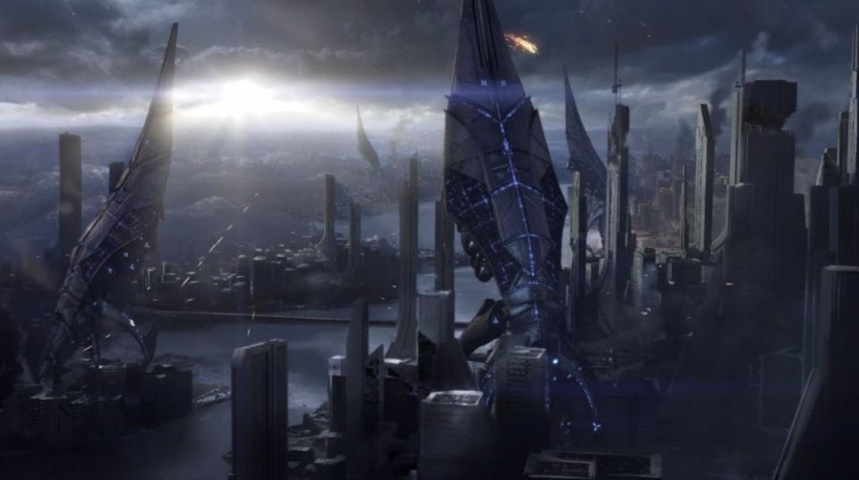
The biggest game release of 2012 so far has come and gone, trailing controversy in its wake. Fans of the Mass Effect series have been enraged by what they see as a substandard ending for Bioware’s space opera magnum opus and have raised a lot of noise (and money) about it. I’ll talk a little about the ending later, but if you want deeper, more philosophical, design-oriented takes on the ending, you can read them here, here, or here.

In any case, if you have an interest in Mass Effect 3, beware of SPOILERS from here on in.

The first thing that you have to realise about Mass Effect 3 is that it’s all pay off. Unlike the first two games, where you had an abundance of side-quests to distract you as you pursued the main plot, here all of those smaller missions contribute to the main plotline. And if you’ve played through the previous two games in the series, it’s massively satisfying, occasionally heartbreaking and once or twice hilarious as it brings to a close the stories of the richly drawn characters who have accompanied you through the series. Which is not to say that there’s nothing for newcomers: the lengthy intro to the third instalment ably sets up the players and the stakes, but you won’t get the full effect if you’re coming in fresh.

As far as gameplay goes, Mass Effect 3 represents a bit of a step back from the streamlining that took place between the first and second games. The combat feels more fluid than ever, if significantly more finicky, with controls that are apt to put you in the wrong place if you get too enthusiastic with the key/button presses. With increased weapon and armour options, there’s plenty for you to tinker with too.

The sense of everything you do having an effect on a galactic war does lend weight to the decisions you make, and fittingly Bioware has the central Shepard character show the stress of the losses and compromises required to make that war winnable. (This sense of player agency is somewhat undercut by the fact that unless you play the game’s multiplayer mode or use the clunky Mass Effect Datapad smartphone app, it can be much harder, if not impossible, to reach the very best conclusion.)

So, anyway, onto that ending. And, in case I didn’t say it loudly enough before, SPOILERS.

The ending, by which I mean the final few scenes, draws on two main sources, one good and one iffy. The first is the original Deus Ex game, where the main character is presented with a choice that will change the world (and apart from scale, the choices presented in Mass Effect 3 are identical). The second is The Matrix Reloaded, where a heretofore unsuspected god in the machine reveals himself and offers the main character an insight into the true reasons behind the conflict they’ve participated in.

Now, I’m a completist. I scoured every inch of the galaxy in all three games, and I only found one hint, late in the third game, that there was some director behind the massive threat of the Reapers. So there was a lack of impact to him when he showed up. Secondly, of the three choices you’re offered, one of them is barely explained, even though it seems to be the preferred option from the designers’ point of view. So on the front of emerging from the choices that the character has made and the story that he or she has experienced, the ending falls short. However, I do love the fact that all three choices in the ending adhere to the theme of sacrifice, either of yourself or of at least one friend and possibly an entire race, in order to ensure the galaxy’s future.

Anyone who’s tried to put together a compelling narrative will tell you that endings are hard. Providing a pay off for a story as big as Mass Effect was always going to be a massive task, and I can see where Bioware wanted to go with the ending: consequences at a scale appropriate to the tale being told and a sense of closure to Shepard’s personal journey. However, Peter Jackson spent half an hour on the ending/epilogue for his Lord of the Rings trilogy, so fan disappointment at the two brief cut scenes that round off the Mass Effect series is understandable.

Still, that doesn’t mean that the final game in the series isn’t worth playing. It’s a compelling, finely crafted narrative wrapped up in a polished storytelling and gameplay engine, and it’s done horrible things to my productivity over the past week. Even if it doesn’t spot the landing perfectly, it still engages and enthralls throughout its performance and is worthy of the high scores that it’s been getting.
The (Necessary) Hole in the Heart of the Mass Effect Experience

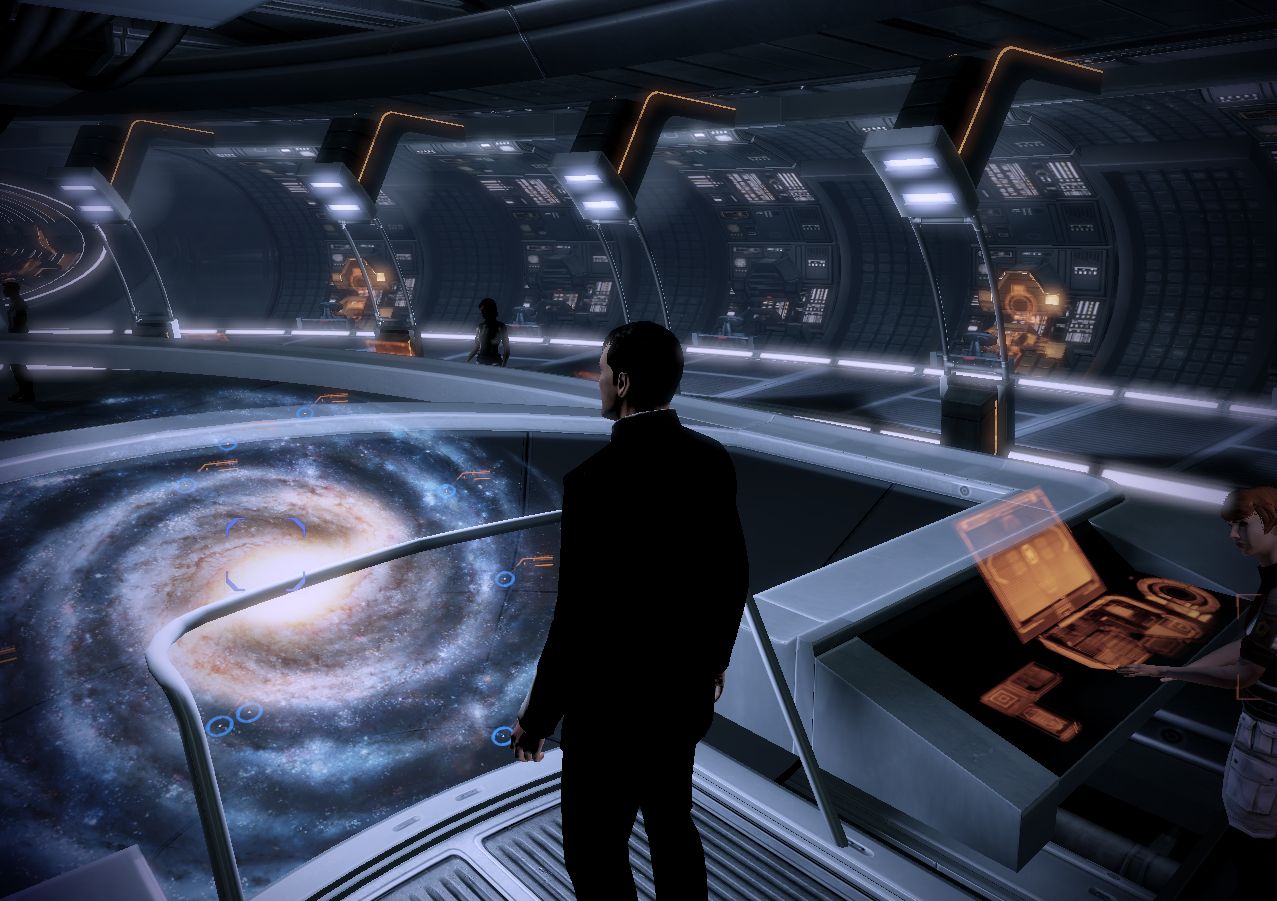
Shepard's Bridge is much better-looking than Picard's.
The galaxy's out there waiting for you. If you have a really nice starship, that is.

(This is the first in what will hopefully be a series on computer games and how they do or don’t tell stories.)

In honour of the fast-approaching due date of Bioware’s Mass Effect 3, the culmination of its space opera epic, I’ve been replaying Mass Effect 2 in an effort to polish up my save game. Replaying the entire title gave me a second chance to appreciate just how good this game is. It’s not without flaws, but as a combination of action, character, setting and story, it’s hard to think of any titles that approach, let alone match it. Except that there’s one niggling gap in the experience, and it’s constantly under the player’s eye.

I’ll skip over action: I play games for story and experience and leave twitch games to those with better hand-eye coordination and reflexes. When it comes to rich fictional settings though, Bioware have an excellent track record, and they’ve crammed as much as they can in here. The galaxy presented to the player is rich, varied and deep, with plenty of corners to explore, and the only potential frustration is that it’s much less free-roaming than the Elder Scrolls or Fallout games from Bethesda.

The characters who accompany the player on their quest to save the galaxy are simply a joy. Richly detailed, flawed yet capable, you aren’t so much presented with them as you are offered a chance to get to know them. The life that they have comes from two sources: quality design, voice and motion capture work and a mass of thoughtful detail put into their backstories, even if you’re only partly aware of it all. My view of one character in particular was shifted appreciably by an easily overlooked text file found lurking in a data vault in a piece of downloadable content. Now that’s attention to detail.

Which brings us to that gap I mentioned. Among this cast of real characters, the player’s avatar, Commander Shepard, is a plastic everyman (or woman). Not only is the Commander’s gender flexible, but his history is virtually a blank sheet, his ties to the rest of the universe loose at best, and his abilities and opinions subject to the player’s whim. It’s fair to say that the ship he cruises the galaxy in, the Normandy, has more character than he does. In fact, like the Commander, it was reborn bigger and stronger in the second game, and with a literally new personality.

The Commander’s lack of identity is part of a problem that’s plagued makers of computer RPGs for years: the more you define your main character in a story-based game, the more you take agency away from your player.(1) The recent Deus Ex: Human Revolution was a wonderfully polished revival of a well-loved series, but there were times when you felt like you were just hitting one checkpoint after another as you followed the story of the pointy-chinned hero: your choices were limited to just how violent you wanted to be in reaching each checkpoint.

Japanese-style RPGs, such as Final Fantasy, seem happier to establish your character in advance of the game, but their western counterparts tend towards the blank slate approach: the player creates the character then unleashes them on the world to participate in a the story. Bioware itself wrestled with this problem in its Dragon Age series: the first game gave players a multitude of options as to who they could be, the second narrowed down that scope dramatically and suffered for it.

Outside the realm of the pure action offering, games work best as story creation, rather than story experience, engines. With Mass Effect, Bioware have created a galaxy full of secrets and characters, presented the player with a massive problem to solve and then let them go about it. Of course, the path that they can take to do so is limited, but the key is to create the illusion of freedom, and a big part of that is allowing the player to be the hero they want to be. In this way, Bioware and the player collaborate to create a more immersive story than Bioware could create alone: they’ll care more about the deeds and relationships of a character they identify with than they will about one presented to them fully formed.

By allowing the player’s choices to feed over from one game to the next in the series, Bioware have deepened the impact of the story they’ve created. I’ll be interested to see how all this pays off in Mass Effect 3. At least now I have the perfect save game to start the experience with.

(1) This trend was ably dissected and toyed with in Black Isle’s seminal Planescape: Torment, wherein the player is an amnesiac everyman, who repeatedly dies and has to deal with the choices made in past lives. The point made there is one of self-determination, in which the player has to actively consider choices made and understand their morality, yet has the freedom to choose any path, regardless of moral right or wrong.

February Book Reviews

20120302-140822.jpg
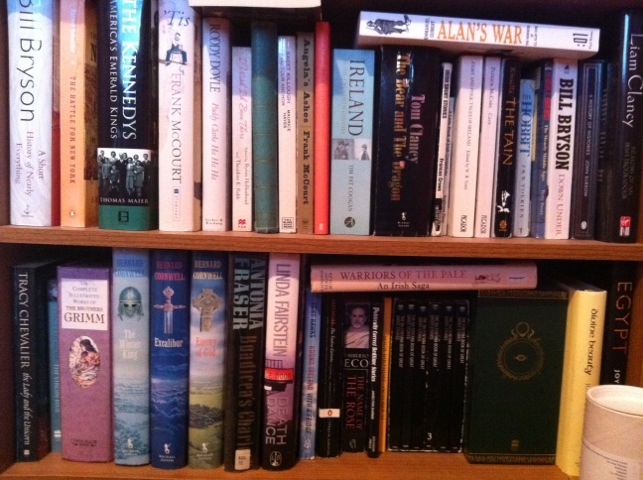
Bookshelves: slightly dusty. My mother would not approve.

A shorter month than the rest but longer than normal. And more reading than I managed to do in January, mostly because I managed to clear away the Banville blockage that was keeping me from the printed page. After that, I had to resort to some lighter and more enjoyable fare…

Eclipse, John Banville: Employing his mastery of the English language to depict an episode in the life of a self-absorbed actor, Banville delivers a piece that is self-consciously a work of art as much as it is a novel. Concerning itself with things occluded and an inability to comprehend the inner workings of the world and the human mind, it allows the reader to marvel at the author’s ability to spin words according to his will, but engagement with the narrator’s life falls by the wayside. A novel so involved with emotions should not perhaps be so cold, but it engages the intellect where it fails to spark the soul, making it an intriguing exercise rather than an absorbing read.

Empire of Ivory, Naomi Novik: For the fourth book in her “Temeraire” series, Novik once again sends Captain Will Laurence and his eponymous dragon on their travels, this time to darkest Africa. It’s a more successfully depicted journey than the second book’s trip to China, due largely to a greater sense of threat and urgency, and Novik continues to fill in the corners of her world, providing yet another slant on the notion of a Napoleonic world with dragons. It’s not wholly successful, as the final third of the book is largely detached from what comes before, but as before it’s the strength of the characters and their utterly believable emotional ties and dilemmas that pulls the whole thing through.

Victory of Eagles, Naomi Novik: The fifth book in the “Temeraire” series would serve as a surprisingly poignant point of closure, if not for the fact that there’s more of this fascinating world to explore, as the final chapters make clear. Ramping up the action right from the start, Novik for the first time makes the dragon Temeraire an equal point of view character with his captain Will Laurence, and it’s a mostly successful move, even if Laurence’s personal history and reactions to the situations he finds himself in remain the core of the book. Some impressive battles and well-thought out strategy and tactics keep the whole thing moving, but surprisingly, a lack of copy editing in the version I read gave an unpleasant feeling that the whole thing was rushed into publication.

Redbreast, Jo Nesbo: A Scandinavian crime thriller that wears its moral message more lightly than Stieg Larsson’s Millennium trilogy, this is an engaging and clever read that only suffers by not being wholly complete in and of itself. Nesbo’s Harry Hole is an appealingly dogged and down-at-heel detective, and the World War II story and aftermath that surrounds his latest case will make it all the more enticing for history buffs. However, the real draw lies in the vivid characters and interesting world that Nesbo has created, as well as the jolts of horrible violence that occasionally intrude on all of them.

January Book Reviews

Going for tenuous relevance to the text here...
A City Under a City: Washington's Metro

January was a busy month: getting settled into a new mode of working and chasing down leads for actual work. Add into that an effort to be sociable, healthy and productive in the middle of winter, and somehow books got left by the wayside. Accordingly, only two reviews this time around. Film reviews, as promised, have been shunted off into the twittersphere, visible to the right, while my thoughts on games are still forthcoming. (Yes, it’s all a grand delay, but work is in progress…)

Born to Run, Christopher McDougall: The somewhat crazy world of ultrarunners, for whom marathons are nothing but a warm up, is the subject of this occasionally hyperbolic but very readable book. McDougall structures his tale around a search for the semi-mythical Tarahumara tribe of Native Americans, who ran their way into obscurity in Mexico, and an attempt to set up the ultimate race between them and the best that the running world has to offer, but a huge chunk of the fun comes from the digressions into the strange characters who populate this world. Occasionally it all seems a bit too weird to be non-fiction, but it’s enough fun that it might even encourage some readers to take up running (if not ultrarunning, admittedly).

The City and the City, China Miéville: On the surface, this is a Kafka- and Orwell-infused detective novel set in two intertwined cities, but at its heart, it’s about the power of the human mind and society to create and bind us to a particular reality. At the outset, language is used as a distancing device, with odd phrasings dragging readers out of their comfort zone, but it seems that the author abandons this device further in, perhaps to give those readers a feeling of acclimatising themselves. Like a lot of Miéville’s work, it’s more interesting than engaging, but if the ideas herein appeal to you and you prefer your reality tinged with weirdness, rather than fantasy, you might find it worth exploring.

Apple Gets Hyper Over Education

And you can play games on it too. That will be good for learning, I'm sure.
Apple's iPad has just got a big push into the education sphere

This afternoon saw Apple’s latest media event taking place in an unusual venue for the company – New York – and without the oversight of the company’s late founder, Steve Jobs. The focus of the event was education, a subject that Jobs claimed was close to his heart, and although the event was very much U.S.-centric, the announcements made there have much wider implications.

There are three main prongs to Apple’s education push: The first part is an upgrade to the iBooks application for the company’s iPad device in order to enable it to deliver media-rich, interactive text books for students in the U.S., focusing first on the high school level. The aim is to provide cheaper (assuming you factor in the cost of the iPad itself), more engaging, more up-to-date text books for students. That Apple has managed to get some of the main textbook providers on board already is undoubtedly due to the fact that if the technology company succeeds in turning the textbook market electronic, it will simultaneously kill the market in second-hand textbooks.

Prong number two is the new iTunes U app. I’ve been using the iTunes University section of the iTunes Store for a while, as it has an amazing selection of free audio and video recordings of lecture series. The new app takes that idea to the next step, allowing educators to create and manage courses and deliver them to students. Together with the iBooks app, it’s nothing less than an effort to make tablet computers in general and the iPad in particular central to education in the U.S. And where the U.S. leads in this regard, the world is likely to follow.

However, for me – someone who isn’t involved directly in education at the moment – the most interesting element of the announcement was the third prong: the iBooks Author application for the Mac. Although the focus at the event was on using this application to create textbooks, it’s clear that there’s much more potential here: iBooks Author allows anyone to put together rich media books, using video, audio, pictures and 3D elements together with text in an easy drag and drop environment. I’ve already downloaded it and am tinkering with it now to check out its capabilities, but already it’s reminding me a lot of a storied application from Apple’s past: Hypercard.

If you don’t know what Hypercard is (and unless you used a Mac in the late ’80s, you probably don’t), you could take away a few elements of the above description of iBook Author and it would apply pretty well: Hypercard created stacks (read: ebooks) into which content creators could place audio, graphics and even video, linked together with a programming language that prefigured the HTML code of the World Wide Web. iBooks Author may not offer the same degree of interactivity and expandability, but the capability is definitely there, and the drag-and-drop creation is much easier. The ebooks sold through Apple’s iBook store may be called books, but they’re really standalone apps, designed to run on the iPad. They’ll deliver content first and foremost, but the manner in which they do so will be limited only by the imaginations of those who use the app itself.

Of course, this being a brand new program from Apple, some caution is warranted. It’s already been pointed out that the EULA attached to iBooks Author may be overreaching itself. Similarly, Apple’s applications and devices tend to really hit their stride only when they reach the 2.0 milestone. Compare the original iBooks app, a polished but underwhelming competitor to Amazon’s Kindle, with the new textbook delivery system it has become. iBooks Author has a limited number of templates at present, and it will be a while before its users get to grips with what it can do. Already, however, I’m impressed with what I can see and am looking forward to playing with it and seeing the results.

The Case of the Problematic Woman

Irene Adler as seen in the BBC's "Sherlock"
Lara Pulver proves the more dangerous of the two recent Irene Adlers.

It’s Sherlock Season at the moment. The second installment in Guy Ritchie’s Downey Jr-&-Law driven comeback arrived on cinema screens over the Christmas period, and on New Year’s Day, the BBC debuted the second series of its modern-day updating of the Arthur Conan Doyle tales, starring Benedict Cumberbatch and Martin Freeman. As a long-time Sherlock fan (when it comes to the classic interpretations, I’m a Jeremy Brett man), this double header definitely added to my festive cheer. However, there was one feature of both offerings that raised a doubtful eyebrow.

Spoilers below for those of you who haven’t watched either slice of Holmes (and they’re both worth taking your time to see).

Irene Adler, like Professor Moriarty (with whom she’s associated in both the cinematic and televisual Holmes offerings), looms a lot larger in the Holmes mythos than her brief appearance in Conan Doyle’s tales would suggest. She appears in a single story, “A Scandal in Bohemia,” and is referred to in just four others. Nonetheless, the idea of the woman who matched wits with Holmes and won has fascinated fans and writers of derivative works ever since.

Which makes it just a little odd that both the most recent Holmes offerings veer away from the idea of her being Holmes’ equal. The first Ritchie movie had her as Moriarty’s catspaw, and the second reduced her to a damsel in distress before swiftly killing her off for little reason other than to provide Holmes with an axe to grind against Moriarty himself. In the BBC version, she matches wits well with Holmes before being undone and reduced again to a damsel in distress, whom Holmes this time saves.

A feature of both the recent versions of Adler is that she is undone by her own affection for Holmes. This is a long way from the Conan Doyle story, where all the affection and admiration is on Holmes’ part, with Adler in love with and set to marry another man. The transition towards something closer to a genuine romance between the characters seems to do Adler a disservice, as Holmes ends up the dominant partner both times out.

This may be inevitable – Holmes is the central figure, after all – but there could be something else at work here. Both Ritchie and Steven Moffatt, the co-creator of the BBC series with Mark Gatiss, have made the relationship between Holmes and John Watson the central point of their versions. No mere foils for the mercurial and manic Holmes, the Watsons of Jude Law and Martin Freeman are close to equal partners, emotionally if not intellectually, avoiding the bumbling caricature that Watson often became in other adaptations. In both cases, the depiction of the relationship between Holmes and Watson is a major part of why these versions work so well.

What that seems to mean, though, is that there’s no room for a romance with Adler. To have her become a victim in both cases seems a shame to me, given that she’s a character with a lot of potential (and the only strong female in the Holmes canon). Ritchie’s casual disposal of her seems much more of a waste, and in somewhat poor taste, whereas Moffat’s decision to have her thoroughly defeated and then rescued seems more a result of confusion as to what to do with her.

Perhaps Conan Doyle had it right: Adler was notable because she won and because she entranced Holmes with her intelligence and honour. To try to bring her closer into the orbit of Holmes-Watson is to ruin her.

December Reviews

20120103-133215.jpg
Nothing to with the reviews; just a nice photo.

I started writing these reviews around the beginning of 2011. At first they were mostly a writing challenge: sum up my reaction to a piece of work in three sentences. All the same, I stuck them up on my old LiveJournal, then brought them here too, as an aid to my own memory and recommendations to my few readers of the things that I enjoy. It’s nice to get a full year in, and this is probably an apt time for a review of the reviews.

The film reviews are fun, but as films don’t last long in the cinema these days, gathering them up in a monthly bundle means they’re mostly out of date by the time they’re released. The solution is to deliver them more quickly, either in longer format, so as to be worthy of a full post, or short enough to fit in a Tweet. I’ll probably go the latter way, unless I come across a film I really like.

The book reviews work best, as they’re not as time-limited as the film reviews. They’ll probably continue as they have been, though I’ll likely tinker with the three-sentence structure.

Game reviews were an occasional feature, and I’ve been thinking about them a fair bit as I’ve been working on working in that area. I hope to have more of those in the future, in a longer format and focused on the role of story in games. Specifically where it works, where it doesn’t, and why. Ambitious, but it’ll be helpful to me if no one else.

Without further ado then, on with the last reviews of 2011.

Books

Throne of Jade, Naomi Novik: With the second book in her “Temeraire” series, Novik slows down her narrative a little but maintains the high degree of plausibility in terms of both character and world-building that marked her debut. Both a sequel and a stand-alone tale, “Throne of Jade” suffers a little from the fact that its central conflict is wrapped in diplomacy and subterfuge, making the ending somewhat abrupt after a long, careful build up. Not that it needs to be saved, so high is the quality of the writing, but the utterly believable, sympathetic and well developed characters of the dragon Temeraire and his captain and companion Will Laurence make this indispensable for anyone who read and enjoyed the first book.

Anno Dracula, Kim Newman: A pseudo-sequel to Stoker’s “Dracula”, based on the idea that Dracula not only survived but succeeded in subjugating Britain, Newman’s book is a gleeful romp through Victorian-era tropes, with every page offering a plethora of in-jokes and references both subtle and obvious for the discerning and informed reader. The central mystery of the identity of a “Jack the Ripper” of vampire victims is revealed right away, making the chase to find the killer more of a vehicle to explore Newman’s vampire-dominated Britain. The weakness of the central plot and a pair of lead characters who are made distant by their experiences and attitudes make the book a little less visceral than it should be, but it’s a very enjoyable experience nonetheless.

The Ship Who Sang, Anne McCaffrey: Old-style science fiction from one of the masters of the genre, this is less interested in the nuts and bolts of a possible future than it is with the predicament of a woman who serves as the mind of a ship and has to deal with emotional entanglements with the fully embodied humans who pass through her life. McCaffrey invests her heroine with a feisty, yearning humanity, and the futuristic background adds colour without serving up too many anachronisms to jolt the modern reader. It’s the humanity of the tale and the journey the heroine goes on that has made this story endure, and it’s still worth a read, slim volume though it might be.

Dragonflight, Anne McCaffrey: The first book in McCaffrey’s “Pern” series, over four decades old now, still stands up well as an imaginative and interesting creation, its telepathic dragons and celestial menace as solid as they were all those years ago. The relationships between the central characters are touched on a little obliquely, and there may be a shortage of detail for readers accustomed to lengthier fantasy and science fiction epics, but there’s a surprising amount of grit under the fingernails of the setting, with various twists and tricks used to resolve the plot. It’s hard not to get invested in wanting to know more about McCaffrey’s creation, with this story just one slice of a greater history, and indeed the lengthy series of books that continued from this one bears that notion out.

Black Powder War, Naomi Novik: Continuing the process of turning the more-or-less standalone first book into a globetrotting adventure series, Novik delivers perhaps the strongest involvement yet, introducing both a credible nemesis for her dragon-and-captain duo and a genuine sense of desperation. As always, the relationship between the two members of that duo forms the emotional heart of the book, and that relationship continues to evolve in realistic ways as they struggle to return home after the adventures in the Far East of the previous book. It proves amazingly successful as part of a series, both satisfying those who want to know more after the previous installment and whetting their appetites for yet more to come.

The Rise and Fall of Ancient Egypt, Toby Wilkinson: Not only does Toby Wilkinson manage to cram more than three millennia of history into an admittedly chunk history book, but he does so in a readable and even gripping form. Given the sources available the main focus is on the pharaohs and demystifying the idea of their Egypt as a glittering golden age but the character of Egypt and its people is well portrayed, even if sometimes there’s a feeling of political bias in the history. Even in as sizable a books as this, the occasional leaps of generations within paragraphs are inevitable, but although Wilkinson’s language dos get a bit casual from time to time, this is a great overview of Egyptian history for anyone interested in getting an idea of how it survived from Narmer to Cleopatra.

Films

Arthur Christmas: Just in time for the festive season comes an Aardman animated offering about succession struggles in the Family Claus and the subjugation of an entire race of elves under the North Pole. Well, not really (sort of): this is a polished kids’ film all about “the true meaning of Christmas” in a commercial, technological age, as we tend to see this time every year, and it successfully tugs the heart strings while providing some amusement for adults in the form of Grandsanta’s un-PC comments. It’s a long way from being the best of Aardman’s offerings, and it sags in the middle, but as an honest piece of Yuletide entertainment with some clever touches and too much in the way of product placement, it’s likely to become a fixture on Christmas TV schedules in years to come.

Take Shelter: Anchored by a powerful central performance by Michael Shannon, this tale of a man afraid that he’s slowly losing his mind is strong when it comes to depicting the effect of his affliction on his relationships but loses its way when it explores elsewhere. Shannon convinces as a man who cannot escape his belief that his apocalyptic visions are real, even in the face of a family history of mental troubles, and he has able support from Jessica Chastain as his loving but suffering wife. If the last five minutes of the film were missing, it would be a perfectly crafted and moving film, but as it is, how you feel on walking out of the cinema will depend on your investment in everythng that’s come before.

Sherlock Holmes: A Game of Shadows: Guy Ritchie continues his steampunk-and-fisticuffs reimagining of the Holmes stories by throwing Moriarty into the mix and dropping everything that gets in the way of the bromance between Holmes and Watson. It’s not as sharp as the first film, and there are parts that feel distinctly ropey, but everything moves at such a pace that viewers will probably have to wait until it’s done to figure out exactly what might have been bothering them. It’s really nothing exceptional, but as an example of mindless, roller-coaster movie entertainment, with Robert Downey Jr. and Jude Law enjoying themselves in the lead roles, it will do nicely.

Missin Impossible – Ghost Protocol: Brad Bird is the latest director to put his own stamp on the MI franchise, adding a dash of humour and humanity to globe-trotting hijinks and gadgetry and delivering perhaps the most diverting of the films in the series so far. Tom Cruise is at his least smug, and there’s plenty of room for the other members of their team to strut their stuff as a plot that begins with an explosion in the Kremlin careens all over the world, eventually landing in the Far East for a few more explosions. It’s not the best film that anyone involved has ever done, but there are no discernable weak points and the whole thing is well worth the price of admission.

A Taste of the Future

One of the great things about reading science fiction is receiving a glimpse into the future. It’s not true of every science fiction writer, but a great many of them are well read in the social and scientific trends of their day and weave that knowledge into their writing, extrapolating out to take a guess at where we all might be in a few decades, centuries, or millennia. Of course, predicting the future is a hard business, and it’s a truism that nothing dates so quickly as science fiction. Still, Verne had men travelling to the moon, Clarke foresaw the communications satellite, and Gibson gave us cyberpunk and the kind of brain-computer interfaces that are even now emerging into the light.

I’m even guilty of it myself, in the short stories that I’ve written that veer into the science fiction arena. I’m not claiming any great foresight, but I do enjoy finding here and there among the materials that I read an idea or two that sparks a story. In some cases, the original inspiration gets forgotten. So I don’t really know where I got the idea for “Life and Death on the Edge of Unreason“. I suspect I just liked the idea of an observation station orbiting a star about to go supernova. As settings for a detective story go, it’s pretty evocative.

It’s not the best story I’ve ever written – the fact is that a detective story in a panopticon society with instant access to information is never going to work well. Still, I was reminded pleasantly of it when I read this article, all about  one of the main elements in the story – a charred planet surviving in a star’s outer layers. Pleased enough to be inspired to tidy it up and offer it here as some Christmas reading material. I hope you enjoy it.

November Reviews

20111201-144306.jpg

November was a month of major readjustment for me, keeping me busy and reducing my opportunities to add to this blog. Hopefully that will change in the weeks to come. In the meantime, here are some reviews of the books and movies I managed to avail of during the month.

Book Reviews

Steve Jobs, Walter Isaacson: Written with the full cooperation of the Apple founder in the years before his death but without his editorial interference, Isaacson’s in-depth review of Jobs’ life reveals him to be a complex, often unlikeable, character who is redeemed by a life trajectory that saw him learn from his failures and recover to change a range of global industries. Isaacson’s interest is in Jobs the man rather than Jobs the technological pioneer, and this book is likely to disappoint those who have criticised or lauded him over the years from within the technology industries, but as a portrait of his personality, it’s exhaustive. It’s not likely to become a classic of the biography field, but as a portrait of Jobs himself, it will probably never have a rival.

Temeraire, Naomi Novik: Taking fantasy out of its traditional faux-medieval setting can be tricky, but Naomi Novik manages to make it very rewarding as she delivers a Napoleonic-era tale embellished by the addition of dragons. Not only is the impact of dragons on the world carefully thought through, but the characters are rendered with due care and attention to detail, creating an overall package that is emotive without being overly sentimental. One of the best new fantasy offerings in years, it not only tells a fine tale but also sets up a world that most readers will be keen to explore in subsequent books in the series.

Movie Reviews

Tinker Tailor Soldier Spy: One of the finest assemblages of British acting talent in years (all white and mostly male, mind you) offer up a masterclass in acting as they move through a spy thriller where the smallest gesture or glance carries a novel’s worth of meaning. Based on the Le Carre book, this is as far from James Bond as you can get, with the unravelling of the treachery at the heart of the plot requiring patience and psychology, with guns kept off the screen except for a few moments at the beginning and end of the film. A film about loyalty and betrayal as much as it is about the Cold War conflict it depicts, it is intricate enough to reward repeated viewing if you’re determined to winkle out all the nuances on display by the first-rate cast.

Wuthering Heights: Taking the latest shot at the classic tale of gothic moorland romance, director Andrea Arnold strips away the framing narrative and minor characters to deliver a version that proves heavy on the atmospherics but somewhat muted in terms of passion. Extreme closeups are seemingly meant to remove the emotional distance between the audience and the cast, but everything proves to be downplayed to the point where the adult character of Heathcliff, more central than he is in the book, never quite escapes the sulky victim of circumstance he’s portrayed as in his youth. The film itself is stark and easy to follow, even given the lack of dialogue, but for all of its apparent efforts to get to the heart of Emily Brontë’s tale, it doesn’t reveal much worth knowing.

The Mammy Principle

20111114-220400.jpg
Even Lenin listened to his mammy.

This modest proposal has been brewing in my brain for a while. Pretty much since St. Petersburg, and that was several months ago now. It might not seem that way, but it was.

If you spend any length of time in a museum or art gallery in Russia, you’ll note a common feature to almost every room: the presence of a middle-aged to elderly lady sitting in the corner. Her purpose? To watch over the unwashed hordes who troop through her fief every day and threaten to do unspeakable things to the wonderful things that have been collected for their perusal. Her only defence against this dark threat: a stare that could reduce a hardened Red Army veteran to a sobbing wreck in only a few seconds.

I have to admit my admiration for the genius of this use of an underutilised resource. Who in Ireland does not know the power of a mammy’s disapproval? Even worse when she has risen to the exalted heights of grandmotherhood and can express her disdain over several generations at once. I shall not even speak of greatgrandmothers, lest I inadvertently draw the attention of one.

Such is the threat that these women wield that they rarely have to employ their glare: being in the same room as one, no matter how large or imposing the room, is enough to remind you of all the times when, as a child, you contemplated raiding the biscuit tin, only to turn and find yourself face to face with someone who knew what you were thinking before you did. I suspect that they only leave their seats to have a natter with one another just to reinforce the connections in their victims’ minds between those childhood guardians and the wardens of Russia’s treasures.

Perhaps, in this time of economic distress, we should seek to make similar use of the deeply-felt power of the mammy. I don’t speak of situating them in our museums, or even our banks or shops, where they would surely make any would-be thief pause in his criminality and slink away, shamefaced. No, the places where we need to situate our mammies are boardrooms and parliamentary chambers. No sooner would a captain of industry contemplate an ethically questionable shortcut to profit or an elected official dream up a scheme to enrich those who aided their rise to power than their inner guilt would kick in, they would look over to the corner to find a pair of steady eyes staring back at them over a copy of Ireland’s Own, and they would then return to find some more difficult yet more virtuous means of attaining their goals.

The price for all of this would be small: an increase in general stress levels among the powerful of the land, a few extra chairs and cushions here and there and a constant stream of tea and biscuits on demand. The rewards, I’m certain, would be many.