Category Archives: Cinema

July 2025 Reviews

I’m going to start trying to write again, so a regular blogging habit might help with that. Reviews won’t be all of it, but I’m fond of my old three-sentence review format. Let’s see if we can get some more mileage out of that.

The Surfer (2024 film, Lorcan Finnegan)

The Surfer is an Irish-Australian production from director Lorcan Finnegan that provides a vehicle for Nicolas Cage as a man who views buying his childhood home as a potential solution to a life falling apart at the seams, only to face hostility to an absurd degree from the locals. That’s an incomplete, if not to say entirely misleading, description of a film that has clever and interesting things to say about the pressures that men face and the maladapted ways that many choose to cope with them. However, for me at least, the film gets off to the wrong start by making Cage’s character completely unlikeable, rendering the first two thirds of the movie a depressing slog, no matter how well thought out it is.

Ithaya: Magic Studies (2025 PC game, Blue Turtle)

Ithaya: Magic Studies is less a game than it is a study or work aid, but it’s so well put together by blueturtle that it’s both entirely enchanting and well able to perform its chosen task. The “narrative” sees you, as Ithaya, arriving at an ancient city to study magic, and the systems of the game slowly unlock the world surrounding the city as you devote tasks and time to the underlying organiser. The lack of pressure from the mechanics and the appealing nature of the art and audio means that there’s plenty to appreciate and explore, and I’ve already devoted more work to it than I’ve managed in multiple months beforehand.

Andor (2025 TV show, Disney+)

Of the various spin-offs of Star Wars that have appeared in recent years, none have received the same acclaim as Andor, a two-series show from Tony Gilroy, which serves both as a prequel to his film Rogue One and as a deep dive into the mindset of people making the decision to resist an authoritarian state (hmm, wonder why that feels relevant). As someone who wasn’t a huge fan of Rogue One, I’ve enjoyed Andor to a much greater degree, with its longer format providing the chance to dig into its characters, their troubles, and the inevitable costs that raising a rebellion incurs. There can be few countries around the world that don’t have some revolutionary history of their own to speak of, and for all that it feels distant from the mainline Star Wars offerings, Andor speaks to a broader human experience and may well endure all the better for it.

Blue Prince (2025 PC game, Dogubomb)

I gave up on Blue Prince not long after starting it: Dogubomb’s puzzle game is structured in such a way that it requires an investment of effort and thought to get over the initial hurdle of bafflement. As someone who tends to solve puzzles by brute force (or ignoring them for extended periods of time), this isn’t a puzzle game exactly suited to me, no matter how much I might enjoy taking notes as I progress through an ever-changing mansion of rooms with multiple meanings, hidden treasures, and unguessed-at secrets. I don’t want to spoil too much, as this is one of the deepest games and the most carefully crafted titles that I’ve come across in many years, but if you have the patience (and an ability to think laterally), you might just have a lot of fun digging into the foundations of this mansion of madness.

A City on Mars (2023 book, Kelly & Zach Weinersmith)

Fans of Zach Weinersmith’s webcomic Saturday Morning Breakfast Cereal will already know of his deep interest in science of various flavours, and A City on Mars stands as an excellent follow-up to his and his wife’s Soon-ish, a review of the reality or unreality of various upcoming technologies. In A City on Mars, the Weinersmiths pick apart the various arguments in favour of settling Mars (or space in general) and try to get to the reality of the new life that often gets hyped up by over-promising tech bros. The result is a highly entertaining and gently chastening book for anyone with the vaguest interest in space or the future of humanity, at the same time offering solid proof that humorous is not the opposite of serious.

Thunderbolts*—Punch the Dark Away

It’s been a while since I came out of a Marvel movie with anything more than a feeling of having been adequately amused. Like a lot of other nerds and comics fans, I got caught up in the initial rush of not only comic book movies done right, but a comic book universe splashed across the big screen in release after release. We had a roller coaster ride for ten years, with the payoff of Avengers: Endgame to complete it all, and then… it kept going.

(Spoilers for Thunderbolts* below.)

That it kept going wasn’t in itself the problem. The problem was that there didn’t seem to be a solid reason for it to keep going. The success of telling an increasingly coherent story over the first three “phases” of the “Marvel Cinematic Universe” necessitated some sort of structure to what came next, but the MCU as such had started with only the vaguest hints of an endgame, whereas the next saga was instantly anticipated but largely left hanging in the movies and television shows, outside of a nebulous concern with the multiverse, a concept broad enough to cover any potential stories but hardly one to stir audience interest.

With a mix of tentative new stars and second-stringers stepping up to prime time, the MCU went on struggling to fill its sizeable shoes, usually managing to deliver that adequate entertainment but increasingly losing the buzz it once had. In this growth-obsessed world, holding steady (or worse, slight declines) don’t cut it. To audiences and studio bosses, the MCU was starting to look a little shabby.

This is the ground that Thunderbolts* steps into. Presenting a collection of Marvel’s broken toys in a story of betrayal and despair, it’s a surprisingly bleak little offering. Yet in contrast to what I’ve heard of the preceding MCU movie (Captain America: Brave New World) it does seem that Thunderbolts* at least knows what it’s about and how to stick to its guns. Because I came out of a showing last weekend not only adequately amused but wholly charmed.

Much of this, of course, is down to Florence Pugh. Playing Yelena Belova, the grieving, self-loathing sister of Scarlet Johansson’s Black Widow, she’s rightly kept at the core of the film, her path towards acceptance and her growing awareness of the suffering of others as important as the occasional beatdowns she inflicts on anyone unlucky enough to get in her way. She’s a magnetic presence, nakedly emotional against the Marvel tendency to be ironically cool.

Along the way, Pugh gets to pinball off (both literally and figuratively) some of those aforementioned broken toys: Wyatt Russell’s U.S. Agent, a similarly self-loathing replacement for Captain America; Sebastian Stan’s Bucky Barnes, stuck in a job he can’t stand and desperate to punch someone; Hannah John-Kamen’s Ghost, a mercenary with phasing powers (and the one character underserved by the story); and especially David Harbour’s Red Guardian, Yelena’s bombastic but failure-addled super soldier father.

And then there’s Bob. Now, I have to admit some bias here. Bob Reynolds, aka the Sentry, is one of the more divisive Marvel characters among fans. Created as a Marvel mirror image of Superman and often used to explore the terror of godlike powers in the hands of an unstable personality, the Sentry rubs some people up the wrong way, especially as his origin retconned him into decades of Marvel continuity. Here, that isn’t a problem, but I have a lingering affection for a character I’ve followed since his creation, and I was fascinated to see how the MCU would treat him.

As it turns out, Thunderbolts*, in the hands of director Jake Schreier and writers Eric Pearson and Joanna Calo, very much knows what it’s about with Bob and his terrifying alter ego. From the very first moments, when he appears amnesiac and confused in the middle of a fight to the death between Yelena and some of the other broken toys, to Yelena’s quickness to ascertain that things aren’t quite right with him and her first instinct being to help, we’re clued into the notion that Bob is important, not just for what he is, but simply for who he is.

So when we get to the grand confrontation with the villain and ensuing punch up that normally marks the denouement of a Marvel movie, Thunderbolts* is ready to start twisting the script. First of all, it’s not much of a fight. The broken toys are hopelessly, hideously outclassed by the Sentry, who even saves their lives during the fight when he might have accidentally killed them instead. Bob, it seems, doesn’t want to kill people he knows, even if the only way some of them know to get through to him is punching.

There’s an oft-quoted Terry Pratchett line that I’m going to mangle here: “Sin, young man, is when you treat people like things.” That theme seems to run through the background of the movie—I can’t imagine that at least one of the writers didn’t know that line. The broken toys are treated as things to be discarded by Julia Louis-Dreyfus’ Valentina, then Bob is treated as a prize to be used (to save her ass) and then discarded when he turns dangerous. It’s treatment that causes only hurt and makes the world worse, and it unleashes the dark flip side of the Sentry, the Void.

This kind of broad-strokes storytelling of the light and dark side of a personality can fall very flat if not handled right, but the movie stays on target. As the Thunderbolts were outmatched before, so they are now. All they can do is try to save people from the Void’s wrathful self hatred (did we forget that the fantasy of the super hero is that someone is coming to save us?), and ultimately try to save Bob from himself.

There is only a little punching at the end of Thunderbolts*, and it’s a terrible thing. The victory of the climax is that we get to a point where punching isn’t necessary. Where the characters realise that it doesn’t help, and that what they are there for is to help. It’s a surprisingly uplifting, lighthearted turn for a movie that spends so long looking at self loathing and despair, but it’s all the more earned for that.

I’m not saying it’s a perfect movie. There’s more than a bit of clunky exposition, certainly more than I was comfortable with, and one or two characters were poorly served by the script, but overall this is one of the bigger Marvel successes in a while. The series as a whole may yet get sucked back down into the maw of chasing those post-Endgame highs, but for now it’s shown that it can still make good use of its broken toys.

Celluloid Cubes

Way back in the distant past of 2000, there was a movie called Dungeons & Dragons. It was a pretty big deal at the time, with a substantial budget, plenty of flashy CGI, and a cast that included Jeremy Irons and a then-hot Thora Birch (hot in the sense of fame, for clarity’s sake). It was also, unfortunately but deservedly, a rather massive flop

Treating the fantasy trappings of the game it took its name from as an embarrassing necessity, its mix of overwrought portentousness and slacker humour didn’t work at all. D&D crashed and burned, failing to make back its original budget (not even accounting for what I remember as a substantial marketing campaign). It was enough of a flop that it could have killed off fantasy movies as a genre for a decade, were it not for the small matter of The Lord of the Rings: Fellowship of the Ring coming out the next year. As it was, the D&D film series limped on with a couple of direct to DVD sequels before being put out of its misery.

Well, now we have a new D&D movie, in the form of Dungeons & Dragons: Honor Among Thieves, and it’s coming out into a very different landscape. Not only is fantasy as a genre both more diverse and more respectable, but D&D and roleplaying are actually kind of cool at the moment, courtesy of cameos in Stranger Things and real-play series like Critical Role. And, wonder of wonders, HAT (they might have thought a little harder about that acronym) isn’t just a good movie, it’s also a riotously fun one.

Spoilers below the jump…


Sure, the film is stuffed with CGI, but that CGI is actually used to recreate elements of the Forgotten Realms setting from D&D that players would recognise, and those elements are used as functional parts of the narrative, not as embarrassing set dressing. (The beholder from the original movie can make me cringe at a distance of two decades.) As the action hops from location to location, each one is colourfully depicted and the various fantastic beasts that show up all have a good amount of heft to them.

Cleverly, the writers of the movie have hung the story on a familiar movie form: the heist. The main characters have to run a scam on a former friend and in order to do so they have to gather a team, case the joint, make a plan, deal with setbacks, collect necessary equipment, etc. Any halfway ciné-literate viewer will catch on to how things are supposed to work, and that allows them to just sit back and enjoy the ride. A ride that takes them on a whistle-stop tour of the Forgotten Realms, complete with encounters with the undead, dragons, and Red Wizards, not all of which are hindrances to our heroes’ quest.

The lead heroes in question are Chris Pine as bard and spy Edgin, who is only marginally handy in a fight and slightly better at making plans, and Michelle Rodriguez as barbarian warrior Holga, absolutely the combat specialist of the two and devoted friend to Edgin and surrogate mother to his daughter. That shared devotion provides the emotional hook for the plot, driving the heroes into and through their heist and counterpointing a personal motive against the more traditionally grandiose plans of the villains. In fact, the conflicting web of motivations is one of the strongest points of the movie: everyone’s reasons for what they’re doing are kept clear and consistent, right up to the inevitable but satisfying conclusion.

For D&D fans, there’s plenty of fun in spotting the many and varied call-outs to elements of the game’s lore, both Forgotten Realms-specific and otherwise, but what really makes the movie sing is how it uses now-recognisable elements of the roleplaying experience to enliven the action. The heist itself, with its many setbacks and impromptu plans, resembles closely many roleplaying sessions of my own experience, in which players came up with outlandish plans that got themselves into trouble (with or without the help of the dice), which they then got themselves out of via even more implausible plans. There were times in the action when you could feel the fumbles and criticals being rolled.

Special mention needs to be given to Regé-Jean Page’s extended cameo as the paladin Xenk Yendar. The “lawful-good” alignment in D&D is often jokingly referred to as “awful good” and paladins portrayed as dour enforcers of divine will, but Page brings a warmth and humour to his portrayal while still being the perfect paladin. It’s an impressive achievement and one I want to catch again on a rewatch. For many, I suspect Page will be the highlight of the movie.

All the above is only a very quick and incomplete stroll across the highlights of the movie. D&D: HAT is a surprising riot of a film, and it’s one that should manage to entertain both fans of the original game and people who don’t have the first notion of what a displacer beast is. Go see it, relax into it, and enjoy the ride.

Freshly Baked Reviews — January 2021

A few years back, I was in the habit of writing regular reviews on this blog. Covering games, books, and movies, the poorly explained schtick of the reviews was that I limited them to three sentences each. This both leaned into the fact that this was more or less my job for over a decade (compressing information into tiny packages, not writing reviews) and was a fun writing exercise, even if it did occasionally lead to long run-on sentences.

Anyway, after a 2020 that proved very hard for writing, I figure it’s worth my while to develop a better writing habit, and returning to something that was once fun seems like a good start. So expect a few more of these review bundles in the months to come, but in the meantime, here’s what I thought of four movies that I managed to catch over the Christmas break.


Soul (Pete Docter)

Pixar’s latest musing on the nature of life, the universe, and everything may not have been the biggest movie to be released online-only at the end of the plague year, but it wasn’t far off the top of pile. Telling the story of a teacher and aspiring jazz pianist who finds himself hovering between life and death just as he gets his big break, it sets its characters to explore the question of what life is for: a single grand purpose or the simple joys of existing day to day. It shouldn’t come as a surprise that Docter, who also directed Up and Inside Out for Pixar, lands on the latter option as the best one, and while Soul’s message might prove a little straightforward if you’ve already spent part of your life considering it, Soul tells its tale with warmth and humour and is definitely worth checking out.

Wonder Woman 1984 (Patty Jenkins)

Okay, so this movie was the biggest online-only release of the festive period, made all the more notable by Warner Bros’ decision to shift its entire slate online in 2021, and it’s just a shame that WW1984 turned out to be a colourful mess of a film. The first Wonder Woman cannily cast Gal Gadot as a fish out of water hero, but despite the sequel being set some seventy years later, there isn’t any character growth to be seen, and Gadot and her talented supporting cast find themselves tumbling through a series of set pieces that are barely connected by the central conceit of granting wishes with dark costs. WW84 has clearly suffered from its many delays and the chaos surrounding the DC cinematic universe, and the result is a colourful and occasionally exciting shambles that doesn’t build on the success of its predecessor.

Tenet (Christopher Nolan)

If the pandemic year had a tentpole film, it was Christopher Nolan’s time-twisting Tenet, which Nolan fought to get into cinemas and which proved to be divisive on its release. Nolan’s success over the years has seen him lean increasingly towards structural complexity, as seen in Inception and Dunkirk, and Tenet pushes that habit further still, to the point where the structural games overwhelm character development and even plot clarity. Tenet is certainly a spectacle, but its drabness is only really alleviated by Robert Pattinson’s louche secret agent, and while repeated viewings might provide insight into its depths, there might not be much impetus to watch it again if it fails to engage and inspire on first viewing.

Wolfwalkers (Tomm Moore & Ross Stewart)

Arriving just as the year was ending, in a small scattering of cinemas and on Apple TV+, Wolfwalkers is a spellbinding animated tour-de-force, set in a myth-soaked vision of the Irish past. Cartoon Saloon’s film tells the story of two girls—a hunter and a “wolf walker”—who connect amid the turmoil of Cromwell’s occupation of Kilkenny, with animation that sweeps and shifts in stunning hand-drawn fashion as the characters shift from human to wolf and back. Undoubtedly the artistic high point of all the films I’ve seen in the past month, Wolfwalkers benefits further from heartfelt performances from its voice actors and a story that invests viewers in the survival of the wolves and wolfwalkers as a vision of a threatened, romantic land.

New Year, New Movies

As promised, something a little lighter. The turn of the year brings with it Oscar season and a swathe of awards-bait movies. Somewhat unusually, this year I’ve managed to see a few of them. This has proved to be good timing. Movies gunning for golden statuettes can tend to be desperately self indulgent, but I actually enjoyed most of the movies that I watched over the Christmas period.

Below are brief reviews of four of those movies (one of them is not an awards-bait movie, but I did see it over the holidays). I also saw The Irishman, Scorsese’s mob epic, on Netflix, which was probably the best way to watch it, as it’s an interminably long retread of ground that Scorsese has already crossed and re-crossed, mostly in the company of the same actors. I’m not a big Scorsese fan but when all a movie has going for it is familiarity and technical achievement, it’s going to be a lesser work.

For upcoming movies, I still want to catch Greta Gerwig’s Little Women and I’m looking forward to Armando Ianucci’s The Personal History of David Copperfield. However, while I wait for those, on with the reviews, in more or less chronological order:


Knives Out, Rian Johnson

Having become the focus of Internet fan ire a year earlier for his work on Star Wars: The Last Jedi, Rian Johnson’s return with a wonderful modern version of the classic Agatha Christie detective story is a warming success. Garnished with a truly wonderful cast, led by Anna de Armas and Daniel Craig, it does what Johnson likes doing best: takes apart a well-known genre, figures out what makes it tick, then puts it back together in a form just skewed enough to require the audience to pay close attention.

Paying attention pays off in this case, as Knives Out plays fair throughout, providing all the information that the audience needs to figure out what’s going on. Casually mentioned facts reappear later in the story, and no one is entirely to be trusted. Even better, the film lays out early on exactly what happened, turning instead into an exploration of how and why it happened. It’s a subtle distinction, but it brings the characters and their motivations to the fore, much to the evident joy of the cast.

Often when the people involved in a movie have clearly had a good time making it, the movie itself is a bit of a mess. That’s not the case here. Johnson’s script is tight and purposeful, and his cast are clearly having a ball playing a bevy of horrible, entitled people. Chris Evans, Michael Shannon, and Jamie Lee Curtis are all worthy of note, but Craig’s louche detective Benoit Blanc is a constant joy. All the happier news then that Johnson is planning further movies starring him. Bring them on.


Star Wars: Rise of the Skywalker, J.J. Abrams

It’s been a tough few years for Star Wars fans at the movies. For all the money they’ve made, the Star Wars films have stuttered for Disney, with production on movies outside the main story having been halted. Which leaves only the final movie in the trilogy of trilogies for now. Following on from The Force Awakens, which was predictable but buoyed up by its appealing young cast, and The Last Jedi, which did interesting things with the Star Wars universe but clunked in several areas, we have Rise of the Skywalker, which lands with the dullest, heaviest of thuds.

The problem lies mostly with the writer/director. J.J. Abrams has a talent for tapping into fan nostalgia and grabbing audience interest with mysterious stories, but if Rise of the Skywalker proves anything, it’s that he has no idea how to plot a movie. He got away with it in The Force Awakens, which could devote itself to setting up mysteries for later films and which in any case borrowed its plot from earlier films in the franchise, but here he’s required to provide payoff for at least two and as much as eight earlier films, and he really doesn’t.

What he does instead is deliver a film stuffed from one end to the other with incident, action, and brand new and unexplained twists and turns. In this constantly weaving spaghetti junction of plot lines, the appealing traits of the core cast are lost and no time at all is taken to build suspense or allow the impact of seemingly galaxy-shaking events to sink in. Despite watching Star Wars since I was old enough to follow a story, my sense of wonder only twitched once, a positive reaction far outweighed by my eye rolling at overt fan service and sighing at yet another pointless hint that never gets followed up on. This should have been so much more.


JoJo Rabbit, Taika Waititi

Imagine the trickiest assignment you could give a scriptwriter. A comedy set in the waning days of World War II, told from the perspective of a ten-year-old Nazi fanboy, with Hitler as his imaginary friend? Oh, and it has to deal sincerely with anti-semitism, tragedy, and despair, all without being offensive or trite. That’ll probably be close to as tough as it gets. It’s entirely to Taiki Waititi’s credit that he took on the assignment in the first place and a sign of just how good a writer and director he is that the resulting film is something close to a triumph.

I’ve seen and heard a few reviewers complain that as a satire it’s toothless as a result of its silliness, which somewhat misses the fact that JoJo Rabbit isn’t a satire. It’s a coming-of-age story, told amid the most insane of circumstances, as the titular JoJo is required to confront the Nazi “truths” that have been drummed into him from his earliest days, embodied by Waititi’s Hitler, an imaginary friend who is by turns supportive, manic, and hateful.

The complexities of the supporting characters are deliberately hinted at rather than delved into: JoJo simply isn’t equipped to understand their despair, devotion, and rebellion. The exception is Thomasin McKenzie’s Elsa, a jewish girl he finds hiding in his house. Older and more insightful than JoJo, she has a drive for survival that he doesn’t understand, and it’s through her that he finds a path to growing up and developing empathy. By turns hilarious and deeply heartfelt, JoJo Rabbit was my favourite movie of the winter.


1917, Sam Mendes

Most of the attention paid to Sam Mendes’ World War I epic 1917 prior to its release centred around its unusual editing. The entire two hours is presented as taking place in more or less real time, with a single time jump in the middle. Any edits are carefully concealed, with the result that the camera almost never leaves its protagonists as they struggle through no-man’s land and across the western front during a lull in the fighting.

Does this structural flourish actually serve the movie? Arguably, it increases the sense of immersion, as the audience has little opportunity to breathe or look away across the two hours of the film. By the end of the movie, they’re likely to be just as exhausted as the survivors are. However, film editing is an almost universally recognised language, and at times the refusal of the editor to cut away or switch to a closeup can be jarring and remind the audience of the artifice of what they’re watching.

What’s left then is a solid, well-told story of desperation and heroism amid the horrors of the World War I trenches. Mendes doesn’t shy away from showing how awful the experience was, though the film is rarely gratuitous in its use of corpses and death. The cast, while not as impressive as that of Knives Out, does provide some highlights for viewers, but it’s the core duo of Dean-Charles Chapman and George MacKay that impress the most. The weight of having an entire film production focused on you for far longer than normal can’t be underestimated, and succeeding as well as it does marks 1917 as an impressive feat.


Cancer Update: Towards the end of my second week on alectinib/Alcensa, things are settling down a bit. The most notable side effect has been a lowering of my heart rate, which may have knock-on effects in time but otherwise isn’t bothering me too much for now. My weight has also gone up a bit, but the cause of that is harder to identify. Constipation and returning to a sedentary job with ample access to snacks could both be contributing. So it’s probably a good thing that I started running again today.

Well, I say running. It was more of a 5k run/walk/stagger. However, the breathing wasn’t a problem. Instead, the out-of-practice legs were. So, as before, good news worth taking and I’ll run with that. Once I recover, that is.

A Tale of Two Captains

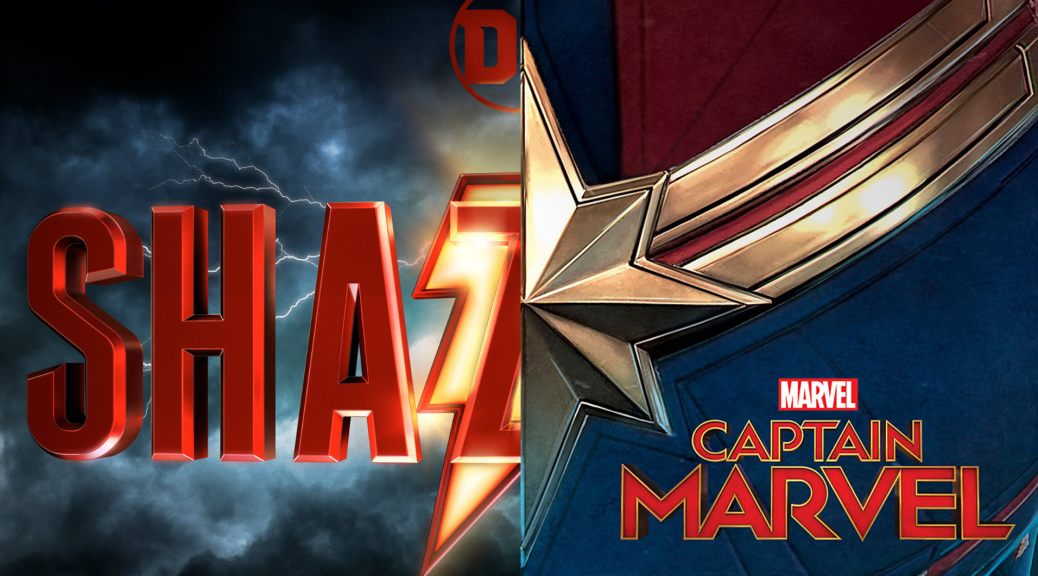
The history of the comics industry, with all its twists and turns, contains fewer stories more convoluted than that of Captain Marvel. A plethora of characters have held that title across multiple publishers, and there’s no way to tell the tale in a straightforward fashion. There’s even an extension to the Captain Marvel story that ropes in a British copy called Marvelman, comics’ greatest writer, and a slew of hard-fought court cases.

Given all of this complication, there must be some cosmic synchronicity at work in two versions of this storied character having their movie debut within a month of each other, in the form of Marvel/Disney’s Captain Marvel and DC/Warner’s Shazam! It might be a little spurious to compare the two movies, but it might also be a little fun and tell us something about the seemingly bloated state of the superhero movie genre right now.

Besides, when has being spurious ever stopped this blog before?

Continue reading A Tale of Two Captains

The Not-So Subtle Knife—The Favourite

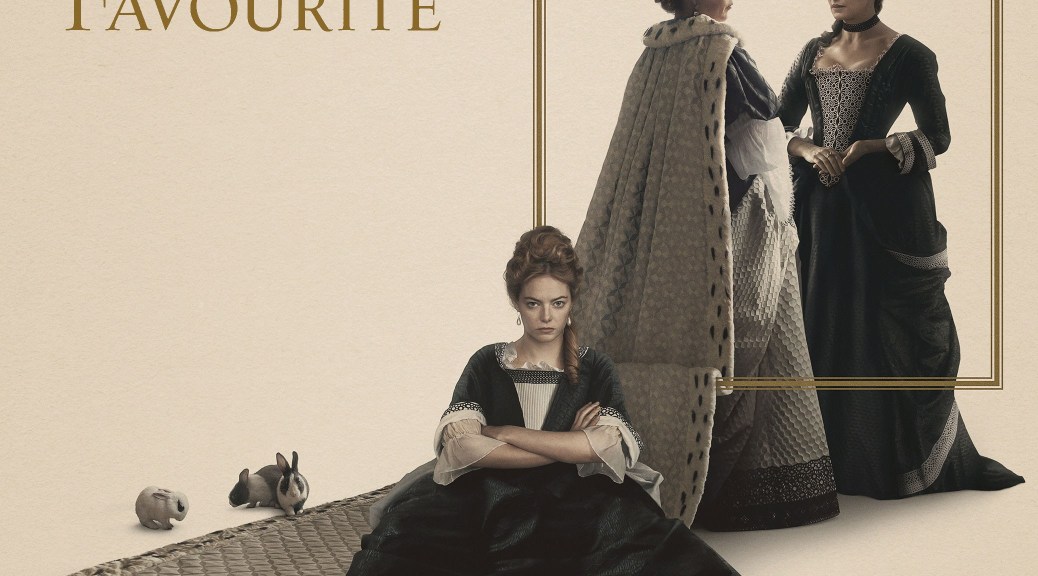
Do you have a favourite? Not just a best friend, though they can play that role. Perhaps a sibling or a spouse, someone whose judgement you trust, someone who knows you as well as you do yourself. Someone you could rely on so much that they could take over your life. What if the power you gave to this favourite was, effectively, power over an entire nation? What, then, if you found yourself with two potential favourites? What would that reveal about where the true power lay?

The Favourite*, the latest film from Yorgos Lanthimos, sees men play games of war and politics as women wield the real power.

Continue reading The Not-So Subtle Knife—The Favourite

Spider-Diversity

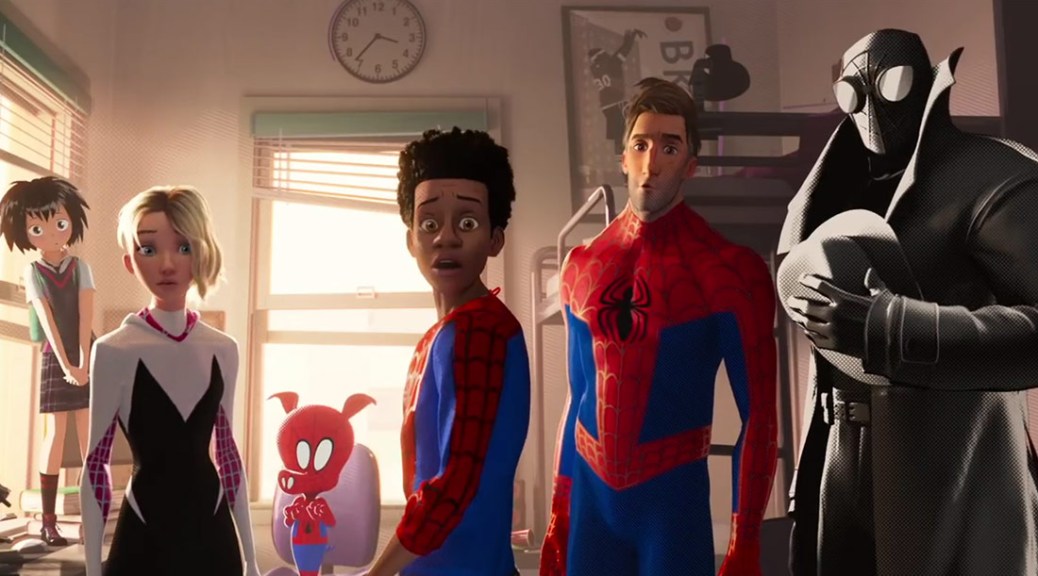
Anyone can be Spider-Man. It’s an unusual theme for a superhero movie, where the exceptional nature of the central character is usually the central point. However, Spider-Man: Into the Spider-Verse is an unusual superhero movie. Animated at a time when live-action superheroes rule at the box office, it’s currently struggling against the live-action Aquaman, but if there’s any justice, it will find success in the long term, because Into the Spider-Verse is a far more interesting movie and a fitting bookend for a superhero year that started with Black Panther.

Spoilers for the movie (which you really ought to go and see) below.

Continue reading Spider-Diversity

Aquaman—An Overstuffed Fish Taco

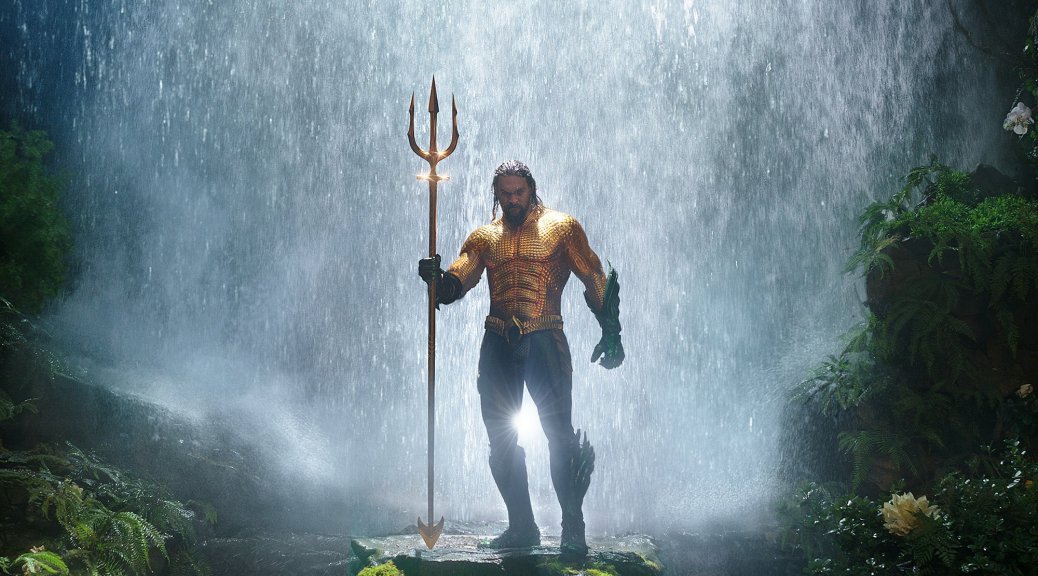
DC/Warner Bros.’s latest superhero movie, Aquaman, manages the impressive trick of being both too long and too short. Before you get to the end of it, you’ll have the feeling that you’ve been tricked into starting an epic series of novels, yet there’s also an ongoing feeling that the amount of story it’s trying to fit in exceeds the amount of minutes it’s prepared to devote to it.

(Spoilers beyond this point, but not too many.)

Continue reading Aquaman—An Overstuffed Fish Taco

A Long Time Gone


A picture of a dead whale. Because this blog is like a … never mind.

It’s been a long time, hasn’t it? Not that this was deliberate on my part. I had plenty of intentions of posting new and fascinating content, but circumstance and laziness always got in the way. I do intend to be better though. Thoughts about films, books and games will be forthcoming, and there will – in a not overextended period of time – be more travel journals. (Yes, that time of the year has come around again. I have become terribly predictable in my elder years.) In the meantime, a few thoughts on some of the media I’ve been consuming lately.

Mysterium: It’s a board game. Which is not something that I play enough of these days. (There’s a Tuesday evening boardgaming evening in the Black Sheep pub in Dublin that I’ve been making excuses for not going to for weeks now.) What sold me on Mysterium was the review from Shut Up and Sit Down, a site you should really be following. Boiled down to a brief description, it’s cooperative psychic Cluedo (Clue for Americans) and is as easy to play and strange as that description suggests. One player is a silent ghost who hands out vision cards to the gathered psychics; the others are those selfsame psychics, who must use those visions to solve a long-ago murder. Cue a lot of confused babbling about the exact meaning of the symbolism on the vision cards and exasperated gurning on the part of the Ghost, who doesn’t understand why they can’t figure it out. It’s a lot of fun, and most importantly you don’t need to be a boardgame veteran to play. Highly recommended.

(I also played Cards Against Humanity for the first time at a recent wedding (no, really) and proved beyond all reasonable doubt that I am a horrible person. Which is all that you need to know about that.)

The Just City: I burned my way through Lev Grossman’s The Magicians trilogy recently, having enjoyed the TV series to start with, so normally I’d be writing about that. But I’d been looking forward to reading Jo Walton’s The Just City for so long that it sneaks in ahead of it. The high concept – the goddess Athena decides to build the theoretical state from Plato’s The Republic as an experiment – is delightful, and the execution more than lives up to it. The viewpoint characters are chosen to pick apart the assumptions of privilege and precedent at the heart of Plato’s supposed clean-slate state, and while it’s no surprise when holes are poked in it, the manner in which it happens is consistently engaging. The second book in this series is already out, and the third is coming soon, and if they live up to the opener they’ll have a happy place for themselves on my bookshelves.

Stellaris: It’s been an odd year for games. This was the first of three games I was really looking forward to, and poor reviews for the latter two – No Man’s Sky and Deus Ex: Mankind Divided – have put me off splashing money on them until the next Steam sale. So in the moments between the vaguely social activities that are my forays into Lord of the Rings Online, I’ve been playing Paradox’s Stellaris, a mostly successful attempt to lift its grand strategy template into space and take the place of much-loved classics like Master of Orion. The opening stages of the game, as with all Civilization-style games, are the key draw, as you map out a galaxy for your new interstellar power (designed with plenty of freedom courtesy of the game’s engine), and the mid-game has improved with Paradox’s legendary post-launch support. As yet, none of my games have made it into the late-game phase, so I can’t really report on that (blame LotRO) but with larger patches and content expansions looming, I’m looking forward to seeing the game it becomes.

Film: Honestly, nothing I’ve seen in the past few months has really floated my boat. Which is a little depressing. Overhyped offerings are the order of the day in blockbuster season, and even those films that promise something more haven’t gone anywhere. There’s been no Mad Max: Fury Road this year, and while that’s a high bar to clear, it would be nice if someone at least got close. Or made the attempt.

So, that’s where I am right now. There are political thoughts (shudder) and other matters in my brain that may or may not get exposed in the three-and-a-bit weeks before I escape on another travelogue. In the meantime, my apologies for having been absent and my promise to be a little more present in the weeks and months to come.