Category Archives: Games

Shiny Happy Knightly People

20140614-145234-53554609.jpg

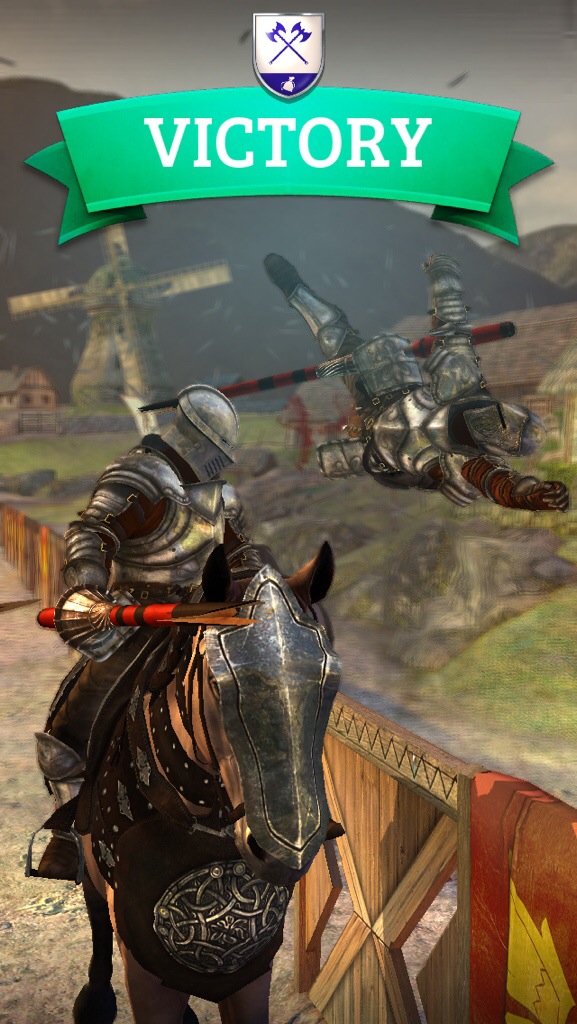
What does it take to make a game? Not all that much, it seems. Take a rhythm action section, consisting of eight taps on a screen, then add a few seconds of drag-to-target and voila! You have new free-to-play offering Rival Knights (Gameloft, iOS and Android).

Oh, all right, there’s a bit more to it than that. This game of jousting knights is deepened by an item (mail, helm, lance and steed) collecting element that improves your abilities, and it’s polished by some fine design, graphics, audio and physics. The latter element is particularly satisfying, as a successful strike sends your opponent ragdolling through the air.

Still, the core of the gameplay comes down to the joust itself, and given that each joust lasts around ten seconds or so and will be repeated many, many times by a player seeking to advance through the single- or multiplayer modes, it has to be refined to a high degree. Luckily, it is. While the mechanics can be made more difficult by the wrong equipment, they provide satisfying rewards for increasing expertise.

That equipment affects the three measures that decide who wins a joust. Armour is largely decided by mail and helm, though it, along with the other measures, can be boosted by a critical hit. Speed is based on your horse and modified through the rhythm-action segment. Attack Strength is based on your horse and modified by your accuracy in the targeting segment. Win two out of three and you win the lot.

Being a free-to-play game, players can spend some money to purchase in-game cash or the game’s premium currency: gems. Gems allow you to buy special equipment to get a head start in both game modes, though you can play with the standard items without feeling short-changed. You can also use gems to reset the timers that control how often you can play, though they fill quickly enough on their own. If you’re trying to hit the top of the daily leaderboards in the multiplayer mode, though, spending gems gained either in-game or through purchases might sound appealing.

So we have some simple, yet rewarding, game mechanics at play and a relatively nonintrusive payment system. What really sets Rival Knights apart is the amount of detail and polish Gameloft has lavished on it. The graphics are top-notch, and though there’s only one jousting field, differing times of day and weather conditions (none of which have any effect on the gameplay) boost variety.

Even more variety comes through the equally attractive equipment you can collect, which extends to designing your knight’s coat of arms. I’m getting into the third of five tiers of the single-player game and there are still plenty of opportunities to mix and match equipment to find a successful blend of armour, speed and attack strength. Even lower-tier equipment remains useful in the multiplayer mode.

Still, it’s not a terribly deep game, just a fun one. The multiplayer mode relies mostly on daily leaderboard challenges, with an asynchronous knock-out competition offering some secondary fun. It’s a bit loose and while it offers rewards to dedicated players, it’s not as big a draw as the single-player mode yet. Worse, the networking behind the multiplayer is pretty flaky at the moment. While this will probably be smoothed out soon, it’s annoying right now.

The only real worry I have with regard to the game is the impact of all that shiny graphical wonder on my iPhone’s battery. Sure, it looks beautiful on an iPhone 5S, but the way the phone heats up proves just how hard its graphics chip is being pushed. As a result, playing regularly through the day is going to burn through your charge. So while you might enjoy the life of a knight on the tourney circuit, it’s best not to stray too far from a plug socket while you do so.

Tiny Death Star

20131118-150036.jpg
It’s a hard life as building manager of the Death Star…

Nimblebit, iOS, Free

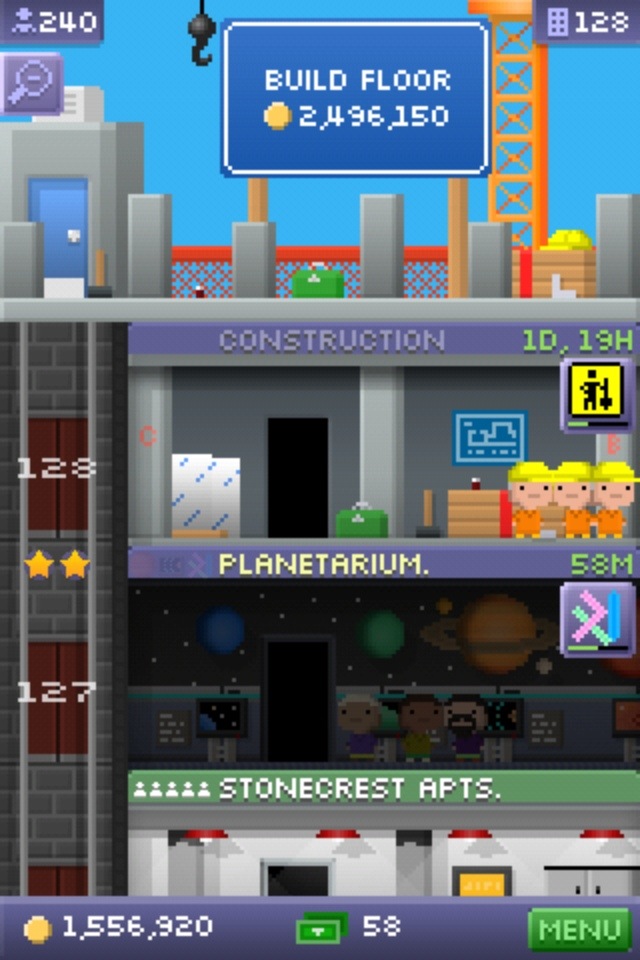
It’s a mark of how watered-down Star Wars has become that Tiny Death Star even exists. The villains of the original trilogy, a bunch of faceless, menacing, planet-destroying quasi-fascists are here rendered down into cutesy 8-bit form, as you’re asked to fund the construction of the planet-destroying battle station by turning it into a residential/commercial emporium.

Yeah, someone didn’t put a lot of thought into that. Best to just roll with it.

Tiny Death Star is, of course, a reskin and slight reworking of Nimblebit’s hugely popular Tiny Tower, taking the basic mechanics of building a tower block and filling it with inhabitants and things for them to buy and tweaking it for a kiddiefied version of the Star Wars universe. As such, anyone who’s played Tiny Tower will find themselves right at home. However, they may also find themselves uncomfortably constrained.

The big draw of Tiny Death Star is the Star Wars ambience, and the game sprinkles it around liberally, with famous figures from the movies roaming the levels of your growing battle station, sometimes incongruously so. Fittingly, the soundtrack also consists of musak versions of famous Star Wars themes, though these soon enough grate through repetition alone.

Tiny Tower’s gameplay has also been tweaked in several ways. In addition to the standard residential and commercial floors, you can also build Imperial levels, which allow you to complete missions (about which more later). Since these levels don’t make you money though, this slows down the process of building new levels, which was already slow in the original game.

Of the game’s two currencies, then—credits and bux—the former, used to build and stock new floors, comes more slowly than before. Not half so slowly as bux though, which are used to buy elevator upgrades and hurry various other aspects of the game. As purchases of bux are the main form of in-app purchases the game offers, it’s understandable that Nimblebit have chosen to strangle in-game opportunities to earn them, but in doing so they’ve also strangled the sense of progress for players who don’t want to spend extra coin.

Providing at least a modicum of variety to gameplay that strays close at times to Ian Bogost’s Cow Clicker (click on things to earn more things, then click on them to earn yet more things) are the missions, provided by Darth Vader and the Emperor. Both provide credits as rewards, but although the Emperor’s missions are designed to guide your construction efforts, the rewards are meagre. Vader’s missions are slightly more rewarding, but I ran into one that required me to build a specific level (the game chooses which levels in a specific category are built at random), stalling any progress in that direction.

In the end, this is a Star Wars game, offered for free. If that appeals to you, go for it. But be aware that unless you’re willing to pay up, it’s going to present you with a choice between a long, hard slog and an escape route from this doomed battle station.

It’s About Time for Zombies

20130822-141527.jpg
Part of the Pirate World in PvZ2

Plants Vs Zombies 2, Popcap, iOS, Free

No game on my iPhone engaged me as long or as deeply as the original Plants Vs Zombies. A tower-defence game blessed with an abundance of humour, impressive cartoon visuals and a catchy score (including the best end credits song since Portal), it also had the benefit of a developer that continued to enhance and upgrade the game for several years after it came out, with new game modes and other add-ons.

Well, the sequel has finally landed, in the form of Plants Vs Zombies 2: It’s About Time, a punning, double-meaning subtitle that reassures fans of the original that the same twisted brains are still in charge. The big change this time around is that PvZ2 is free-to-play. The game itself comes without charge, but players can decided to pay more for extras within the game itself.

Free-to-play is rightly viewed with some suspicion. It’s a new business model for the games industry, and earlier efforts to make it work have resulted in crippled games that frustrate players. Luckily, PvZ2 takes another tack: the game offers an abundance of content, all of which can be accessed for free, but players can spend some coin to make their passage through the game easier or to buy some new plants to improve the variety of the experience.

As far as gameplay goes, the winning formula hasn’t been altered: the player places plants on the left of the screen and zombies attack from the right in waves of increasing intensity. There are some new elements thrown in, such as new plants and new zombies, but if anything the variety is a little bit down compared to the state the first game reached with all its expansions in place.

Tweaks have been added to the gameplay in the form of new special powers. Plant food supercharges plants temporarily and coins can be spent to activate special powers that will squish, electrocute or fling zombies offscreen. For an old-school player, these powers can seem a little like cheating, but the game is balanced so that while plant food is often necessary, the special powers rarely are. However, the in-battle currencies of plant food and coins do add complexity to a game laden with currencies (the familiar sun for buying new plants, stars for completing new levels and keys to unlock new routes).

These routes are the big change in the presentation of the game world. The first game took place in a back yard, by day and night, with a pool and without, and occasionally afflicted by fog. The player progressed from level to level, in a linear fashion. In PvZ2, the game is split into three worlds (Ancient Egypt, Pirates and Wild West, with an upcoming Far Future world having been announced). Each one is completed by following a linear path, but keys gained during battles allow the player to unlock side paths and gain extra plants and abilities thereby.

It’s a slightly more graphically intense game than the old one (only iPhone 4 and above need apply), and the graphics designed for retina displays take a little adjusting to, but everything is in order gameplay-wise. It’s as addictive as the old game—I’ve already completed the first world and made my way through part of the second, at a time when I really shouldn’t be playing games (or writing reviews of them).

The one niggle I’d point out? Although the side routes in each game world do offer different challenges akin to the mini-games of the first game, there’s no way to tell which one is which from the isometric world map. It’s a bit of an odd design decision, and one that I suspect will be fixed in further updates. If nothing else, Popcap’s reputation breeds confidence in the fact that this will be a well-supported game for a long time to come.

Recommending this game is a no-brainer (ahem). For no money at all, you get the same great gameplay of the original PvZ, and you can happily play through it without spending a penny. My only worry is that a lot of people will do just that, and that PvZ2 won’t be the financial success it deserves to be. Because, honestly, we could all do with more games like this.

(A quick reminder to clarify: the Android version of PvZ2 isn’t out yet, but it isn’t likely to differ too much from the above.)

A Game of Words

20130716-120344.jpg
Early days on the French language tree.

Duolingo (iOS and Android, Free)

My several years of iPhone experience have seen me fall prey to a number of apps. Addiction to horticultural zombie escapades, miniaturised high-rise management and Indiana Jones-style sprinting have all proved fun, but I wouldn’t have called them beneficial. Well, now I may have found an app that is both addictive and good for me.

Duolingo is a language-learning app, based on the web site of the same name. The concept behind the service is a simple one: crowdsourcing humanity’s efforts to learn new languages by getting them to translate web content. Because the learners are providing a service, the learning experience is free.

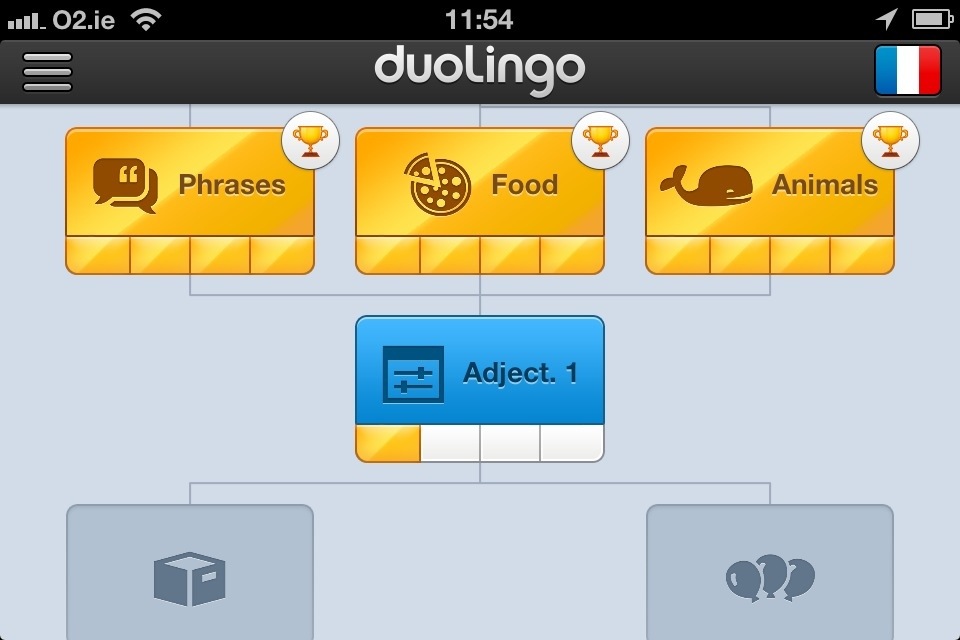
Of course, having a free service doesn’t mean much if the experience is no good. Luckily, Duolingo’s app doesn’t fall down on that score. It sports a clean, colourful design that’s both welcoming and easy to understand. Each language is presented as a tree of connected lessons that users progress through at their preferred pace, from basic comprehension to complex concepts.

Lessons consist of 20 exercises, each taking no more than a few seconds to complete, with four or more lessons grouped into themed nodes (food, animals, adjectives, etc.) on the learning tree. As a barely competent reader of French, the early lessons in that language were a useful refresher for me, but if I’d wanted to jump ahead, each node offers the chance to “test out” and complete the whole thing in one short lesson.

Gamification elements are put to good use here: users get three hearts per lesson, so they can make three errors before a fourth requires them to start over. Completing a lesson earns a users points and builds their in-app vocabulary, and the number of consecutive days they’ve been playing is recorded. The intelligence behind the app seems well tuned thus far, and will point out certain errors, like misplaced accents, but not penalise users for them.

One of the big problems with learning a language (and maintaining that knowledge) is the issue of practice. Duolingo covers this too. First by offering users the chance to strengthen the skills they’ve already earned and second by providing a leaderboard so they can compare their acheivements with their friends. I can’t speak to the success of the latter as yet, but it’s another example of game mechanics intruding beneficially into the non-game world.

The Duolingo app is comprehensive in its treatment of the five languages it covers (French, German, Spanish, Portuguese and Italian) and demonstrates a wealth of thoughtful touches in its design. One feature I’d love to see is a searchable vocabulary of words in each language, but as a relatively new app, there’s bound to be more to come from this initiative.

Puzzle Craft – Slim but Beautifully Made

20120902-200317.jpg
A fully-loaded settlement – a far cry from what you start off with.

The recipe for making a game that profits through microtransactions is ostensibly a simple one: provide an enjoyable activity for players and then throw in a few difficulties that they can ease through small purchases. The trick lies in finding the balance between fun and hardship. Too easy and there’s no reason for anyone to reach for the microtransaction button; too hard and players will feel that they’re being gouged.

Right from the start, the iOS game Puzzle Craft (€0.79) from Chillingo gets two things very right. First the name: puzzle games are perfect for smartphones and tablets, and the “craft” suffix has worked for some major properties (World of Warcraft and Minecraft most obviously). Second the art, which is a luscious spin on the Euro boardgames style, with tiny, characterful workers and cartoonish buildings. However, when it comes to gameplay, it errs (perhaps understandably) on the easy side of the microtransaction equation.

The goal of the game is straightforward: collect resources to build your settlement up into a city, complete with castle. The resources are collected by dragging your finger to link up groups of tiles on two 6×6 grids, representing a farm and a mine. Both cash and resources can be used to hire workers, craft tools and construct buildings, introducing higher-level resources and easing the process of building up their stockpiles. The game is generous with its handouts, and the core mechanic of linking resources will stick in your brain when you put the game away for a while.

The problem (apart from some serous bugs that have supposedly been squashed in the latest update) is that there just isn’t a huge amount to do at the moment. The only current element to the game, the “campaign mode”, in which you build up your settlement to a city complete with castle, isn’t going to last for more than a week. Worse, there isn’t much challenge to be had along the way. The lack of a need to reach for microtransactions isn’t wholly a bad thing: this isn’t a free game, after all, and €0.79 for a week’s worth of fun is a decent deal.

Further content is promised, though exactly what that might be isn’t clear yet. Hopefully, it will provide a little more challenge and add some replayability and a social aspect. For the moment though, picking up this game will deliver a gentle, slick and appealing city-building game that you’ll come back to again and again as long as it lasts.

Pocket Planes: Fly the 8-bit Skies

20120629-112120.jpg
Flying out of Baghdad – generally considered a questionable idea…

Not too long ago, in a review of Tiny Tower, I commented that the publisher, Nimblebit, may have missed a trick in not selling out to Zynga, which proceeded to photocopy its game when rebuffed. As addictive as Tiny Tower was, it was an ultimately shallow experience, with most of the enjoyment coming from comparing towers with your friends. Well, I may have been worried prematurely, for Nimblebit’s follow up to Tiny Tower, Pocket Planes, is in an entirely different league.

Instead of building a skyscraper and filling it with stores, apartments and occupants, Nimblebit now asks you to craft a globe-spanning airline, starting from a handful of airports and a few rickety planes. It might seem obvious, but the premise of the game permits it much greater depth than Tiny Tower, as you actually have to think about how you expand: go for cheap airports for quick cash or save for more expensive ones and build for the future.

Some Tiny Tower mechanics are carried over: the whimsical 8-bit graphics and tone, and the “bitizens” that fly with your airline. There are still two forms of currency as well: cash for building and upgrading airports and “bux” for purchasing new planes and hurrying your flights. You can purchase bux for cash through the game, but there’s nothing you need to spend money to achieve. All it costs you is a little more patience.

The main substance of the game comes in routing flights of bitizens and cargo from one airport to another: the further the flight, the more money you make, and if you can fill a plane with items for a single destination, you’ll get a bonus. Meandering flights will make you less money (or even cost you money), so some strategic thinking when purchasing airports will pay off in the long run. As your airline grows, you’ll purchase airports further and further apart and faster planes with longer ranges to connect them. In turn, you’ll need to concentrate on higher tier airports that can support those planes.

There are plenty of achievements to pursue, unlockable items to collect, upgrades to pay for and cosmetic changes to tinker with. As for social elements, there’s both a step forward and a step back from Tiny Tower. The ability to view your friends’ efforts has been lost, but in its place there’s a chance to cooperate as part of a “Flight Crew” sharing a hashtag to achieve particular tasks in-game and win bux and special aircraft. It’s a little less personal, but it offers new content every few days, and novelty in a game like this is an important feature.

Pocket Planes isn’t perfect: it’s still a little buggy, with a tendency to quit quite often and an odd Flight Crew glitch that delivered me way more bux than I’d actually earned. The Flight Crew mechanic is also somewhat compromised by the fact that the #toucharcafde hashtag is by far the biggest anywhere. Still, Nimblebit will undoubtedly patch the game until it works smoothly, and for a free offering, there’s a huge amount of content in here. Whether I’ll follow it as far as I did with Tiny Tower, a game that burned out my obsessive-compulsive habit, I’m not sure. However, Pocket Planes is a far superior game to its predecessor and well worth trying out just to see if it suits you.

Tiny Tower – An Addictive Experience

20120412-104429.jpg
The tip-top of my Tiny Tower.

Tiny Tower on iOS isn’t so much a game as it is a drug for obsessive-compulsive completists (people like me, in other words). As is the way with most drugs, I was introduced to it by a friend, and even though they’ve had the sense to wean themselves off it, I haven’t quit just yet. Maybe tomorrow

The purpose of the game is to build a tower up to the heavens, filling it with shops and apartments full of “bitizens”. The 8-bit graphics are almost terminally cute, and there’s a quirky sense of humour at work, but just how much game is there here?

The game itself runs on two currencies. The first, money, is used to build floors and stock shops and can be gained through selling goods from those shops and giving lifts to bitizens. The second currency, towerbux, is used throughout the game to speed up the sometimes slow process of stocking floors and gaining new bitizens, as well as to spruce up floors with new paint jobs and bitizens with costumes.

Importantly, players can purchase towerbux for real money, which is where the profit part of the equation comes in for the developer NimbleBit. It’s perfectly possible to play without ever paying for towerbux, and the more attention you pay to the game, the more towerbux you’ll pick up from in-game sources, such as completing tasks and fully stocking floors, but in order to make towerbux an attractive option, the game has to tweak players’ impatience, and it does so by getting slower and harder to build floors as it goes along.

Most of the fun to be had with Tiny Tower comes early in the game, when you get to add a few new floors every day. There’s a basic community element too, which uses iOS’s Game Center to show your friends’ progress. However, as the pace of the game slows (at the moment, I get a new floor slightly faster than every other day) there’s not much attachment to your tower or bitizens to keep you coming back. Worse, the ability of towerbux to speed your progress diminishes, making them less appealing right at the moment a player might want them most.

There was a lot of fuss not long ago about Zynga’s decision, after being rebuffed in an attempt to buy NimbleBit, to simply copy Tiny Tower wholesale for their own game Dream Heights. Whatever the rights and wrongs of that kerfuffle, I can’t help feeling that NimbleBit missed a trick. Tiny Tower was the iOS game of 2011, but the two main wikis on it haven’t been kept properly updated. Perhaps selling at the height of the market might have been a good idea?

At the moment, this obsessive-compulsive completist is still playing, mostly because I want to get all the available floors. Which, at my current rate of progress, will take perhaps two more months, assuming that NimbleBit don’t release yet another update adding a batch of new floors. Is it really a game? I’m not sure, but I’ve had fun with it. I’m just not sure that I’m still having fun with it.

Mass Effect 3: Endings are Hard

20120326-001932.jpg
Not Vancouver’s best day ever…

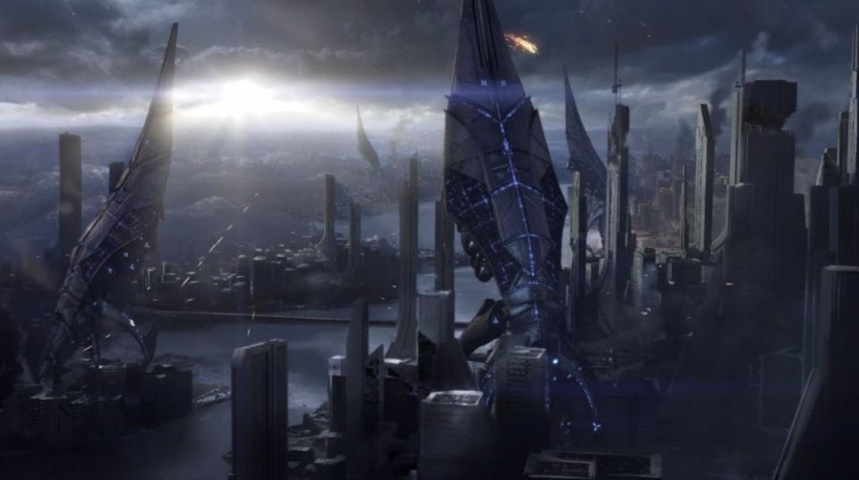
The biggest game release of 2012 so far has come and gone, trailing controversy in its wake. Fans of the Mass Effect series have been enraged by what they see as a substandard ending for Bioware’s space opera magnum opus and have raised a lot of noise (and money) about it. I’ll talk a little about the ending later, but if you want deeper, more philosophical, design-oriented takes on the ending, you can read them here, here, or here.

In any case, if you have an interest in Mass Effect 3, beware of SPOILERS from here on in.

The first thing that you have to realise about Mass Effect 3 is that it’s all pay off. Unlike the first two games, where you had an abundance of side-quests to distract you as you pursued the main plot, here all of those smaller missions contribute to the main plotline. And if you’ve played through the previous two games in the series, it’s massively satisfying, occasionally heartbreaking and once or twice hilarious as it brings to a close the stories of the richly drawn characters who have accompanied you through the series. Which is not to say that there’s nothing for newcomers: the lengthy intro to the third instalment ably sets up the players and the stakes, but you won’t get the full effect if you’re coming in fresh.

As far as gameplay goes, Mass Effect 3 represents a bit of a step back from the streamlining that took place between the first and second games. The combat feels more fluid than ever, if significantly more finicky, with controls that are apt to put you in the wrong place if you get too enthusiastic with the key/button presses. With increased weapon and armour options, there’s plenty for you to tinker with too.

The sense of everything you do having an effect on a galactic war does lend weight to the decisions you make, and fittingly Bioware has the central Shepard character show the stress of the losses and compromises required to make that war winnable. (This sense of player agency is somewhat undercut by the fact that unless you play the game’s multiplayer mode or use the clunky Mass Effect Datapad smartphone app, it can be much harder, if not impossible, to reach the very best conclusion.)

So, anyway, onto that ending. And, in case I didn’t say it loudly enough before, SPOILERS.

The ending, by which I mean the final few scenes, draws on two main sources, one good and one iffy. The first is the original Deus Ex game, where the main character is presented with a choice that will change the world (and apart from scale, the choices presented in Mass Effect 3 are identical). The second is The Matrix Reloaded, where a heretofore unsuspected god in the machine reveals himself and offers the main character an insight into the true reasons behind the conflict they’ve participated in.

Now, I’m a completist. I scoured every inch of the galaxy in all three games, and I only found one hint, late in the third game, that there was some director behind the massive threat of the Reapers. So there was a lack of impact to him when he showed up. Secondly, of the three choices you’re offered, one of them is barely explained, even though it seems to be the preferred option from the designers’ point of view. So on the front of emerging from the choices that the character has made and the story that he or she has experienced, the ending falls short. However, I do love the fact that all three choices in the ending adhere to the theme of sacrifice, either of yourself or of at least one friend and possibly an entire race, in order to ensure the galaxy’s future.

Anyone who’s tried to put together a compelling narrative will tell you that endings are hard. Providing a pay off for a story as big as Mass Effect was always going to be a massive task, and I can see where Bioware wanted to go with the ending: consequences at a scale appropriate to the tale being told and a sense of closure to Shepard’s personal journey. However, Peter Jackson spent half an hour on the ending/epilogue for his Lord of the Rings trilogy, so fan disappointment at the two brief cut scenes that round off the Mass Effect series is understandable.

Still, that doesn’t mean that the final game in the series isn’t worth playing. It’s a compelling, finely crafted narrative wrapped up in a polished storytelling and gameplay engine, and it’s done horrible things to my productivity over the past week. Even if it doesn’t spot the landing perfectly, it still engages and enthralls throughout its performance and is worthy of the high scores that it’s been getting.

The (Necessary) Hole in the Heart of the Mass Effect Experience

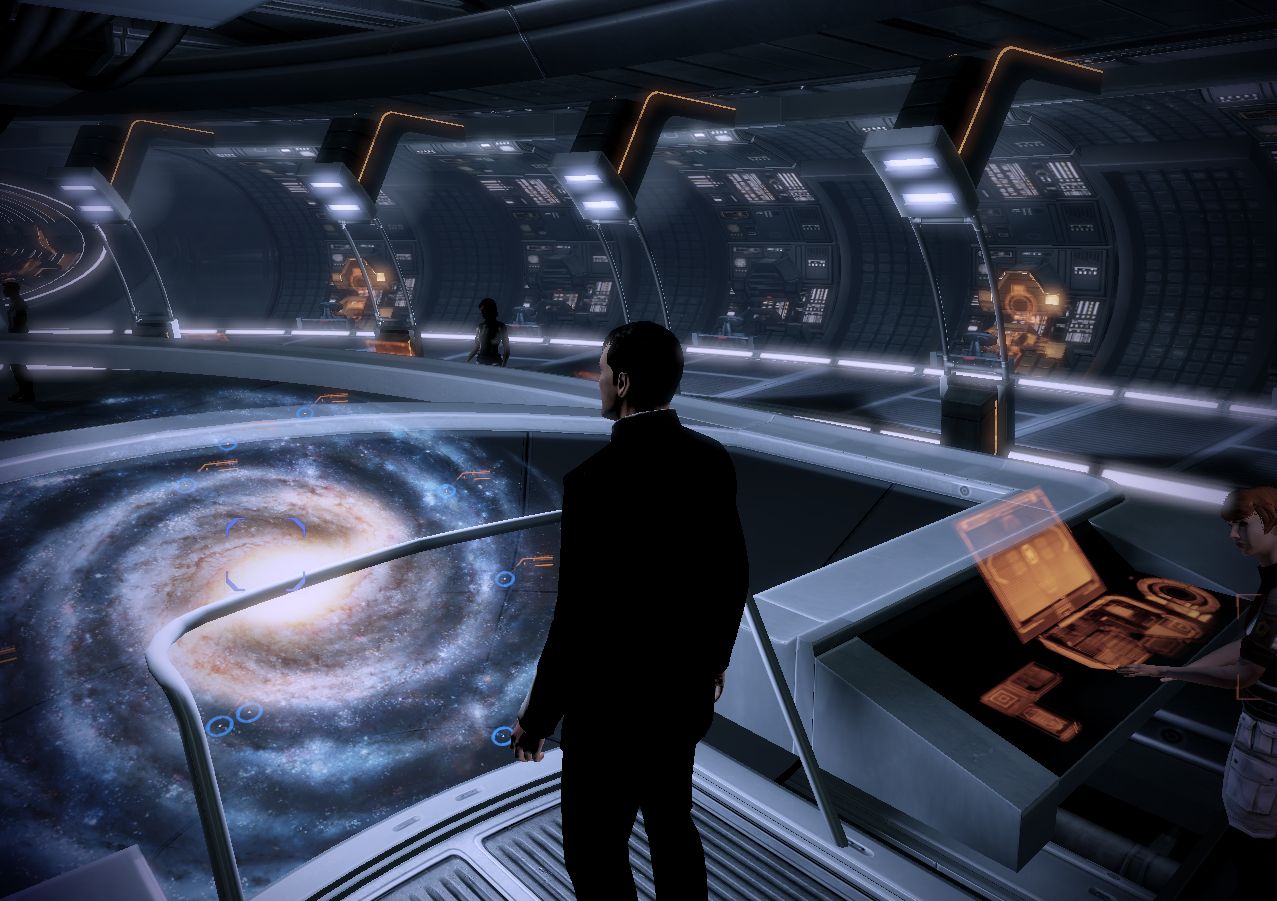
Shepard's Bridge is much better-looking than Picard's.
The galaxy's out there waiting for you. If you have a really nice starship, that is.

(This is the first in what will hopefully be a series on computer games and how they do or don’t tell stories.)

In honour of the fast-approaching due date of Bioware’s Mass Effect 3, the culmination of its space opera epic, I’ve been replaying Mass Effect 2 in an effort to polish up my save game. Replaying the entire title gave me a second chance to appreciate just how good this game is. It’s not without flaws, but as a combination of action, character, setting and story, it’s hard to think of any titles that approach, let alone match it. Except that there’s one niggling gap in the experience, and it’s constantly under the player’s eye.

I’ll skip over action: I play games for story and experience and leave twitch games to those with better hand-eye coordination and reflexes. When it comes to rich fictional settings though, Bioware have an excellent track record, and they’ve crammed as much as they can in here. The galaxy presented to the player is rich, varied and deep, with plenty of corners to explore, and the only potential frustration is that it’s much less free-roaming than the Elder Scrolls or Fallout games from Bethesda.

The characters who accompany the player on their quest to save the galaxy are simply a joy. Richly detailed, flawed yet capable, you aren’t so much presented with them as you are offered a chance to get to know them. The life that they have comes from two sources: quality design, voice and motion capture work and a mass of thoughtful detail put into their backstories, even if you’re only partly aware of it all. My view of one character in particular was shifted appreciably by an easily overlooked text file found lurking in a data vault in a piece of downloadable content. Now that’s attention to detail.

Which brings us to that gap I mentioned. Among this cast of real characters, the player’s avatar, Commander Shepard, is a plastic everyman (or woman). Not only is the Commander’s gender flexible, but his history is virtually a blank sheet, his ties to the rest of the universe loose at best, and his abilities and opinions subject to the player’s whim. It’s fair to say that the ship he cruises the galaxy in, the Normandy, has more character than he does. In fact, like the Commander, it was reborn bigger and stronger in the second game, and with a literally new personality.

The Commander’s lack of identity is part of a problem that’s plagued makers of computer RPGs for years: the more you define your main character in a story-based game, the more you take agency away from your player.(1) The recent Deus Ex: Human Revolution was a wonderfully polished revival of a well-loved series, but there were times when you felt like you were just hitting one checkpoint after another as you followed the story of the pointy-chinned hero: your choices were limited to just how violent you wanted to be in reaching each checkpoint.

Japanese-style RPGs, such as Final Fantasy, seem happier to establish your character in advance of the game, but their western counterparts tend towards the blank slate approach: the player creates the character then unleashes them on the world to participate in a the story. Bioware itself wrestled with this problem in its Dragon Age series: the first game gave players a multitude of options as to who they could be, the second narrowed down that scope dramatically and suffered for it.

Outside the realm of the pure action offering, games work best as story creation, rather than story experience, engines. With Mass Effect, Bioware have created a galaxy full of secrets and characters, presented the player with a massive problem to solve and then let them go about it. Of course, the path that they can take to do so is limited, but the key is to create the illusion of freedom, and a big part of that is allowing the player to be the hero they want to be. In this way, Bioware and the player collaborate to create a more immersive story than Bioware could create alone: they’ll care more about the deeds and relationships of a character they identify with than they will about one presented to them fully formed.

By allowing the player’s choices to feed over from one game to the next in the series, Bioware have deepened the impact of the story they’ve created. I’ll be interested to see how all this pays off in Mass Effect 3. At least now I have the perfect save game to start the experience with.

(1) This trend was ably dissected and toyed with in Black Isle’s seminal Planescape: Torment, wherein the player is an amnesiac everyman, who repeatedly dies and has to deal with the choices made in past lives. The point made there is one of self-determination, in which the player has to actively consider choices made and understand their morality, yet has the freedom to choose any path, regardless of moral right or wrong.