Sicario is a beautifully shot film, orchestrated by director Denis Villeneuve and master cinematographer Roger Deakins. It has a fine script, well acted by the cast, with Emily Blunt and Benicio del Toro standing out in the leading roles. As much as I appreciated it, though, I didn’t enjoy it. Why not? Because it’s also an unremittingly bleak film, with nary a chink of light to be seen.
Honestly, the idea of exploring Mars in this is as appealing as anything in the film. (from gadgets.ndtv.com)
The Martian has been out for a week, and it looks like it’s not just a box office success but a big one. It’s just what’s deserved for a film that marries Ridley Scott’s visual genius to a clever and intelligent (not the same thing) script, delivered via Matt Damon’s leading-man charisma and a stellar supporting cast. As popcorn entertainment, it’s the best thing since Mad Max: Fury Road (which, okay, wasn’t that long ago, but that will become an actual classic).
Charles Bridge, somewhere near sunset.
My preferred method of exploring a city is to start walking and only change direction whenever I see something more interesting down another street. Were I to try that in Prague, I would end up walking in spirals, or in an endlessly zig zag pattern. In Prague, there’s always something more interesting around the corner. This is a city that’s as close as any I’ve seen to the clichéd fantasy medieval metropolis.
There are the endlessly winding cobbled streets, with tiled rooftops packed so tightly overhead that guilds of thieves could conduct entire wars up there with no one below being any the wiser, save for the occasional corpse-cobble impact incident. There’s a town hall with an overly ornate astronomical clock, complete with clockwork mannequins. (The story goes that the designer was blinded once he finished so he wouldn’t go on to make a better one.)
Other clocks are available, and probably easier to read.
There are legends and stories galore surrounding the city, from poor old Jan Hus, who put too much trust in princes, to the golem that once stalked the Jewish quarter. Best of all, there’s the Defenestration of Prague, which manages to use one of my favourite words in its title. (Seriously – how much more fun is it to say “defenestration” than “thrown out of a window”?)
There’s a centuries-old bridge lined with statues of saints and divinities, across a river that’s home to an entire flotilla of swans. There’s not one but two hilltop citadels overlooking the city. Prasky Hrad, with its Gormenghast-like scale and complexity, and the over-the-top gothicness of St. Vitus’s Cathedral, gets all the press, but I’m partial to the more ancient Vyšehrad, which is mostly a shell these days, but is lovely to wander through and offers great views of the Vlatva River and Prague itself.
The Vlatva, looking south from Vyšehrad.
There’s even a hill hard by the city that’s swathed in an encroaching forest and hides not only a monastery with an ancient library but also a wizard’s tower that peeks through the treetops and has a labyrinth at its base.
All right, so the tower is a copy of the Eiffel Tower and the labyrinth is a maze of mirrors, but wizards are noted for their lack of originality. I doubt the average medieval inhabitant of Prague would have quibbled over the details before reaching for the nearest pitchfork and joining the local mob.
It’s a city for losing yourself in, then, as I’ve done for the past few days, the high point of which was when I found a store selling replica Viking arms and armour. For a good five minutes, I considered attiring myself in a manner befitting a Norse adventurer and taking ship down the Danube to the Black Sea and seeking service as a Varangian Guard in Miklagard/Constantinople.
Sadly, dreams of adventure and fantastic vistas founder when they hit the hard rocks of reality. Even as I’m enjoying my travels throughout Europe, a group of far more desperate travellers are trying to head in the opposite direction. The “tide” of refugees entering Europe is much in the news at the moment, often to heartbreaking effect, and while I’m currently on my way to Vienna, my plan is to be in Budapest, the current flashpoint of the crisis, in three days.
That may change, but even if it doesn’t, it forces me to think about why I’m travelling – this experience of cities and nations I’ve never been to before. How much worth does my indulgence hold against the desperate need of others, exemplified in the huddled form of a small boy washed up on a lonely beach? Are they comparable? Or even relatable? And what can I do?
I only have the beginnings of answers for any of those questions. I doubt that one traveller can make much of a difference, or learn everything he’d need to in the space of the two weeks I have remaining. The one thing I do know is that if I close my eyes, I’ll learn nothing. So I’ll keep travelling and see what answers I can find.
Depending on who you believe, the wearables revolution is underway, has not yet started, or has already failed. While I don’t wholly agree with any of those viewpoints, the fact that I’m now on my second smartwatch does suggest that I don’t agree with the last.
Those who follow this blog and are aware of my devotion to the Cult of Mac may be surprised to learn that my new toy isn’t an Apple Watch. Those who follow this blog in slightly closer detail might be able to guess what it is: a Pebble Time. Several years ago, in one of my early Kickstarter forays, I stumped up for a first-generation Pebble smartwatch, which adorned my wrist for all of a month or two.
Its short lifespan wasn’t down to the fact that it was a bad product. Beyond being a first-generation device (part of my reason for eschewing the Apple option this time) with somewhat dodgy Bluetooth wireless and limited functionality, its only major flaw was that it was uncomfortable to wear for long periods of time. Unfortunately, that’s also why it was in my pocket instead of on my wrist during a fateful bus journey, and the fact that it fell out of the pocket somewhere was entirely my fault, not the watch’s.
But enough of my ongoing habit of losing things (which seems to come in waves – whenever I lose one thing, I known that at least two more will vanish in the short-term future), what of the Pebble Time? Well, the first thing to note is that it’s much more comfortable to wear, with a slightly curved back to the watch body and a much improved rubber strap. While I’ve had to take it off for comfort reasons a few times, this has been the result of sweating due to exertion, not general day-to-day use.
So score one for the Pebble Time there. In addition, the straps now include easy-release clips that, while not as clever as the Apple Watch’s high-end version, allow access to a full range of standard-gauge watch straps.
In fact, the Pebble Time is a solid version 2.0 in a lot of ways. A colour e-ink screen replaces its monochrome predecessor, the Bluetooth connection seems much more solid, the vibration function is hard to miss, and the build quality overall seems much better, with buttons that avoid feeling too spongy despite being plastic. My gunmetal grey version has picked up a few scratches after a month or two of use, but stumping up a little more money for the Pebble Time Steel could gain you an even more polished experience.
In use, the Pebble Time is easy to figure out. Hit the single button on the left of the watch to navigate backwards to the home (watchface) screen. Hit the centre right button to dive into and select menu options and the buttons above and below it to navigate up and down through lists. Changing settings, accessing apps, changing watchfaces, etc. are trivial tasks. To actually install apps or watchfaces, you’ll need the companion smartphone app, but once installed, they can connect to the phone via a Bluetooth connection for extra processing power. Pebble’s own app store, accessible via the smartphone app, makes installing new apps easy, but finding the app you want can be tricky, as the browsing experience feels a little haphazard.
As with any smartwatch, the Pebble Time is reliant on its connection to a smartphone. Lacking that, it can tell you the time and offer access to any standalone apps that you’ve installed, and not much more. A connected smartphone offers instant access to weather, music, and more advanced apps. For example, I’ve installed the Tripadvisor app, which can point me towards nearby restaurants or attractions, should I so desire. It’s limited, but the interface is responsive and fun to use.
In fact, fun is a good description of the Pebble Time overall. The Pebble team seem to have put a lot of thought into making their device as easy to use and enjoyable to own as possible. For example, there’s no need to install an app to use the Pebble Time as an external display for Runkeeper’s smartphone app—it happens automatically. This good user experience is further helped by the Pebble Time’s battery life, which will stretch out to five days. Changing your watchface to one that displays the battery level will help you keep an eye on that, but it’s far ahead of the Apple or Android watches in this regard at least.
Some commentators have raised concerns that transferring notification from the phone to the wrist just makes us even more tied to that “always on” mentality. The reality has proven very different: an initial flood of notifications trained me to turn off any that weren’t vital. Moreover, even though vibrations on your wrist make notifications hard to miss, it’s it’s far quicker and easier to dismiss those notifications by glancing at summaries of them on a watchface than by digging your phone out of your pocket or purse to see what they are. Yes, notifications probably aren’t wholly a good thing, but if you’re going to opt in, this is the way to go.
I haven’t tested the limits of what I can do with the Pebble Time yet, having only installed a couple of apps and watchfaces. Though far less powerful than the Apple Watch or its Android competitors, the Pebble Time offers plenty of variety in terms of what it can already do. Everything that I have experienced with it so far has made me pretty happy with my purchase. The cluttered app store is the only minor fly in the ointment, whereas everything else is pleasingly smooth.
The grand “what might have been.” The eternal tale of how life is. Image from here.
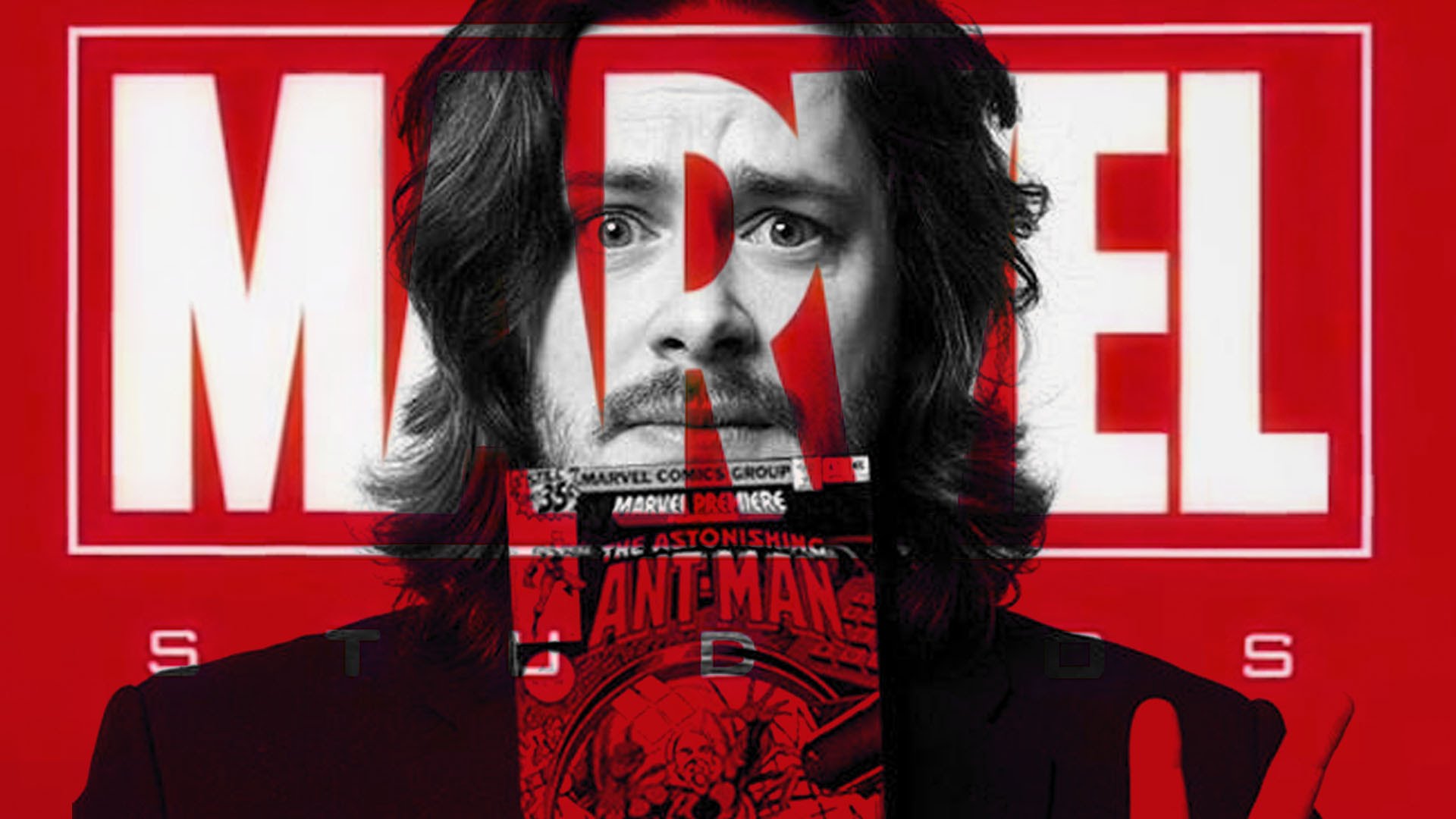
Director Edgar Wright’s departure from Marvel Studios’ Ant-Man before it was due to start filming will keep film critics and academics in coin for years. Wright, one of the most creative and inventive directors around, had worked for several years on the film and retains both executive producer and screewnwriter credits on the final feature. However, for all that Ant-Man retains some of the hallmarks of Wright’s work, it’s not one of his films. For better or worse, his replacement as writer and director, Peyton Reed, has made it his own. Continue reading Flawed Heroes, Edgar Wright and the Incorruptible Ant-Man→
The sceptical eye is probably a decent icon for this event.
One day I will go to the San Diego ComicCon (SDCC). This year, though, is not that year. Instead, while Northern Ireland prepares for its annual renewal of sectarian grudges, my brother provides me with my second niece, and my sister’s kids do their best to physically and mentally exhaust both my parents and myself, I’ve been keeping up with ComicCon online.
Over the past few years, as SDCC has risen to become the flagship event of the geek-driven media industry, the stars have been the movies of Marvel Studios’ superhero super-franchise. This year though, Marvel Studios is absent, presumably to await a dedicated event of its own later in the year. So the field was open to new challengers, with another Disney super-franchise foremost among them.
With the weekend mostly over, then, it’s time to take a completely subjective look at some of the standout offerings.
Doctor Who
SDCC is well-timed for Doctor Who, which is returning to screens this autumn. So at the panel this year, in addition to the cast and crew, audiences got their first peek at the new season. And it all looks…very Hollywood and action packed. Which isn’t a bad thing in a trailer, but part of the appeal of Doctor Who is a protagonist who eschews violence in favour of intelligence. Nu-Who (the series since its relaunch) has had some great moments but the last few series in particular varied wildly in quality. So a polished trailer raises hopes that those variables might come into alignment this season, but it doesn’t do much to convince.
Sherlock
Speaking of variable quality, when Sherlock is good, it’s very, very good, but when it’s bad it’s…still watchable, due mainly to the two leads. Instead of a new season, there’s only a special episode on the way (Martin Freeman and Benedict Cumberbatch both being in heavy demand these days), and accordingly we got somewhat less than Who provided: a snippet of a scene instead of a trailer. Given the success of retelling the Victorian-era stories in the modern day, it’s odd that the special takes the characters from the revamp and puts them back into the Victorian era. It’s all a little odd, if not counterproductive, and the scene released online does suggest that it’s all going to lean on humour rather than drama. Which, given the indication that the eventual return of the show proper will see some very dark and dramatic turns, is probably a good thing.
Marvel Comics
With movies absent, Marvel’s comics presentations had a prominence that they haven’t had in years. Which is well-timed, as the company’s current Secret Wars crossover is probably its most critically acclaimed in years and looks set to lead into something of a soft reboot, with the best parts of its Classic and Ultimate lines mashed together and cleaned up by its stable of writers in order to welcome in a bevy of new readers. (Multi-media marketing being what it is, there’s some alignment with upcoming movies as well.) There were plenty of new titles to announce and discuss, but my detachment from the majority of superhero comics these days can be measured by the fact that one of the characters depicted in the fourth blurry image on this page was by far the most exciting thing in their entire presentation for me. (If you can guess which one, you get a cookie.)
Marvel TV
Marvel’s TV output stands as the poor relation of the movies, which is a shame, as the quality is quite high. But they were definitely lost amid the rest of SDCC. Not much was to be heard of the new season of Agents of SHIELD, though the midseason miniseries Agent Carter got a welcome push, with its period glamour and post-war pulp stylings boosted by a move from New York to Los Angeles. I’ll be tuning in for that, as well as Marvel’s Netflix series: the return of the excellent Daredevil and the upcoming Jessica Jones. Neither of those were brought to SDCC, but we got images and castinginformation to keep the hype bubbling away and keep existing fans paying attention.
Pseudo-Marvel Movies
Sort of an unfair description, but then Marvel sold off the rights to its key properties years ago, back when it was in bankruptcy and long before Iron Man paved the way to cinematic dominance. Sony has since moved its Spider-Man into the orbit of Marvel’s franchise, but 20th Century Fox’s X-Men and Fantastic Four properties are still out on their own, and they have a fair amount to recommend them. Their presentation was a mishmash of everything they have planned, from the upcoming Fantastic Four to the further-out X-Men Apocalypse and the R-Rated Deadpool. There’s a lot of talent involved, but not much in the way of coherence, and in the age of colour-coordinated mega-franchises, that’s actually a little refreshing.
Star Wars
What is this strange feeling? Could it be the human emotion called…hope? In my head, JJ Abrams has a lot to make up after the twin travesties that were the two nu-Trek movies (wherein the corpses of the classic movies and TV shows were savaged and the result ground up with an excess of lens flare and quality actors, then slung in the oven until undercooked and served to the rabid masses), but I can’t really complain about anything that’s been done with Star Wars so far. True, we still don’t know a lot about the upcoming The Force Awakens, but I like that. Keep the trailers few and far between, and maintain a bit of secrecy in this era of instant gratification. What we’ve seen so far looks to be in the spirit of the original trilogy, with a dusty, lived-in universe inhabited by dashing scoundrels, noble heroes, imposing villains and the scum of the galaxy. In short, it looks like Star Wars, on the kind of epic scale that modern CGI allows. If Jurassic World showed just how bad the overuse of CGI could get, The Force Awakens might—just might—show how good it can be when it’s done right. (The free concert for convention attendees may have been a stunt, but it was an impressive one.)
And now I’m doomed to be disappointed, aren’t I?
DC Movies
Though I’m a Marvel fan, not a DC reader, I’ve seen most of the movies that DC have put out though (even if Green Lantern was only because it was free and on a trans-oceanic flight). Given how little I thought of Zack Snyder’s Man of Steel and how my opinions of Frank Miller’s The Dark Knight Returns have trended downwards over the years, I really wasn’t expecting much from a movie that looks to be the product of an orgy between those two and every other major DC comic hero, all desperate to generate a franchise to match’s Marvel’s billion-dollar success. So, perhaps it’s my low expectations talking but…that’s one hell of a trailer. The grimdark tendencies of the Nolan Batman movies are balanced, if not exactly tempered, by Snyder’s operatic excesses, and enough of the story is hinted at in order to suggest that Ben Affleck’s Batman might actually be justified in kicking the crap out of Henry Cavill’s Superman. Plus, Jesse Eisenberg as a Mark Zuckerberg-esque Lex Luthor remains an inspired piece of casting. It could still all collapse into a complete mess, but there’s a spark of excitement that wasn’t there before, and DC might just have lit a fire under Marvel’s ass that could benefit everyone further down the line.
Random Other Stuff:
The new season of The Walking Dead and its spin-off Fear the Walking Dead both received new trailers and heavy promotion. And I…don’t really care. I’ve stuck with The Walking Dead way longer than its entertainment value warranted, and I couldn’t even be bothered to fire up the new trailer. I’m sure it’ll be a huge hit.
I’d put Quentin Tarantino in the same category—his movies can be fun, but have always seemed more flash than substance to me. Still, the news that the western he’s working on will be scored by Ennio Morricone? Worthy of your attention at least.
One of my favourite ever comics series was Vertigo’s Lucifer, which used Milton’s rebel angel (as first shown in Neil Gaiman’s Sandman) to examine obsession and self-determination. It’s now being brought to TV as a…police procedural? Where the devil helps cops fight crime while running a piano lounge in Los Angeles? It sounds utterly terrible, but early reviews suggest it could be fun. I’ll be tuning in out of morbid curiosity if nothing else.
The Man From UNCLE is one of those old TV shows that was regularly repeated when I was a kid. I even had a Man From UNCLE annual once upon a time. So this hits my nostalgia button squarely on, and I don’t mind admitting that I love the look of it. Suave secret agents butting heads, feisty women, 1960s glamour, and action aplenty. Again, there’s only a couple of trailers to go on, but Henry Cavill could be getting some more of my cinema money in the year to come.
Joss Whedon has earned a deserved break after the madness of Avengers: Age of Ultron, and his next project is…a Victorian female Batman. Which from anyone else might seem odd but seems right in Whedon’s wheelhouse. Sadly, it sounds like we’re going to be waiting a long time for Doctor Horrible 2, but such are the vagaries of life.
My experience of Warcraft the game was limited but fun, much like the information released to the public on the upcoming movie. Duncan Jones is a director to trust, and the cast and early imagery are very promising, but even though the built-in fanbase is sizeable, it’ll have to work to reach beyond it. Taking the Star Wars path of teasing rather than showing could be a wise move.
DC’s other movie properties (unlike Marvel, their movie and TV properties operate in unconnected universes) operated in the shadow of Batman V Superman, and they’re too far out to judge as yet. A lot’s going to depend on whether BvS is a success, but they seem to have learned from the mistakes of the past at least. As for the TV properties, Arrow and Flash have a lot of fans, and while I’m not among them, I may just tune in to Legends of Tomorrow to catch Doctor Who alumnus Arthur Darvill in a new role.
HBO makes good TV. Jonathan Nolan (Christopher’s brother) is responsible for one of my favourite series in Person of Interest. So bring the two of them together for a relaunch of Michael Crichton’s Westworld and you have my interest. Sadly, Vladivostok’s favourite son Yul Brynner is no longer available to reprise his role as the deadly android gunman, but this could be something special.
Speaking of good TV, Bruce Campbell is always worth watching. Bruce Campbell revisiting his Evil Dead glory days in a TV series? Practically required viewing. Do yourself a favour and watch the only trailer that rivals Deadpool in the humour stakes.
Also in the quality TV arena is Amazon’s The Man in the High Castle. It’s an impressively faithful adaptation of one of Philip K. Dick’s best books, and the pilot episode showed massive promise. The fact that it’s going to be made into a full series makes me very happy.
Pride and Prejudice and Zombies kicked off an entire subgenre of rewriting classical literature to include fantastic elements. Diminishing returns kicked in long before publishers lost interest in the idea, and the movie version of the original of the species languished in development hell for ages. It’s here now though, and it looks to be adopting a straight-faced approach to the silliness of its concept. That may help it to avoid being a complete mess, but the amount of trouble it had getting to the screen does not bode well.
One Last Thing
The sheer quality and amount of cosplay on offer at SDCC never ceases to amaze. I’m genuinely impressed by all of it and not a little jealous. If I ever do get to attend SDCC, a decent costume will definitely be part of the agenda, no matter how overheated San Diego in July is likely to be.
I have no aversion to spending money on mobile games, and some of my best experiences with iOS games have been paid for: Plants Vs Zombies, Hitman Go, Thomas Was Alone and Monument Valley to name but four. Still, the plethora of free-to-play games does allow me to try out new gameplay experiences more or less forever, as long as I’m willing to risk the intrusion of money-making schemes into your fun. Recently, I’ve been playing three F2P games that have taken very different approaches to monetising fun, with very different results.
Capitals is a clever little app that combines a Scrabble-like word game with some simple head-to-head strategy. You and your opponent start with one space each (your “capital”) on a hexagonal board, and the aim is to grow your territory and ultimately conquer your opponent. You do this by claiming spaces: each space has a letter, and if you use the letter in a space connected to your territory, you expand into it. But if your opponent claims territory bordering yours, some of your territory will turn neutral again.
A huge amount of strategy emerges from this simple gameplay: Sometimes it’s better to avoid a big word in favour of shoring up your defences. Sometimes you see an opportunity to strike deep into your opponent’s territory. Sometimes you want to use up convenient letters so as to cramp your opponent’s options. In the games I’ve played, some have been brief and wild struggles, others chess-like confrontations of advance and retreat.
There’s not much to complain about on the gameplay front: a few games turned into slogs as I tried to grind my opponent down (or they tried to grind me down), but there’s plenty of fun to be had. All the same, you wonder whether NimbleBit thought out their F2P strategy very far. Right now you can pay for unlimited “lives,” which you can also claim by watching promotional videos (one view equals one life). It feels restrictive, and Nimblebit might have been better simply making this a cheap paid game instead. Still, they’ve been updating Capitals gradually since it came out, and they might yet get the balance right. In the interim, I’d recommend giving it a try.
I’m a comic book geek, and when it comes to superheroes, you can Make Mine Marvel. So a F2P fighting game starring a range of Marvel heroes, with good gameplay and high production values should be a winner, right? Future Fight certainly makes a good start, giving you three leading heroes (Iron Man, Captain America and Black Widow) to start with and plenty of free goodies just for logging in every day. But it then buries the whole experience under layers of complexity, social networking hooks and premium currencies.
The core gameplay is a lot of fun—the three hero types (brawler, speed and ranged), are each stronger or weaker against one of the other types. Missions last no more than two minutes, providing experience and equipment to improve your heroes, and there’s even a story illustrated with quick cut scenes before and after missions. So that’s fun. The problem is that managing everything else becomes a chore. There are multiple ways to improve your hero, multiple types of mission you can take on, and coins, gems and tokens galore to collect.
If you’ve got the patience to get to grips with all of this, there’s a rewarding game to be found under all of the cruft. However, I found myself reduced to logging in once a day to pick up my daily reward, telling myself that I’d try to get to grips with it later. I never did. It’s one of the problems of F2P—having paid nothing, I’m not invested, and the grind of gaining expertise and levelling up my characters has put me off. Which is a shame. This is a well-coded, slick and fun game that might have done better had it been paid-for with much less in the way of complications.
Fallout Shelter caused a lot of fuss when Bethesda announced it alongside Fallout 4 at E3 recently. As a promotional iOS app, trading on an established franchise name and using a F2P model, it could have been awful. It isn’t. In fact, it’s one of the friendliest F2P games out there, with an in-app purchase model that actually seems to work. (It’s currently at #18 in the top-grossing games in Ireland.) How did Bethesda manage this? By keeping things simple and sticking to the feel of the Fallout franchise.
Whimsical ‘50s nuclear paranoia might not seem like a good basis for a game, but it’s worked for Fallout for years. The main Fallout games have been roleplaying-focused, but this is a management game that charges you with creating a paradisiacal “Vault” in the midst of a post-apocalyptic wasteland. To do this, you’ll have to guide your vault dwellers to create food, water, energy and medical supplies, send them out to explore the wasteland, and encourage them to breed in order to swell your population. Do it right and everyone will be blissfully happy. Do it wrong and you’ll have miserable, radiation-raddled inhabitants who fall prey to radroaches, raiders and the occasional nuclear reactor fire.
The first ingredient that makes this game so appealing is the grace notes sprinkled across the game (equipment descriptions, wasteland explorers’ journals, and cheesy banter between dwellers—the writing is uniformly excellent). The second ingredient is an in-app purchase system that doesn’t intrude and even enhances the game. The standard currency is bottle-caps, with which you pay for new rooms (and occasionally resurrecting unlucky vault dwellers). The premium currency is lunchboxes, which serve as booster packs that contain equipment, caps or dwellers, some of them better than any you’re likely to find in game. You can earn these lunchboxes through the game, but the excitement of opening a new one is enough to encourage you to plonk down actual money for more.
It’s not a perfect game—the learning curve is a little steep if you don’t RTFM, and there’s a lack of depth in the challenges you’ll face as you build your Vault beyond 100 inhabitants. But even so, it manages the SimCity trick of making you feel proud of what you’ve created while allowing you to peek in on the lives of your dwellers and even get a little invested in their continued existence.
“The Indominus Rex really needs to work on its diet choices.”
Along with half the world, or so its box office returns would indicate, I went to see Jurassic World last week. It’s all about the dinosaurs with me, and despite some middling reviews, I have an unrelenting optimism that you never know, a movie might be fun (see also: Star Trek Into Darkness). Or maybe I’m just addicted to being grumpy about underwhelming movies. Spoilers on…
The past year has been an interesting and diverse one for fans of cinematic science fiction. We’ve had Christopher Nolan’s ambitious, if flawed, Interstellar, and Alex Garland’s fascinating Ex Machina. Right at the moment, cinemas are sporting two further major releases that do what all good science fiction does: reflect the concerns of the present in visions of the future.
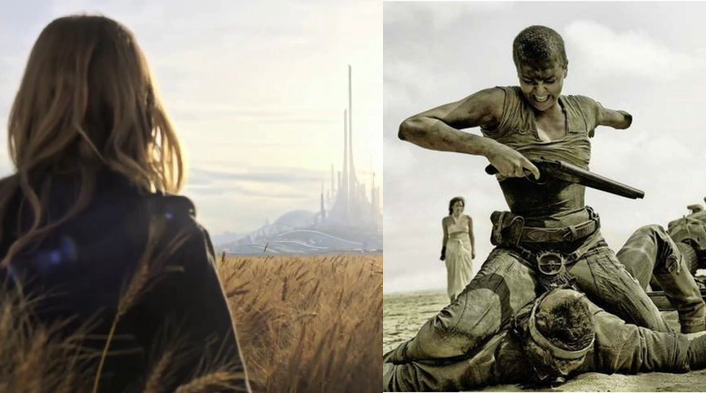
George Miller’s Mad Max: Fury Road and Brad Bird’s Tomorrowland are both visually stunning, but their similarities go deeper than that. Both films depict an alternate present instead of a distant future, albeit both warning in their own way of how our own present could go. In doing so, they become fables, trying to make their points symbolically, with characters who represent much more than the journeys that they go on. A central theme of both films is the need to avoid giving up, to retain optimism and humanity in the face of cynicism and despair.
But for all of the similarities, there are multiple differences too. Most glaring is their storytelling success—Fury Road is good enough that it’s hard to pick holes without coming across as petty, whereas Tomorrowland struggles to avoid being dragged back down into the summer blockbuster mire. Taking a look at the differences between them might help to illustrate this.
The “eclectic” results of a bookstore raid, as someone else described them.
Every so often, I drop into a bookshop. I try not to do it too much, because once there, I have a tendency to buy things. On one of my more recent visits, I picked up three good-sized books, which did wonders for my loyalty card. Less so for my wallet. Luckily for this blog, there was a thematic connection running through all three of them, so I get to package up their reviews in a single post. (Arranged, for the convenience of the reader, in order of increasing worth.) The Swerve, Stephen Greenblatt
The concept behind Greenblatt’s book is an appealing one: in the 15th century, a bibliophile, classicist and proto-humanist called Poggio Bracciolini rediscovered Lucretius’s De Rerum Natura (On the Nature of Things) in an Alpine monastery. This lost work of Epicurean philosophy offered a new way of looking at the world and helped spark into life the Renaissance. Sadly, while Greenblatt weaves an entertaining story, he doesn’t quite manage to live up to the headline.
There are a lot of moving parts here, and Greenblatt does a good job of outlining Epicurus’s philosophy and why works like Lucretius’s epic poem were suppressed in an increasingly Christian world. He also succeeds in portraying the slippery character of Poggio Bracciolini, a cynical papal secretary in love with the classical world, as well as the political and religious milieu he operated in. Where the author falls down is in demonstrating how the rediscovery of De Rerum Natura fed into the heaving intellectual scene of the time.
Notable figures from Shakespeare to Da Vinci certainly read Lucretius’s poem, and Greenblatt points out many times and places where references to it crop up. However, as a work of classical poetry and philosophy, it’s hardly alone in that sense, and the book peters out rather than rises to a climax. It’s a shame—in the life of Poggio Bracciolini, the impact of Epicurean thought and the turbulent times of 15th century Europe, there’s enough material for a handful of books. As it is, Greenblatt has delivered an entertainingly told, but ultimately unsatisfying, tale. Action Philosophers Omnibus, Fred Van Lente and Ryan Dunlavey
From the impact of one philosopher to the body-slamming impact of more than two dozen heavyweight thinkers in a comic book battle royale. Van Lente and Dunlavey’s exploration of the thoughts and lives of some of the greatest thinkers in human history is constantly entertaining and far more thought-provoking than its funnybook styling would suggest.
An omnibus edition of previously published comics, the individuals profiled are here arranged into something resembling chronological order, from the Pre-Socratics to Ayn Rand. And while the authors’ preferences sometimes shine through, they do their best to be even-handed, pointing out facts like Thomas Jefferson’s multiple hypocrisies and the fact that almost all we know of Socrates (who doesn’t get a section of his own) comes through the words of Plato, presented here as the former wrestler he actually was.
Unlike a lot of comic books and graphic novel, Action Philosophers requires the reader to pause in their reading and consider the words and thoughts of the great philosophers. This is to its detriment as a comic book, but given that there’s a lot of clever ideas and imagination at work in presenting these sometimes complex ideas, it doesn’t suffer all that much. And while philosophy majors might decry the short shrift given to their heroes in the few pages each one is afforded, as an introduction to some of the deepest thinkers of the past 2,500 years, it’s hard to beat. Plus, as a bonus at the end, a reading list and a guide to critical thinking and argumentation are provided in the same fashion as the rest of the omnibus. Highly recommended. The Thrilling Adventures of Lovelace and Babbage, Sydney Padua
Unlike her hero and heroine, Sydney Padua actually managed to turn her concept into an actual product, and we’re all the beneficiaries. From an initial one-shot webcomic about Charles Babbage and Ada Lovelace, inventor of the first computer and the first computer programmer respectively, Padua spun off into an irregular webcomic and has now produced a book that manages to be both riotously funny and deeply informative about its two protagonists and the machine they never quite created.
Never quite created in the real world that is, as the conceit of Padua’s book is the creation of a bubble universe, in which the wonders of steampunk technology and boundless optimism have allowed Lovelace and Babbage to indulge their every technological whim while encountering just about every major figure of Victorian England’s social scene (Isambard Kingdom Brunel as a burly action hero is a particular highlight). That the result is such a well-balanced book is down to a combination of Padua’s skill as an artist and writer, her comprehensive research, her clear affection for her protagonists blends nicely with the poignancy of the fact that in the real world Lovelace died young and Babbage old, having never brought to fruition any of the schemes that he devised.
The Thrilling Adventures is simultaneously a tribute to its heroes, a rollicking series of adventures in which they star and a deep dive into their lives and the technology that almost (but probably never could have) started the computer revolution a century early. Add to that the fact that the hardback edition of the book is a beautifully made tome and I can’t really recommend it highly enough. It’s enough to make you wish you were living in a steampunk world of dashing, pipe-smoking female mathematicians, absent minded technological geniuses and action-hero engineers.





 cerandor.com