Category Archives: Reviews

Doctor Why

...rather unlike a Hollywood movie, really.
Featuring an old man walking slowly away from an explosion…

Doctor Who is a funny phenomenon. (It’s often a funny TV show too, but let’s look at the phenomenon first.) Fifty years old as of this weekend, it’s enjoying a heavily promoted anniversary period, and while a lot of the current level of publicity has been driven by the BBC, it’s a show that inspires a degree of devotion from its adherents that’s unusual even in the world of science fiction.

Part of that is down to its two-part history: the original show, which ran for over three decades before petering out into low-budget irrelevance and a misguided attempt at a U.S.-led revival, and the new show, which launched in a blaze of glory in 2005 and is still going strong, despite sometimes iffy quality (something the show has always endured). Fans of the former are mostly fans of the latter, but fans of the latter aren’t always aware of the former.

Befitting its status as a celebration of all 50 years of the show, the 50th anniversary special, The Day of the Doctor, does its damndest to bridge that gap.

When the show was relaunched, one key element was altered: rather than being one of a race of time travellers, the Doctor instead became the last of them. More than that, it was revealed that he was responsible for their doom, together with that of their archenemies. This had the double effect of making the Doctor unique and adding a melancholy tone to his character that quality actors like Christopher Ecclestone and David Tennant were able to mine to good effect.

So for writer Steven Moffat to not only reveal this hinted-at element of the Doctor’s history in detail but also to effectively rewrite it during The Day of the Doctor was suitably ambitious. For him to succeed so thoroughly was a delight. Inevitably for a show with as convoluted a timeline as Doctor Who, there are some very visible plot holes and seams, but on the whole it makes for a thrilling adventure.

If The Day of the Doctor manages to bridge the gap between old and new though, it does so using the materials of the new. There are plenty of hat-tips and Easter Eggs relating to the old show embedded in the episode, but with the exception of a rather odd cameo towards the end, none of the actors who played the role in the old series make a showing (they did, however, get a cameo-filled anniversary special of their own).

Despite the hopes of some of the old-time fans, this was clearly the best choice. The old actors look nothing like they did when they played the role, and Moffat makes the absolute most of the three Doctors he has to play with (Tennant, Matt Smith and a war-weary John Hurt), making their commonalities and differences central to the unfolding of the plot.

The result is a special that’s all about the show itself, and all the more satisfying for that. I was lucky enough to see it in the cinema, where I was able to enjoy some very decent 3D effects and the reaction of the crowd around me to every grace note of the script and special effects. So many people there were not only dressed for the event but also knew all the show lore, resulting in laughter and applause in all the right places.

Those cinema showings may have been a gift to those fans whose love of the show extended back beyond the 2005 revival, but they weren’t solely enjoyed by them. The show is now bigger and deeper than it used to be, and the fan base is global in a way that only the Internet could allow.

With The Day of the Doctor, Steven Moffat not only celebrates the first 50 years of the show, tying together all of its constituent parts, he also ties a bow on the show as it has been since the relaunch. With a new Doctor in the form of Peter Capaldi incoming at Christmas, The Day of the Doctor strikes the right note: a celebration of all that has come before together with an opportunity to enjoy something new.


Tiny Death Star

20131118-150036.jpg
It’s a hard life as building manager of the Death Star…

Nimblebit, iOS, Free

It’s a mark of how watered-down Star Wars has become that Tiny Death Star even exists. The villains of the original trilogy, a bunch of faceless, menacing, planet-destroying quasi-fascists are here rendered down into cutesy 8-bit form, as you’re asked to fund the construction of the planet-destroying battle station by turning it into a residential/commercial emporium.

Yeah, someone didn’t put a lot of thought into that. Best to just roll with it.

Tiny Death Star is, of course, a reskin and slight reworking of Nimblebit’s hugely popular Tiny Tower, taking the basic mechanics of building a tower block and filling it with inhabitants and things for them to buy and tweaking it for a kiddiefied version of the Star Wars universe. As such, anyone who’s played Tiny Tower will find themselves right at home. However, they may also find themselves uncomfortably constrained.

The big draw of Tiny Death Star is the Star Wars ambience, and the game sprinkles it around liberally, with famous figures from the movies roaming the levels of your growing battle station, sometimes incongruously so. Fittingly, the soundtrack also consists of musak versions of famous Star Wars themes, though these soon enough grate through repetition alone.

Tiny Tower’s gameplay has also been tweaked in several ways. In addition to the standard residential and commercial floors, you can also build Imperial levels, which allow you to complete missions (about which more later). Since these levels don’t make you money though, this slows down the process of building new levels, which was already slow in the original game.

Of the game’s two currencies, then—credits and bux—the former, used to build and stock new floors, comes more slowly than before. Not half so slowly as bux though, which are used to buy elevator upgrades and hurry various other aspects of the game. As purchases of bux are the main form of in-app purchases the game offers, it’s understandable that Nimblebit have chosen to strangle in-game opportunities to earn them, but in doing so they’ve also strangled the sense of progress for players who don’t want to spend extra coin.

Providing at least a modicum of variety to gameplay that strays close at times to Ian Bogost’s Cow Clicker (click on things to earn more things, then click on them to earn yet more things) are the missions, provided by Darth Vader and the Emperor. Both provide credits as rewards, but although the Emperor’s missions are designed to guide your construction efforts, the rewards are meagre. Vader’s missions are slightly more rewarding, but I ran into one that required me to build a specific level (the game chooses which levels in a specific category are built at random), stalling any progress in that direction.

In the end, this is a Star Wars game, offered for free. If that appeals to you, go for it. But be aware that unless you’re willing to pay up, it’s going to present you with a choice between a long, hard slog and an escape route from this doomed battle station.

Gravity – The IMAX Experience

20131115-112517.jpg
Think about it…

Until relatively recently, Dublin had no IMAX cinemas. These days it has two, one in Cineworld, one in the Odeon at the Point. Hollywood releasing movies created with IMAX in mind is another relatively recent development—when the format was first introduced, it was filled with short novelty films, often in 3D. Well, full 3D IMAX films are here now, and Gravity is their standard bearer.

Spoilers below the cut, of course.

Continue reading Gravity – The IMAX Experience

It’s About Time for Zombies

20130822-141527.jpg
Part of the Pirate World in PvZ2

Plants Vs Zombies 2, Popcap, iOS, Free

No game on my iPhone engaged me as long or as deeply as the original Plants Vs Zombies. A tower-defence game blessed with an abundance of humour, impressive cartoon visuals and a catchy score (including the best end credits song since Portal), it also had the benefit of a developer that continued to enhance and upgrade the game for several years after it came out, with new game modes and other add-ons.

Well, the sequel has finally landed, in the form of Plants Vs Zombies 2: It’s About Time, a punning, double-meaning subtitle that reassures fans of the original that the same twisted brains are still in charge. The big change this time around is that PvZ2 is free-to-play. The game itself comes without charge, but players can decided to pay more for extras within the game itself.

Free-to-play is rightly viewed with some suspicion. It’s a new business model for the games industry, and earlier efforts to make it work have resulted in crippled games that frustrate players. Luckily, PvZ2 takes another tack: the game offers an abundance of content, all of which can be accessed for free, but players can spend some coin to make their passage through the game easier or to buy some new plants to improve the variety of the experience.

As far as gameplay goes, the winning formula hasn’t been altered: the player places plants on the left of the screen and zombies attack from the right in waves of increasing intensity. There are some new elements thrown in, such as new plants and new zombies, but if anything the variety is a little bit down compared to the state the first game reached with all its expansions in place.

Tweaks have been added to the gameplay in the form of new special powers. Plant food supercharges plants temporarily and coins can be spent to activate special powers that will squish, electrocute or fling zombies offscreen. For an old-school player, these powers can seem a little like cheating, but the game is balanced so that while plant food is often necessary, the special powers rarely are. However, the in-battle currencies of plant food and coins do add complexity to a game laden with currencies (the familiar sun for buying new plants, stars for completing new levels and keys to unlock new routes).

These routes are the big change in the presentation of the game world. The first game took place in a back yard, by day and night, with a pool and without, and occasionally afflicted by fog. The player progressed from level to level, in a linear fashion. In PvZ2, the game is split into three worlds (Ancient Egypt, Pirates and Wild West, with an upcoming Far Future world having been announced). Each one is completed by following a linear path, but keys gained during battles allow the player to unlock side paths and gain extra plants and abilities thereby.

It’s a slightly more graphically intense game than the old one (only iPhone 4 and above need apply), and the graphics designed for retina displays take a little adjusting to, but everything is in order gameplay-wise. It’s as addictive as the old game—I’ve already completed the first world and made my way through part of the second, at a time when I really shouldn’t be playing games (or writing reviews of them).

The one niggle I’d point out? Although the side routes in each game world do offer different challenges akin to the mini-games of the first game, there’s no way to tell which one is which from the isometric world map. It’s a bit of an odd design decision, and one that I suspect will be fixed in further updates. If nothing else, Popcap’s reputation breeds confidence in the fact that this will be a well-supported game for a long time to come.

Recommending this game is a no-brainer (ahem). For no money at all, you get the same great gameplay of the original PvZ, and you can happily play through it without spending a penny. My only worry is that a lot of people will do just that, and that PvZ2 won’t be the financial success it deserves to be. Because, honestly, we could all do with more games like this.

(A quick reminder to clarify: the Android version of PvZ2 isn’t out yet, but it isn’t likely to differ too much from the above.)

Beauty, not Brains?

20130822-141343.jpg
Hairy arm: model’s own.

Pebble Smartwatch, $150, iOS and Android

As people smarter than myself have already pointed out, taking part in a Kickstarter funding campaign is like buying a present for your future self: by the time it arrives, you’ll have forgotten that you paid for it, and be pleasantly surprised that it showed up at all. That and the feeling of actually participating in a product rather than just buying it are all the reasons you need to know why Kickstarter is still huge.

To date, I’ve participated in five Kickstarter campaigns, mostly for small amounts. In each case, it was clear that I’d be waiting a long time for the results, something I didn’t mind at all. Well, in recent months my currently impoverished self has been reaping the benefits of my affluent former self, in that two of the results have shown up (in one form or another).

My biggest Kickstarter contribution to date was for one of the site’s most famous campaigns: the Pebble ePaper watch. A customisable bluetooth watch for Android and iOS phones, the Pebble raised $10,000,000 through Kickstarter, far above an original funding goal of $100,000. Due to the fact that I opted for a grey watchface rather than black, red or white, mine took a little longer to arrive than it might have otherwise, but a few weeks ago I wrested it from the hands of Irish customs and onto my wrist.

For the first wave in a new breed of smartwatches (Kickstarter is already hosting its more ambitious next-gen brethren), the Pebble has a definite retro, plastic feel to it. Which is not to say it’s not solid: the plastic case keeps it watertight while allowing charging through a USB lead and keeps the body light despite the its bulk.

The ePaper screen is basic but readable, with a motion-activated backlight, and can be modified with a multitude of watchfaces. Figuring out how to do so can be a bit of a chore: the online setup process is straighforward enough, but for more expansive options, you’ll need to use your phone’s web browser and the app that manages the Pebble itself.

In use, the Pebble is a handy accessory. I often don’t hear my phone when it’s in my pocket, but I can feel the Pebble’s vibration on my wrist without a problem, alerting me to calls, texts and mails. I can even read the mails and texts, or at least the first few lines of the mails, on the Pebble’s screen, though this only works in the moment—there’s no way to browse older messages.

At the time of buying the Pebble, my main reason was to have it as a running accessory. I’d just started recording my running with RunKeeper, and the idea of having a watch that would tell me my pace and distance covered sounded pretty good. Well, mission accomplished on that front: the Pebble keeps updated throughout a run

There are only three issues with the Pebble, all of them technology based. The first is that it drops the bluetooth connection occasionally. This is an issue because the Pebble isn’t a smartwatch. It’s a terminal for your smartphone, and lacking the connection, it can tell you the time in various pretty ways but not much else (there are game apps for the Pebble, but the chunky buttons don’t allow for sensitive control).

The second issue is battery life. I’ve averaged around five days so far, which isn’t too bad for a bluetooth device, but the phone software doesn’t do a great job of indicating when you need to recharge, so there have been a couple of times when I’ve looked at my wrist and found a blank screen looking at me. Annoying, but some of those multitude of watchfaces promise to fix that issue.

The last issue is probably the biggest one for Pebble: this is a first-generation device, cute and functional, but staring down the barrel of technological innovation. As stated, Kickstarter is already hosting second-generation devices, and Apple and Samsung look set to enter the space before long, bringing all their engineering know-how to the field. When that happens, Pebble’s retro looks may become all-too apt.

For now though, I’m wearing a watch for the first time in a couple of years, and I’m more than happy with the present my former self bought me. Runkeeper functionality, message and call alerts and a variety of funky watchfaces. It may not be smart, but it sure is handy.

On the Personality of Monsters: Pacific Rim

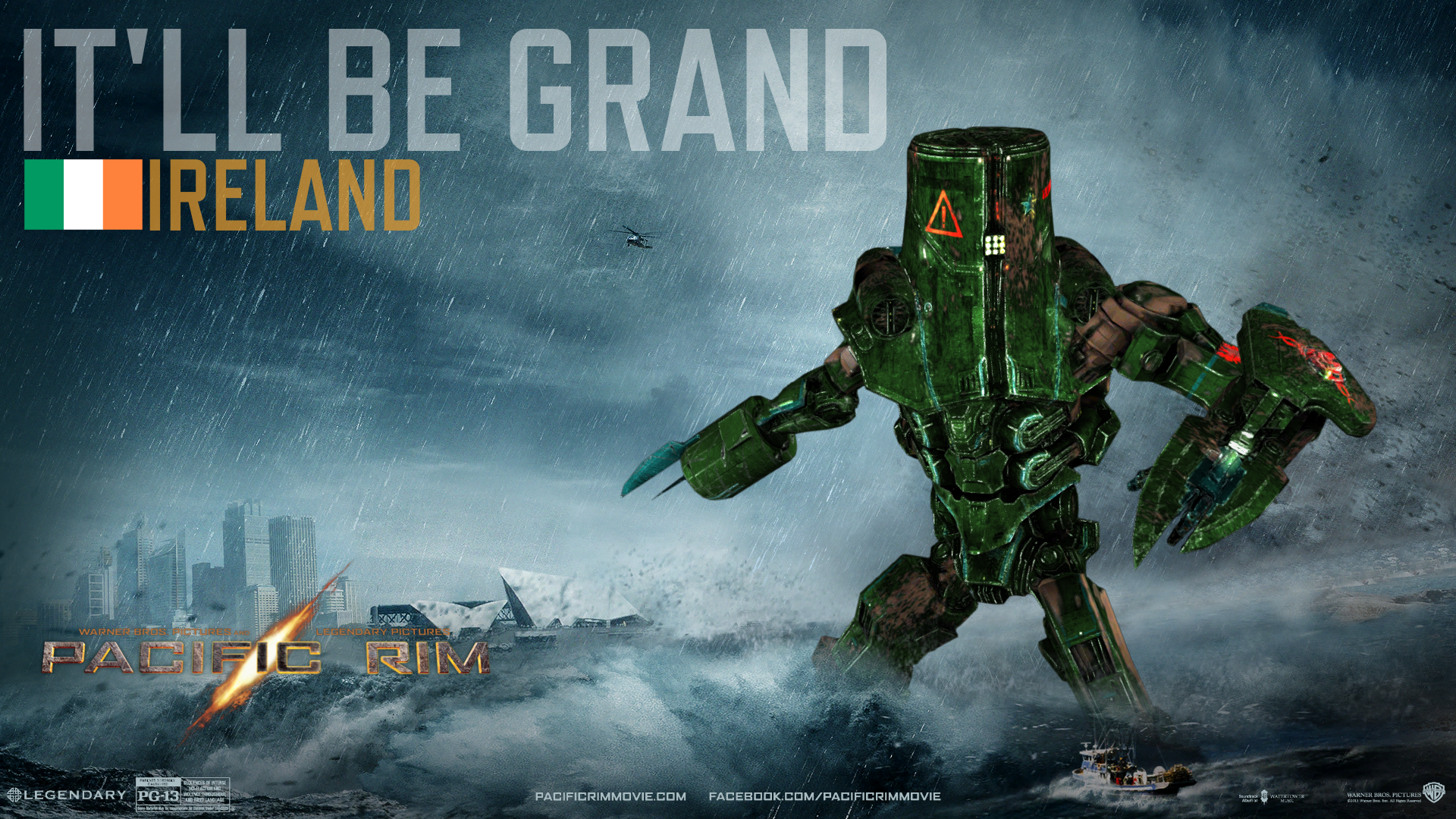
Ireland's Contribution to the Kaiju War
Collateral damage? What collateral damage?


First things first: Pacific Rim is a movie about 25-storey-tall mechanoids smacking the protoplasm out of genetically engineered, city-destroying monstrosities. It is, therefore, immune to criticism on at least one level. If that’s your kind of thing, you should probably go watch it in the cinema. If it isn’t, you shouldn’t. That said, there’s a difference between criticism and critique.

This isn’t going to be a review, more a pondering of some points of design and storytelling. However, there will be spoilers, so it’s all below the cut.

Continue reading On the Personality of Monsters: Pacific Rim

A Game of Words

20130716-120344.jpg
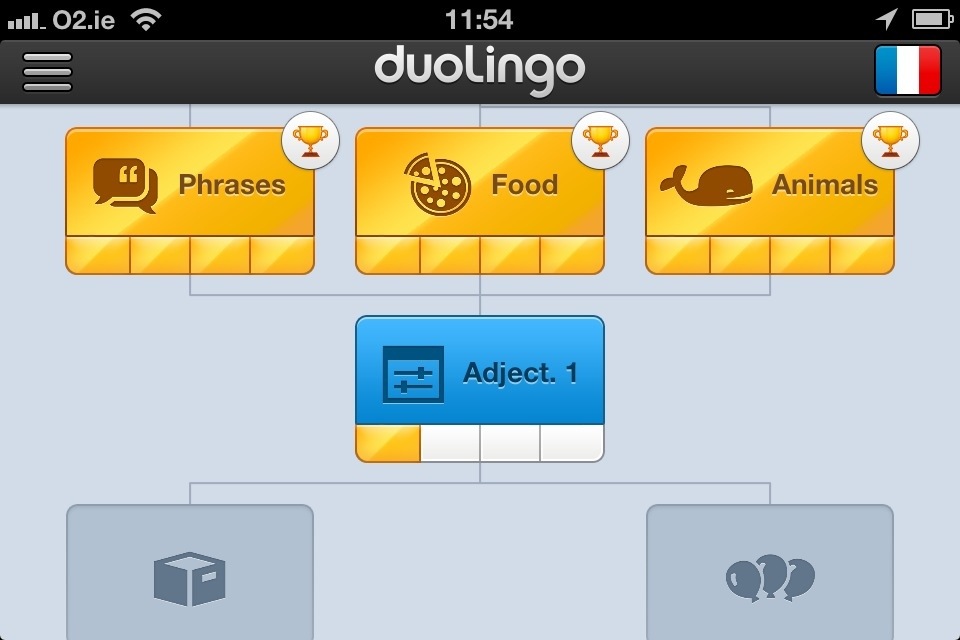
Early days on the French language tree.

Duolingo (iOS and Android, Free)

My several years of iPhone experience have seen me fall prey to a number of apps. Addiction to horticultural zombie escapades, miniaturised high-rise management and Indiana Jones-style sprinting have all proved fun, but I wouldn’t have called them beneficial. Well, now I may have found an app that is both addictive and good for me.

Duolingo is a language-learning app, based on the web site of the same name. The concept behind the service is a simple one: crowdsourcing humanity’s efforts to learn new languages by getting them to translate web content. Because the learners are providing a service, the learning experience is free.

Of course, having a free service doesn’t mean much if the experience is no good. Luckily, Duolingo’s app doesn’t fall down on that score. It sports a clean, colourful design that’s both welcoming and easy to understand. Each language is presented as a tree of connected lessons that users progress through at their preferred pace, from basic comprehension to complex concepts.

Lessons consist of 20 exercises, each taking no more than a few seconds to complete, with four or more lessons grouped into themed nodes (food, animals, adjectives, etc.) on the learning tree. As a barely competent reader of French, the early lessons in that language were a useful refresher for me, but if I’d wanted to jump ahead, each node offers the chance to “test out” and complete the whole thing in one short lesson.

Gamification elements are put to good use here: users get three hearts per lesson, so they can make three errors before a fourth requires them to start over. Completing a lesson earns a users points and builds their in-app vocabulary, and the number of consecutive days they’ve been playing is recorded. The intelligence behind the app seems well tuned thus far, and will point out certain errors, like misplaced accents, but not penalise users for them.

One of the big problems with learning a language (and maintaining that knowledge) is the issue of practice. Duolingo covers this too. First by offering users the chance to strengthen the skills they’ve already earned and second by providing a leaderboard so they can compare their acheivements with their friends. I can’t speak to the success of the latter as yet, but it’s another example of game mechanics intruding beneficially into the non-game world.

The Duolingo app is comprehensive in its treatment of the five languages it covers (French, German, Spanish, Portuguese and Italian) and demonstrates a wealth of thoughtful touches in its design. One feature I’d love to see is a searchable vocabulary of words in each language, but as a relatively new app, there’s bound to be more to come from this initiative.

Carey Good Comics

20130626-101008.jpg
Take three in the morning and call me in the afternoon.

The Amazon fairy brought me some reading goodness over the past weekend, in the form of a trio of graphic novels from one of my favourite writers: Mike Carey. The first was a reprint of a series I’ve long had in the less-convenient monthly form, Lucifer, the latter two were the sixth and seventh installments of Carey’s current magnum opus, The Unwritten.

Lucifer was one of several spin-off series that DC Comics released in the wake of Neil Gaiman’s Sandman. Of all those spin offs, it came closest to the original in form and longevity, though Carey brought a very distinct tone to it. Whereas Sandman was a tour through mythology and storytelling, revolving around the enigmatic figure of Morpheus, Lucifer skews closer to a traditional quest tale, as the much more forceful title figure overcomes all obstacles as part of his plan to obtain his freedom from all authority and destiny.

Carey’s Lucifer hews closely to the Miltonian ideal of the ultimate rebel and borrows heavily from the “Magnificent Bastard” trope: an unsympathetic figure who’s just so damned (pun intended) impressive that you can’t help but root for him. Carey plays this up by regularly placing his protagonist in positions where he’s powerless and has him come out on top by out-thinking those who set themselves against him.

This beefy collected edition brings together the original Lucifer miniseries and the first 13 issues of the regular series. It’s far from perfect, as Carey seeks to find the right way to tell his tale and deals with changes in artist, but by the end it’s caught the wave that would carry it all the way to the end, the details of which I’m not going to spoil here.

The Unwritten is much more recent vintage Carey, sharing much of the same interest in myth and storytelling, but here using them as a theme rather than as props. Like Lucifer it builds on the work of another author, but here the chosen one is J.K. Rowling. The protagonist is the son of an author of a Harry Potter-like series, and his life is turned upside down when questions are asked about the links between him and his father’s most famous creation.

This isn’t just a Potter pastiche though. Carey’s interest is in how stories affect us and how we in turn affect them, and to explore this he tosses his likeable cast into a labyrinth of literary theories and allusions. Not that he wanders too far into the highbrow either: there are vampires and monsters aplenty to go with the ever-present Potterisms, and a multitude of mysteries to be uncovered.

As the books I received were well into the long-form story, I won’t discuss them here, other than to say that they continue the process of revealing the truth behind Carey’s universe of stories. It’s a journey that I’ve been enjoying ever since I picked up the first book. Carey as a writer has come on in leaps and bounds since Lucifer, and he was already pretty damn good then. Anyone with even a passing interest in myths and stories could do far worse than picking these tales up.

Personally Interested

Star of the show.
Jim Caviezel at ComicCon (via Genevieve719)

This Monday, RTE starts showing crime drama Person of Interest. The CBS show is one of the better recent offerings from a U.S. broadcast television industry that has mostly been left in the dust for quality by cable.

Fitting questions about surveillance, paranoia, vigilantism and computer sentience into its case-of-the-week structure, it’s cleverer than it has any right to be and digs into its themes without losing the qualities that make it appealing right from the off. But as much as I like it for the thought that’s gone into its creation, what really impressed me was its approach to its female characters.

The two leads are both male, fitting into the brain/brawn categories, with plenty of psychological damage in their makeup. There’s a supporting female cop, who follows a fairly standard antagonist-to-support role, well played by Taraji P. Henson. With her as with the rest of the female characters, a simple rule seems to be followed: the women are as capable and intelligent as the men. Moreover, they’re just as likely to be the bad guys as good guys.

It seems like a simple thing, but it’s rare. Our culture is rife with female stereotypes that writers have to work hard to avoid. One in particular, never far away when a female villain is involved, is the femme fatale. Pleasingly, right through its first season, Person of Interest stays well away from that one.

Why is this a good thing? After all, literature and film are full of femme fatales. The problem is that when you have a female villain, it’s too easy an option to reach for. The link between women, sexual allure and power over men is an unbalanced one: no male character is so defined by his ability to manipulate women. James Bond may be a lothario, but he’s much more besides.

That’s why femme fatales, while memorable, are not long-enduring characters. They’re expressions of a trope, one that states that a women who uses her sexual desirability as a weapon is dangerous, even evil. In contrast, culture tends to view men who seduce women as admirable.

I wonder how much of the show’s avoidance of the femme fatale is down to Jim Caviezel (who plays the brawn side of the central equation in an appealingly deadpan manner). Famously religious, he avoided naked scenes with his romantic interest in The Count of Monte Cristo out of respect for his wife. It doesn’t seem like too much of a stretch to think that the show’s avoidance of overt sexual themes is something that might have appealed to him. (There’s plenty of flirtation, but it’s underplayed.)

Of course, it’s possible to go too far the other way and be completely puritan in avoiding sex altogether. Person of Interest doesn’t go that far, and the point to all of this is that its female characters play on the same board as the men: matching wits with them and often winning. It’s good to see.