Tag Archives: travel

Chile—Santiago and La Serena

Chile was always going to be a scramble. Perhaps we should have realised how much of a scramble it would be, but it was a unique situation, so I’ll cut ourselves some slack. The Lawyer, the Doctor, and I were in the country to view a total solar eclipse (a story I’ve already told), but we were also each in the Southern Hemisphere and South America for the first time, and while we were all experienced enough at travelling, we were well outside our comfort zones. For myself in particular, while I’m used to travelling alone, travelling with friends is a less common experience.

We’d divided up the duties before arriving, with the Doctor, who was landing the day before the rest of us, dealing with accommodation and myself with car hire. The latter wasn’t too hard to arrange, but the crowds flocking into the country for the same reasons as us, as well as the vagaries of Internet booking, meant that the Doctor had a harder time of it, dividing our time in Santiago between the Luciano K and Magnolia hotels, and arranging a beachside apartment in the Agua Marina complex in La Serena.

It was a little hazy on the first day, but that cleared.
A glimpse of Santiago from the top of Cerro Santa Lucía

As the Lawyer and I flew in (on separate flights, mine delayed) to Santiago, the city wasn’t showing its best side. The morning light struggled through the clouds over the Andes and the coastal mountains that cradle the city, but the airport delivered us through customs and baggage reclaim without too much of a struggle. Our hotel had arranged a taxi to pick us up, with my Irish name replicated closely enough to be recognisable.

The drive into town took us past plenty of slices of the city, with the sights of wooden pallets stacked high, walls daubed with massive murals, and the now grey, overcast skies making me think of Belfast and the glorious 12th that it’s always a pleasure to avoid by being in a different country, and if possible a different continent.

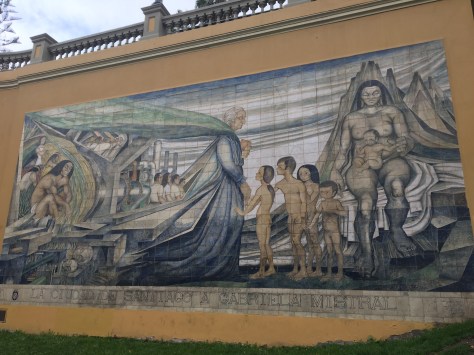
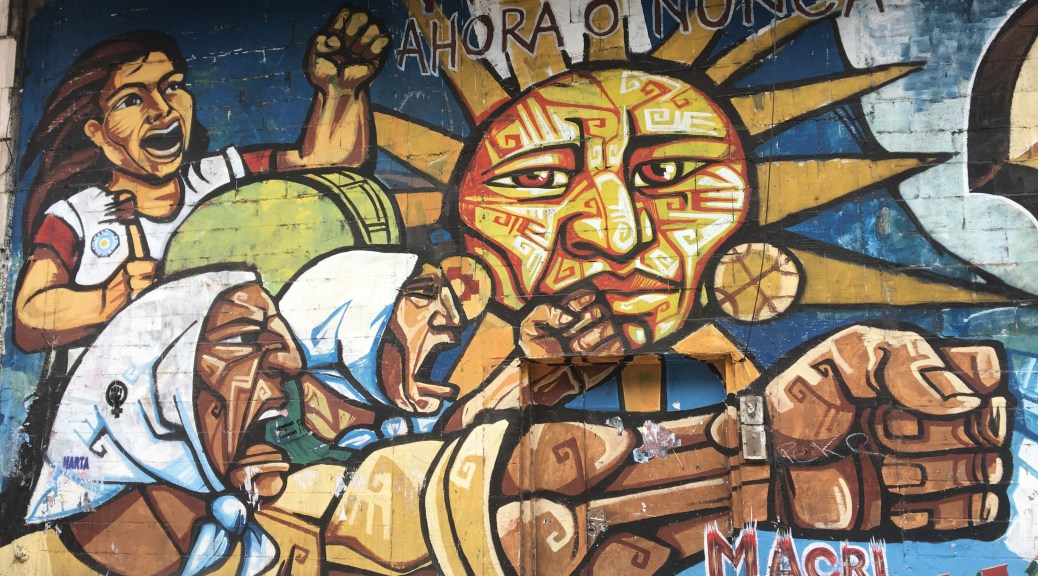
A mural in Santiago, telling the history of the city.
Santiago is full of murals—this is one of the more official ones.

Once we’d rendezvoused with the Doctor at the Luciano K and dropped our bags, we could do some proper exploring. The Doctor had done some reconnaissance the day before and showed us around the city centre, taking us up the Cerro Santa Lucía, a sculpted peak in the heart of Santiago, with monuments and viewing points aplenty. From up there, we could see the contradictions of the city’s architecture: like most older cities, it maps its history through eras of enthusiasm and decline, with modern skyscrapers rising amid older areas both wealthy and drab, occasionally preserved but often neglected.

For the rest of that day and the next, we experienced as much of Santiago as energy and jet lag would allow. The city is easy to walk, though there’s a good metro system if you’re in a hurry, and it boasts some excellent museums. The one we liked best was the Museo Chileno de Arte Precolombino, which showed a full array of artworks from across South and Central America, limited though these were. It’s a sobering reminder of just what was lost when the New World encountered the Old—civilisations that were developing along parallel tracks to our own but were snuffed out and much of their art and memory lost with them, as well as the chance to ever know how they might have developed, given the chance.

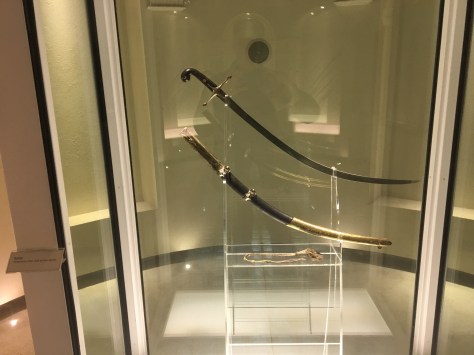
A golden ear ornament from pre-Colombian South America.
A rare piece of surviving native goldwork. Most of it was melted down.

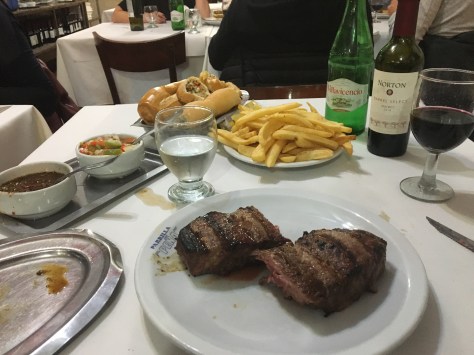
As for nightlife, we weren’t the most active partakers. We became fans of the restaurant Holy Moly and the nearby Opera de Catedral bar, with burgers and beer at the former and pisco sours (and more beer) at the latter. Despite it being the heart of winter it was still worth enjoying the rooftop bar at Opera de Catedral, but we probably enjoyed being in the cellar of Holy Moly more, especially when the Copa America quarter final was on, and we were treated to a penalty shootout between Chile and Colombia. (A return trip to watch the semifinal between Chile and Peru after the eclipse was sadly less successful for our adopted team.) The Doctor and I also ventured across the river to the Cerro San Cristobal and to the Gran Torre Santiago at the Costanera Center in Santiago’s financial district. Both offered incredible views of the city and the mountains surrounding it, with the tower in particular worth visiting for the well-designed viewing floor and skydeck.

When the time came to drive to La Serena, our base for the northern half of our trip, my car booking proved to have been a solid one, though the car we were given was an odd Chinese brand, with Tesla trappings in the form of a massive LCD control panel, but little of the Tesla refinement (a delay of a few seconds when trying to use the screen, assuming it responded at all). Still, the five hour drive north was pleasant enough, with a single stop at a crowded filling station enough to refresh and refill us. As driver, I didn’t get the full benefit of the often stunning views as this section of the Panamerican Highway moved from mountainous terrain to rocky coastlines, but the Lawyer and the Doctor certainly enjoyed it, and the road was never too crowded, even at the regular toll booths.

The beach at La Serena, Chile, just before sunset.
It’s not Baywatch—that job was left to the helicopter that buzzed the beach after sunset, reminding surfers to get out.

We arrived in La Serena early enough that it wasn’t yet jam-packed with eclipse watchers. Our apartment, while chilly, was right beside the beach, so we did get to stroll along the sands and enjoy a Pacific sunset, in between which we were interviewed by a Brazilian reporter—one of many present for the event. Decent burgers but slow service were had at Bastad & Burger right beside our apartment, and we had an early night for the early start we were expecting the next day.

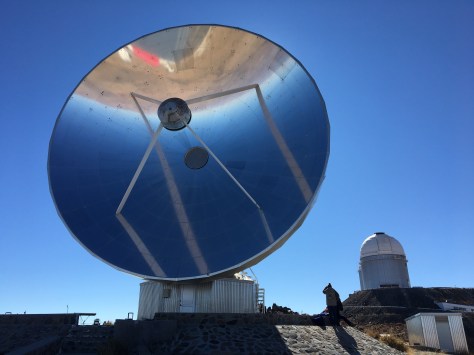
Of the actually eclipse experience I’ve already written, so for the morning let’s just say that we were well organised and ahead of most of the crowds, getting out onto Route 5 (the Panamerica) and climbing into into the mountains of the southern Atacama desert along several switchback sections. We’d read our instructions well and followed the signs to the La Silla base camp rather than the eclipse party camp that the normal road would have taken us to. A fleet of minibuses took us up to the mountaintop, where we joined hundreds of others in waiting for and enjoying a close-to-ideal eclipse experience.

A mirrored dish and telescope dome at La Silla observatory, Chile.
Even without the eclipse, it still would have been a pleasure to visit La Silla.

Descending in the darkness and driving back along the 5, things got a little more tricky. The switchback sections of the road were navigated without too much trouble, but long before we hit La Serena we hit a tailback. One that went on and on, keeping us stop-starting and crawling for an hour and a half before we reached the lane closure that was the partial cause. That and the numbers of cars leaving the eclipse viewing sites were a warning of what the next day would bring.

Our last day in La Serena saw us trying to get around some bank and card issues that had been only partly sorted out during the car hire experience. This entailed leaving the beachfront area of the city behind for the commercial centre, crossing the dirt-tracked area in between, and navigating the city’s one-way system before we could even begin to deal with the banks and get the funds we needed for our accommodation. Still, we managed it in time and had one last look at the beach before getting in the car and setting off at around noon. A little later than planned, but a five hour drive and eight hours before the car was due back was plenty of leeway, right?

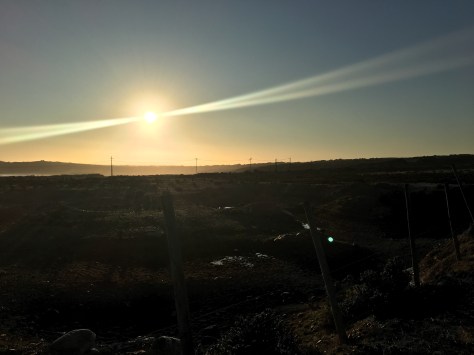
Sunset over the Pacific again, seen from somewhere north of La Serena.
I didn’t get to see the sunset while driving—this at a rest stop we took was the best I could manage.

Wrong. The Panamerican south to Santiago was a nightmare. The one sensible thing we did was to fill up the car as early as we could, as every subsequent filling station featured ever-longer queues. Every toll station along the road south now resulted in a massive tailback as everyone quit the area of the eclipse for the capital and/or the airport. None of the tailbacks were as bad as the one we’d endured the night before, but together they added up, and it was long after dark that we found ourselves at the outskirts of Chile’s capital, trying to follow the signs for the airport. (On our trip north, we’d missed a turnoff and ended up heading south through the city instead, eventually restoring ourselves to the right direction through guesswork and drama.)

After some tense moments, we finally pulled into the car rental site with ten minutes to spare and gratefully returned our off-brand Chinese SUV without any more scratches than it had when we got it (but quite a bit more desert dust). A shuttle to the airport and a taxi into town at last brought us to the Hotel Magnolia, by far the most luxurious of our lodgings. We had just enough time to venture out to Holy Moly for one last round of beers and burgers, as well as Pisco sours before and after in the hotel bar.

A queue to board a coach in Santiago’s Terminal Sur.
All aboard for those of you who want to cross the Andes in genuine comfort.

That was more or less it for me though. While the Doctor and the Lawyer had another full day in Santiago to shop and explore, I was heading for the bus station the next morning, after eating my fill at the Magnolia’s excellent breakfast buffet. Farewells were said and I was off, first on the metro and then (after an hour’s delay) on the bus heading east into the Andes, where tunnels, valleys and switchbacks took me above the snow line and into Argentina, my last view of Chile being down a narrow rocky valley into the sunset land beyond.

Portugal – Escape to the Atlantic Coast

Belem Tower, perhaps the best known sight in Lisbon, if not all of Portugal.

Dublin around the time of the Ides of March is a perilous place to be, packed with tourists and locals eager for an excuse to party and imbibe a beer or two. Getting from one end of O’Connell St to the other can take up most of St. Patrick’s Day if you’re unwary. Most years, I stay at home while the parade’s on or make the most of the long weekend in quieter gatherings with friends. This time I took myself out of the country entirely and spent five days in Portugal instead.

This isn’t a thorough description of what I did on that trip. If you want that, you can check it out here: Portugal 2018 What it is is a brief run through the best parts of the trip, which took in two cities, lots of walking, and nearly as much in the way of custard tarts. I’m not sure how well the latter two balanced out in the end, but I hadn’t put on any weight by the time I came back.

Continue reading Portugal – Escape to the Atlantic Coast

Luxembourg and Brussels – Familiar Places

Down there somewhere is where I had my birthday dinner.
The view of the river that surrounds Luxembourg from the old fortress of the Bock.

(Yes, this travel diary is exceptionally out of date at this stage. Such are the perils of following a procrastinating writer.)

I’ve only been to one of these places before, so I’ll focus on the other one. There’ll be a bit about Belgium at the end, but mostly this is about Luxembourg. A word of warning though: I’m writing this under the influence of a day of travel compounded by a 90 minute delay for a Ryanair flight. So take every other word with a grain of salt.

Luxembourg was the third micro-nation I hit on this trip, but it’s on the edge of deserving this status. It’s bigger than most of the European micro-nations put together, and where San Marino and Liechtenstein were small enough that you could see from one side to the other on a clear-ish day, Luxembourg is big enough for its corners to be just as scruffy as those of larger nations.

...that came when I walked down three sets of stairs to a dead end.
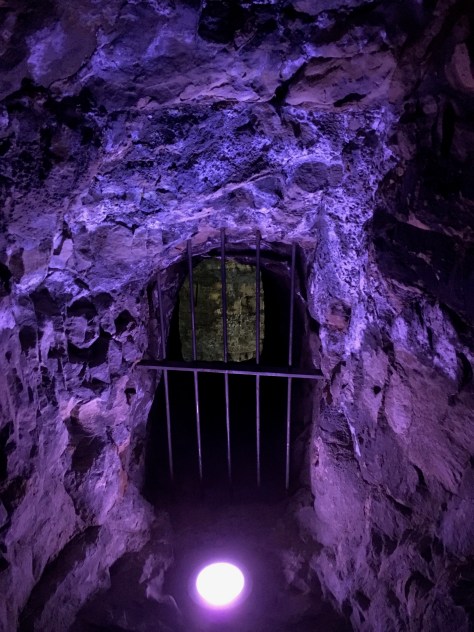
A spooky grating under the mountain. At this stage I wasn’t worried about getting out…

What Luxembourg does have in common with its smaller brethren is that it’s rich. Having sat at the heart of European affairs since the days of the European Coal and Steel Community, the old city is a commendably neat and tidy revamp of a former walled citadel now turned fortress of finance. There are some very expensive, very shiny cars driving around the place, is what I’m trying to say.

Not that you’d recognise the place as a former fortress if you approached it from the west side. Where massive bastions once stood are now broad avenues and neatly tended gardens. It’s only on the eastern side of the city, where the last remnants of the original Bock fortress stand, that you can get an idea of how valuable this place used to be. Founded in the tenth century (there’s a whole legend involving a river mermaid), the Bock commanded a view over the river below, and over the centuries tunnels and storerooms were carved out of the rock below,

You can still wander those passages, and I did so on the first night I arrived. The last tour group was leaving as I arrived, so I had the place more or less to myself for the next hour and half—there are arrows placed in the ground pointing to the exit, but there’s no set path through the narrow passages and the caverns that open out onto views on the valley below. It was only when I became worried they’d close the place with me in it that I started to pay attention to the arrows and found my way out.

Heights don't bother me much. Drops do.
These photos never show the scale of the drop as much as they should.

Luxembourg in the day is a much neater and more understandable prospect. The national museum covers the thousand-year story of the nation over several floors, the lowest of which are carved into the rock below the city, with massive models demonstrating how Luxembourg was shaped over the centuries. Once, when the House of Luxembourg were kings of the Holy Roman Empire, the fate of nations was decided here. Now the decisions made in council chambers are more abstract but no less weighty.

In the end, Luxembourg felt a little neat and sanitised. Like San Marino, everything has been cleaned and polished, and you have to dive down into the valley to get a better sense of the place. A special mention ought to go to the viewing platform north of the Bock, where you can stand on a glass floor and contemplate the multi-storey drop below.

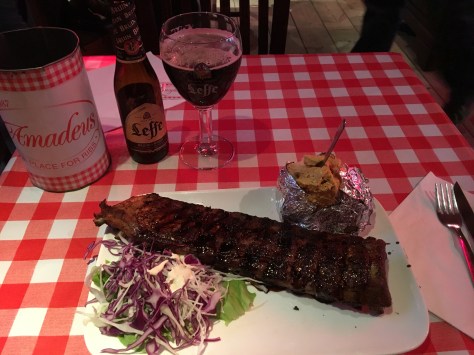
As good a way as any to end the holiday: Endless ribs.
Ribs and beer in Brussels on the last night of the holiday.

So then, on to Brussels and the end of the trip. I’ve been here multiple times and like both the people and the place. So apart from an evening of a little food and a little drink, I wanted to see if I could look at something further afield. The options were the battlefield at Waterloo (to annoy someone who’ll never read this) or the beach at Knokke, to complete my journey from the Mediterranean to the north sea. Of course, the beach won.

Not that I had much time to spend there. Courtesy of Belgium’s leisurely trains and the extremely long avenue leading from the train terminus to the beach, I had no more time at the water’s edge than it took to take a couple of photos and wet my feet. (In point of fact, I’d misread the timetable and had around half an hour more than I thought, but a few minutes was all I got.)

A fine place to end one's journeys.
The lone and level sands stretch far away…

Which brought the whole journey to an end. What had started in the parched streets of Palermo on the island of Sicily, had taken me north through Italy, across the Alps to Switzerland, on to the familiar city of Brussels, hitting three small nations along the way, came to a close on the sands of the North Sea, caught between tourism and a massive seaport on the horizon. Yes, there would be a journey back to Brussels and on to the airport and from thence to Dublin, but that was it. Another journey ended.

I’ll get around to absorbing it and adding any extra thoughts in a while. For now, thanks for reading and I hope you’ve enjoyed these posts. More detailed descriptions of what I got up to will appear in the Travels section above soon.

Liechtenstein and Zurich – The Alpine Experience

And every steeple that I could climb, I did.
A panorama of Zurich – the Zurichsee is on the left, the Uetliberg on the horizon.

There’s going to be a lot packed into this one, so pay attention. As soon as you leave Milan, headed for Tirano, you’re in the Alps, racing along the shores of Lake Como towards the mountains. To an extent, this doesn’t even feel like Italy anymore, or at least not the Italy I started in, back in Palermo. This is Alpine territory, of high, green meadows and bells ringing in valleys overlooked by mountains that rear up, shouldering their rocky peaks above a mantle of forest.

If you like trains at all, I’d recommend the Bernina Express as the way to see the Alps. From comfortable seats before panoramic windows, you’ll have a view of clear mountain streams, those green valleys, viaducts, mountains, glaciers, high lakes, and everything else that the Swiss have spent centuries learning how to build on or through. I saw it in the late summer, when green was the predominant colour, but in the winter it all turns to white and the experience is said to be every bit as impressive.

The Swiss and tunnels: an impressive combination.
One of the viaducts on the Bernina express, emerging from the mountain.

As for what was waiting on the other side, Liechtenstein is an odd little country, with an emphasis on the little. I’d been planning on staying two days, but two things cut that short: First, I saw most of Vaduz in the process of one morning stroll (to give you an idea of scale, the map of the city includes house numbers), and second, it’s stupidly expensive. Which makes sense given that it’s a tax haven of sorts, and it did give me a bit of warning with regard to what Zurich was going to be like, but it was still a shock.

So I spent one night and a few hours there instead, enjoying the clear mountain air and the views, which were only a little spoiled by clouds that cut off the tops of the mountains. Liechtenstein’s tiny territory is bordered by the Rhine and the mountains, and it takes little more than half an hour to cross from one to the other. Perhaps the most fun thing to visit was the football stadium—they’re very proud of the national team here, for all that they’re the ultimate in European minnows. Or at least they were until Gibraltar somehow got a team of their own.

The kind of bridge billy goats might trip-trap across.
An old-school bridge separating Liechtenstein and Switzerland.

Stroll over the bridge across the Rhine and you’re in Switzerland. You don’t even have to do that much if you’re a mobile phone—mine kept swapping between Swiss and Liechtenstein carriers every time I approached the river. When I eventually took the bus out of town, in search of the Sargans Bahnhof where’d I’d get the train to Zurich, this was one reminder of my travelling ways I was glad to leave behind.

In truth, there’s not much culturally to separate the two nations. Maybe the Swiss are a little more uptight, at least on first encountering them. Unlike most places I’ve been, where they’ll switch to English as soon as they figure out where you’re from, the Swiss will assume that you know what you’re doing if you try to speak a language not your own. So be wary if you want to try out your foreign tongues here.

I'd be annoyed too if someone had planted me where dogs could piss on me.
A friendly (?) face encountered on my way up the Uetliberg.

As mentioned, Zurich is expensive. Evidence of this can be seen in the houses that line the waterfront of the Zurichsee and the slopes to the east, and proof can be found every time that feel like going for a drink or eating out. Try to keep that to a minimum if you want your funds to survive a few days here. I’m generally not too proscriptive when it comes to spending money on holidays, but even so I couldn’t justify visiting a restaurant with €40 main courses.

Saving money is possible though: there are 24-hour and 72-hour travel passes, which will speed your way on the many public transport options and a lot of museums. Mine took me on a round trip of the northern half of the Zurichsee, down from the heights of the Uetliberg mountain to the west of the city (some might say it would have been more sensible to take the tram up, then walk down, instead of the other way around), through the excellent Landesmuseum and its exhibits, and then up the eastern slopes of the city too, to where the city zoo sits right next door to the FIFA world headquarters.

(There’s a joke to be made here about amoral creatures with insatiable appetites, trapped in a structure that should never have been built, but I’m sure someone else can construct it better than I could.)

Actually linesmen in training, though that's no less a weird sight.
FIFA officials doing their bribery-denial drills.

In short, if you make a bit of an effort, you can enjoy Zurich on something resembling a sensible budget. If you make the most of the Co-Op supermarkets that are everywhere, you’ll probably even manage much better than I did. It’s worth the effort too. While I loved Liechtenstein for its quiet isolation, I enjoyed Zurich for its reserved honesty. There’s plenty to do and see, and lots of narrow alleys, steep streets, hidden parks and other places to discover. The Landesmuseum exhibit on Swiss history is open, if regretfully so, about how Switzerland’s history of democracy, neutrality and isolationism has had its downsides. If we could be so honest about ourselves in Ireland, it would be a big step forward.

Rimini and San Marino—Sand and Stone

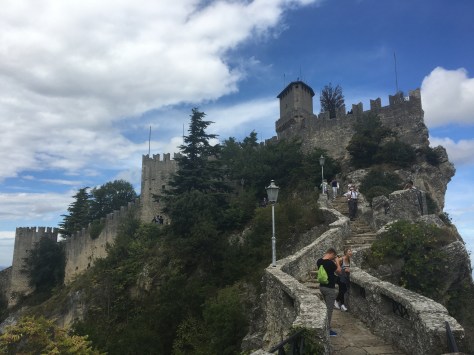
From any side, conquering San Marino would have been a pain.
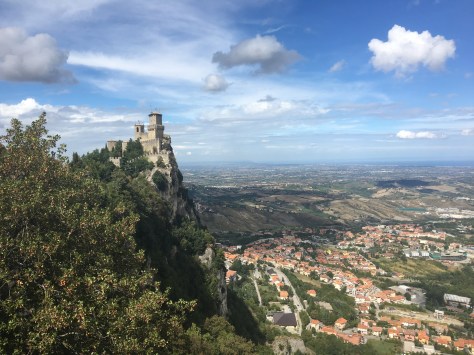
A commanding view of the Italian countryside from the towers of San Marino.

Let’s start with San Marino, as it was the reason that I was in Rimini in the first place, rather than being a bonus added on to a stay in Italy’s Adriatic beach resort. Founded in 301AD, if you believe the local legends, San Marino rests on and around Monte Titano and likes to refer to itself as the “Titanic Republic”. Which probably counts as overcompensating, given that it’s the third smallest nation in Europe (only Vatican City and Monaco are smaller, and those two are essentially just cities).

It’s not like it really needs to compensate for anything, as San Marino offers plenty to stun visitors. Perched on its mountain peak, it commands views across a good chunk of northeastern Italy. Rimini and the Adriatic are easily visible on a clear day, and the valleys of Italy’s more mountainous interior are just as open to viewers from on high. Maintaining your independence across the centuries was undoubtedly made much easier due to being able to see pretty much any threat long before it became a problem.

This actually isn't in the citadel proper, which starts at the First Tower.
The climb to the First Tower of San Marino.

The first impression of San Marino, just off the tour bus from Rimini, might be a little underwhelming though. This isn’t a picturesque ruin: it’s a working, living city (albeit one heavily weighted towards tourism). The stonework is neatly chiselled and well maintained, and the streets are spotlessly clean. It can all seem a bit quaint and even kitschy. The overabundance of tourist-trap shops doesn’t help, even when half of them also seem to be selling guns.

Step away from the well-groomed northern part of the mountain though and you’ll find more interesting sights. Clean and cobbled streets give way to (well-tended) mountain paths that lead up to and between the three towers that protected San Marino in days gone by. Each of them are well preserved, but their sites and prospects are still breathtaking, especially that of the lonely third tower, a single edifice that rises up on the edge of a cliff, commanding views to the east, south and west.

Old-school Ferrari is hard to beat.
An auto-rally in Rimini at night gave a chance to glimpse some gorgeous Italian motors.

As a tick on the list of nations to visit goes, San Marino didn’t disappoint. I just wished that I could have learned more about it. As mentioned, tourism seems to trump all, and the State Museum is a little light on the actual history of San Marino, preferring to load up on local artefacts and fill in the gaps with strange items from foreign lands donated by local grandees. It’s all a little lightweight, and given that the other museums nearby include a Museum of Torture and a Museum of Vampires, detailed history proves thin on the ground.

Oddly, Rimini fares better on that front. I say oddly, because my first experience of Rimini was of a battlefield of a beach, occupied by an army of deckchairs. This place is resort central, and any Italian charm is flattened under the need to welcome and feed as many guests as possible, divest them of their money, and shuffle in the next crowd. Not to my taste (though I did enjoy the chance for an early morning dip in the Adriatic).

Two thousand years old and still carrying traffic.
He may have been a grumpy sod, but Tiberius built solid bridges.

Venture onto the other side of the (railroad) tracks though, and something different emerges. Rimini was once Ariminum, a coastal town formerly inhabited by the Etruscans and others. Plenty of Roman relics remain, not least in the layout of the compact city centre. It’s not a large place by any means and is likely dwarfed by the beach resort that shares its name, but it’s worth strolling through. For one thing, it has lots of charm in its own right, and for another that stroll might just take you across a 1,995-year-old bridge built by the Emperor Tiberius, which still serves as a (single lane) crossing for cars. How many times in your life are you going to get to walk across something like that?

In short, San Marino is definitely the big draw here and deservedly so. Its mountaintop vistas and winding streets are worth spending a good chunk of a day exploring, though you’re likely to tire of it long before it tires of trying to sell you stuff. Rimini, on the other hand, is worth persevering with: beneath, or rather behind, the trappings of a modern day beach resort is a charming little town with plenty of its own history and culture to root around in. I’m glad I had the chance to do so, and it made me happier about deciding to stay there in the first place.

Naples – Vesuvius and What it Left Behind

My Latin isn't the best, but even I know this is a greeting.
A Pompeiian welcome mat.

(Apologies for the delay on this one – things have been hectic since I got home. Well, hectic-ish. Next one will be along sooner.)

This is going to be all about Pompeii. Well, almost. This shouldn’t come as much of a surprise to anyone who’s had a look at my bookshelves or knows of my historical preferences. As much as the Romans could be an unpleasant bunch, they had an unrivalled influence on western civilisation, and there’s enough of their writings and edifices that remain to get a pretty strong idea of what life in their time was like.

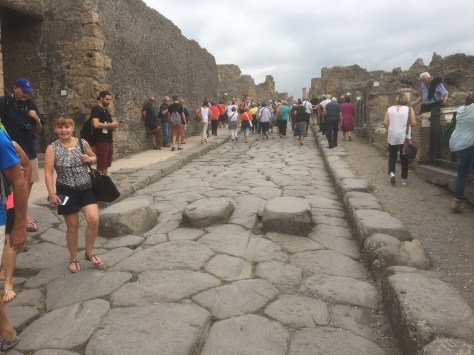
Pompeii, that most famous relic of the eruption of Vesuvius in 79 A.D., demonstrates both just how much of ancient Rome we have access to and how distant we still are from it. Streets of fast-food vendors, sports stadiums, the mansions of the suburban rich, and brothels in the back alleys of the red light district are all there to be seen. However, so are stepping stones across streets that allowed citizens to keep their feet out of the rivers of sewage that flowed downhill. So while a lot of Rome might have been familiar to us, there’s a lot more that would have given us pause. (More on that later.)

Just a hop, skip and a jump.
This is how you crossed the road in Pompeii without getting your feet dirty.

A guided tour through Pompeii is a good introduction to the city that Vesuvius buried, but you ought to set aside more time to explore afterwards, as no tour is going to do any more than hit some of the highlights. Two of the most impressive parts of the city—the Villa of the Mysteries and the Amphitheatre—lie at diametrically opposite parts of the site, and most tours will stick to the central section instead.

To complete your Pompeiian experience, there are a couple of options. You could visit Herculaneum, the other victim of Vesuvius, which I didn’t do, or you could head to the National Archaeological Museum, which I did. That museum is split between the relics of Pompeii and the Farnese Collection, which is one of the finest gatherings of classical sculpture in the world, outdone only (possibly?) by the Pope’s own collection in the Vatican. At least one of the Farneses was Pope too, so there’s been some cross-pollination.

Also, rock-hard buns.
An unusual angle on Herc, with the Apples of the Hesperides hidden away.

That collection certainly shouldn’t be missed, but the Pompeiian relics are just as interesting. The mosaics and frescoes are some of the best you’ll see anywhere, including the famous mosaic of Alexander the Great from the House of the Faun (a copy of it now sits in the original house in Pompeii). Rather more amusing is the collection of Roman erotica that’s tucked away into a corner of the museum, guarded by a warning (in Italian) that kids aged 14 or less maybe should go get their culture somewhere else.

You see, one of the things that the excavation of Pompeii did was to puncture forever the image of Romans as dignified elderly types, delivering fine speeches to other dignified elderly types. Whatever truth there is to that image, the Romans were also open and frank about sex and obsessed with dicks. (all right—phalluses.) Even the moralistic Augustus was said to have his own private book of porn. The museum’s collection of erotica includes a range of frescoes kept away from the general public and some completely explicit sculptures, including a Mercury adorned with multiple penises, Pan having sex with a goat, and a winged dick suspended from a chain. Frankly, after roaming these rooms for a little while, you’ll run out of synonyms for male genitalia and need a breather. Or possibly a cold shower.

Possible a good luck charm, but it's also pretty funny.
This image of Priapus adorned a wall in Pompeii, once upon a time.

Naples, much like Palermo, only really comes alive at night. Once the sun has gone, people crowd the shopping district that runs downhill from the National Archaeological Museum, past the Piazza Dante and along the Via Toledo. Perhaps it was just that it was a Friday night, but it certainly seemed to me like everyone was out and having a good time. At least for as long as the weather held—before the night was through, the night was rent by a particularly impressive storm, with Jupiter tossing around thunderbolts a couple of time every minute.

Luckily for me, I was already safe indoors and away from the torrential rain at that stage, having circled back to my lodgings via the Piazza del Plebiscito and the impressively solid Castel Nuovo. Still, if there’s any fitting way to end a visit to the vicinity of Vesuvius, it’s with a demonstration of the fact that natural forces are to be cowered before whenever they start to throw their weight around.

Palermo – Out on its Own

Rooftops that would work well in an Assassins' Creed game.
Looking north from the Teatro Massimo, with Monte Pellegrino in the distance.

My first experience of Palermo and Sicily was the sparkling blue of the Tyrrenhian Sea contrasting with the terracotta dust of late-summer/early-autumn. Sicily, which I’d heard so much about but never seen, was rocky in its northwestern corner, with steep peaks rising straight out of the sea, and Palermo itself sprawled across a shallow valley caught between several of those peaks.

It’s not an easy city to get to grips with, because it doesn’t have a strongly defined centre. Instead, there are a few streets running north-south and one key one that runs east-west. Stray too far from any of these and you might find yourself among run-down quarters with narrow alleys full of street vendors’ stalls, rows of apartment blocks that can be either new or crumbling relics of ages past, or parched gardens that offer some shade in the heat that lingers on after the departed summer.

Let's face it, when you move into a new place, it's the pleasure gardens you go for.
Would that its pleasure gardens were still in as good a shape.

There’s no metro in Palermo, and the only tram I saw actually runs from the non-central train station to an outlying shopping centre, so if you’re going to explore, it’ll have to be on foot. (Forget about wheeled transport unless you’re willing to wait on buses or take your life in your hand on a moped. In fact, the very existence of mopeds requires pedestrians to be either vigilant or accepting of potential disaster.) I like exploration by foot though, so that suits me pretty well.

As far as another habit of mine goes—that of climbing on top of tall buildings to get a better idea of the city I’m in—there are some good options, albeit none too tall. The first and preferable is the Teatro Massimo, Europe’s third-largest opera house. Take the excellent tour around the opera house itself and pay the extra to get up to the terrace. Courtesy of a slow elevator and some steep steps you’ll get to enjoy the best view of the city. Mostly unobstructed, it’s the best way to get a feel for how Palermo has spread out to occupy the space available.

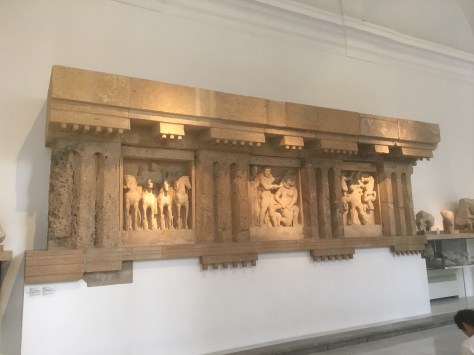
The Greeks liked settling anywhere they had access to marble and chisels.
An ancient carving from the Greek colony of Selinunte on Sicily’s south coast.

Palermo Cathedral offers the next best thing when it comes to viewing the city, but the cathedral’s towers get in the way of the view, and the narrower space up there can get a bit more crowded. It is a good bit cheaper though, and as a bonus you also get access to the royal tombs that the cathedral holds (Sicily had its own kings up until Italy’s unification) and the crypt beneath, which contains relics dating back to the Norman occupation of the 12th century. Or possibly even earlier, given the Cardinals’ habit of re-using convenient sarcophagi.

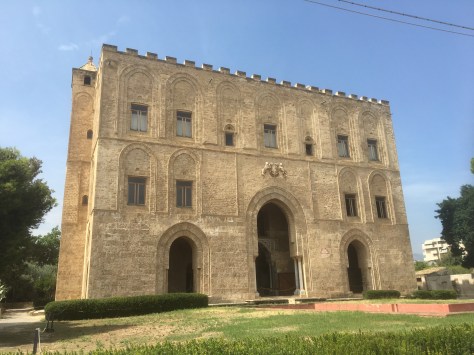
The crypt is a good place to get a feel for how old Sicilian habitation has been and how many different groups have claimed it over the centuries. From the original inhabitants to the Phoenician and Greek settlers, to the following Carthaginians and Romans, who waged their first Punic War over the island, through the Arabs and the Normans to the European dynasties who fought over the island until Italy put its boot down, there are layers of warfare, trade, and settlement everywhere you look.

More than a little Arab in the design, mind you.
The Norman Chapel of Chiesa de Santa Cataldo.

Getting an explanation of all of this history is a little more difficult. The Archaeological Museum is mostly closed for renovations at the moment, with only one out of three floors open. That one floor is free to visit though, and it’s a really well presented exploration of some of Sicily’s earliest history, with a particular focus on the Greek city of Selinunte. It’s really well laid out and explained, and as the rest of the museum opens up, it’ll be even more worth your time.

Palermo, then, is hard to get to grips with but worth the effort. If I had more time, it would be a great place to start an exploration of the island from. As it was, I didn’t get a chance to break out of the city, though the two days I had there were filled as far as I was able with the aid of two feet and a handy map. There’s great food to be had (especially seafood) and sights to see, but when my time was done, it was the Palermo Centrale train station that drew me, with the promise of a bed that would carry me east to Messina and across the straits to the mainland, to visit Naples, Pompeii and Vesuvius next.

From South to North

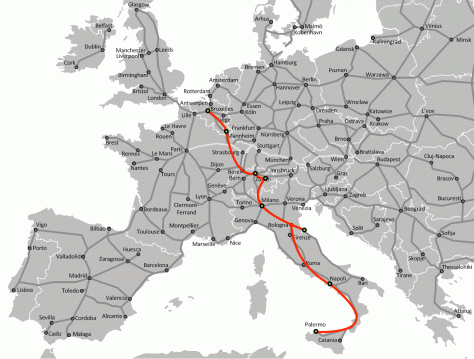
At the very least, it looks like a straight line. (Damn you San Marino!)
This is probably one of the more sensible-looking travel routes I’ve ever devised.

As mentioned in my previous post, I’m once again taking time off from local affairs this September and heading for less familiar climes. Moreover, so as not to break with tradition, I’m not just travelling to, I’m travelling through. Hitting all sorts of nations and cities that I’ve never been to before.

This excursion feels a little different from previous years though. This time there’s no strong theme, as there was in my Eastern European journey last year, or my exploration of Greece the year before. Instead, there’s just a direction: south to north, from the Mediterranean to the North Sea. Or as close to the North Sea as I can manage. If there’s a binding theme at all, it’s one of filling gaps in my collection of nations; visiting places that I haven’t been to, or even near to.

As I said, it feels a little off-kilter, as though the series of mostly train-based journeys that I’ve been on since Norway, back in 2009, is coming to an end. The two or three further European trips that are percolating in my head don’t suit train-based shenanigans nearly as well, and the continents further afield that await my bootprints are even less amenable to sticking to the iron rails.

It may just be time for me to stretch my conception of what a travelling holiday might be. No bad thing that—I’ve gotten a lot out of rail (and sea) travel, but this holiday will stretch the balance between exploring and watching the landscape speed by about as far as it’s likely to go.

As for this trip, there’ll be plenty to keep myself occupied (and not just making sure that I catch the next connection). I’ll be kicking off in Italy, which is familiar enough in itself, albeit in a part of it that I’ve never been to before: Palermo, Sicily. An island that’s been the site of contention ever since the Greeks and the Phoenicians first started looking crosswise at each other, it’s a long way south of any part of Italy (Rome) that I’ve been in before, and it’ll feed my lust for history nicely.

An overnight train (the only one of this trip) will take me across Sicily and the Straits of Messina (loading the train onto a boat in the process, which I’ll likely sleep through) and on through the night to Naples. Which is worthy of a visit in itself, even if it weren’t for the presence of Vesuvius and the ruins of Pompeii in close attendance. I won’t miss out on those, I can assure you. It’s no accident that the overnight train will drop me off beside the Circumvesuviana line to the ruins at a time when the tour groups have yet to have their breakfast. Should I be able to drag myself away from this long-awaited visit to the preserved ruins of ancient Rome, I’ll see as much of Naples as I can in the time remaining.

Onwards then from Naples and one of the more awkward routes of the trip. North through and past Rome to Bologna, then an almost-180-degree reversal to head south east to the Adriatic coast and Rimini. Why stop here? Well, Rimini itself and the nearby beaches are said to be well worth the visit, but that’s less my style than the small nation-state only a short bus ride away. San Marino has been happily independent for a very long time, and for all that it’s tiny in comparison to the Italian nation that enfolds it, it should be well worth a visit in its own right.

After Rimini and San Marino have had their fill of me, it’s north again, this time to Milan. I came close here last year with a layover in nearby Bergamo, but Milan is the big dog of northern Italian cities, nestled in under the Alps, and it should be interesting to compare it to the more southerly Italian locations that I’ll have passed through to get there. However, for the most part it’s a breathing space before tackling the mountains.

If any day is going to mark my complete over-commitment to the rail theme, this one will. Three nations, three trains (and a bus), and as many mountains as you may care to shake a stick at. From Milan to Tirano, there to catch the Bernina Express that’ll see me safely over the Alps, through some of the most fabulous scenery to be had in Europe. That will deposit me in Chur in Switzerland, from whence a train to Sargans and a bus to Vaduz will drop me in a nation almost as small as San Marino: Liechtenstein.

This is where the nature of the trip and the problems with it ought to become apparent: I’m on a one-way trip to Checklist-ville. Last year I visited ten countries, but I had just over three weeks in which to do so, which meant I averaged out at around two days in each. This time, I’ve got a little less than 12 days to cross Europe from south to north, and in way too many places I’ll be there no longer than it takes to have a look around. At least in Liechtenstein, where an afternoon stroll is enough to take you across the country from west to east, I’ll see a good percentage of it before I go.

Switzerland’s efficient public transport system will shuttle me back from Vaduz, across the border and on to Zurich. Given that my major Swiss influences extend to Heidi, William Tell and one of the Asterix books, it’s fair to say that I have little or no idea of what to expect here. However it turns out, given that Switzerland is one of the world’s most heavily armed countries, I will at least be on my very best behaviour.

From Zurich, it’s all downhill on the home stretch of this trip. Specifically downhill towards Mulhouse in France on a TGV, then onwards to my next destination, Europe’s biggest mini-nation. Luxembourg is a giant compared to San Marino or Liechtenstein, even if it’s trapped between France, Belgium and Germany, and it’s been at the heart of the European Union ever since its founding. I have been told by someone who ought to know that there’s nothing there to see there, but I feel that in these dark times of Brexit and Grexit, it’s probably sensible to visit the beating heart of the Euro Illuminati and make sure that I’m not on their “naughty” list.

After all, Luxembourg is just three hours on the train from my very final stop, which is the even more EU-centric capital of Belgium—Brussels. A place I’ve become all too familiar with over the past year and a bit, and there’s no more friendly or relaxed city to spend a last evening in before a late night flight back to Dublin. I’ll do my best to take a day-trip out to the North Sea before I leave, but the allure of beer and waffles may prove too strong.

For now though, I’m just engaged in pre-packing routines, printing out my train tickets (e-tickets are great, but it pays to have a backup), and double-checking everything else. Inevitably I’m going to forget something, as is always the way of holidays, but with all the travelling to be done, it’s not likely to be anything that I’ll miss much.

Eastern Europe Odyssey: Roundup

It's painful to resist on Ryanair in particular.
Long-legged though I may be, it’s hard to resist a window seat.

So, I’ve been back home for a few days, and after a lot of running around, I’ve finally gotten settled, enough so that I can sit down and think about the journey that I’ve just been on. I’ve been taking trips like this for a little while. What’s changed, what hasn’t, and what have I learned for the future?

Timing: This was probably the tightest trip in terms of timing since I was in Norway five years ago. With ten countries fitted into just over three weeks, some cities got no more than a single night at the expense of places like Berlin that got three. It wasn’t perfectly organised, and a fumble in miscounting the days meant that I ended up missing out Sofia altogether. Still, I quite liked the rhythm of having two days in a place: one to see the city itself, and one for a day trip to somewhere nearby. In some places where I stayed longer, time dragged a little more. That might be something to remember for the future. (Bear in mind, that I’ve developed a dislike of sitting still in recent years. My pace of solo travel might not suit everyone else.)

Rail is the Way: I still love rail travel, and for this trip it took me all around Europe, with only two deviations – the boat trip down the Danube from Vienna to Bratislava and the bus trip from Sofia to Veliko Tarnovo. The most expensive tickets were those in Poland and Germany, which I booked in advance, whereas the trips I took as I went further south and east were cheaper and usually booked at the station. There usually weren’t any problems finding space on overnight trains, and you get to meet all sorts of interesting people when you’re sharing a compartment. Though travellers at the peak of the high season would probably find things a little trickier than I did.

Luggage: I think I shaved things close to as minimal as I could on this trip, toting a medium-sized backpack instead of a full-sized rucksack. As it was, I needed to add a shoulder bag that allowed me to keep some daily essentials with me when I left the main bag behind for a few hours. Over the course of the whole trip, I only needed a single laundry day to keep me in clean clothes, so things went well on that front. The lack of luggage space did mean that I was restricted in bringing things back, but my usual collection of fridge magnets fitted nicely.

Accommodation: As in my last trip to Greece, I mixed B&Bs, hotels and hostels, booking them a day or two in advance on my phone. Again, it all worked out well, and the variety was one of the high points of the trip. Hostels are great for meeting people and having a space to chill out, whereas B&Bs and hotels can be cosier and offer some respite for your humble introvert and a decent shower. The last place I stayed in, the Hotel Cosmos in Chisinau, Moldova, was a former Soviet tower that had only patchily been updated to modern standards – just enough to be comfortable while keeping that weirdly appealing ’80s vibe of the original building.

Technology:  Once again, I relied on my iPhone alone. This worked as well as it did in Greece, if not better. Wifi has become completely ubiquitous – even in Moldova I never had any problem finding a place with a signal. This has both good and bad sides: booking accommodation remained easy, and TripAdvisor kept me informed about things worth seeing locally, but there’s no longer a lack of internet to provide a crutch to enable disconnection, if that’s what you’re looking for. You’ll have to rely on willpower alone, or escape to the sticks. Battery life can be an issue, albeit one that can be alleviated with planning. My external battery pack worked nicely, though I couldn’t charge it and the phone at the same time – a dual-port USB adapter might complete the travel kit.

Footwear: I might just have got the balance on this one right this time. I’ve always preferred a sturdy pair of shoes that you can wear both in the city and on the trail over a pair of boots that are only suited to the wilderness. Previously, I’d brought some flip-flops for sunnier weather but found them neither comfortable nor very useful. So this time I picked up a pair of sturdy sandals, which proved a fine backup for the shoes. And no, I didn’t wear them with socks (though if it was cold enough, I probably would).

History: I love digging into the history of places, which usually means museums, but most cities also express their history through their culture and architecture. Bucharest in Romania, with its wealth of gorgeous architecture, is completely different from Chisinau, capital of the neighbouring Moldova, which is Soviet almost everywhere you look. Yet both nations share a culture, and their histories and future are tied as tightly together as those of Ireland and Britain. To travel through so many different nations is to get a real feel of how the changing fortunes of history have affected them all in different ways. Common elements abound, like World War II and the Holocaust, but Serbia has its own experience of history both recent and distant, completely different from those of a nation like Poland. One frustration for me was the language support in museums – it got tougher to find English-language offerings the further south and east I went.

Travel Guides: Phone apps versus traditional books is the choice here. I managed to get an Eastern Europe Lonely Planet book that covered all my stops except Berlin and Vienna, but it had the twin problems of being bulky and a couple of years old. In the other corner, TripAdvisor allowed me to download city guides for major cities, but these had fairly basic navigation functions and didn’t cover minor destinations, such as Chisinau and Veliko Tarnovo. So neither option is perfect yet, though paper’s bulk and the fact that apps are updated suggests that a little more work on finding the best option on the latter front could be well worth it.

Exploration vs Checklist: The one big issue with this trip was that in fitting so many different destinations into only three weeks, there was a danger of turning it into a process of ticking boxes. Most of the cities I went to were capitals, and in many cases I didn’t have time to explore beyond the city limits. Still, there are always going to be limits to any holiday – you can never get to truly experience a place without living there. As long as I’m okay with missing out on some things, there’s nothing wrong with this way of travelling. And, as mentioned above, the two-day rhythm of city and day trip turned out to be a pretty good one.

Future Trips: My next holiday might not be in Europe, but I’ll be doing this again at some stage. Three holidays in particular suggest themselves – a European Fringe Tour from Finland south through the Baltic states and Belarus to Ukraine, a Balkans Tour starting in Venice and ending in Albania, and a Statelets Tour covering as many of the minor states and principalities as I can hit. If I can do all three of those, the only European nation I won’t have been to is Cyprus. And a weekend away in the sun should cover that. Checklisting, maybe, but as an excuse to dust off my travel shoes, it’s proved a pretty handy one to date.

Bergamo: Italian Addendum

Not that I had a choice, mind you. The stairs were out.
I’d say the climb was worth it, but I used the lift.

The vagaries of modern-day cut-price flying being what they are, you will, on occasion, find yourself with hours to waste on a layover in some spot halfway between a distant departure point and home. That being the case, there are probably worse places to spend said hours in than Italy, and more specifically Bergamo. Having been dropped off by WizzAir (comfy and punctual) and having 13 hours before hopping onboard Ryanair (cramped and delayed), I was pretty happy to be no more than a short bus ride away from the medieval Citta Alta, with its massive walls and narrow streets.

Not that the Citta Alta is the highest place in the vicinity. It occupies a high point south of the Alps, overlooking the plains of Lombardy, but San Vigilo Castle stands guard from an ever higher point just to the west. There’s not much there to be seen now, but the views are quite spectacular, even on a misty day. If you’re not inclined to explore and climb your way to the top, there’s a funicular railway that’ll take you to the heights, but you’ll miss out on cobbled streets and horse chestnuts that pop and drop around you as you pass beneath. (That last one might be time-of-year dependent.)

I still don't know what the testicle heraldry is about. Also, three?
Chapel Colleoni in the foreground, basilica in the back. Inside there’s less to choose between them.

As pleasant as it is to sit in San Vigilo and enjoy the view, the Citta Alta is the main draw, and it’s worth your time to descend. Possessed by the Venetians for more than 350 years, Bergamo was their western outpost against the rival great Northern Italian power and was massively fortified as a result. The Venetian walls still surround the Citta Alta, and the winged lions of St Mark, symbol of the Venetian Republic, still stand guard over the fortified gates. Yet Bergamo itself is far older than the Venetian occupation and there are buildings in the Citta Alta that are closer to 1,000 years old than 500.

Perhaps the most impressive is the Basilica di Santa Maria Maggiore. Dating to 1137 but built on the site of a 7th-century religious edifice, it’s not so imposing on the outside as the Cappella Colleoni, the massive tomb of the condottiere Bartolomeo Colleoni annexed to it, but the interior is spectacular, with tapestries and frescoes adorning that walls and further frescoes and other adornments stretching all the way to the roof. Not that the Cappella Colleoni should be missed either – it’s a masterwork in its own right, and Colleoni’s heraldic symbol of three testicles on the gates have been rubbed to a shine by tourists and locals seeking some of his luck.

A brief visit, a fond farewell.
One of the Venetian “lion gates”, with an elevated walkway approaching it.

The museums are nothing to sneeze at either – I didn’t make it to the art galleries lying outside the eastern gate, but the Piazza della Citadella contains both the Archaeological Museum and the Museum of Natural Science. The former has some fine relics of the millennia of habitation in the area, from the palaeolithic through the Celts and Romans to more recent times. The latter sprawls all around the piazza and has an impressive section on other cultures. Closer to the Basilica, the Torre campanaria di città alta or old bell tower is worth climbing, and its attached museum has a fine interactive section on the medieval history of Bergamo itself. Don’t expect much in the way of non-Italian language help though.

Beyond all of the attractions though, the beauty of Bergamo lies in the ability to wander the narrow streets of the Citta Alta freely, medieval buildings towering to either side and cobbles packed tight under your feet. Enjoy a gelato, or perhaps a beer or wine, and find a place to sit and soak in the atmosphere. And then, when the hours have spun past at last, descend though one of the Venetian gates into the Citta bassa and make your way to the airport. The final flight on that cut-price carrier may depress your spirits, but it won’t erase those hours stolen in the Lombard sunshine.