All posts by cerandor

Everything Echoes

IMG_2962.JPG
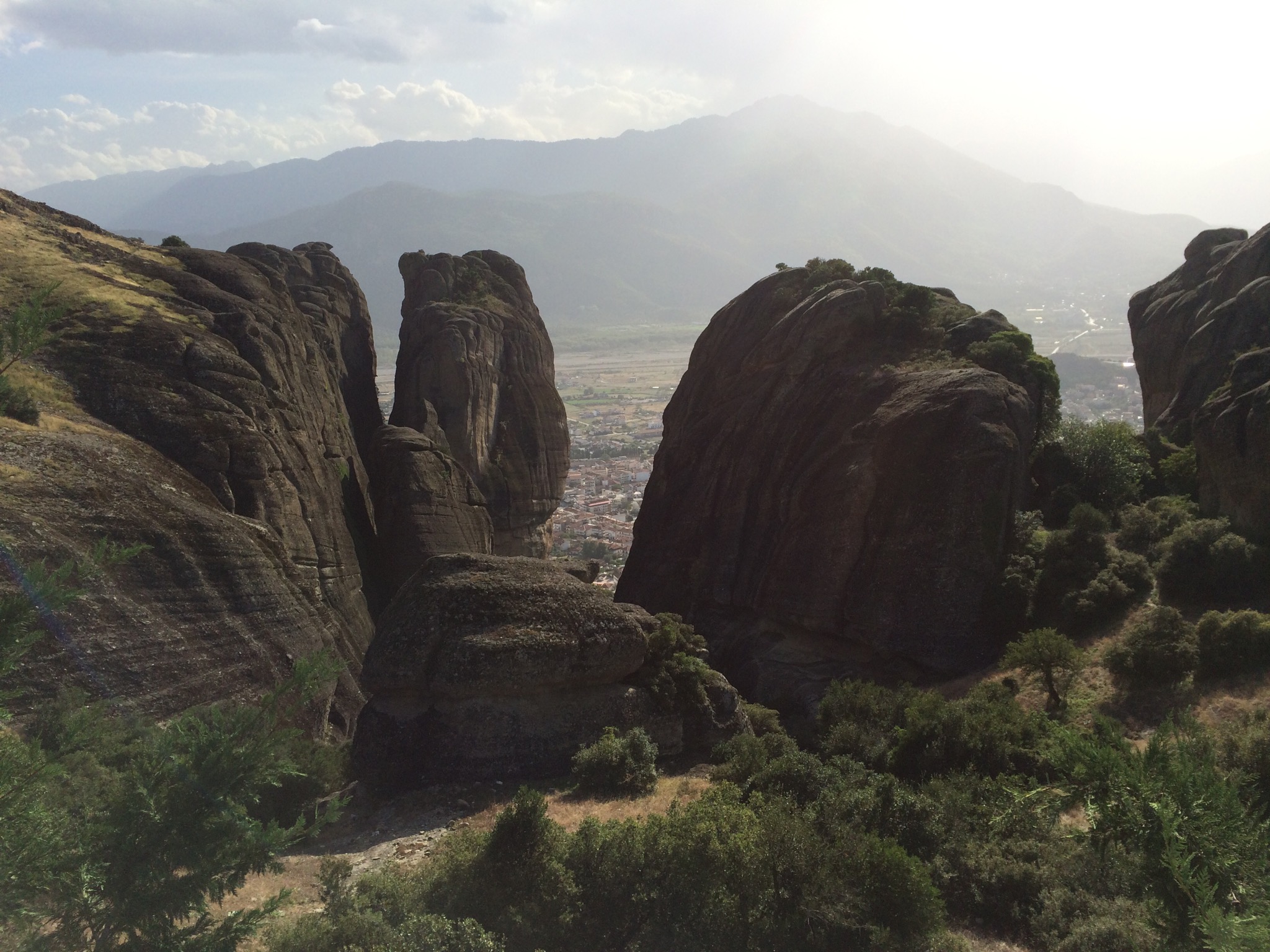
Dawn over Meteora.

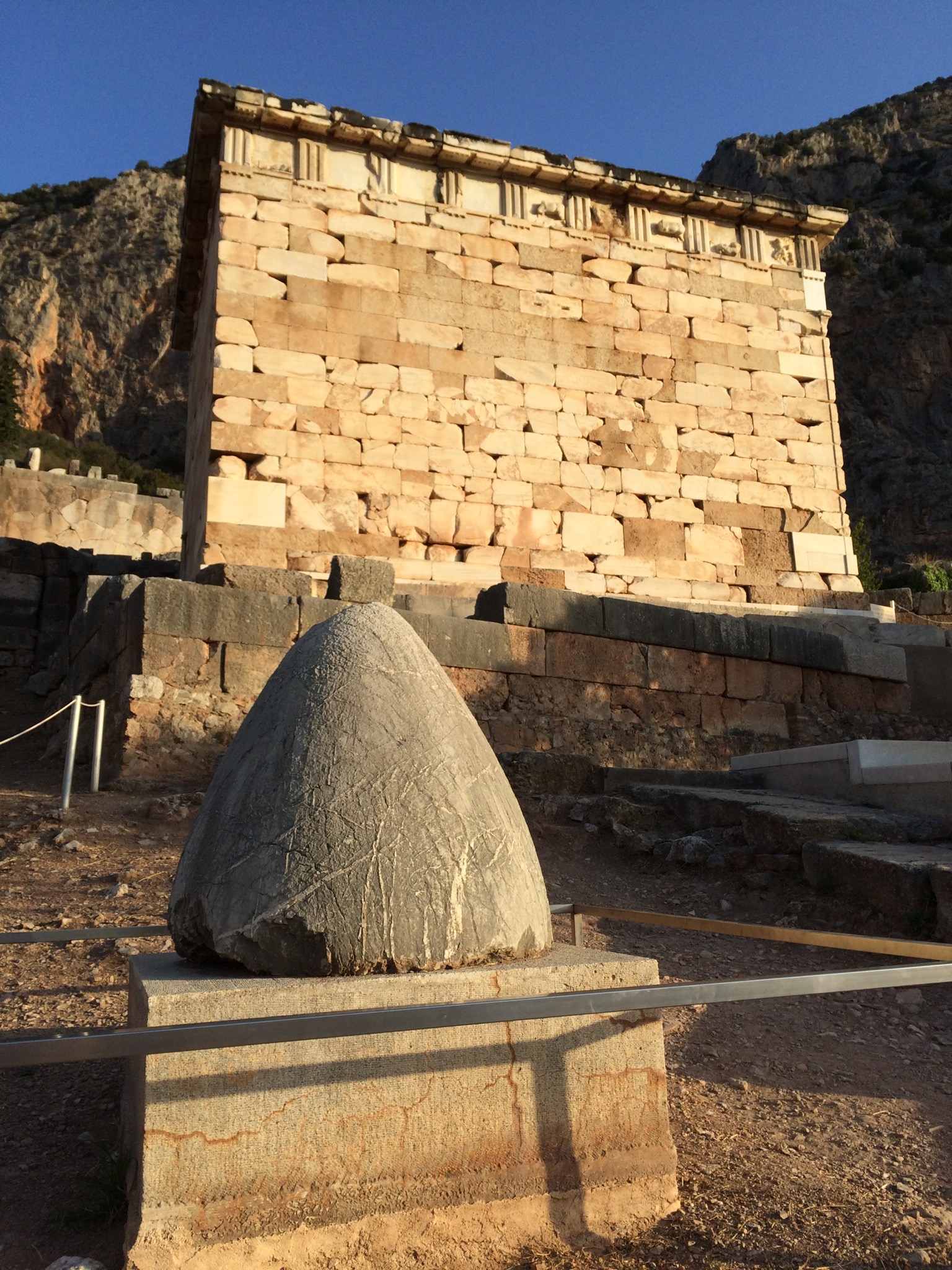
Twenty years ago, I was preparing to start college and live away from home for the first time. Sixteen years ago, I was about to interview for a job that, counting promotions, would keep me employed for the next dozen years. Three years ago, I watched the sun rise over Japan during a journey that was a reaction to losing several of the props of the life I’d built for myself and trying to figure out something new. Two years ago, I was beginning a Masters course that was a bigger challenge than anything I’d taken on in years, and one year ago I was completing it successfully. This year, I woke to see sunrise over the pinnacles of Meteora and will go to sleep in Delphi, the centre of the ancient Greek world, in time for sunset.
Draw any straight line through a life and you’re likely to find a similar degree of drama. This particular history sticks in my mind because my birthday and that of two thirds of my family fall within the space of a month at this time of the year. Late September and early October has always been, for me, a time of change and new beginnings. (That school years in Ireland, north and south, also begin at this time of year probably also helped to set this association in stone.)
For today though, I’m not so much starting something new as passing from one thing to another. Walking among other the monasteries of Meteora this morning (as the image above depicts) has been followed by much travelling by bus. Lamia, amid the mountains of central Greece, was my resting place for the past few hours. Unable to make my way to Thermopylae, only twenty kilometres away (sorry dad), I avoided being stuck in the bus station for four hours by heading into town for a stroll and a frappé (a Greek habit that’s proved worth picking up), returning to the station a safe hour before the bus to Delphi left.
Sunset was lost behind the mountains south of Lamia as we followed a road that Xerxes would have given a king’s ransom for. The closest I got to Thermopylae was passing around the wrong side of a mountain, though perhaps not far from the goatherd’s path that betrayed Leonidas and the 300 Spartans (minus two injured “tremblers” but plus their normally ignored helot slaves and allies). From there it was switchback corners up and down mountainsides into the gathering gloom, changing in Amfissa to take on even narrower mountain paths in the dark, heading towards a site of pilgrimage for a thousand years and more.
In Ancient Greece, travellers to Delphi went there seeking answers to what the future might bring. It was a dangerous business though, seeking out prophetic wisdom. Even if they heard what they wanted to, there was no guarantee that their interpretation was the correct one. Not for nothing has the word “Delphic” come to mean “enigmatic to the point of deliberate ambiguity.” (Look up Croesus for an example of the trouble misinterpreting prophecy can get you into.)
The Pythia’s not been in business for centuries though, and I’m not inclined to look for answers from inspired sources. For me, these blog entries have provided answer enough to something that’s been bothering me for a while. I’ve been trying to get back into the habit of writing for a few months but unable to break through a barrier of self-consciousness. What Greece has provided is a chance to get away from habitual surroundings and strip back my tools to the basics. (I have with me a pen and notepad for writing and an iPhone for posting notes and photos.) With less to worry about, I feel more relaxed, and I hope that shows in my writing. Unlike the ancient Greeks, I’ll be arriving in Delphi with no question in dire need of answering.

IMG_3010.JPG
The Maliakos Gulf. Down there, Xerxes’ army once camped. I wasn’t quite so held up.

Up a Rock, Without a Prayer

IMG_2936.JPG
Not bad for a hotel room view.
The first Christian hermits in the Middle East thought that the best way to get close to God was to get as far away from the madding crowd of humanity as they could (some of us may sympathise). Holiness, however, brought fame, and soon those same crowds sought them out. So the hermits erected poles and pillars and retreated up them for years at a time. Anything for a quiet life.
The monks of Meteora, sadly, weren’t taking this approach to its logical extreme when they decided to build their monasteries on top of inaccessible pinnacles of rock. It would have made this post much more coherent if they had. Instead, they were trying to keep out of the way of the Ottoman conquerors of Greece, with whom they weren’t religiously in synch . Whatever their reasons though, the results are spectacular.
Kalambaka, nestled at the base of sheer limestone cliffs (which, yes, people try to climb because some people aren’t happy unless they’ve found a new way of making their lives difficult) is a small town that mostly caters to the tourists coming to gawp at the monasteries of Meteora. My own gawping is taking place towards the end of the gawping season, which means that the town is a little quieter than it might be and a fair bit cooler. (That it gets a lot colder can be seen in the piles of firewood that most houses have set aside for the winter.) Which is definitely a good thing, as a trek up the footpath to the nearest monastery without a bottle of water came close to being a rather bad idea.
The views, though, were well worth it again, and tomorrow morning I’ll be back to do it properly. Already I’m realising that ten days isn’t enough to even scratch the surface of a country like Greece. But a day that can grant you a glimpse of Mount Olympus, a tour through a thousand-year-old church adorned with frescoes on every surface, and the sight of a monastery that can only be reached by a rickety cable car or a stairway carved into a cliff face is a day well spent.

IMG_2957.JPG
A little more Meteora is good for the soul.

Initial Greek Perambulations

IMG_2872.JPG
It was all downhill from here…
If, like me, you harbour illusions about your ability to navigate around a foreign city unaided, Thessaloniki will disabuse you of them. Not so much the newer city, with its straight lines parallel to the dockside, but the older city, in the vicinity of the ancient acropolis and slightly less ancient Byzantine walls.
Here, roads go up and down, intersecting in random fashion, usually one lane wide but sometimes no lanes wide, owing to either parked cars or suddenly turning into stairs instead of a street. And while you’re trying to figure this mess out, the cats of the old city are watching you, aristocratically amused by another human struggling to survive in their domain.
I managed well enough last night, locating my hostel, the exceptionally welcoming Little Big House, and a pleasant place to have a beer in the form of Toixo Toixo. That was limited stuff though, and not long after beginning a day of perambulating this morning, I was reduced to heading vaguely downhill and hoping that I’d run into either the city walls or the sea.
Not that wandering wasn’t fun though, and once I did get my bearings again, there were plenty of places for this historical traveller to see, many of them relating to the little-thought-of Roman Emperor Galerius, who made Thessaloniki the capital of his eastern empire, a status it only held for a little time before Constantine moved the entire business to Byzantium/Constantinople.
Between that and the museums and the White Tower, wherein medieval prisoners were wont to be, well, imprisoned, there has been more than enough walking done today. The time has come to eat, at the Kitchen Bar by the waterside, before figuring out a route back to the Little Big House. If you don’t hear from me in the next ten days, send a search party…
Note: The wifi in the Kitchen Bar was pretty dire, so I’m posting this from the Little Big House. Which wasn’t impossible to find. Not easy, but not impossible either.

IMG_2913.JPG
The White Tower. Once known as the Bloody Tower, before they literally whitewashed it.

Danish Pastry Stopover

IMG_2832.JPG
I’ve been devouring Copenhagen in bite-sized pieces over the past few years. Right now, the piece that I’m devouring comes in the form of a ham and cheese toasty in Kobenhaven Airport. As always seems to be the way with the Danish capital, I’m only here on my way to or from somewhere else. Maybe someday I’ll stick around long enough to see some of the country itself. (I’ll spare you the “Aarhus, in the middle of aarstreet” joke I’ve been working on for the last few days.
This time, I was actually here long enough to stay overnight, in the Generator hostel in the heart of the city. After navigating my way through a Friday night crowd that was notably better dressed and less drunk than their Dublin equivalents (they had to be – lots of them were cycling), I made it to a comfy bunk in a dorm room, if not quite so quickly to sleep, due to a combination of music reverberating through the building and snoring from the bunk below.
The day that followed, I decided to focus on Christiansborg Palace, or rather on the ruins underneath it. It’s honestly a bit of a shame that the ramshackle old castle (a model of which is pictured below) was flattened to make way for a Versailles-aping edifice during Denmark’s golden age of trade, in a particularly expensive form of keeping up with the Joneses. In a turn that the Monty Python troupe would have appreciate though, the new palace burned down not once but twice in the next century and a bit. The third one though, that’s stayed up (so far).
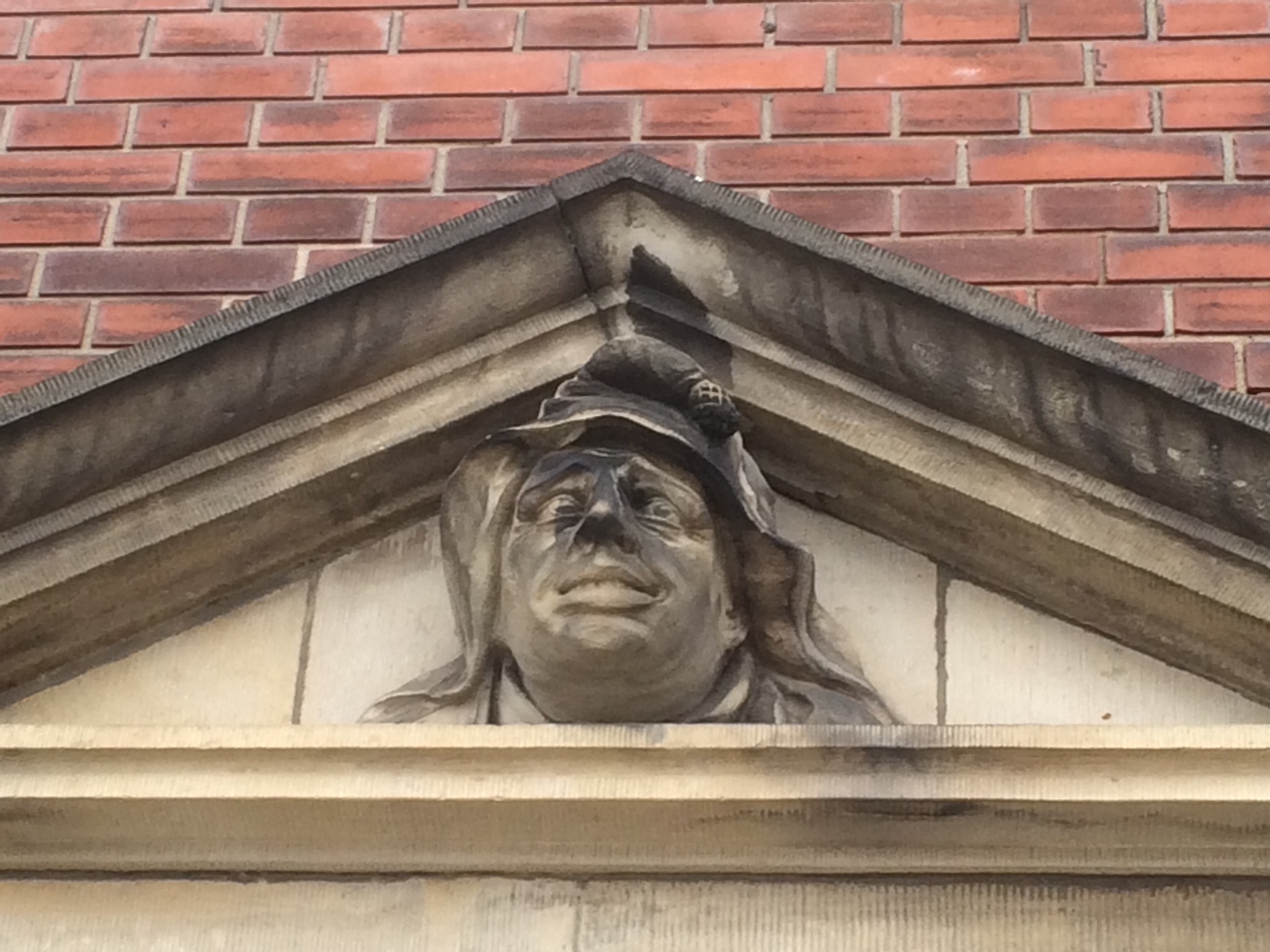
Next to the palace are other sights worthy of your time: the delightfully strange Exchange Building, one of whose gargoyle-like decorations can be seen above, and the Thorvaldsen’s Museum, a celebration of Denmark’s greatest Neoclassical sculptors (and of the few nearby buildings to survive the second burning of Christainsborg intact).
Sadly though, it’s another flying visit for me to this city. The airport, Thessaloniki and Greece are calling. This particular odyssey has a long way to go yet.

IMG_2852.JPG

The Historical Traveller

Mind you, I live in Dublin now, so visiting this is a holiday in itself.
A millennium and a half of history just down the road. But if you can go further, why wouldn’t you?

There’s a certain set of rituals to be undertaken before a long holiday. Eating the last of the perishable food in the house. Considering what clothes to take with you (there may be shorts, and the baring of milky-white leg flesh). Making sure that no one gets left in the lurch at work (inevitably, though, the clock draws the eyes more and more strongly as the end of the last day approaches). Reminding yourself not to forget your passport (which has absolutely no effect on whether or not you do eventually forget it).

I’m in the middle of all of this right now—in two days I leave Dublin for Greece (via Copenhagen for reasons of cheap flights and the prospects of a pleasant layover). On this trip, I’m staying true to one of my main reasons for travelling. There are many things that can drive one to visit distant places—time in the sun, adventure in an exotic locale, a new cultural experience, encounters with natural wonders—and over the years I’ve resorted to them all, either solo or in company. The draw that most informs my list of “must visit” places though? History.

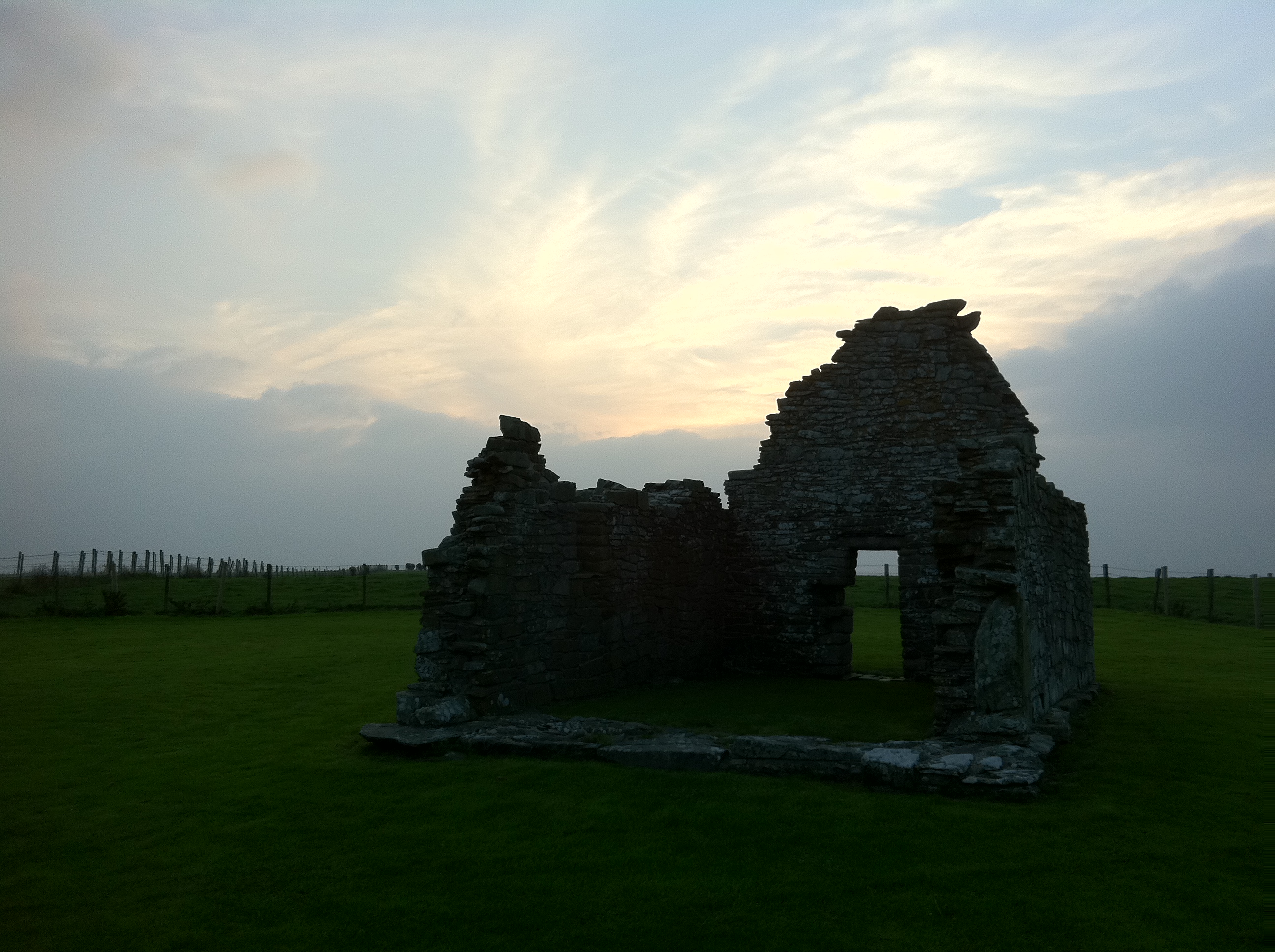
Experiencing history is something like floating on an ocean. There are depths below you, all around, and every so often you can catch glimpses of what lies below. Back at home, familiar sights included a schoolhouse more than a century old, a ruined church more than a thousand years-a-crumbling and a stone circle dating back to the Neolithic period. Being surrounded by all of this as a child made me feel like I could reach out and touch the people who shared my homeland, no matter how separated in time we might be. The same feeling hits me on my holidays too, whether in the Colosseum in Rome, Tycho Brahe’s observatory in Copenhagen or a temple in Kyoto.

Greece has been on my top-ten list of places to visit for a long time. In fact, in the current political climate (which rules Egypt and Iran out) and in the absence of a long sabbatical from work (ruling out much of the southern hemisphere), it’s probably the most desired unvisited destination I have. Ten days won’t be near enough to see everything that I want to see (I’m focusing on the mainland rather than the islands) but they’ll be a packed ten days.

Why Greece? Look back to a childhood dominated by myths and legends for the main clue. To travel around Greece is to step back through time: from Ottoman rule to Byzantine domination, beyond that to the time of Imperial Rome and Macedonian kings, then to classical Athens and archaic Mycenae and Knossos. To return to the ocean metaphor, travelling through Greece is like floating above a wonderful mix of coral reefs and abysses. There’s always going to be something to see, layered everywhere you look. It’s a beautiful country too, full of wild mountains and deep valleys.

My basic plan is to start in the north, near Thessaloniki, and make my way south through the mainland, visiting Delphi, Athens and Mystra before hopping on a ferry to Crete, from where I’ll fly home again. Unlike my last long journey through Russia and beyond, there’s no need to exhaustively plan everything out, so I’m happy to wing it to an extent. That’s another benefit of travelling solo, I suppose: you can indulge your own whims without worrying about the impact they might have on your travelling partner. Of course, the drawback is not being able to share your enthusiasm and experiences, but that just provides a reason to repeat the journey again in the future.

All of which is to say that there should be, before too long, another travelogue appearing under the long-neglected “Travel” tab above. Between now and then, there will be reports from Greece whenever I get the chance to add them (not having planned out my accommodation to the last detail, I have no idea when and where I’m going to have Internet access—again, on the bright side, it’ll be nice to get away from LCD screens for a while).

In the last couple of days, I’ve realised all the things I’m going to be missing while I’m gone: a comics convention, Dublin’s Culture Night, the Ryder Cup and two weeks of rugby, West Brom and Doctor Who. For all that though, it’s been too long since I travelled. The excitement is just starting to kick in now, and it’s a nice, unfamiliar feeling. When I finally head to the airport, it’ll be in my preferred fashion, with a bag on my shoulder, a passport in my pocket and history in my future. I hope, in whatever I come to write about it, I manage to share some of that excitement with you.

Paisley and Legacy

That Paisley documentary, should you wish to delve into his mind.

So Ian Paisley is dead, as of a few days ago. I’m no more inclined to dance on his grave than I am to shed a tear at his passing, but the injunction not to speak ill of the dead mostly exists to preserve the feelings of the deceased’s loved ones, none of whom I know, nor are they ever likely to pay heed to anything I say. So some recollections might be in order.

When I was growing up in Northern Ireland, Ian Paisley was a constant presence. Back then he was a fringe character, albeit the most prominent one of his kind. To a child old enough to pay attention to the news but not old enough to understand the tangled truths and lies at the heart of the Northern Irish situation, there was something immediately appealing about this shouty man, spouting certainties at the top of his lungs wherever the lines between communities at war were in danger of becoming blurred.

The more understanding I gained, the more the limitations of his worldview became evident. Paisley was a complex man, even an exceptionally intelligent one, but those complexities were hammered flat by his fundamentalist worldview. Those he was close to remember him as warm, cordial figure, but one suspects that such warmth only extended to those who existed as human beings in his own eyes. Someone who could say that Catholics “breed like rabbits and multiply like vermin” had placed strict limits on his empathy.

In this, he was heir to centuries of anti-Catholic, biblical tradition arising from his Ulster Scots background, owning no authority save that of the bible. This is a man, after all, who founded his own church and his own political party. The common joke back in the Troubles was that Paisley had finally consented to a power-sharing agreement: with God. His famous heckling of Pope John Paul II suggested that he didn’t see him so much as a man as he did a figure of mythic significance, one that he was locked in war with.

All the stranger then that he executed an almost complete volte-face in his latter days. From being the most intransigent figure of the Troubles, he (once his party were in a position to take power) suddenly became open not just to power sharing, but to power-sharing with Sinn Fein, which he was more apt to call Sinn Fein/IRA. Which is either a breathtaking acceptance of the limitations of the principles he’d adhered to for decades, or an act of equally breathtaking hypocrisy.

That there were plenty willing to take the latter view may be seen in the fact that both his church and his party eventually rejected him. The former as soon as he took up that leadership role, the latter as soon as their grip on the reins of power was firm enough that they could afford to jettison their non-political anachronism of a founder.

As much as the Unionists may have had to hold their nose on going into government with Sinn Fein though, the same may have been true in reverse. His Damascene conversion on the road to government notwithstanding, Paisley was as responsible as anyone for generating the atmosphere of hatred and suspicion that drove the Troubles through three decades of murder. He’s gone to his grave with blood on his hands and no more willing or able to admit his culpability than Martin McGuinness or Gerry Adams have ever been.

His decision, in what turned out to be his last year, to participate in a tell-all documentary, stands now as a final preacher’s performance, a spouting of the truth as he saw it from the mountaintop. Perhaps even to make clear that the twists and turns of his own life could be looked back upon as a straight road, laid out according to his principles. If so, there were many lives bulldozed to make way for it.

Watching the Apple Watch

Go on, admit it. You want to at least play with them for a while.
All these can be yours, for a (to be determined) price.

I’ve been an Apple user long enough that the company’s regular keynote events are a recognisable form of entertainment. Unusually, I didn’t watch this week’s well-publicised event until the day after it happened. (Possibly a good thing given the problems that the live streaming coverage faced.) By that time I’d already read enough of the media reaction to know exactly what I’d be seeing. Spoilers aren’t really the point with an event like this.

The first part of the event, to be fair, had already been well spoiled by leaks. Enough prototype parts and schematics had trickled out from Apple’s supply chain that only a few details remained to be filled in about the new iPhones. The 6 and 6 Plus looked much as expected and neatly relegated last year’s 5s and 5c to the minor places in Apple’s product lineup. A one-year-old free (on contract) iPhone is a better trick than a two-year-old free offering, but the 6 and 6 Plus are now the stars. The former seems the better bet, though the 6 Plus has its own appeal if you can handle its unwieldy dimensions—in its case, battery life and an improved screen are bigger draws than the optical image stabilisation of its slightly protruding camera.

Next up after the phones was something only hinted at in pre-show leaks: Apple Pay. A solution to the hassle of everyday credit card payments, it positions Apple well in the race to made commercial life more convenient. It’s the biggest leveraging to date of Apple’s credit-card enabled iTunes customers, bringing together a lot of pieces (iBeacon, Passbook) that Apple has been putting into place for some time now. However, given that it’s only usable with NFC-enabled devices (both the iPhone 6 and 6 Plus, as well as this article’s titular device) and is only to be deployed in the U.S. for the moment, its reach will initially be limited. Over the long term though, it could well be the most important announcement of the entire show.

Last up was the fabled “One More Thing,” returning to a very warm welcome from the crowd. This was, of course, the Apple Watch, likewise rumoured in the media but barely even glimpsed in advance of the show itself. It seems that Apple’s secrecy can still hold when they really need it to.

A handful of smartwatches have already hit the market. I owned one briefly, in the form of the Pebble, but most of them are now running Google’s Android in one form or another, and yet more are on the way. If the Apple Watch is going to be a success, Apple’s going to have to repeat a trick it’s already pulled with the iPod, iPhone and iPad: to enter an existing but nascent market and turn it upside down. So has it done so?

Well no, not yet, if only for the reason that the Apple Watch won’t be released until early next year and many important facts about it remain uncertain, but at least one watch industry watcher has been impressed by the unveiling, not just its implications for the smartwatch industry but for watches in general.

Whereas its competitors seem to have focused primarily on providing an adjunct to their Android phones, Apple is coming from the other direction. The Apple Watch is tethered to the iPhone (or possibly the iPad too?) true, but it’s as much a fashion accessory as it is a computing accessory. The fact that Apple paid attention to what people might actually want to put on their wrist can be seen in the simplest fact about the Apple Watch: it comes in two sizes, small and large. Just like non-smart watches do.

Physically, it’s arguably more attractive than any of the other smartwatches already out there. More importantly to potential buyers, it’s massively customisable, more so than any other Apple product before it. Between size, colour and strap type, as long as you fancy having an Apple Watch on your wrist, you’ll be able to make it look exactly the way you want it to. Moreover, Apple has gone to great lengths to design its straps so that you can fit and adjust them yourself, rather than heading to a jeweller to have it done for you, as is the case with several of the Android smartwatches.

As for the software, it certainly looks the part, with Apple once again tailoring an operating system to suit the device. The Apple Watch has a touch screen, but given that any touching finger would obscure a significant portion of the screen, it also has a “digital crown,” refashioning the traditional watch crown into a multifunction control wheel with an integrated home button. Another button devoted to bringing up a “favourite contacts” screen is a reminder that the Apple Watch, above all else, is meant to leverage the power of its linked iOS device, faster and with greater ease than ever, and preferably without needing to take it out of your pocket or bag.

As for whether I plan to get one or not, that depends. Depends on the battery life of the final device and the price of the various options. Depends on whether or not the eventual software manages to live up to the promises of the keynote speech. For, whatever else it may be good at, Apple is very good at selling its devices as objects of desire. I’ll be looking out for reasons not to break open the piggy bank come early 2015. It’s up to Apple to match its own hype.

Until then, I have iOS 8 (coming next week) and OS X Yosemite (coming a little later) to refresh my own devices, making them seem like new again. There’s a new U2 album as well, offered as an awkward freebie at the end of the keynote, but that can’t really compete as an attraction. After all, what we get for free, we never really appreciate as we should.

Negotiating a Breakup


The Saltire really did bring out the best in those crusader crosses.
Somehow it all seems a lot less colourful now…

All of a sudden, with under two weeks to go, the referendum on Scottish independence is making a lot of people nervous. Whereas its failure was previously treated as a foregone conclusion, with the media enjoying the raised voices and ridiculousness of it all, it’s now looking too close to call. So has it really come to this? Is the United Kingdom going to be split along Hadrian’s Wall?*

Well yes, probably. And it shouldn’t be too much of a surprise. The United Kingdom has been in a state of slow dissolution for a century and more. The colonies of the Empire headed for the exit one by one over many decades. The Irish had to kick and punch their way into doing the same, the results of which can still be seen in Northern Ireland. The Welsh? Well, they were first in, and they’ll probably be last out too. Feel sorry for them.

The Scots only joined in the first place because they were bribed with the crown of England. Not that it was a particularly easy unification, and indeed it took most of a century to sort out the details. (Ireland didn’t get roped in fully for nearly another century, and that happened at least partly as a result of rebellious efforts to head in the other direction.) In Scotland, the English are still the Auld Enemy, and while it can hardly be argued that Scotland hasn’t benefited through its part in the British-led Industrial Revolution and all that followed, the fact is that it has always been an unbalanced partnership.

For all that, this should have been a fairly straightforward vote. Countries don’t tend to break up for no real reason, especially not First World countries with several centuries of successful history behind them. So how has it come to this?

Well, the United Kingdom has, at the moment, the misfortune to be led by one of the most insular cliques of public school-educated toffs in many a long year. Hardly the kind of thing to appeal to the provincials. Not that the minor parties are notably better. Together, they’ve driven a “No Campaign” of staggering ineptitude, ricocheting between platitudes, hypothetical doomsday scenarios and hectoring condescension. Hell, even calling it a No Campaign was probably a bad idea. They never managed to move the media needle on that piece of negative campaigning, no matter how much they promoted the insipid “Better Together” tagline.

Would Scotland be better off independent? I don’t know, but cutting themselves off from the rest of the U.K. is not a risk-free move. Economically and politically, Edinburgh’s heft is far short of London’s. Culturally too. Though the calculus of the situation looks tougher to work out further down the line. The cussedness of the Scots suggests that if anyone can deal with the problems of independence and build themselves back up, it’s them.

As a native of Northern Ireland now living in the non-British-aligned South, the eventual outcome doesn’t hold a huge amount of immediate impact for me. Not that the Northern Irish aren’t involved at all. In fact, there a lot of resonances at play for the North. The Unionist movement up there is largely the legacy of Scottish planters. The Nationalist movement has been working on getting out of the U.K. for decades now. A shame it took Sinn Fein three decades and thousands of deaths to figure out that politics and P.R. are a much better way of getting what they want.

A “Yes” vote on September 18th might cut Scotland free of the U.K., but the implications will rattle along for years, and the U.K. is a more complicated place than a quickie divorce can mend. The Scots will make their mind up one way or another, but both they and the English will have to work on being either neighbours or partners giving it one more shot.

*Okay, not exactly along Hadrian’s Wall, but close enough.

Good Omens About the Radio

I'd give anything to have been at that reading...
The Good Omens team gathered for a reading. Aren’t they a lovely bunch?

What’s your favourite book?

It’s always been a tough question to answer for me. What are the criteria? The Lord of the Rings is a superlative work of creation. Rubicon is as great a work of historical narrative as I’ve ever read. The Lies of Locke Lamora impressed me more than any novel in the past ten years and genuinely shocked me with one of its many twists. Planetary and V for Vendetta are superbly well-crafted comics series. I could dig in to my library and make an argument for many more of the books in there.

But if I’m allowed to narrow it down to the book that has given me the most joy, then the answer’s easier. Neil Gaiman and Terry Pratchett are two of my favourite authors, their storytelling skills and mastery of wordplay having made me smile more often than most, and when they collaborated to create a novel, they both surpassed themselves. That novel, Good Omens, reduced me to even more helpless giggling than Douglas Adams Hitchhiker’s Guide series ever managed.

The news, then, that Pratchett and Gaiman are adapting Good Omens as a six-part BBC Radio 4 dramatisation, just fills me with even greater joy. Add to that the fact that the team behind it was also responsible for last year’s wonderful adaptation of Gaiman’s Neverwhere and joy levels are starting to reach near-terminal levels. Anything else? Oh yes, how about the amazing Peter Serafinowicz as co-lead Crowley, “an angel who did not so much fall as saunter vaguely downwards”.*

Needless to say, a radio-centric Christmas can’t come soon enough. I may just have to dig out my very-well thumbed copy of the original novel** and remind myself of just how good it is in order to prepare myself…

*He hadn’t meant to fall. He’d just hung around with the wrong people.

**It was first published in 1990. That’s … quite a while ago.

Gerry Anderson – Learning to be Northern Irish

Two men who had a lot of influence on the Northern Ireland I grew up in died last week. One was the taoiseach who first brought ceasefire talks with the IRA to the highest levels of government, beginning the process that led to the Good Friday Agreement and a halt to three decades of slaughter. The other was a radio DJ who, through those years, provided a wry, human voice for those trying to live a normal life.

I don’t think it’s any insult to the memory of Albert Reynolds to say that for me, Gerry Anderson was by far the more important of the two.

Let me clarify that. One of my very earliest recurring memories is of travelling in the family car with one or both of my parents. The school my sister and I went to (and where my parents taught, and where my two brothers would later go) was several miles away from where we lived. So in the morning and the evening, we’d be driven there and back. Whenever that happened, and indeed whenever we were driven anywhere else, the radio was usually on, tuned to one of Northern Ireland’s local radio stations.

This was the 1980s, when the Troubles in Northern Ireland were more than a decade old and had become soul-grindingly mundane. I would be much older before I learned that being stopped in the middle of the night by soldiers in full camouflage, wielding automatic rifles; that cycling past police stations that looked more like fortresses; that listening to the news and hearing the tally of the latest bombings, shootings and burnings wasn’t something that everyone else in the western world had to deal with on a day-to-day basis.

The radio shows, which mostly mixed music with phone-in segments, were a means of holding together the majority of the population who didn’t support the lunatics on either side and didn’t care for living in a militarised zone. They maintained the thread of normality, of entertainment, good humour and common experience that frayed every time another bullet was fired or car bomb exploded. You could listen to them on the way to Belfast, arrive and have to deal with a city centre that had been fortified, then return and listen to them on the way home, restoring some sense of balance and sanity to your world.

Gerry Anderson was my favourite and still embodies much of what I think of as the best of Northern Ireland. For me, his dry humour, the way he dealt with the myriad strangenesses of daily life in the North, and his insistence that all those things were, in their own way, more important than the blood and thunder of the lunatics, is quintessentially Northern Irish. Famously, he was the man who cut through the Gordian knot of the Derry/Londonderry debate by renaming the city Stroke City. A Northern Irish solution to a Northern Irish problem if ever there was one.

Twenty years ago, the IRA ceasefire began, marking yet another step in the peace process, which has now taken firm, if occasionally painful hold on Northern Ireland. As bad as the Troubles were, those of us who lived through them were, in a way, lucky. We had the space to hold on to normal lives in the midst of it all, with the help of Gerry Anderson and many others. It’s hard not to look at the Middle East today and the chaos swirling around Syria and Iraq and wonder just how many people there won’t have as much of a chance. How much of their way of life is being destroyed. I hope that when the sound of the guns and the bombs fades away, there might be the sound of a radio somewhere, and of a dry-witted host engaging with everyday concerns before reaching for another record.