All posts by cerandor

The Upgrade Urge—Apple’s October Event

I’m really not in a position to be buying new technology now.* I’m in the middle of a job hunt and I ought to be saving every penny while the employment market remains a fickle, teasing wretch. Why, then, did Apple run an event yesterday designed to remind me that my existing array of gadgetry is but a dusty heap of aluminium and silicon, no more than one careless step from the technological grave?

Yes, all of Apple’s announcement events are supposed to do this. But this one was personal. They specifically announced updates to (almost) every Apple product that I own, and if I find out that Tim Cook did this just to annoy me, I’m going to be … well, I’m going to be impressed. Impressed, but also annoyed.

I wish I was exaggerating. My mostly superannuated selection of Apple technology consists of my elderly Mac Mini, my much-used MacBook Air, and my relatively youthful iPad Pro (which, with accompanying Apple Pencil and Smart Keyboard case, has taken on many laptop-style duties over the past year). Everything mentioned in the last sentence saw an update at Apple’s October 30th event, and none of those updates were small ones.

Mac Mini

The oldest of my Macs is my Mac Mini, which has been sitting beside my TV since 2010. It’s done solid service over the years, and I’ve kept it youthful by feeding it as much RAM as it will take and performing some mild surgery to replace its hard drive guts with a solid-state alternative. Yet it’s been slow and clunky for some time now, its major services taken over by an Apple TV (along with my iPhone, the one Apple item I use so much that I often forget it exists), with only the lack of a viable upgrade from Apple keeping me from considering a replacement.

Well, yesterday Apple answered the prayers of us Mac Mini devotees and delivered unto us a new machine, sleek in its smallness, patterned in gunmetal grey, and pulsing with barely contained potency. In other words, it’s been so long since the Mac Mini had an upgrade that Apple was able to claim that the new one is five times faster than its predecessor. Which was a good bit faster than my much older version, so this one would blow the doors clean off if I were to opt for it.

Which I won’t. Not yet anyway. Not because I don’t want to—it’s a desirable little chunk of metal and silicon—nor because I can’t afford to—I can, I just know I shouldn’t—but because, as mentioned above, most of its main duties have now been shifted onto the much more suitable (and cheaper) shoulders of the Apple TV. While not a perfect machine in and of itself, the Apple TV is designed to work through a television and does so nicely. To the point where I’ve ditched cable TV in favour of broadband services. In the meantime, my Mac Mini remains as it is, quietly acting as a media server. It’s happy, I’m happy, and one day we shall part, but that is not this day.

I’m sure the new Mac Mini will sell well anyhow. Just not to me right now.

MacBook Air

My MacBook Air is a little younger than my Mac Mini, being of 2012 vintage. For all that, it’s still running well and speedily, courtesy of having an SSD from the start. I don’t ask too much of it these days, as the battery has long since left behind the days of offering multiple hours’ service, but when I just need to type something, it’s the go-to machine. It’s also survived an unfortunate encounter with a glass of breakfast orange juice, courtesy of a replacement keyboard and some repair guides from iFixit.com—living to suffer another day.

The MacBook Air has seen more regular updates than the Mac Mini, but in comparison to the Retina screen-enabled rest of the Mac laptop lineup, it’s been something of a red-headed stepchild for a while. Minor processor tweaks have bumped up its speed, but the budget Mac laptop was looking a little dated and cheap before yesterday. Now, though, it has been given the Retina screen users have been crying out for, as well as substantial processor and graphics speed bumps and the new butterfly keyboard that Apple is much enamoured of (though its users are more ambivalent). Available in multiple colour options and with a Touch ID fingerprint sensor, the MacBook Air finally feels like a modern laptop again.

Not that I’ll be upgrading though. For a start, all the upgrades have seen its price jump to €1,379 for the base model. Less than the ultralight MacBook or the MacBook Pro but no small beans. The price may well come down in time, but for the moment it’s not really a budget option. Second, my iPad Pro has usurped most of my MacBook Air’s functions in daily life. And that’s what I’ll get to below.

iPad Pro

Having saved up my pennies, I splashed out on an iPad Pro just over a year ago. This was very deliberately meant to be a laptop replacement—I added a Smart Keyboard and Apple Pencil to the purchase, and I made sure the device itself had plenty of storage onboard. In the year since, I’ve been more than happy with it. It’s light enough to tote anywhere, powerful enough to handle anything I care to throw at it, has a good enough battery to last for days at a time, and is a serviceable enough typing machine for me to write a NaNoWriMo novel on it last year. All in all, I like it a lot.

This love wasn’t ended by Apple’s announcement of a new iPad Pro yesterday, but maybe it was dented a bit. The new machine is both an upgrade and a refinement: faster and better looking, with the physical Home/Touch ID button removed in favour of a Face ID camera system. The gadget ecosystem has been upgraded too, with a new Smart Keyboard case that provides a better typing experience and better protection and a new Apple Pencil that locks magnetically to the iPad for safekeeping and charging. As is not unusual for an Apple upgrade, everything just feels a little better, a little fresher.

And I won’t be buying one. Of course I won’t—my iPad Pro is only a year old. I’m not crazy! Much though I may envy the improved gubbins that my newly aged device will never provide me with, it does everything I need to it to with aplomb, and nothing other than an excess of cash and a sudden break with reality could persuade me to spend that much on such (ultimately) minor improvements.

Technological envy is a real thing, but patience works as an antidote. The tech you’ve got will serve you well, and the longer you wait, the better the reward when you finally do decide to splash out. Whether it’s for one, six, or eight years, the upgrade urge can be resisted, no matter how well Apple targets its events at you.


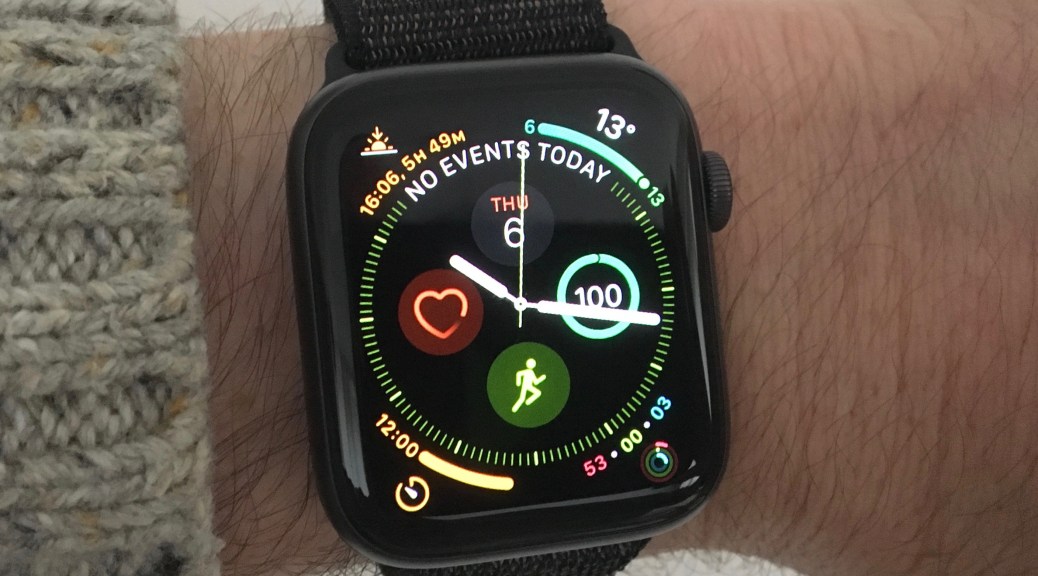
*This hasn’t stopped me. I broke open my piggy bank** to add an Apple Watch to my Apple menagerie just three days ago. A review will be forthcoming once I’ve been using it for a while.

**Actually a real thing, but also actually a cow bank. It was a present from a friend. Don’t judge me.

Election Relief

Last night, I was worried. Yesterday we had another public vote here in Ireland, and with reports of low turnout, the result seemed to be more in doubt than it had been just a few days before. Things haven’t gone as badly as I feared, but there’s still worth to seeing how it came to this.

There’ve been quite a few public votes in recent years, between referenda and actual elections, and they’ve attracted attention beyond our own borders, for good reason. This time, we had both an election and a referendum—the former to choose a president for the next seven years and the latter to decide whether to remove a requirement to legislate for blasphemy from the Irish Constitution. At the moment, final results are being tabulated, but it seems that worries I had late last night about the outcome won’t bear fruit.

The less interesting vote was the referendum on removing the reference to blasphemy from the constitution. The reference was widely seen as an anachronism, but unlike earlier referenda on gay marriage and abortion, this one didn’t inspire much in the way of vitriol on either side, apart from some of the usual figures opposing the change. Right now it looks like the 37th Amendment to the constitution will be passed with support from all age groups. Instead, all the controversy in the final days of campaigning revolved around the presidential election.

At stake in the presidential election was whether or not current President Michael D. Higgins would be returned for a second seven-year term. Higgins had campaigned in his first election on serving only a single term, but he’s proven a popular and even well-loved incumbent, and despite his age he’s in tune with the progressive mood that’s seen Ireland tackle some of the darker elements of its past and return those referendum victories in recent years. As such, it was possible that he would stand unopposed, as has happened with the Irish presidency several times in the past.

That this didn’t happen was mostly down to Sinn Fein. By promising to put their own candidate in the race (something no other political party did), they ensured that there would be a race. In this, they were continuing Sinn Fein’s efforts to whitewash the party’s public image, to the point where it might be seen as a valid party of government in the future. That this gambit seems to have been less successful than they hoped was partly down to their own candidate, Liadh Ní Riada, who struck a condescendingly aristocratic figure in the debates, and partly down to the candidates who followed in their wake.

With the major parties unwilling to challenge a popular incumbent, there were no popular or experienced candidates in the field. Instead, Higgins’s challengers came from the political fringes or from reality TV, specifically the show Dragons’ Den. Rounding out the field in addition to Higgins and Ní Riada were Senator Joan Freeman and businessmen Gavin Duffy, Sean Gallagher, and Peter Casey. For most of the campaign, the challengers lagged far behind Higgins in the poll. Then the election took its reality-show businessmen trend a bit further down the Trump line.

Peter Casey, largely undistinguishable from his Dragons’ Den cohorts, decided to bolster his campaign with some anti-Traveller bigotry. The Travelling community in Ireland, both north and south, has long been an easy target for this kind of political grandstanding, and Casey threw in some welfare-dependency jibes for good measure. There’s always an audience for such rhetoric among those willing to blame the less fortunate for their troubles, and Casey enjoyed a predictable boost in his polling numbers amid the controversy, as he at first seemed to consider withdrawing, then doubled down on his rhetoric.

While I’ve been writing this, the final results have come through. Higgins has indeed won a second term with 55.8 percent of first preference votes, with Casey taking 23 percent and no other candidate reaching 7 percent. Plenty of people (again, the usual candidates) have been rushing to put Casey in a Trump-like position, arguing that he only said truths that the “establishment” would prefer to suppress and that the media conspired against him. Which is a little rich given that Casey’s surge relied purely on his willingness to play the media game, ginning up controversy to get support from the permanently dyspeptic.

That 23 percent figure, you see, is something that’s been visible in politics and culture for a long time. I first noticed it during the presidency of George W. Bush. No matter how incompetent or hateful a regime, if they pay at least lip service to the grievances and bigotries of their supporters they’ll rarely dip below 20 percent approval ratings. Stirring up hate and resentment works as a strategy.

Which is why I was worried last night when I heard that turnout for the election was low. After all, getting voters inspired to vote is how Ireland has seen referendum-driven change in the past few years. With Higgins seen as a certainty and few people inspired by the blasphemy referendum, only Casey voters were genuinely driven—even if only by their own personal hatreds and the promise of a candidate who seemed to reflect them.

That inspiration served to take Casey only to 23 percent, but he may well spend the next few years trying to spin it into a political role. Certainly others will be pushing him to do so now. For the rest of us, who heard his rhetoric and looked to recent events in the UK and the US with a shiver, it serves as a warning. There’s been a lot of positivity in recent years, as the Irish, especially the young, have been reminded that elections actually do matter. However, taking success for granted is only a positive form of apathy to replace the more cynical apathy that existed beforehand.

Ireland isn’t immune from the ravages of Trumpian or Brexit-like campaigns. We have advantages of size and culture (the lack of any pretensions of power) that make such campaigns harder to get started, but as Casey’s antics show, there’s always an audience for them. The only answer is engagement, staying active, and speaking out. Let’s hope this proves to be a blip rather than the beginning of a trend.

Moments of Clarity

Autumn is my favourite season. I may be a little biased because I was born in September, but still. There’s a clarity you only get in autumn, when it’s too cool for a heat haze but the sun is still strong enough to burn away the mist and fog. On days like that, you can see all the way to the horizon in perfect clarity, every outline sharply delineated.

This blog has, after around seven years of life, undergone a bit of a facelift. Part of that is the new title. When I first created it, the intent was to document some travels I was planning and provide a replacement for the LiveJournal site I’d been using for years. (The archives of that site are available through the link above.) Given that the LiveJournal site had been a collection of random thoughts, the process for creating a title mostly consisted of coming up with some vaguely pretentious and throwing it up there. “The Limits of Human Imagination” was vaguely pretentious enough for my purposes, and it’s served in a mediocre fashion ever since.

So why the new title? “The Clarity of Now” seems just as vague and pretentious, right? Well, there’s a little more thought behind it this time. This past twelve months have seen as much upheaval as I’ve had to deal with since, well, the year that saw me set up this blog in the first place. In fact, a lot of the events of that time have echoed in the past year. The main difference is that I’m not the person now that I was then. I have – I hope – more insight into myself. More clarity, if you will.

The Clarity of the Now, then. Why? Because I’ve come to understand that now is the only thing we can have clarity about. The future is always unformed, and all the worrying and obsessing that we might do about it won’t change that a bit. The past might seem more solid, but try to recreate that past and you’ll find that memories aren’t to be trusted. We’re prone to obsessing about past mistakes and regrets just as much as the future and to as little purpose. The past is fixed and gone, providing lessons to learn from, and the future remains unborn in the now that we have and that we create moment by moment.

You may have noticed that it’s not just the titles of my blogs that tend towards pretension. That’s okay. This is a statement of purpose going forward, so I’ll allow myself a little bit of pretension this once.

I’ll still keep writing about my travels, whenever they happen. And when I have time, I’ll add more detailed diaries of those travels under the travels tab above. (Including the long-delayed addition of my Greek odyssey.) I do have some new travels planned, for all the craziness of this last year.

I’ll get back to writing reviews too, as my cultural consumption gets back on track. Thinking about how I react to what I watch, read, and play is something I enjoy doing, and it’s good to have an outlet for that. Plus, whoever reads this might get pointed in the direction of something they’ll enjoy, which would be a bonus.

The main thing though is to start doing something that I’ve wanted to do for a while: talk about the world as it is and what might be done about it. About politics, society, the environment. I’ve made multiple abortive attempts at this already, only to pause and reconsider, daunted by the scale of the subject. Well, I’m going to try again, and this time I’ll stick with it. A single person may only be able to make a small difference, but there are so many people making an effort already, and it’s the pebbles that make the avalanche. I’ve done little pieces here and there, but this pebble is tired of being stationary.

So that’s the reasoning behind the revamp. The acceptance that the only clarity there is is now. These are serious times, but there’s light to be found, and we can see all the way to the horizon, even at sunset.

Portugal – Escape to the Atlantic Coast

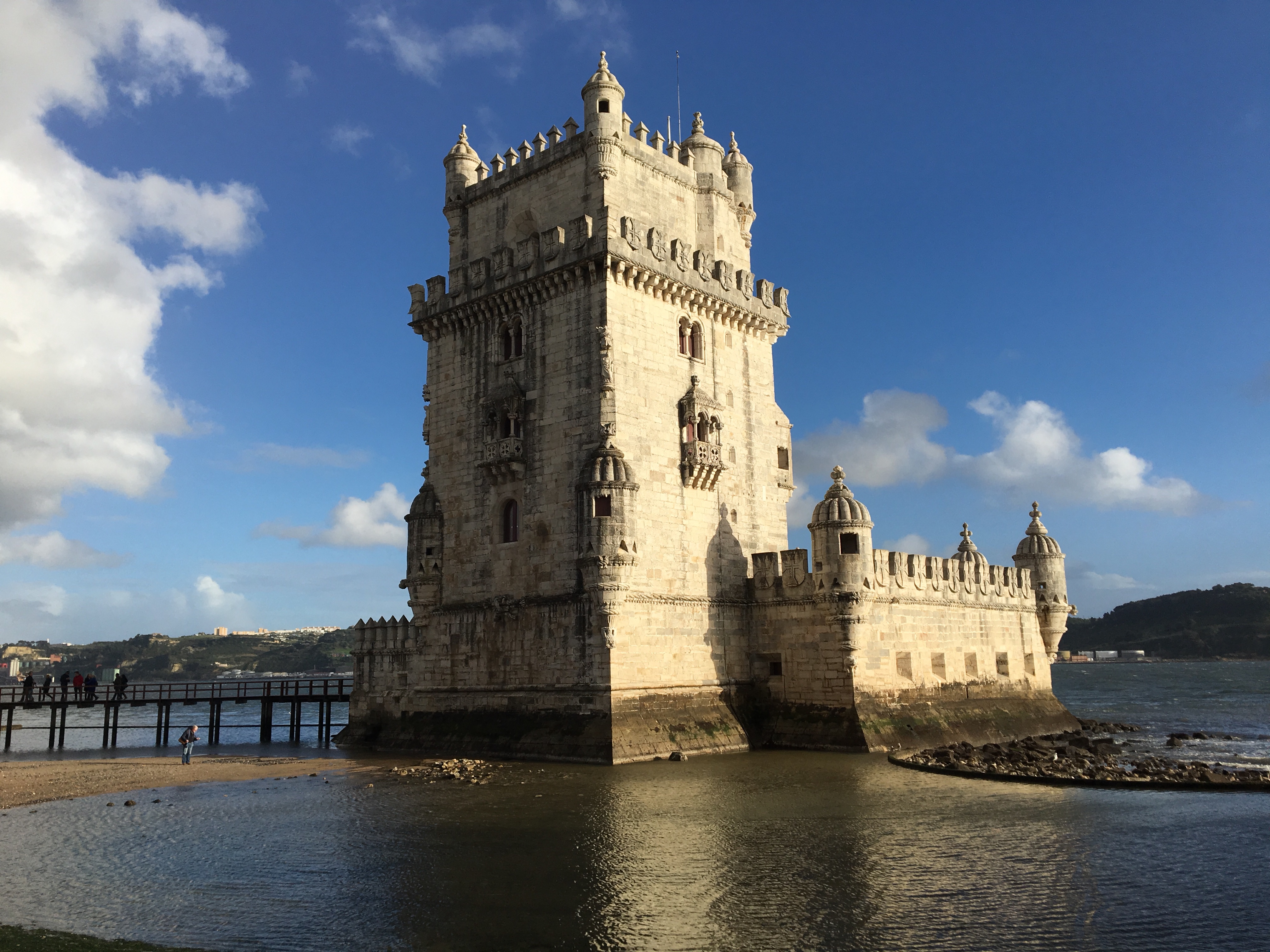
Belem Tower, perhaps the best known sight in Lisbon, if not all of Portugal.

Dublin around the time of the Ides of March is a perilous place to be, packed with tourists and locals eager for an excuse to party and imbibe a beer or two. Getting from one end of O’Connell St to the other can take up most of St. Patrick’s Day if you’re unwary. Most years, I stay at home while the parade’s on or make the most of the long weekend in quieter gatherings with friends. This time I took myself out of the country entirely and spent five days in Portugal instead.

This isn’t a thorough description of what I did on that trip. If you want that, you can check it out here: Portugal 2018 What it is is a brief run through the best parts of the trip, which took in two cities, lots of walking, and nearly as much in the way of custard tarts. I’m not sure how well the latter two balanced out in the end, but I hadn’t put on any weight by the time I came back.

Continue reading Portugal – Escape to the Atlantic Coast

Fuerteventura: New Year in the Sun

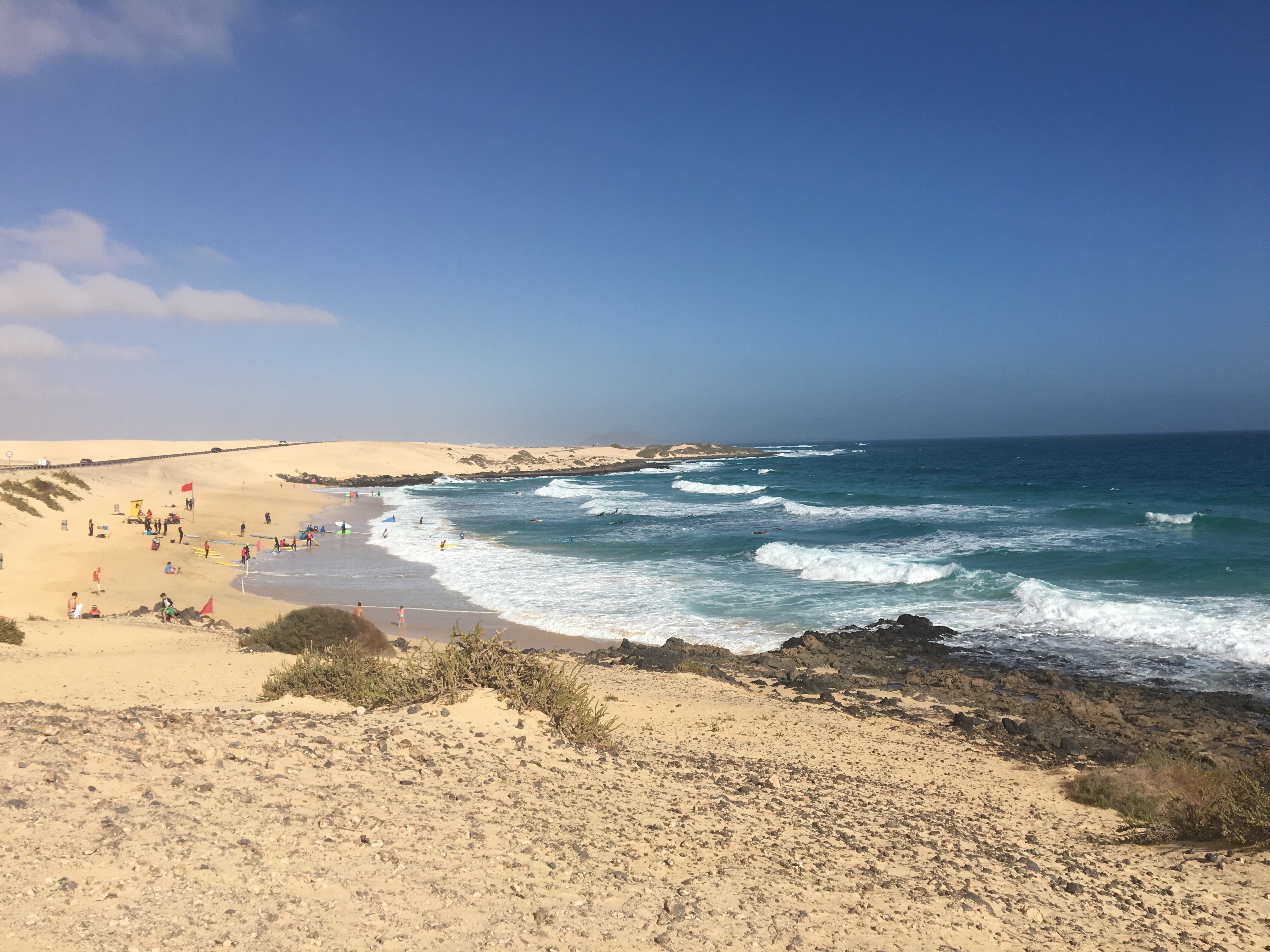
El Moro Beach - Surfers Included

The progress of my Christmas and New Year celebrations has remained much the same ever since I moved down to Dublin. Spend Christmas itself with family, then return to Dublin to see in the New Year with friends. Depending on who’s available, this can either be a party or quiet drinks in someone’s house, or braving the madness of the city on New Year’s Eve. This year though, I did something a bit different.

Continue reading Fuerteventura: New Year in the Sun

Belgium, Not Brussels

Yeah, it’s just a bit picturesque.

Okay, so that’s a little bit of a lie. There is some Brussels in this post. Just not a lot. As the one bit of Belgium that I’m familiar with (apart from a very brief foray to the North Sea at Knokke), I think I’ve written enough about it. This is going to be a post about exploring some of the more distant corners of Belgium instead.

It’s been an odd year for holidays, 2017. Very much in opposition to my usual habit, all my trips so far have been in company and to places that I’ve already visited. Hence, I haven’t really written them up, seeing as I already said most of what I wanted to say the first time around. This trip was also in company, in this case of a Brussels-based friend of mine, but it did take me to new vistas, hence it’s worthy of a post.

Continue reading Belgium, Not Brussels

On Female Leads and Genre Fiction

Taken in the British Library. Sadly he was busy saving the universe. Travelling by train is all very well, but travelling by Tardis...
An encounter of my own, some years ago. Though time travel makes that a tricky thing to pin down.

On a weekend when Roger Federer won his 8th Wimbledon title and Disney announced its intention to release all the movies coming out over the next three years (these were the things that registered with me – your mileage will undoubtedly vary), the biggest news was that the newest incarnation of the Doctor will be, for the first time, female. This is not only a big thing for me – a viewer of Doctor Who since an unreasonably young age – but it means that the three big ongoing science fiction/genre fiction franchises (Star Wars, Star Trek (with its new Discovery series) and Doctor Who) will soon have female leads.

Continue reading On Female Leads and Genre Fiction

Luxembourg and Brussels – Familiar Places

Down there somewhere is where I had my birthday dinner.
The view of the river that surrounds Luxembourg from the old fortress of the Bock.

(Yes, this travel diary is exceptionally out of date at this stage. Such are the perils of following a procrastinating writer.)

I’ve only been to one of these places before, so I’ll focus on the other one. There’ll be a bit about Belgium at the end, but mostly this is about Luxembourg. A word of warning though: I’m writing this under the influence of a day of travel compounded by a 90 minute delay for a Ryanair flight. So take every other word with a grain of salt.

Luxembourg was the third micro-nation I hit on this trip, but it’s on the edge of deserving this status. It’s bigger than most of the European micro-nations put together, and where San Marino and Liechtenstein were small enough that you could see from one side to the other on a clear-ish day, Luxembourg is big enough for its corners to be just as scruffy as those of larger nations.

...that came when I walked down three sets of stairs to a dead end.
A spooky grating under the mountain. At this stage I wasn’t worried about getting out…

What Luxembourg does have in common with its smaller brethren is that it’s rich. Having sat at the heart of European affairs since the days of the European Coal and Steel Community, the old city is a commendably neat and tidy revamp of a former walled citadel now turned fortress of finance. There are some very expensive, very shiny cars driving around the place, is what I’m trying to say.

Not that you’d recognise the place as a former fortress if you approached it from the west side. Where massive bastions once stood are now broad avenues and neatly tended gardens. It’s only on the eastern side of the city, where the last remnants of the original Bock fortress stand, that you can get an idea of how valuable this place used to be. Founded in the tenth century (there’s a whole legend involving a river mermaid), the Bock commanded a view over the river below, and over the centuries tunnels and storerooms were carved out of the rock below,

You can still wander those passages, and I did so on the first night I arrived. The last tour group was leaving as I arrived, so I had the place more or less to myself for the next hour and half—there are arrows placed in the ground pointing to the exit, but there’s no set path through the narrow passages and the caverns that open out onto views on the valley below. It was only when I became worried they’d close the place with me in it that I started to pay attention to the arrows and found my way out.

Heights don't bother me much. Drops do.
These photos never show the scale of the drop as much as they should.

Luxembourg in the day is a much neater and more understandable prospect. The national museum covers the thousand-year story of the nation over several floors, the lowest of which are carved into the rock below the city, with massive models demonstrating how Luxembourg was shaped over the centuries. Once, when the House of Luxembourg were kings of the Holy Roman Empire, the fate of nations was decided here. Now the decisions made in council chambers are more abstract but no less weighty.

In the end, Luxembourg felt a little neat and sanitised. Like San Marino, everything has been cleaned and polished, and you have to dive down into the valley to get a better sense of the place. A special mention ought to go to the viewing platform north of the Bock, where you can stand on a glass floor and contemplate the multi-storey drop below.

As good a way as any to end the holiday: Endless ribs.
Ribs and beer in Brussels on the last night of the holiday.

So then, on to Brussels and the end of the trip. I’ve been here multiple times and like both the people and the place. So apart from an evening of a little food and a little drink, I wanted to see if I could look at something further afield. The options were the battlefield at Waterloo (to annoy someone who’ll never read this) or the beach at Knokke, to complete my journey from the Mediterranean to the north sea. Of course, the beach won.

Not that I had much time to spend there. Courtesy of Belgium’s leisurely trains and the extremely long avenue leading from the train terminus to the beach, I had no more time at the water’s edge than it took to take a couple of photos and wet my feet. (In point of fact, I’d misread the timetable and had around half an hour more than I thought, but a few minutes was all I got.)

A fine place to end one's journeys.
The lone and level sands stretch far away…

Which brought the whole journey to an end. What had started in the parched streets of Palermo on the island of Sicily, had taken me north through Italy, across the Alps to Switzerland, on to the familiar city of Brussels, hitting three small nations along the way, came to a close on the sands of the North Sea, caught between tourism and a massive seaport on the horizon. Yes, there would be a journey back to Brussels and on to the airport and from thence to Dublin, but that was it. Another journey ended.

I’ll get around to absorbing it and adding any extra thoughts in a while. For now, thanks for reading and I hope you’ve enjoyed these posts. More detailed descriptions of what I got up to will appear in the Travels section above soon.

Liechtenstein and Zurich – The Alpine Experience

And every steeple that I could climb, I did.
A panorama of Zurich – the Zurichsee is on the left, the Uetliberg on the horizon.

There’s going to be a lot packed into this one, so pay attention. As soon as you leave Milan, headed for Tirano, you’re in the Alps, racing along the shores of Lake Como towards the mountains. To an extent, this doesn’t even feel like Italy anymore, or at least not the Italy I started in, back in Palermo. This is Alpine territory, of high, green meadows and bells ringing in valleys overlooked by mountains that rear up, shouldering their rocky peaks above a mantle of forest.

If you like trains at all, I’d recommend the Bernina Express as the way to see the Alps. From comfortable seats before panoramic windows, you’ll have a view of clear mountain streams, those green valleys, viaducts, mountains, glaciers, high lakes, and everything else that the Swiss have spent centuries learning how to build on or through. I saw it in the late summer, when green was the predominant colour, but in the winter it all turns to white and the experience is said to be every bit as impressive.

The Swiss and tunnels: an impressive combination.
One of the viaducts on the Bernina express, emerging from the mountain.

As for what was waiting on the other side, Liechtenstein is an odd little country, with an emphasis on the little. I’d been planning on staying two days, but two things cut that short: First, I saw most of Vaduz in the process of one morning stroll (to give you an idea of scale, the map of the city includes house numbers), and second, it’s stupidly expensive. Which makes sense given that it’s a tax haven of sorts, and it did give me a bit of warning with regard to what Zurich was going to be like, but it was still a shock.

So I spent one night and a few hours there instead, enjoying the clear mountain air and the views, which were only a little spoiled by clouds that cut off the tops of the mountains. Liechtenstein’s tiny territory is bordered by the Rhine and the mountains, and it takes little more than half an hour to cross from one to the other. Perhaps the most fun thing to visit was the football stadium—they’re very proud of the national team here, for all that they’re the ultimate in European minnows. Or at least they were until Gibraltar somehow got a team of their own.

The kind of bridge billy goats might trip-trap across.
An old-school bridge separating Liechtenstein and Switzerland.

Stroll over the bridge across the Rhine and you’re in Switzerland. You don’t even have to do that much if you’re a mobile phone—mine kept swapping between Swiss and Liechtenstein carriers every time I approached the river. When I eventually took the bus out of town, in search of the Sargans Bahnhof where’d I’d get the train to Zurich, this was one reminder of my travelling ways I was glad to leave behind.

In truth, there’s not much culturally to separate the two nations. Maybe the Swiss are a little more uptight, at least on first encountering them. Unlike most places I’ve been, where they’ll switch to English as soon as they figure out where you’re from, the Swiss will assume that you know what you’re doing if you try to speak a language not your own. So be wary if you want to try out your foreign tongues here.

I'd be annoyed too if someone had planted me where dogs could piss on me.
A friendly (?) face encountered on my way up the Uetliberg.

As mentioned, Zurich is expensive. Evidence of this can be seen in the houses that line the waterfront of the Zurichsee and the slopes to the east, and proof can be found every time that feel like going for a drink or eating out. Try to keep that to a minimum if you want your funds to survive a few days here. I’m generally not too proscriptive when it comes to spending money on holidays, but even so I couldn’t justify visiting a restaurant with €40 main courses.

Saving money is possible though: there are 24-hour and 72-hour travel passes, which will speed your way on the many public transport options and a lot of museums. Mine took me on a round trip of the northern half of the Zurichsee, down from the heights of the Uetliberg mountain to the west of the city (some might say it would have been more sensible to take the tram up, then walk down, instead of the other way around), through the excellent Landesmuseum and its exhibits, and then up the eastern slopes of the city too, to where the city zoo sits right next door to the FIFA world headquarters.

(There’s a joke to be made here about amoral creatures with insatiable appetites, trapped in a structure that should never have been built, but I’m sure someone else can construct it better than I could.)

Actually linesmen in training, though that's no less a weird sight.
FIFA officials doing their bribery-denial drills.

In short, if you make a bit of an effort, you can enjoy Zurich on something resembling a sensible budget. If you make the most of the Co-Op supermarkets that are everywhere, you’ll probably even manage much better than I did. It’s worth the effort too. While I loved Liechtenstein for its quiet isolation, I enjoyed Zurich for its reserved honesty. There’s plenty to do and see, and lots of narrow alleys, steep streets, hidden parks and other places to discover. The Landesmuseum exhibit on Swiss history is open, if regretfully so, about how Switzerland’s history of democracy, neutrality and isolationism has had its downsides. If we could be so honest about ourselves in Ireland, it would be a big step forward.

Milan – Cisalpine Gaul or Northern Italy?

Taking the concept of double-height ceilings to ridiculous extremes.
The cavernous interior of Milan Centrale.

Milan is rich, Milan is big, and Milan wants you to know all about it. The gradual change in Italy that I’d noticed on my northward trek from Palermo to Naples to Rimini came to its natural conclusion in the shadow of the Alps. Milan feels so different to the rest of Italy that I’d encountered that it’s a different brand of Italian entirely: chic, wealthy and engaged with the rest of Europe. The Romans called this area Cisalpine Gaul, connecting it more to France (Transalpine Gaul) than to Italia. That reasoning could still stand.

The unification of Italy under Vittorio Emanuele was an union of states that hadn’t been unified since the time of the Romans. Sicily and Naples were Mediterranean-facing and had been dealing with foreign rulers for centuries. Rome was the Papacy’s domain, and the surrounding Papal States marked a border between north and south. As for the city states of Northern Italy—Genoa, Venice, Florence, Milan, etc.—they managed to maintain on-off independence even as they served as a battleground in the intrigues between France and the Holy Roman Empire.

Northern Italian civic pride played a large part in the Renaissance, after all.
Looking like the world’s most expensive wedding cake.

There’s something of this mingling still at work in Milan. A mix of Italian and Northern influences—a pride in being Milanese and an openness to the outside on terms strictly set out by Milan itself. The famous Galleria Vittorio Emanuele I is the prime example of this: an ultra-chic shopping arcade, dominated by high-fashion outlets, almost all of them Italian. Stand in the middle and you can see the Piazza del Duomo at one end, a statue of Leonardo Da Vinci at another, and a McDonalds’ (exiled to a street across the road) at a third.

Milan just feels different. At least in the parts of it I walked through, there’s none of the narrow alleys and abandoned or crumbling buildings that I saw further south. Milan is just as old as those cities—the layout of the city still follows the ancient walls, and the city itself is dominated by the Duomo and the gigantic Castel Sforza—but it wears that age more lightly. There’s more modern sheen than there is ancient dust.

At least it was sunny, right?
The main tower of Castle Sforza. Sadly – yes – closed on the day.

Usually, such a polishing of history makes me less sympathetic to a city, but I really liked Milan. There’s something very open and everyday about its blend of Mediterranean sunshine and Northern European business. Unfortunately for me, I’d arrived in Milan on Sunday evening and was spending all of Monday exploring. Which is my one piece of advice for this city: if you have to spend one day here, don’t make it a Monday. Everything is closed.

Well, not quite everything. I enjoyed spending time in and around the massive and ornate Duomo, enjoying the pillared interior, which I’m sure was an inspiration for the Great Hall of Moria in the Lord of the Rings movies, and the roof terrace, which I reached after a long walk up some very narrow stairs. From the roof, you could see the Alps clearly in the distance, and it was nice to get a glimpse of the place I’d be heading next.

The climb is worth it. The lift might be, if you don't fancy the climb.
Off in the distance, the Alps await.

Still, there were things that I’d really wanted to see in Milan, and most of those were closed. The archaeological museum and the church and monastery it was sited beside? Closed. The refectory of Santa Maria delle Grazie, which held Leonardo Da Vinci’s Last Supper? Closed. The museums of Castel Sforza? Closed. The Planetarium and Natural History museum in the Giardina Publicca Indro Montanelli? Closed. Alright, so those last two were targets of opportunity as I was enjoying a stroll through the gardens, but you get the point.

Still, even if all you’re getting to do in Milan is to stroll around the city, it’s well worth the visit. Though you should also bear in mind that a lot of the trattorias close between 3pm and 7pm. (Seriously, this was a weird day of missing out on things.) Milan is its own place, and by a distance the least touristy of the cities that I’ve been to on this trip. Come along and spend your money, it says, but if it’s touristy stuff you’re looking for, you’re going to have to search for it. That kind of thing doesn’t really mesh with our self-image.