Category Archives: Reviews

Prometheus: A Return to a Different World

20120608-105603.jpg
You just know this won’t end well…

Ridley Scott’s reputation as a director was built on two science fiction classics: Alien and Blade Runner. The most recent phase of his career began with a Hollywood blockbuster: Gladiator. With Prometheus, he makes a long-awaited return to science fiction, and all three of the above-mentioned films inform what he’s created with his latest offering.

Spoilers Below – I went into the film knowing as little as I could about it. That may have informed my reaction somewhat.

Continue reading Prometheus: A Return to a Different World

April and May Book Reviews

20120607-164822.jpg
A small slice of bookshelf…

Two months worth of book reviews in one post – I fell behind in my reading in April and only caught up last month. Still, what I did read I mostly enjoyed.

April

Strip Jack, Ian Rankin: An early tale of Rankin’s dour, dogged detective John Rebus, Strip Jack rings with authenticity as it depicts Rebus’s Edinburgh haunts, but in having its central mystery revolve around the doings of that city’s upper crust, it loses a lot of its weight. The central crime is appropriately twisty, but it never feels quite dark enough, and Rebus’s own troubled personal life has at least as much heft. The sharpness of the writing, especially Rankin’s ear for dialogue and the cutting line, as well as the fully-drawn character of Rebus himself, still make this a more than rewarding read.

A Princess of Mars, Edgar Rice Burroughs: One of the founding texts of the now mostly defunct space romance genre, this is an old-style adventure that barrels along at a furious pace, never afraid to stoop to contrivance or convenience in its efforts to get to the next cliffhanger or climax. John Carter is an able and sympathetic romantic hero, marooned on Mars/Barsoom by a mechanism that amounts to authorial handwaving but swiftly adapting to his new surroundings with a verve that a modern reader might decry as wish-fulfillment if it weren’t all so much fun. You’d have to be hard-hearted indeed not to get caught up in Burroughs’ planetary adventure, with its barbarians, princesses, ancient cultures and strange mysteries, and when you reach the end of the breathless ride, you might just find yourself eager for another.

May

The Black Book, Ian Rankin: Following on from Strip Jack, Detective Inspector John Rebus returns with an altogether darker and more satisfying dive into the grimy criminal underworld of Edinburgh. Not only is Rebus himself at his dogged, incisive best, but his supporting cast stand up well to him and the array of ne’er-do-wells he navigates in chasing down the leads in a long-cold murder case are colourfully drawn. Few characters get out without some blood on their hands, and none of them (with the exception of Rebus himself) come across as being guaranteed to make it to the final page.

Mortal Causes, Ian Rankin: The blood and grim purpose of the conflict in Northern Ireland intrudes into the Edinburgh of John Rebus, further darkening an already bleak depiction of the city. A little of Rebus’s own past is also revealed, suggesting some of the demons that haunt him, and he remains a thoroughly flawed protagonist, yet admirable in his unstated insistence on pursuing the unjust into whatever corners they have chosen to hide. Rebus’s world is further deepened by the use of threads from previous novels, and the cast surrounding him are almost as well written as he himself is.

Winter King, Thomas Penn: The repressive, paranoid reign of the first of the Tudor kings, Henry VII, is depicted in epic detail, from his early years in exile to the chaotic scenes that accompanied his death. As much a portrayal of the kingdom Henry created as of the man himself, it’s a fascinating retelling of his efforts to bind together a kingdom and pass it on to his son in the face of rebellion, conspiracy and personal tragedy. With a cast of hundreds, it can sometimes prove tricky to keep track of all the players in this game of court intrigue, but for anyone with an interest in English history, this is a must.

The History of England Volume 1: Foundation, Peter Ackroyd: Speaking of English history, this is an entry in the “magnum opus” corner of the history section of the library, as Ackroyd attempts to chart the history of the English nation from the earliest settlers onwards. It’s a tale full of digressions, and Ackroyd regularly gives his writerly side free rein to express itself as he picks his way through the bones of England’s past, unearthing odd gems and revealing rarely seen sides of otherwise familiar stories. His habits of passing judgement on everything he sees and ending nearly every section with an enigmatic hint or a witty bon mot get somewhat repetitive, but there’s plenty of information in here to keep a reader fascinated.

Spoiler Sport and the Art of Avoidance

20120417-183049.jpg
Spoilers: Not just a way of life; also a catchphrase.

I have a strong attachment to my many books, but every so often I do lend them out. When I do, I often sell that loan by saying what makes it worth recommending: characters, plot, setting, etc. What I don’t do is say anything along the lines of “Well, it’s the tale of a group of small folk who come into possession of a evil magic ring, and they have to travel across half the world, accompanied by allies from different races, in a quest to destroy it.” Not that I’d be giving away all of “The Lord of the Rings” by doing so, but I’d be depriving the loanee of some of the joy of discovery.

So why do movie studios seem determined to go a lot further in spoiling their wares ahead of time?

Last night I had the pleasure of watching “The Cabin in the Woods,” the new film from the fertile brains of Buffy alumni Drew Goddard and Joss Whedon. Partly due to the long gap between its filming and release, but mostly due to the creators’ determination to keep as much of it as possible under wraps, I managed to go into the cinema knowing very little of what it was about. This was a very good thing, and I’ll say no more about that film other than that it’s not so much as slasher movie as a movie about slasher movies (and manages to be a lot more fun than its meta-horror precursor Scream).

However, it’s getting harder and harder to avoid learning most of what a film has to offer long before its release. I already know more about Whedon’s next movie, The Avengers (or Avengers Assemble if you don’t live in the U.S.) than I’d prefer, and I’ve resorted to sticking my fingers in my ears and shutting my eyes to avoid seeing trailers for Ridley Scott’s forthcoming Prometheus.

I do accept a portion of the blame for this. Anyone who trawls the internet habitually can at any moment be enticed by a rumour, press release or teaser trailer. On the other hand, movie studios are always eager to attract more attention for their releases, and media outlets are just as eager to scoop their rivals with the latest unrevealed details of films just over the horizon. The only thing standing in the way of a tidal wave of spoilers is a common awareness that revealing everything ahead of time defeats the purpose of marketing the film in the first place.

It’s good to be surprised by a film. When a trailer shows clips from a film’s climax, or an article leaks details of the plot, then the person thus spoiled loses something. The best movies bear repeated viewing, but there’s a reason why we feel envious of those about to experience something exceptional for the first time. (This is also the case for other forms of entertainment: witness the recent tortured efforts to discuss the ending of Mass Effect 3 without actually talking about it.)

After years of being a happy consumer of rumours and spoilers, I’ve become a convert to the art of avoidance. I’ll happily watch trailers for, and read about, movies I’ve never heard of in the hope of finding something worth watching, but if it’s something I’m already looking forward to, it goes on my interdicted list. I’d definitely recommend it as a habit to get into. If nothing else, it offers a chance to enjoy a movie twice over: once for the new experience and once again to appreciate the artistry with which it was put together.

Tiny Tower – An Addictive Experience

20120412-104429.jpg
The tip-top of my Tiny Tower.

Tiny Tower on iOS isn’t so much a game as it is a drug for obsessive-compulsive completists (people like me, in other words). As is the way with most drugs, I was introduced to it by a friend, and even though they’ve had the sense to wean themselves off it, I haven’t quit just yet. Maybe tomorrow

The purpose of the game is to build a tower up to the heavens, filling it with shops and apartments full of “bitizens”. The 8-bit graphics are almost terminally cute, and there’s a quirky sense of humour at work, but just how much game is there here?

The game itself runs on two currencies. The first, money, is used to build floors and stock shops and can be gained through selling goods from those shops and giving lifts to bitizens. The second currency, towerbux, is used throughout the game to speed up the sometimes slow process of stocking floors and gaining new bitizens, as well as to spruce up floors with new paint jobs and bitizens with costumes.

Importantly, players can purchase towerbux for real money, which is where the profit part of the equation comes in for the developer NimbleBit. It’s perfectly possible to play without ever paying for towerbux, and the more attention you pay to the game, the more towerbux you’ll pick up from in-game sources, such as completing tasks and fully stocking floors, but in order to make towerbux an attractive option, the game has to tweak players’ impatience, and it does so by getting slower and harder to build floors as it goes along.

Most of the fun to be had with Tiny Tower comes early in the game, when you get to add a few new floors every day. There’s a basic community element too, which uses iOS’s Game Center to show your friends’ progress. However, as the pace of the game slows (at the moment, I get a new floor slightly faster than every other day) there’s not much attachment to your tower or bitizens to keep you coming back. Worse, the ability of towerbux to speed your progress diminishes, making them less appealing right at the moment a player might want them most.

There was a lot of fuss not long ago about Zynga’s decision, after being rebuffed in an attempt to buy NimbleBit, to simply copy Tiny Tower wholesale for their own game Dream Heights. Whatever the rights and wrongs of that kerfuffle, I can’t help feeling that NimbleBit missed a trick. Tiny Tower was the iOS game of 2011, but the two main wikis on it haven’t been kept properly updated. Perhaps selling at the height of the market might have been a good idea?

At the moment, this obsessive-compulsive completist is still playing, mostly because I want to get all the available floors. Which, at my current rate of progress, will take perhaps two more months, assuming that NimbleBit don’t release yet another update adding a batch of new floors. Is it really a game? I’m not sure, but I’ve had fun with it. I’m just not sure that I’m still having fun with it.

March Book Reviews

A decent month of reading in March, mostly populated by fantasy, with a bit of Western in there too. Also the month in which I picked up an iPhone app that allowed me to catalogue my library. Not really a good thing to do to someone who has problems keeping his obsessive-compulsive tendencies at bay at the best of times…

Tongues of Serpents, Naomi Novik: Being an even-numbered offering in Novik’s “Temeraire” series, it shouldn’t be too surprising that this book mostly concerns itself with new lands and interesting cultures, nor that it isn’t quite as gripping as the action-oriented, odd-numbered books. Stuck in Australia, far from the Napoleonic wars, Captain Will Laurence and his dragon Temeraire indulge in some personal conflicts and a long chase across the outback, ending in a brief fracas that does more to set up plot points for later stories than provide a satisfying ending in and of itself. Still eminently readable and interesting as an alternate fantasy-history, this series is in danger of becoming just a little too predictable.

The Blade Itself, Joe Abercrombie: Populated with broken, angry, epically flawed characters, the first book in Abercrombie’s “First Law” trilogy is gritty stuff, with hints of high fantasy and ancient powers interspersed with brutal violence and Machiavellian politics. Although very much the first third of a larger story, there’s enough here for the reader to get their teeth into, even if most of it does come by the way of characters who refuse to be as predictable as they might be in another author’s hands. Whether the rest of the trilogy lives up to this impressive start remains to be seen, but Abercrombie has done all that he needed to encourage readers to pick up book two.

The Sisters Brothers, Patrick DeWitt: A laconic, darkly humorous tale of the dysfunctional relationship between two hired-killer brothers in the Wild West, this is as much as anything a homage to classic Western tales. Narrated by the philosophical, fatalistic Eli Sisters, it’s packed full of incident and strangeness yet always remains within orbiting distance of reality, or at least as close as Gold Rush-era California ever got to reality. Very deserving of its critical acclaim, it retains an oddly gentle and thoughtful tone throughout, even in the face of the high level of violence and death that accompanies its protagonists.

The Broken Sword, Poul Anderson: Some classic fantasy, born from a melding of Norse and Celtic myth and folklore, telling the tale of a doomed hero, his changeling replacement and the woman caught between them. Anderson wastes no words as he sets up a layered world of gods and faerie creatures, all operating parallel to the course of history, and the passions that drive his characters and full-blooded, whether they are dark or heroic. As with any good mythic tale, there’s an undercurrent of tragedy that emerges to dominate as the tale comes to its end, with a sense of a world coming to an end as myths and legends die, but this is a rich enough offering to stand with the best of the myths that have been hallowed by the centuries.

Before They Are Hanged, Joe Abercrombie: As his “First Law” series continues, Abercrombie takes the characters he’d introduced in the first book and throws them into the deep end, whether it’s war, a siege or a journey to the end of the world. Those characters and their multifarious flaws are what gives this series its punch, though as the author opens up the myth-making behind his world, he increases the sense of real consequence to the wars and struggles he presents. If there’s a complaint to be made, it’s that after two books, the story doesn’t feel like it’s two-thirds over: there’s a lot of wrapping up to be done in the pages to come.

Mass Effect 3: Endings are Hard

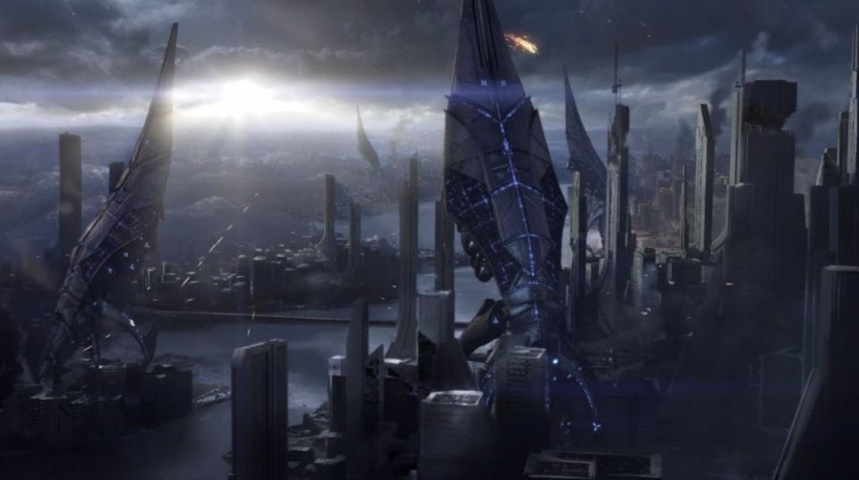
20120326-001932.jpg
Not Vancouver’s best day ever…

The biggest game release of 2012 so far has come and gone, trailing controversy in its wake. Fans of the Mass Effect series have been enraged by what they see as a substandard ending for Bioware’s space opera magnum opus and have raised a lot of noise (and money) about it. I’ll talk a little about the ending later, but if you want deeper, more philosophical, design-oriented takes on the ending, you can read them here, here, or here.

In any case, if you have an interest in Mass Effect 3, beware of SPOILERS from here on in.

The first thing that you have to realise about Mass Effect 3 is that it’s all pay off. Unlike the first two games, where you had an abundance of side-quests to distract you as you pursued the main plot, here all of those smaller missions contribute to the main plotline. And if you’ve played through the previous two games in the series, it’s massively satisfying, occasionally heartbreaking and once or twice hilarious as it brings to a close the stories of the richly drawn characters who have accompanied you through the series. Which is not to say that there’s nothing for newcomers: the lengthy intro to the third instalment ably sets up the players and the stakes, but you won’t get the full effect if you’re coming in fresh.

As far as gameplay goes, Mass Effect 3 represents a bit of a step back from the streamlining that took place between the first and second games. The combat feels more fluid than ever, if significantly more finicky, with controls that are apt to put you in the wrong place if you get too enthusiastic with the key/button presses. With increased weapon and armour options, there’s plenty for you to tinker with too.

The sense of everything you do having an effect on a galactic war does lend weight to the decisions you make, and fittingly Bioware has the central Shepard character show the stress of the losses and compromises required to make that war winnable. (This sense of player agency is somewhat undercut by the fact that unless you play the game’s multiplayer mode or use the clunky Mass Effect Datapad smartphone app, it can be much harder, if not impossible, to reach the very best conclusion.)

So, anyway, onto that ending. And, in case I didn’t say it loudly enough before, SPOILERS.

The ending, by which I mean the final few scenes, draws on two main sources, one good and one iffy. The first is the original Deus Ex game, where the main character is presented with a choice that will change the world (and apart from scale, the choices presented in Mass Effect 3 are identical). The second is The Matrix Reloaded, where a heretofore unsuspected god in the machine reveals himself and offers the main character an insight into the true reasons behind the conflict they’ve participated in.

Now, I’m a completist. I scoured every inch of the galaxy in all three games, and I only found one hint, late in the third game, that there was some director behind the massive threat of the Reapers. So there was a lack of impact to him when he showed up. Secondly, of the three choices you’re offered, one of them is barely explained, even though it seems to be the preferred option from the designers’ point of view. So on the front of emerging from the choices that the character has made and the story that he or she has experienced, the ending falls short. However, I do love the fact that all three choices in the ending adhere to the theme of sacrifice, either of yourself or of at least one friend and possibly an entire race, in order to ensure the galaxy’s future.

Anyone who’s tried to put together a compelling narrative will tell you that endings are hard. Providing a pay off for a story as big as Mass Effect was always going to be a massive task, and I can see where Bioware wanted to go with the ending: consequences at a scale appropriate to the tale being told and a sense of closure to Shepard’s personal journey. However, Peter Jackson spent half an hour on the ending/epilogue for his Lord of the Rings trilogy, so fan disappointment at the two brief cut scenes that round off the Mass Effect series is understandable.

Still, that doesn’t mean that the final game in the series isn’t worth playing. It’s a compelling, finely crafted narrative wrapped up in a polished storytelling and gameplay engine, and it’s done horrible things to my productivity over the past week. Even if it doesn’t spot the landing perfectly, it still engages and enthralls throughout its performance and is worthy of the high scores that it’s been getting.

The (Necessary) Hole in the Heart of the Mass Effect Experience

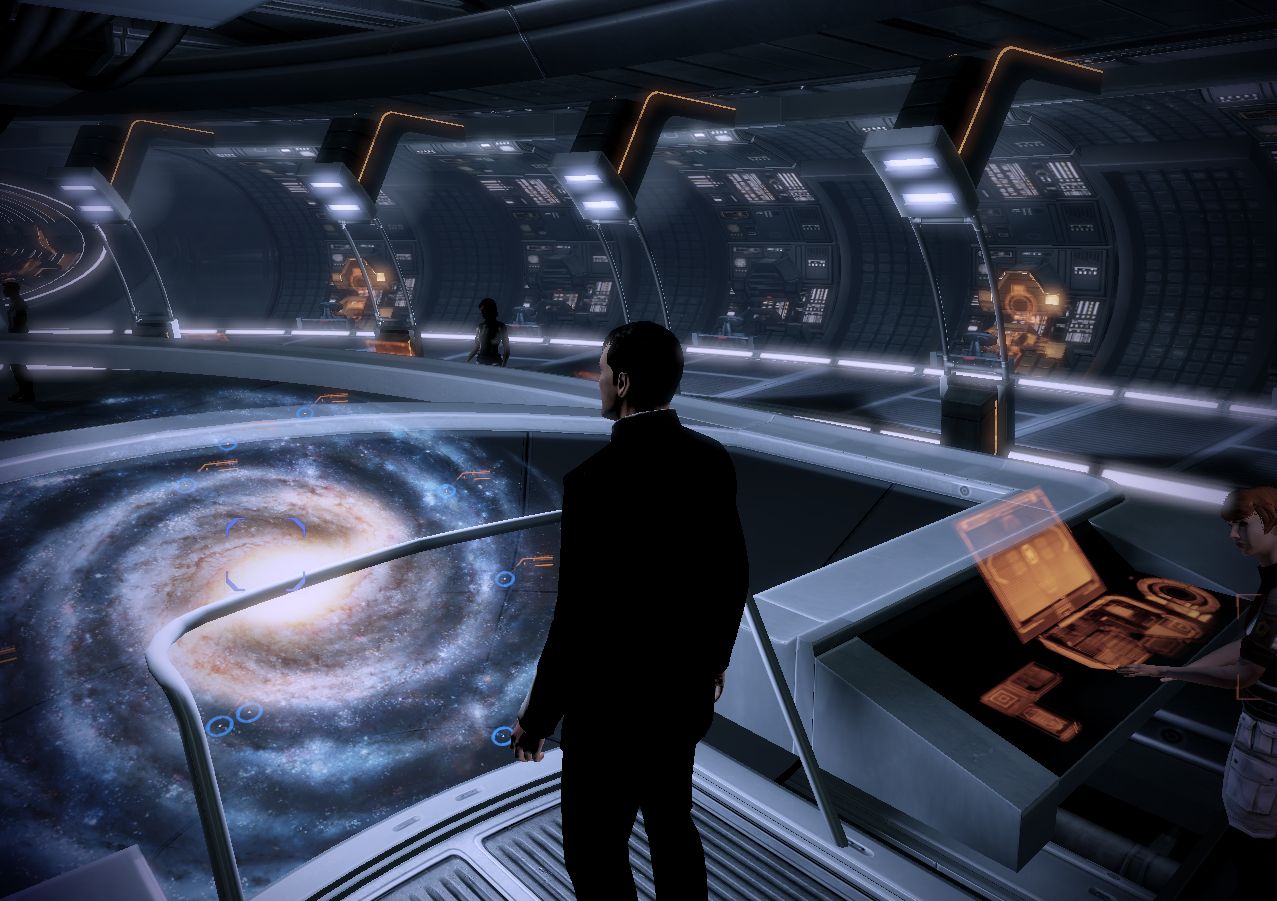
Shepard's Bridge is much better-looking than Picard's.
The galaxy's out there waiting for you. If you have a really nice starship, that is.

(This is the first in what will hopefully be a series on computer games and how they do or don’t tell stories.)

In honour of the fast-approaching due date of Bioware’s Mass Effect 3, the culmination of its space opera epic, I’ve been replaying Mass Effect 2 in an effort to polish up my save game. Replaying the entire title gave me a second chance to appreciate just how good this game is. It’s not without flaws, but as a combination of action, character, setting and story, it’s hard to think of any titles that approach, let alone match it. Except that there’s one niggling gap in the experience, and it’s constantly under the player’s eye.

I’ll skip over action: I play games for story and experience and leave twitch games to those with better hand-eye coordination and reflexes. When it comes to rich fictional settings though, Bioware have an excellent track record, and they’ve crammed as much as they can in here. The galaxy presented to the player is rich, varied and deep, with plenty of corners to explore, and the only potential frustration is that it’s much less free-roaming than the Elder Scrolls or Fallout games from Bethesda.

The characters who accompany the player on their quest to save the galaxy are simply a joy. Richly detailed, flawed yet capable, you aren’t so much presented with them as you are offered a chance to get to know them. The life that they have comes from two sources: quality design, voice and motion capture work and a mass of thoughtful detail put into their backstories, even if you’re only partly aware of it all. My view of one character in particular was shifted appreciably by an easily overlooked text file found lurking in a data vault in a piece of downloadable content. Now that’s attention to detail.

Which brings us to that gap I mentioned. Among this cast of real characters, the player’s avatar, Commander Shepard, is a plastic everyman (or woman). Not only is the Commander’s gender flexible, but his history is virtually a blank sheet, his ties to the rest of the universe loose at best, and his abilities and opinions subject to the player’s whim. It’s fair to say that the ship he cruises the galaxy in, the Normandy, has more character than he does. In fact, like the Commander, it was reborn bigger and stronger in the second game, and with a literally new personality.

The Commander’s lack of identity is part of a problem that’s plagued makers of computer RPGs for years: the more you define your main character in a story-based game, the more you take agency away from your player.(1) The recent Deus Ex: Human Revolution was a wonderfully polished revival of a well-loved series, but there were times when you felt like you were just hitting one checkpoint after another as you followed the story of the pointy-chinned hero: your choices were limited to just how violent you wanted to be in reaching each checkpoint.

Japanese-style RPGs, such as Final Fantasy, seem happier to establish your character in advance of the game, but their western counterparts tend towards the blank slate approach: the player creates the character then unleashes them on the world to participate in a the story. Bioware itself wrestled with this problem in its Dragon Age series: the first game gave players a multitude of options as to who they could be, the second narrowed down that scope dramatically and suffered for it.

Outside the realm of the pure action offering, games work best as story creation, rather than story experience, engines. With Mass Effect, Bioware have created a galaxy full of secrets and characters, presented the player with a massive problem to solve and then let them go about it. Of course, the path that they can take to do so is limited, but the key is to create the illusion of freedom, and a big part of that is allowing the player to be the hero they want to be. In this way, Bioware and the player collaborate to create a more immersive story than Bioware could create alone: they’ll care more about the deeds and relationships of a character they identify with than they will about one presented to them fully formed.

By allowing the player’s choices to feed over from one game to the next in the series, Bioware have deepened the impact of the story they’ve created. I’ll be interested to see how all this pays off in Mass Effect 3. At least now I have the perfect save game to start the experience with.

(1) This trend was ably dissected and toyed with in Black Isle’s seminal Planescape: Torment, wherein the player is an amnesiac everyman, who repeatedly dies and has to deal with the choices made in past lives. The point made there is one of self-determination, in which the player has to actively consider choices made and understand their morality, yet has the freedom to choose any path, regardless of moral right or wrong.

February Book Reviews

20120302-140822.jpg
Bookshelves: slightly dusty. My mother would not approve.

A shorter month than the rest but longer than normal. And more reading than I managed to do in January, mostly because I managed to clear away the Banville blockage that was keeping me from the printed page. After that, I had to resort to some lighter and more enjoyable fare…

Eclipse, John Banville: Employing his mastery of the English language to depict an episode in the life of a self-absorbed actor, Banville delivers a piece that is self-consciously a work of art as much as it is a novel. Concerning itself with things occluded and an inability to comprehend the inner workings of the world and the human mind, it allows the reader to marvel at the author’s ability to spin words according to his will, but engagement with the narrator’s life falls by the wayside. A novel so involved with emotions should not perhaps be so cold, but it engages the intellect where it fails to spark the soul, making it an intriguing exercise rather than an absorbing read.

Empire of Ivory, Naomi Novik: For the fourth book in her “Temeraire” series, Novik once again sends Captain Will Laurence and his eponymous dragon on their travels, this time to darkest Africa. It’s a more successfully depicted journey than the second book’s trip to China, due largely to a greater sense of threat and urgency, and Novik continues to fill in the corners of her world, providing yet another slant on the notion of a Napoleonic world with dragons. It’s not wholly successful, as the final third of the book is largely detached from what comes before, but as before it’s the strength of the characters and their utterly believable emotional ties and dilemmas that pulls the whole thing through.

Victory of Eagles, Naomi Novik: The fifth book in the “Temeraire” series would serve as a surprisingly poignant point of closure, if not for the fact that there’s more of this fascinating world to explore, as the final chapters make clear. Ramping up the action right from the start, Novik for the first time makes the dragon Temeraire an equal point of view character with his captain Will Laurence, and it’s a mostly successful move, even if Laurence’s personal history and reactions to the situations he finds himself in remain the core of the book. Some impressive battles and well-thought out strategy and tactics keep the whole thing moving, but surprisingly, a lack of copy editing in the version I read gave an unpleasant feeling that the whole thing was rushed into publication.

Redbreast, Jo Nesbo: A Scandinavian crime thriller that wears its moral message more lightly than Stieg Larsson’s Millennium trilogy, this is an engaging and clever read that only suffers by not being wholly complete in and of itself. Nesbo’s Harry Hole is an appealingly dogged and down-at-heel detective, and the World War II story and aftermath that surrounds his latest case will make it all the more enticing for history buffs. However, the real draw lies in the vivid characters and interesting world that Nesbo has created, as well as the jolts of horrible violence that occasionally intrude on all of them.

January Book Reviews

Going for tenuous relevance to the text here...
A City Under a City: Washington's Metro

January was a busy month: getting settled into a new mode of working and chasing down leads for actual work. Add into that an effort to be sociable, healthy and productive in the middle of winter, and somehow books got left by the wayside. Accordingly, only two reviews this time around. Film reviews, as promised, have been shunted off into the twittersphere, visible to the right, while my thoughts on games are still forthcoming. (Yes, it’s all a grand delay, but work is in progress…)

Born to Run, Christopher McDougall: The somewhat crazy world of ultrarunners, for whom marathons are nothing but a warm up, is the subject of this occasionally hyperbolic but very readable book. McDougall structures his tale around a search for the semi-mythical Tarahumara tribe of Native Americans, who ran their way into obscurity in Mexico, and an attempt to set up the ultimate race between them and the best that the running world has to offer, but a huge chunk of the fun comes from the digressions into the strange characters who populate this world. Occasionally it all seems a bit too weird to be non-fiction, but it’s enough fun that it might even encourage some readers to take up running (if not ultrarunning, admittedly).

The City and the City, China Miéville: On the surface, this is a Kafka- and Orwell-infused detective novel set in two intertwined cities, but at its heart, it’s about the power of the human mind and society to create and bind us to a particular reality. At the outset, language is used as a distancing device, with odd phrasings dragging readers out of their comfort zone, but it seems that the author abandons this device further in, perhaps to give those readers a feeling of acclimatising themselves. Like a lot of Miéville’s work, it’s more interesting than engaging, but if the ideas herein appeal to you and you prefer your reality tinged with weirdness, rather than fantasy, you might find it worth exploring.

The Case of the Problematic Woman

Irene Adler as seen in the BBC's "Sherlock"
Lara Pulver proves the more dangerous of the two recent Irene Adlers.

It’s Sherlock Season at the moment. The second installment in Guy Ritchie’s Downey Jr-&-Law driven comeback arrived on cinema screens over the Christmas period, and on New Year’s Day, the BBC debuted the second series of its modern-day updating of the Arthur Conan Doyle tales, starring Benedict Cumberbatch and Martin Freeman. As a long-time Sherlock fan (when it comes to the classic interpretations, I’m a Jeremy Brett man), this double header definitely added to my festive cheer. However, there was one feature of both offerings that raised a doubtful eyebrow.

Spoilers below for those of you who haven’t watched either slice of Holmes (and they’re both worth taking your time to see).

Irene Adler, like Professor Moriarty (with whom she’s associated in both the cinematic and televisual Holmes offerings), looms a lot larger in the Holmes mythos than her brief appearance in Conan Doyle’s tales would suggest. She appears in a single story, “A Scandal in Bohemia,” and is referred to in just four others. Nonetheless, the idea of the woman who matched wits with Holmes and won has fascinated fans and writers of derivative works ever since.

Which makes it just a little odd that both the most recent Holmes offerings veer away from the idea of her being Holmes’ equal. The first Ritchie movie had her as Moriarty’s catspaw, and the second reduced her to a damsel in distress before swiftly killing her off for little reason other than to provide Holmes with an axe to grind against Moriarty himself. In the BBC version, she matches wits well with Holmes before being undone and reduced again to a damsel in distress, whom Holmes this time saves.

A feature of both the recent versions of Adler is that she is undone by her own affection for Holmes. This is a long way from the Conan Doyle story, where all the affection and admiration is on Holmes’ part, with Adler in love with and set to marry another man. The transition towards something closer to a genuine romance between the characters seems to do Adler a disservice, as Holmes ends up the dominant partner both times out.

This may be inevitable – Holmes is the central figure, after all – but there could be something else at work here. Both Ritchie and Steven Moffatt, the co-creator of the BBC series with Mark Gatiss, have made the relationship between Holmes and John Watson the central point of their versions. No mere foils for the mercurial and manic Holmes, the Watsons of Jude Law and Martin Freeman are close to equal partners, emotionally if not intellectually, avoiding the bumbling caricature that Watson often became in other adaptations. In both cases, the depiction of the relationship between Holmes and Watson is a major part of why these versions work so well.

What that seems to mean, though, is that there’s no room for a romance with Adler. To have her become a victim in both cases seems a shame to me, given that she’s a character with a lot of potential (and the only strong female in the Holmes canon). Ritchie’s casual disposal of her seems much more of a waste, and in somewhat poor taste, whereas Moffat’s decision to have her thoroughly defeated and then rescued seems more a result of confusion as to what to do with her.

Perhaps Conan Doyle had it right: Adler was notable because she won and because she entranced Holmes with her intelligence and honour. To try to bring her closer into the orbit of Holmes-Watson is to ruin her.