Category Archives: Reviews

June Book Reviews

20120702-102108.jpg
A slice of bookshelf, from Malory to Moore

Another month that seemed to be heading down a quiet path as far as book reading went was turned around by a lazy weekend at the parents’ place, which allowed me to polish off three titles. I guess there’s something to be said for having a few days where you attempt to merge with the couch through osmosis…

;

Night of Knives, Ian C. Esselmont: A stand-alone story set in the world of Steven Erikson’s “Malazan” tales, this is almost as dense in terms of detail as that series, which is to be expected coming from the setting’s co-creator. Set over the course of a single night, it provides a meaningful chunk of backstory to Erikson’s opus, and as a result is probably required reading for diehard fans of the Malazan books. However, it’s not quite as wild and baroque as the series it springs from, and in the course of a single book it cannot explain all the elements of the world that it draws upon, leaving it solely for fans, perhaps.

At Swim Two Birds, Flann O’Brien: Irish myth and folklore twist together with the bluster and verbosity of Irish pub conversation in a surreal, multi-level narrative. Telling multiple stories at various levels, vaguely centered around an author trying to wrangle his recalcitrant creations, it’s filled to the brim with poetically wordy digressions and strange depictions of the wild and the weird of the tiny green island it sprang from. Deeply erudite, constantly playful and Irish in a way that few other books are, even as it launches volley after volley of affectionate digs at the cliches of Irishness, this is a book that demands a lot of the reader but packs more than enough in to reward (if not require) multiple readings.

Girlfriend in a Coma, Douglas Coupland: The title of the book is the kicking-off point for a meditation on the meaning of life, mediated through the experiences of five friends and the few others who come to share their lives as they face the banal apocalypse of adulthood. There’s a vein of weirdness running through the book that comes to overwhelm it towards the end, but the author keeps a careful eye on the point he’s making, and even amid the strangest occurrences the characters remain true to themselves, if not necessarily true to life. Some readers won’t like the overly preachy tone of the last few chapters, but this is a thoughtful book, casting a jaundiced eye over the modern world and comparing its meaningless pursuit of prosperity to a wasted maturity after the promise of childhood.

Last Argument of Kings, Joe Abercrombie: The First Law series of books comes to an end in suitably bloody, ambiguous fashion, with deaths aplenty and destiny revealed to be the inevitable result of choices made by the person affected and those who’ve treated them as pawns. Fittingly, there’s a real sense of returning to where the story began, even as all the secrets and lies laid down before are exposed, leading to results that are all the more satisfying for being unexpected. Joe Abercrombie spots the landing perfectly, even taking the time to have a dig at the fantasy genre and provide plenty of skewed humour amid the blood and gore.

Snuff, Terry Pratchett: At this stage in the author’s career and his long-running Discworld series, there’s a real comfort in revisiting a very familiar setting, but this is Pratchett, and underneath the comfort there’s the steel point of an author who still has things to say. The humour in the newest tale of Sam Vimes, policeman to the bone no matter how high he rises in society, is obvious here, cutting there, but it wouldn’t matter a damn if it weren’t as well-constructed a story as ever, populated by characters who always remain just the right side of caricature. The writing isn’t as sharp as it once was, and the Discworld series has moved far beyond its knockabout roots to warmly told tales of injustice thwarted, but so long as Pratchett keeps issuing invitations to this unique world, I for one will continue to visit.

Dry, Augusten Burroughs: The memoir of an alcoholic trying to go sober in the face of a life that seems to be doing its best to drive him to drink, this is an occasionally hilarious but mostly scouring look into the mind of an addict. An ad exec in New York, Burroughs is at his funniest before he’s forced into rehab, an experience that leads him to confront the reasons for his behaviour and learn whether or not he’s capable of going dry. The degree of self examination can be wearying at times, but there’s no self pity to be found here, just an self awareness that’s at times completely raw.


Pocket Planes: Fly the 8-bit Skies

20120629-112120.jpg
Flying out of Baghdad – generally considered a questionable idea…

Not too long ago, in a review of Tiny Tower, I commented that the publisher, Nimblebit, may have missed a trick in not selling out to Zynga, which proceeded to photocopy its game when rebuffed. As addictive as Tiny Tower was, it was an ultimately shallow experience, with most of the enjoyment coming from comparing towers with your friends. Well, I may have been worried prematurely, for Nimblebit’s follow up to Tiny Tower, Pocket Planes, is in an entirely different league.

Instead of building a skyscraper and filling it with stores, apartments and occupants, Nimblebit now asks you to craft a globe-spanning airline, starting from a handful of airports and a few rickety planes. It might seem obvious, but the premise of the game permits it much greater depth than Tiny Tower, as you actually have to think about how you expand: go for cheap airports for quick cash or save for more expensive ones and build for the future.

Some Tiny Tower mechanics are carried over: the whimsical 8-bit graphics and tone, and the “bitizens” that fly with your airline. There are still two forms of currency as well: cash for building and upgrading airports and “bux” for purchasing new planes and hurrying your flights. You can purchase bux for cash through the game, but there’s nothing you need to spend money to achieve. All it costs you is a little more patience.

The main substance of the game comes in routing flights of bitizens and cargo from one airport to another: the further the flight, the more money you make, and if you can fill a plane with items for a single destination, you’ll get a bonus. Meandering flights will make you less money (or even cost you money), so some strategic thinking when purchasing airports will pay off in the long run. As your airline grows, you’ll purchase airports further and further apart and faster planes with longer ranges to connect them. In turn, you’ll need to concentrate on higher tier airports that can support those planes.

There are plenty of achievements to pursue, unlockable items to collect, upgrades to pay for and cosmetic changes to tinker with. As for social elements, there’s both a step forward and a step back from Tiny Tower. The ability to view your friends’ efforts has been lost, but in its place there’s a chance to cooperate as part of a “Flight Crew” sharing a hashtag to achieve particular tasks in-game and win bux and special aircraft. It’s a little less personal, but it offers new content every few days, and novelty in a game like this is an important feature.

Pocket Planes isn’t perfect: it’s still a little buggy, with a tendency to quit quite often and an odd Flight Crew glitch that delivered me way more bux than I’d actually earned. The Flight Crew mechanic is also somewhat compromised by the fact that the #toucharcafde hashtag is by far the biggest anywhere. Still, Nimblebit will undoubtedly patch the game until it works smoothly, and for a free offering, there’s a huge amount of content in here. Whether I’ll follow it as far as I did with Tiny Tower, a game that burned out my obsessive-compulsive habit, I’m not sure. However, Pocket Planes is a far superior game to its predecessor and well worth trying out just to see if it suits you.

Prometheus: A Return to a Different World

20120608-105603.jpg
You just know this won’t end well…

Ridley Scott’s reputation as a director was built on two science fiction classics: Alien and Blade Runner. The most recent phase of his career began with a Hollywood blockbuster: Gladiator. With Prometheus, he makes a long-awaited return to science fiction, and all three of the above-mentioned films inform what he’s created with his latest offering.

Spoilers Below – I went into the film knowing as little as I could about it. That may have informed my reaction somewhat.

Continue reading Prometheus: A Return to a Different World

April and May Book Reviews

20120607-164822.jpg
A small slice of bookshelf…

Two months worth of book reviews in one post – I fell behind in my reading in April and only caught up last month. Still, what I did read I mostly enjoyed.

April

Strip Jack, Ian Rankin: An early tale of Rankin’s dour, dogged detective John Rebus, Strip Jack rings with authenticity as it depicts Rebus’s Edinburgh haunts, but in having its central mystery revolve around the doings of that city’s upper crust, it loses a lot of its weight. The central crime is appropriately twisty, but it never feels quite dark enough, and Rebus’s own troubled personal life has at least as much heft. The sharpness of the writing, especially Rankin’s ear for dialogue and the cutting line, as well as the fully-drawn character of Rebus himself, still make this a more than rewarding read.

A Princess of Mars, Edgar Rice Burroughs: One of the founding texts of the now mostly defunct space romance genre, this is an old-style adventure that barrels along at a furious pace, never afraid to stoop to contrivance or convenience in its efforts to get to the next cliffhanger or climax. John Carter is an able and sympathetic romantic hero, marooned on Mars/Barsoom by a mechanism that amounts to authorial handwaving but swiftly adapting to his new surroundings with a verve that a modern reader might decry as wish-fulfillment if it weren’t all so much fun. You’d have to be hard-hearted indeed not to get caught up in Burroughs’ planetary adventure, with its barbarians, princesses, ancient cultures and strange mysteries, and when you reach the end of the breathless ride, you might just find yourself eager for another.

May

The Black Book, Ian Rankin: Following on from Strip Jack, Detective Inspector John Rebus returns with an altogether darker and more satisfying dive into the grimy criminal underworld of Edinburgh. Not only is Rebus himself at his dogged, incisive best, but his supporting cast stand up well to him and the array of ne’er-do-wells he navigates in chasing down the leads in a long-cold murder case are colourfully drawn. Few characters get out without some blood on their hands, and none of them (with the exception of Rebus himself) come across as being guaranteed to make it to the final page.

Mortal Causes, Ian Rankin: The blood and grim purpose of the conflict in Northern Ireland intrudes into the Edinburgh of John Rebus, further darkening an already bleak depiction of the city. A little of Rebus’s own past is also revealed, suggesting some of the demons that haunt him, and he remains a thoroughly flawed protagonist, yet admirable in his unstated insistence on pursuing the unjust into whatever corners they have chosen to hide. Rebus’s world is further deepened by the use of threads from previous novels, and the cast surrounding him are almost as well written as he himself is.

Winter King, Thomas Penn: The repressive, paranoid reign of the first of the Tudor kings, Henry VII, is depicted in epic detail, from his early years in exile to the chaotic scenes that accompanied his death. As much a portrayal of the kingdom Henry created as of the man himself, it’s a fascinating retelling of his efforts to bind together a kingdom and pass it on to his son in the face of rebellion, conspiracy and personal tragedy. With a cast of hundreds, it can sometimes prove tricky to keep track of all the players in this game of court intrigue, but for anyone with an interest in English history, this is a must.

The History of England Volume 1: Foundation, Peter Ackroyd: Speaking of English history, this is an entry in the “magnum opus” corner of the history section of the library, as Ackroyd attempts to chart the history of the English nation from the earliest settlers onwards. It’s a tale full of digressions, and Ackroyd regularly gives his writerly side free rein to express itself as he picks his way through the bones of England’s past, unearthing odd gems and revealing rarely seen sides of otherwise familiar stories. His habits of passing judgement on everything he sees and ending nearly every section with an enigmatic hint or a witty bon mot get somewhat repetitive, but there’s plenty of information in here to keep a reader fascinated.

Spoiler Sport and the Art of Avoidance

20120417-183049.jpg
Spoilers: Not just a way of life; also a catchphrase.

I have a strong attachment to my many books, but every so often I do lend them out. When I do, I often sell that loan by saying what makes it worth recommending: characters, plot, setting, etc. What I don’t do is say anything along the lines of “Well, it’s the tale of a group of small folk who come into possession of a evil magic ring, and they have to travel across half the world, accompanied by allies from different races, in a quest to destroy it.” Not that I’d be giving away all of “The Lord of the Rings” by doing so, but I’d be depriving the loanee of some of the joy of discovery.

So why do movie studios seem determined to go a lot further in spoiling their wares ahead of time?

Last night I had the pleasure of watching “The Cabin in the Woods,” the new film from the fertile brains of Buffy alumni Drew Goddard and Joss Whedon. Partly due to the long gap between its filming and release, but mostly due to the creators’ determination to keep as much of it as possible under wraps, I managed to go into the cinema knowing very little of what it was about. This was a very good thing, and I’ll say no more about that film other than that it’s not so much as slasher movie as a movie about slasher movies (and manages to be a lot more fun than its meta-horror precursor Scream).

However, it’s getting harder and harder to avoid learning most of what a film has to offer long before its release. I already know more about Whedon’s next movie, The Avengers (or Avengers Assemble if you don’t live in the U.S.) than I’d prefer, and I’ve resorted to sticking my fingers in my ears and shutting my eyes to avoid seeing trailers for Ridley Scott’s forthcoming Prometheus.

I do accept a portion of the blame for this. Anyone who trawls the internet habitually can at any moment be enticed by a rumour, press release or teaser trailer. On the other hand, movie studios are always eager to attract more attention for their releases, and media outlets are just as eager to scoop their rivals with the latest unrevealed details of films just over the horizon. The only thing standing in the way of a tidal wave of spoilers is a common awareness that revealing everything ahead of time defeats the purpose of marketing the film in the first place.

It’s good to be surprised by a film. When a trailer shows clips from a film’s climax, or an article leaks details of the plot, then the person thus spoiled loses something. The best movies bear repeated viewing, but there’s a reason why we feel envious of those about to experience something exceptional for the first time. (This is also the case for other forms of entertainment: witness the recent tortured efforts to discuss the ending of Mass Effect 3 without actually talking about it.)

After years of being a happy consumer of rumours and spoilers, I’ve become a convert to the art of avoidance. I’ll happily watch trailers for, and read about, movies I’ve never heard of in the hope of finding something worth watching, but if it’s something I’m already looking forward to, it goes on my interdicted list. I’d definitely recommend it as a habit to get into. If nothing else, it offers a chance to enjoy a movie twice over: once for the new experience and once again to appreciate the artistry with which it was put together.

Tiny Tower – An Addictive Experience

20120412-104429.jpg
The tip-top of my Tiny Tower.

Tiny Tower on iOS isn’t so much a game as it is a drug for obsessive-compulsive completists (people like me, in other words). As is the way with most drugs, I was introduced to it by a friend, and even though they’ve had the sense to wean themselves off it, I haven’t quit just yet. Maybe tomorrow

The purpose of the game is to build a tower up to the heavens, filling it with shops and apartments full of “bitizens”. The 8-bit graphics are almost terminally cute, and there’s a quirky sense of humour at work, but just how much game is there here?

The game itself runs on two currencies. The first, money, is used to build floors and stock shops and can be gained through selling goods from those shops and giving lifts to bitizens. The second currency, towerbux, is used throughout the game to speed up the sometimes slow process of stocking floors and gaining new bitizens, as well as to spruce up floors with new paint jobs and bitizens with costumes.

Importantly, players can purchase towerbux for real money, which is where the profit part of the equation comes in for the developer NimbleBit. It’s perfectly possible to play without ever paying for towerbux, and the more attention you pay to the game, the more towerbux you’ll pick up from in-game sources, such as completing tasks and fully stocking floors, but in order to make towerbux an attractive option, the game has to tweak players’ impatience, and it does so by getting slower and harder to build floors as it goes along.

Most of the fun to be had with Tiny Tower comes early in the game, when you get to add a few new floors every day. There’s a basic community element too, which uses iOS’s Game Center to show your friends’ progress. However, as the pace of the game slows (at the moment, I get a new floor slightly faster than every other day) there’s not much attachment to your tower or bitizens to keep you coming back. Worse, the ability of towerbux to speed your progress diminishes, making them less appealing right at the moment a player might want them most.

There was a lot of fuss not long ago about Zynga’s decision, after being rebuffed in an attempt to buy NimbleBit, to simply copy Tiny Tower wholesale for their own game Dream Heights. Whatever the rights and wrongs of that kerfuffle, I can’t help feeling that NimbleBit missed a trick. Tiny Tower was the iOS game of 2011, but the two main wikis on it haven’t been kept properly updated. Perhaps selling at the height of the market might have been a good idea?

At the moment, this obsessive-compulsive completist is still playing, mostly because I want to get all the available floors. Which, at my current rate of progress, will take perhaps two more months, assuming that NimbleBit don’t release yet another update adding a batch of new floors. Is it really a game? I’m not sure, but I’ve had fun with it. I’m just not sure that I’m still having fun with it.

March Book Reviews

A decent month of reading in March, mostly populated by fantasy, with a bit of Western in there too. Also the month in which I picked up an iPhone app that allowed me to catalogue my library. Not really a good thing to do to someone who has problems keeping his obsessive-compulsive tendencies at bay at the best of times…

Tongues of Serpents, Naomi Novik: Being an even-numbered offering in Novik’s “Temeraire” series, it shouldn’t be too surprising that this book mostly concerns itself with new lands and interesting cultures, nor that it isn’t quite as gripping as the action-oriented, odd-numbered books. Stuck in Australia, far from the Napoleonic wars, Captain Will Laurence and his dragon Temeraire indulge in some personal conflicts and a long chase across the outback, ending in a brief fracas that does more to set up plot points for later stories than provide a satisfying ending in and of itself. Still eminently readable and interesting as an alternate fantasy-history, this series is in danger of becoming just a little too predictable.

The Blade Itself, Joe Abercrombie: Populated with broken, angry, epically flawed characters, the first book in Abercrombie’s “First Law” trilogy is gritty stuff, with hints of high fantasy and ancient powers interspersed with brutal violence and Machiavellian politics. Although very much the first third of a larger story, there’s enough here for the reader to get their teeth into, even if most of it does come by the way of characters who refuse to be as predictable as they might be in another author’s hands. Whether the rest of the trilogy lives up to this impressive start remains to be seen, but Abercrombie has done all that he needed to encourage readers to pick up book two.

The Sisters Brothers, Patrick DeWitt: A laconic, darkly humorous tale of the dysfunctional relationship between two hired-killer brothers in the Wild West, this is as much as anything a homage to classic Western tales. Narrated by the philosophical, fatalistic Eli Sisters, it’s packed full of incident and strangeness yet always remains within orbiting distance of reality, or at least as close as Gold Rush-era California ever got to reality. Very deserving of its critical acclaim, it retains an oddly gentle and thoughtful tone throughout, even in the face of the high level of violence and death that accompanies its protagonists.

The Broken Sword, Poul Anderson: Some classic fantasy, born from a melding of Norse and Celtic myth and folklore, telling the tale of a doomed hero, his changeling replacement and the woman caught between them. Anderson wastes no words as he sets up a layered world of gods and faerie creatures, all operating parallel to the course of history, and the passions that drive his characters and full-blooded, whether they are dark or heroic. As with any good mythic tale, there’s an undercurrent of tragedy that emerges to dominate as the tale comes to its end, with a sense of a world coming to an end as myths and legends die, but this is a rich enough offering to stand with the best of the myths that have been hallowed by the centuries.

Before They Are Hanged, Joe Abercrombie: As his “First Law” series continues, Abercrombie takes the characters he’d introduced in the first book and throws them into the deep end, whether it’s war, a siege or a journey to the end of the world. Those characters and their multifarious flaws are what gives this series its punch, though as the author opens up the myth-making behind his world, he increases the sense of real consequence to the wars and struggles he presents. If there’s a complaint to be made, it’s that after two books, the story doesn’t feel like it’s two-thirds over: there’s a lot of wrapping up to be done in the pages to come.

Mass Effect 3: Endings are Hard

20120326-001932.jpg
Not Vancouver’s best day ever…

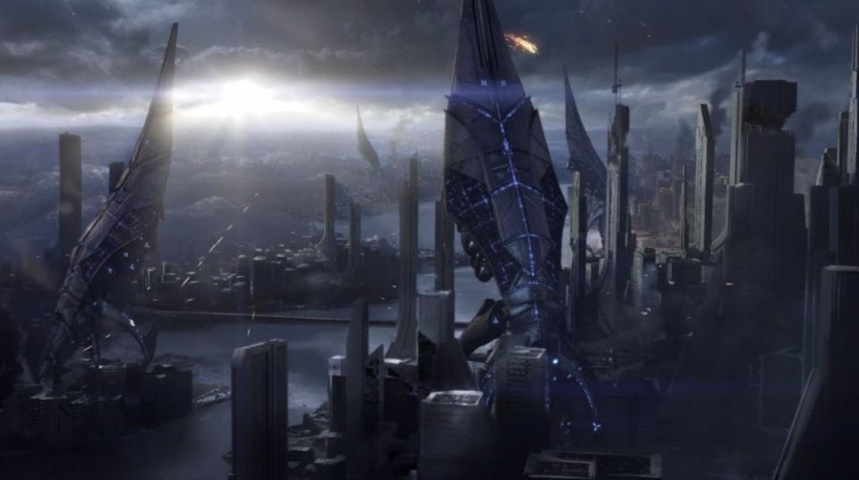
The biggest game release of 2012 so far has come and gone, trailing controversy in its wake. Fans of the Mass Effect series have been enraged by what they see as a substandard ending for Bioware’s space opera magnum opus and have raised a lot of noise (and money) about it. I’ll talk a little about the ending later, but if you want deeper, more philosophical, design-oriented takes on the ending, you can read them here, here, or here.

In any case, if you have an interest in Mass Effect 3, beware of SPOILERS from here on in.

The first thing that you have to realise about Mass Effect 3 is that it’s all pay off. Unlike the first two games, where you had an abundance of side-quests to distract you as you pursued the main plot, here all of those smaller missions contribute to the main plotline. And if you’ve played through the previous two games in the series, it’s massively satisfying, occasionally heartbreaking and once or twice hilarious as it brings to a close the stories of the richly drawn characters who have accompanied you through the series. Which is not to say that there’s nothing for newcomers: the lengthy intro to the third instalment ably sets up the players and the stakes, but you won’t get the full effect if you’re coming in fresh.

As far as gameplay goes, Mass Effect 3 represents a bit of a step back from the streamlining that took place between the first and second games. The combat feels more fluid than ever, if significantly more finicky, with controls that are apt to put you in the wrong place if you get too enthusiastic with the key/button presses. With increased weapon and armour options, there’s plenty for you to tinker with too.

The sense of everything you do having an effect on a galactic war does lend weight to the decisions you make, and fittingly Bioware has the central Shepard character show the stress of the losses and compromises required to make that war winnable. (This sense of player agency is somewhat undercut by the fact that unless you play the game’s multiplayer mode or use the clunky Mass Effect Datapad smartphone app, it can be much harder, if not impossible, to reach the very best conclusion.)

So, anyway, onto that ending. And, in case I didn’t say it loudly enough before, SPOILERS.

The ending, by which I mean the final few scenes, draws on two main sources, one good and one iffy. The first is the original Deus Ex game, where the main character is presented with a choice that will change the world (and apart from scale, the choices presented in Mass Effect 3 are identical). The second is The Matrix Reloaded, where a heretofore unsuspected god in the machine reveals himself and offers the main character an insight into the true reasons behind the conflict they’ve participated in.

Now, I’m a completist. I scoured every inch of the galaxy in all three games, and I only found one hint, late in the third game, that there was some director behind the massive threat of the Reapers. So there was a lack of impact to him when he showed up. Secondly, of the three choices you’re offered, one of them is barely explained, even though it seems to be the preferred option from the designers’ point of view. So on the front of emerging from the choices that the character has made and the story that he or she has experienced, the ending falls short. However, I do love the fact that all three choices in the ending adhere to the theme of sacrifice, either of yourself or of at least one friend and possibly an entire race, in order to ensure the galaxy’s future.

Anyone who’s tried to put together a compelling narrative will tell you that endings are hard. Providing a pay off for a story as big as Mass Effect was always going to be a massive task, and I can see where Bioware wanted to go with the ending: consequences at a scale appropriate to the tale being told and a sense of closure to Shepard’s personal journey. However, Peter Jackson spent half an hour on the ending/epilogue for his Lord of the Rings trilogy, so fan disappointment at the two brief cut scenes that round off the Mass Effect series is understandable.

Still, that doesn’t mean that the final game in the series isn’t worth playing. It’s a compelling, finely crafted narrative wrapped up in a polished storytelling and gameplay engine, and it’s done horrible things to my productivity over the past week. Even if it doesn’t spot the landing perfectly, it still engages and enthralls throughout its performance and is worthy of the high scores that it’s been getting.

The (Necessary) Hole in the Heart of the Mass Effect Experience

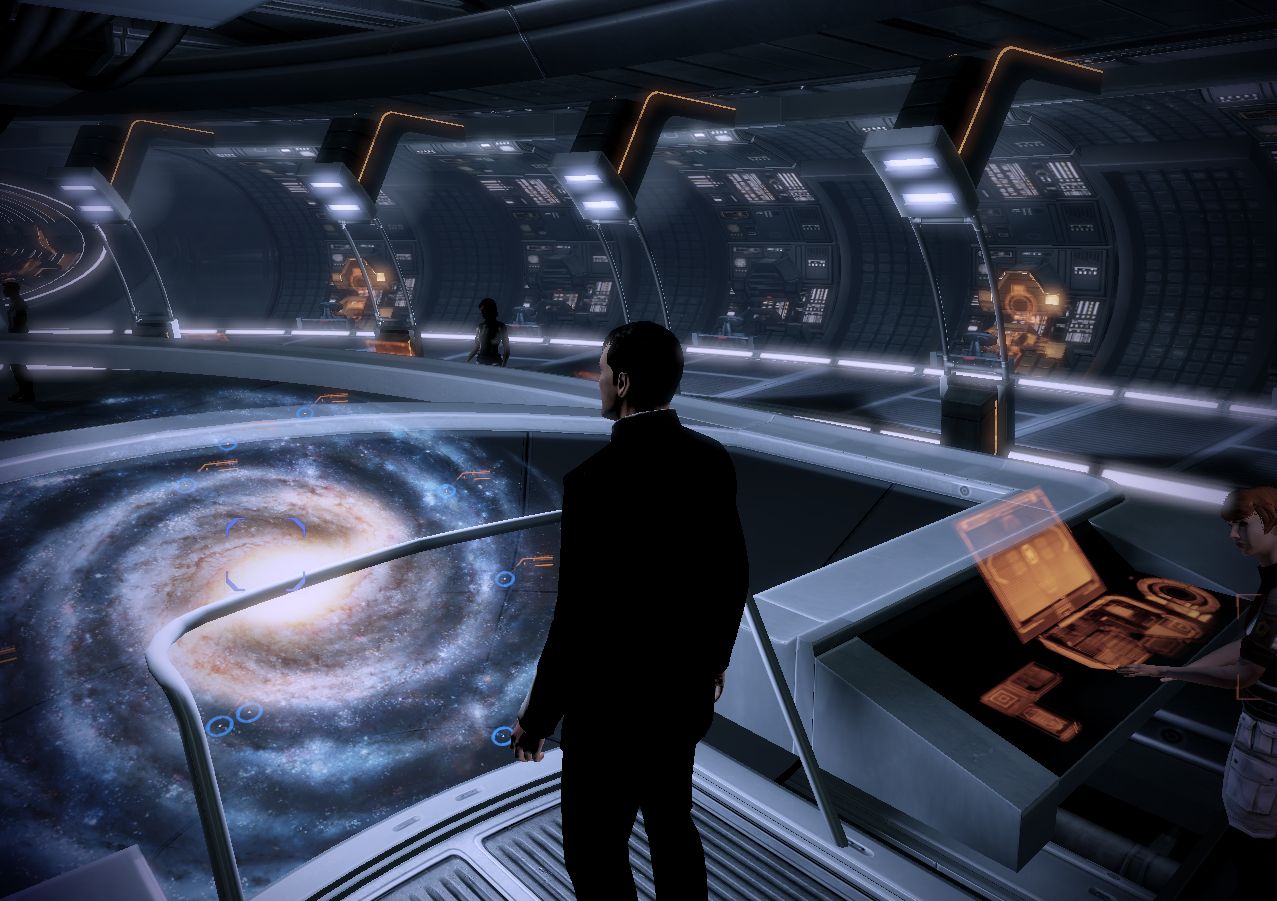
Shepard's Bridge is much better-looking than Picard's.
The galaxy's out there waiting for you. If you have a really nice starship, that is.

(This is the first in what will hopefully be a series on computer games and how they do or don’t tell stories.)

In honour of the fast-approaching due date of Bioware’s Mass Effect 3, the culmination of its space opera epic, I’ve been replaying Mass Effect 2 in an effort to polish up my save game. Replaying the entire title gave me a second chance to appreciate just how good this game is. It’s not without flaws, but as a combination of action, character, setting and story, it’s hard to think of any titles that approach, let alone match it. Except that there’s one niggling gap in the experience, and it’s constantly under the player’s eye.

I’ll skip over action: I play games for story and experience and leave twitch games to those with better hand-eye coordination and reflexes. When it comes to rich fictional settings though, Bioware have an excellent track record, and they’ve crammed as much as they can in here. The galaxy presented to the player is rich, varied and deep, with plenty of corners to explore, and the only potential frustration is that it’s much less free-roaming than the Elder Scrolls or Fallout games from Bethesda.

The characters who accompany the player on their quest to save the galaxy are simply a joy. Richly detailed, flawed yet capable, you aren’t so much presented with them as you are offered a chance to get to know them. The life that they have comes from two sources: quality design, voice and motion capture work and a mass of thoughtful detail put into their backstories, even if you’re only partly aware of it all. My view of one character in particular was shifted appreciably by an easily overlooked text file found lurking in a data vault in a piece of downloadable content. Now that’s attention to detail.

Which brings us to that gap I mentioned. Among this cast of real characters, the player’s avatar, Commander Shepard, is a plastic everyman (or woman). Not only is the Commander’s gender flexible, but his history is virtually a blank sheet, his ties to the rest of the universe loose at best, and his abilities and opinions subject to the player’s whim. It’s fair to say that the ship he cruises the galaxy in, the Normandy, has more character than he does. In fact, like the Commander, it was reborn bigger and stronger in the second game, and with a literally new personality.

The Commander’s lack of identity is part of a problem that’s plagued makers of computer RPGs for years: the more you define your main character in a story-based game, the more you take agency away from your player.(1) The recent Deus Ex: Human Revolution was a wonderfully polished revival of a well-loved series, but there were times when you felt like you were just hitting one checkpoint after another as you followed the story of the pointy-chinned hero: your choices were limited to just how violent you wanted to be in reaching each checkpoint.

Japanese-style RPGs, such as Final Fantasy, seem happier to establish your character in advance of the game, but their western counterparts tend towards the blank slate approach: the player creates the character then unleashes them on the world to participate in a the story. Bioware itself wrestled with this problem in its Dragon Age series: the first game gave players a multitude of options as to who they could be, the second narrowed down that scope dramatically and suffered for it.

Outside the realm of the pure action offering, games work best as story creation, rather than story experience, engines. With Mass Effect, Bioware have created a galaxy full of secrets and characters, presented the player with a massive problem to solve and then let them go about it. Of course, the path that they can take to do so is limited, but the key is to create the illusion of freedom, and a big part of that is allowing the player to be the hero they want to be. In this way, Bioware and the player collaborate to create a more immersive story than Bioware could create alone: they’ll care more about the deeds and relationships of a character they identify with than they will about one presented to them fully formed.

By allowing the player’s choices to feed over from one game to the next in the series, Bioware have deepened the impact of the story they’ve created. I’ll be interested to see how all this pays off in Mass Effect 3. At least now I have the perfect save game to start the experience with.

(1) This trend was ably dissected and toyed with in Black Isle’s seminal Planescape: Torment, wherein the player is an amnesiac everyman, who repeatedly dies and has to deal with the choices made in past lives. The point made there is one of self-determination, in which the player has to actively consider choices made and understand their morality, yet has the freedom to choose any path, regardless of moral right or wrong.

February Book Reviews

20120302-140822.jpg
Bookshelves: slightly dusty. My mother would not approve.

A shorter month than the rest but longer than normal. And more reading than I managed to do in January, mostly because I managed to clear away the Banville blockage that was keeping me from the printed page. After that, I had to resort to some lighter and more enjoyable fare…

Eclipse, John Banville: Employing his mastery of the English language to depict an episode in the life of a self-absorbed actor, Banville delivers a piece that is self-consciously a work of art as much as it is a novel. Concerning itself with things occluded and an inability to comprehend the inner workings of the world and the human mind, it allows the reader to marvel at the author’s ability to spin words according to his will, but engagement with the narrator’s life falls by the wayside. A novel so involved with emotions should not perhaps be so cold, but it engages the intellect where it fails to spark the soul, making it an intriguing exercise rather than an absorbing read.

Empire of Ivory, Naomi Novik: For the fourth book in her “Temeraire” series, Novik once again sends Captain Will Laurence and his eponymous dragon on their travels, this time to darkest Africa. It’s a more successfully depicted journey than the second book’s trip to China, due largely to a greater sense of threat and urgency, and Novik continues to fill in the corners of her world, providing yet another slant on the notion of a Napoleonic world with dragons. It’s not wholly successful, as the final third of the book is largely detached from what comes before, but as before it’s the strength of the characters and their utterly believable emotional ties and dilemmas that pulls the whole thing through.

Victory of Eagles, Naomi Novik: The fifth book in the “Temeraire” series would serve as a surprisingly poignant point of closure, if not for the fact that there’s more of this fascinating world to explore, as the final chapters make clear. Ramping up the action right from the start, Novik for the first time makes the dragon Temeraire an equal point of view character with his captain Will Laurence, and it’s a mostly successful move, even if Laurence’s personal history and reactions to the situations he finds himself in remain the core of the book. Some impressive battles and well-thought out strategy and tactics keep the whole thing moving, but surprisingly, a lack of copy editing in the version I read gave an unpleasant feeling that the whole thing was rushed into publication.

Redbreast, Jo Nesbo: A Scandinavian crime thriller that wears its moral message more lightly than Stieg Larsson’s Millennium trilogy, this is an engaging and clever read that only suffers by not being wholly complete in and of itself. Nesbo’s Harry Hole is an appealingly dogged and down-at-heel detective, and the World War II story and aftermath that surrounds his latest case will make it all the more enticing for history buffs. However, the real draw lies in the vivid characters and interesting world that Nesbo has created, as well as the jolts of horrible violence that occasionally intrude on all of them.