Category Archives: Travel

Under a Black Sun

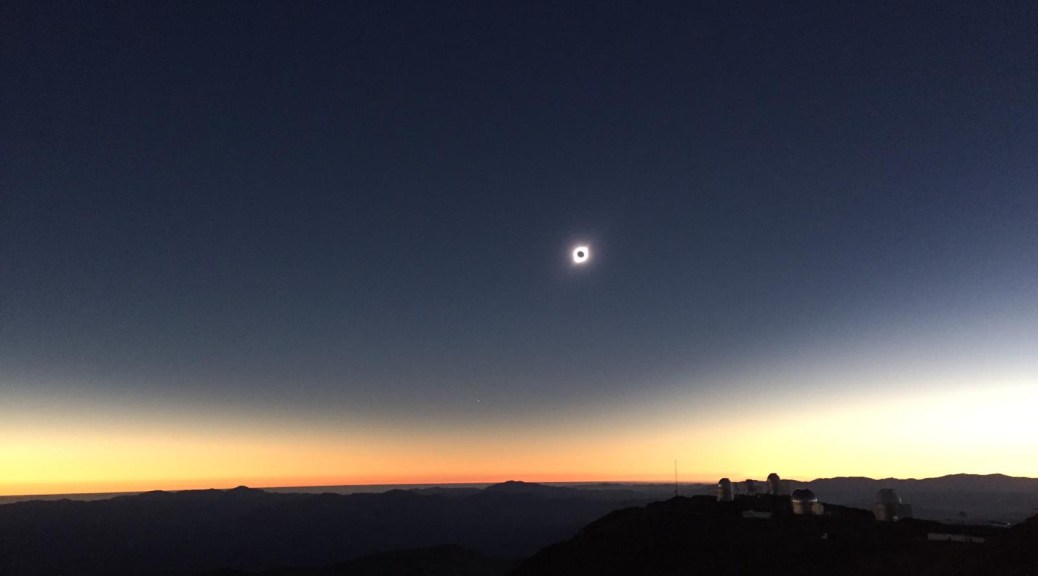
(Featured photo courtesy of the Doctor and his photography skills.)

Normally I do these posts in proper order, following my travels as they happen. However, this one time I think it’s worth breaking that habit. For one thing, the first week of this trip has been unusually hectic, with next to no downtime in which to write, so I’m already behind. For a second, the event that this entire trip was centered around has already happened, and to waste any more time in committing my thoughts on it to words risks losing some of the detail.

In 2018, the European Southern Observatory (ESO), a collection of observatories in Chile’s Atacama desert, decided to celebrate an upcoming total solar eclipse by selling tickets to an unusually perfect viewing point: their mountaintop site at La Silla. I grabbed three tickets, roping in a couple of friends who were as keen as me to make the most of this opportunity. One had to drop out, but another replaced her, and so the three of us made our way to La Silla for July 2, 2019. The broader story of that trip will be told in the next post, but what follows below is my notes made directly after the event itself.


Well, that was special. It took the Lawyer and the Doctor a little over an hour to return (from their tour of the La Silla site), and when I went to follow in their footsteps, the New Technology Telescope (NTT) tour was closed due to VIP activity. So I returned and we hung out at the viewing spot we’d claimed for an hour or two, until the Lawyer and I went to queue for a tour of the massive reflector that sits on La Silla’s highest peak. Despite the presence of the Chilean President and two kids doing their best to start an avalanche, we made it up to the top of the mountain and spent a few awed moments roaming the interior of the telescope dome and marveling at the massive, if somewhat aged, technology within.

By the time we returned, having also spotted more than a few condors* circling the peak, it was about 1500. The Lawyer went to relieve the Doctor, while I took the opportunity of no queue at the now reopened NTT to tour that as well. After a quick run around the internal workings of the telescope, with its double sensors, cooling technology, and adaptive optics, I returned to our viewing spot. At that stage, there were only a few minutes until first contact at 1523. From that moment on, the crowd’s attention was ever more tightly focused on the sun, staring at it through the provided safety lenses and watching as the moon crawled across the face of the solar disc, dimming it more every minute.

As we approached totality, a chill fell over the land, and the contours of the valleys below La Silla were lost in shadow. Our own shadows were twisted by the crescent sun as strange, untimely colours stained the horizon.

Not the best of photos, but better than the one I took during totality.
Moments before totality, captured with my struggling phone camera. The sky colours are pretty visible though.

How to describe how things changed at totality? Up until the last few seconds, even the smallest fragment of the sun was too bright to look at. In an instant though, the sun gave way to a disc of complete darkness, wreathed in a halo of white flame. Colours danced along the horizon, the world utterly changed.

For just under two minutes, the hundreds of viewers gathered on the mountaintop experienced a very different universe to the one we know day-to-day.

As totality had been, the return of the sun’s light was greeted by cheers. An initial speck of light on the edge of the black disc was joined by another, bisected by lunar peaks. Moments later, the sun returned to us the world that had been. Once again there was light, and warmth too slowly returned.

It was as if we all released a breath we had been holding. Awed exclamations gave way to cheerful conversations and mutual congratulations. Slowly we turned to checking the records of the moments that we’d made, as if to distract from the ferment in our brains. Only by routine could we reacclimatise to the everyday world.

Slowly, reluctantly, people began to move. Some began to head for the buses and the long trip back to their lodgings. Others, like the three of us, were hanging around until sunset and later, so we retreated to the warmth of the vistors’ tent. That’s where the Lawyer and I are now, still coming down from our high, while the Doctor remains outside to catch some final shots of the occluded sun.

I’ve never experienced anything like that before. Not even close. And the best thing? We still have the stars to come.


We did hang around for a few more hours, as the sun set and the stars came out, brighter and more numerous than any of us had ever seen them before. Using my binoculars and the Doctor’s camera, we made the most of being in that place at that time, and even after the ESO staff shooed us off the mountain so that the observatory could get back to doing actual work, we did some more star-spotting on the plains below. As for getting back to our own lodgings, that turned out to be an adventure in itself, but one for another post. For now, and for then, the eclipse is enough.

* Possibly turkey vultures rather than condors. My birdwatching skills are not the best.
Black Sun Odyssey

It’s that time of year again. (It’s not—that time of year would be September, if I hadn’t skipped it last year, for reasons.) The travel itch has overtaken me. (The travel itch never really goes away—what does overtake me is available money and time.) I’m about to go somewhere I’ve never been, see something I’ve never seen, and tell the story of it all here. (Those bits are true enough at least.) So sit back and let me explain what’s going to be.

A bit more than a year ago, one of the podcasts I follow, the ESOcast, flagged up something interesting. A total solar eclipse was due to pass over Chile in 2019, more specifically directly over one of ESO’s mountaintop observatories in the Atacama Desert. More relevantly, they were going to sell tickets to this event. My travel plans for 2018 having fallen through, the combination of viewing an eclipse, venturing into the southern hemisphere for the first time, and getting to visit and perhaps cross South America was too tempting to resist.

From darkness into light. A tale of two mountains.
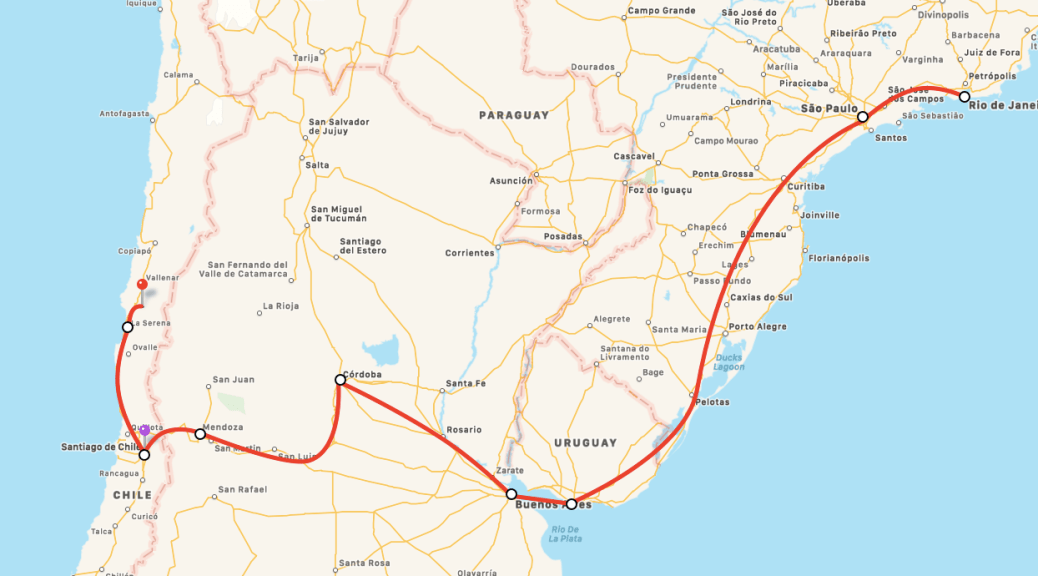
A map of my own folly.

This time though, I did something unusual for me when travel planning. I reached out to a couple of friends who I knew to be astronomy buffs and suggested a joint trip. When I got positive responses, I booked three tickets. A year ahead of time, I was locked into a big trip. It was the longest lead time I’d ever had for a trip like this. The only question is what shape the entire trip would take. The result is the shape on the map above.

Santiago in Chile is the starting point, where myself, the Doctor and the Lawyer will congregate. Chile’s an awkwardly shaped country, thin as a ribbon and stretching across a good portion of the world’s latitude, north to south. The eclipse event is due to happen at a mountaintop site called La Silla, at the southern end of the Atacama Desert, so we’ll be driving (or to be more precise I will) five hours north, first to La Serena on the Pacific coast and then a further two hours north on the day itself to La Silla. As the Atacama is one of the driest spots on earth, this is as close as possible to a sure thing as regards eclipse watching, but either way it’ll be a unique experience.

After this, things don’t get any less interesting on the trip. Another night on the Pacific coast and a few more in Santiago, and then the Doctor and the Lawyer depart for European shores, whereas I go on my merry way. Once again, road and rail are my carriers, but South America’s rail system being as disconnected as it is, there’s only one rail section of this trip, from Cordoba to Buenos Aires in Argentina. To get there, I’ll be hopping two buses, crossing the Andes to the wine district of Mendoza before reaching Cordoba itself.

Buenos Aires comes highly recommended, so it should be a highlight on the trip, and I’ve set aside several days to explore it. Plus, it’s only a ferry trip away from another goal on this journey—the less-visited country of Uruguay and its capital of Montevideo. Like Moldova and Mongolia on earlier trips, Montevideo is an inexplicably personal requirement for a place to visit. Maybe I have a thing for locations starting with “Mo”?

Anyway, if things were otherwise, the trip might end there. I’ll have crossed another continent to add to Europe, Asia, and North America (and I have plans for two of the remaining three), and Pacific to Atlantic would be enough for me. Except that when I was booking flights, departures from Montevideo or even Buenos Aires were prohibitively expensive. So I made a somewhat rash decision that gave birth to the ludicrous-looking line on the map that runs north from Montevideo to the metropolis of São Paulo.

It’ll be the middle of winter when I hit Brazil, but a 29-hour bus trip will drop me into heat matching anything that an Irish summer can muster. For this last part of my trip, I don’t know how much time I’ll spend in São Paulo or Rio de Janeiro (from whence my relatively cheap flight departs), but for my mum’s sake I’ll at least try to climb the hill overlooking the city to visit the Christ the Redeemer statue.

So that’s the plan. Another continent-spanning, mostly land-based odyssey, with a lot of freedom to improvise around some pre-booked fixed points. It’s been too long since I’ve been on one of these trips, and it’s going to be a novelty to be kicking it off in company for a change. My Spanish being as limited as it is, and the prevalence of English speakers being probably less than you’d find in Europe, I’m expecting to face a few more challenges than I have before, but challenging myself is part of the reason why I like to travel solo. You don’t learn anything new by doing the same old thing, again and again.

As always, I’ll fire up travel highlights here as often as I can, and more detailed travel journals will follow in their own good time. There’ll be photos and maybe even some videos, especially of the eclipse. I hope you enjoy it all. I know I will.

Portugal – Escape to the Atlantic Coast

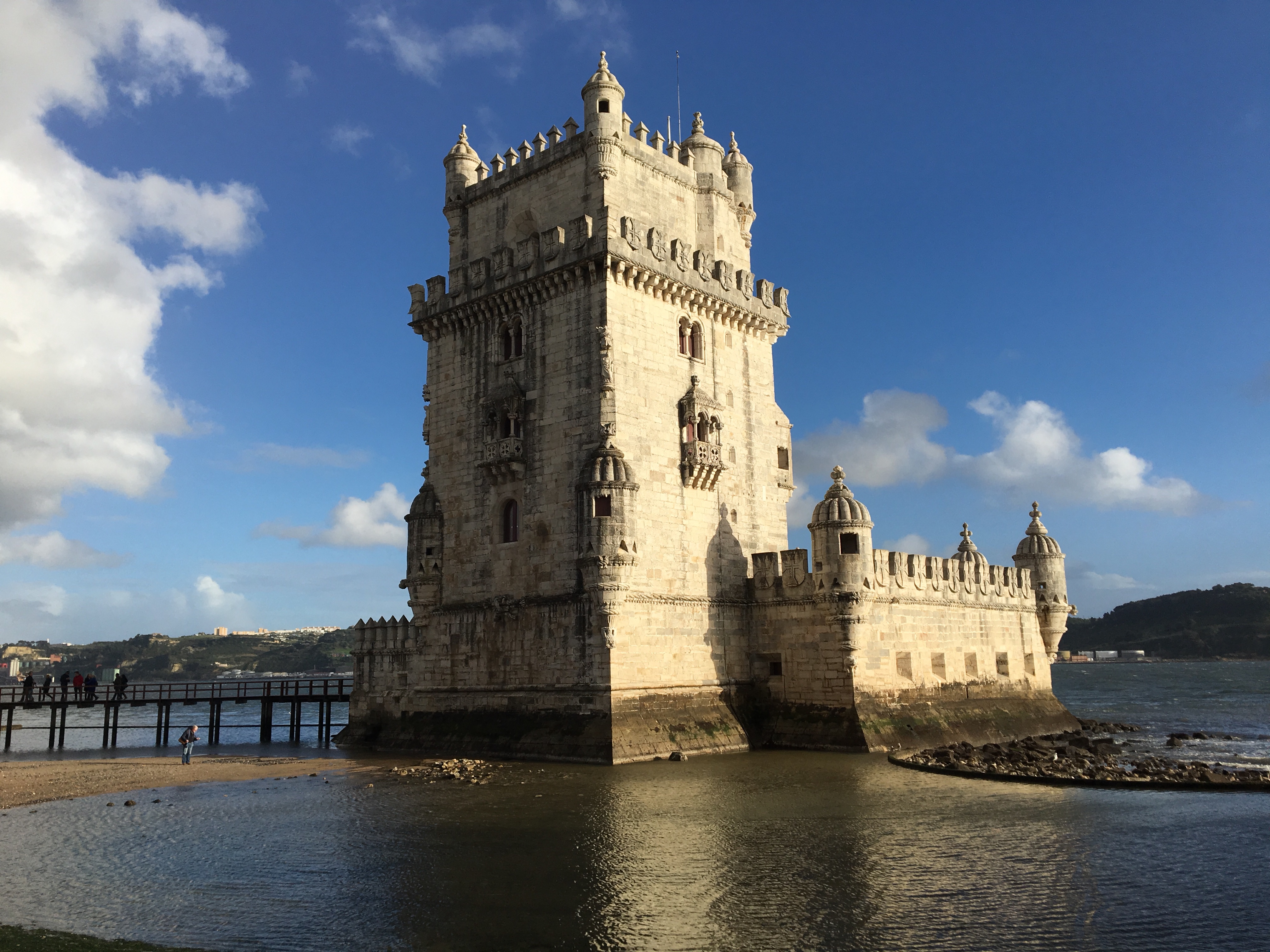
Belem Tower, perhaps the best known sight in Lisbon, if not all of Portugal.

Dublin around the time of the Ides of March is a perilous place to be, packed with tourists and locals eager for an excuse to party and imbibe a beer or two. Getting from one end of O’Connell St to the other can take up most of St. Patrick’s Day if you’re unwary. Most years, I stay at home while the parade’s on or make the most of the long weekend in quieter gatherings with friends. This time I took myself out of the country entirely and spent five days in Portugal instead.

This isn’t a thorough description of what I did on that trip. If you want that, you can check it out here: Portugal 2018 What it is is a brief run through the best parts of the trip, which took in two cities, lots of walking, and nearly as much in the way of custard tarts. I’m not sure how well the latter two balanced out in the end, but I hadn’t put on any weight by the time I came back.

Continue reading Portugal – Escape to the Atlantic Coast

Fuerteventura: New Year in the Sun

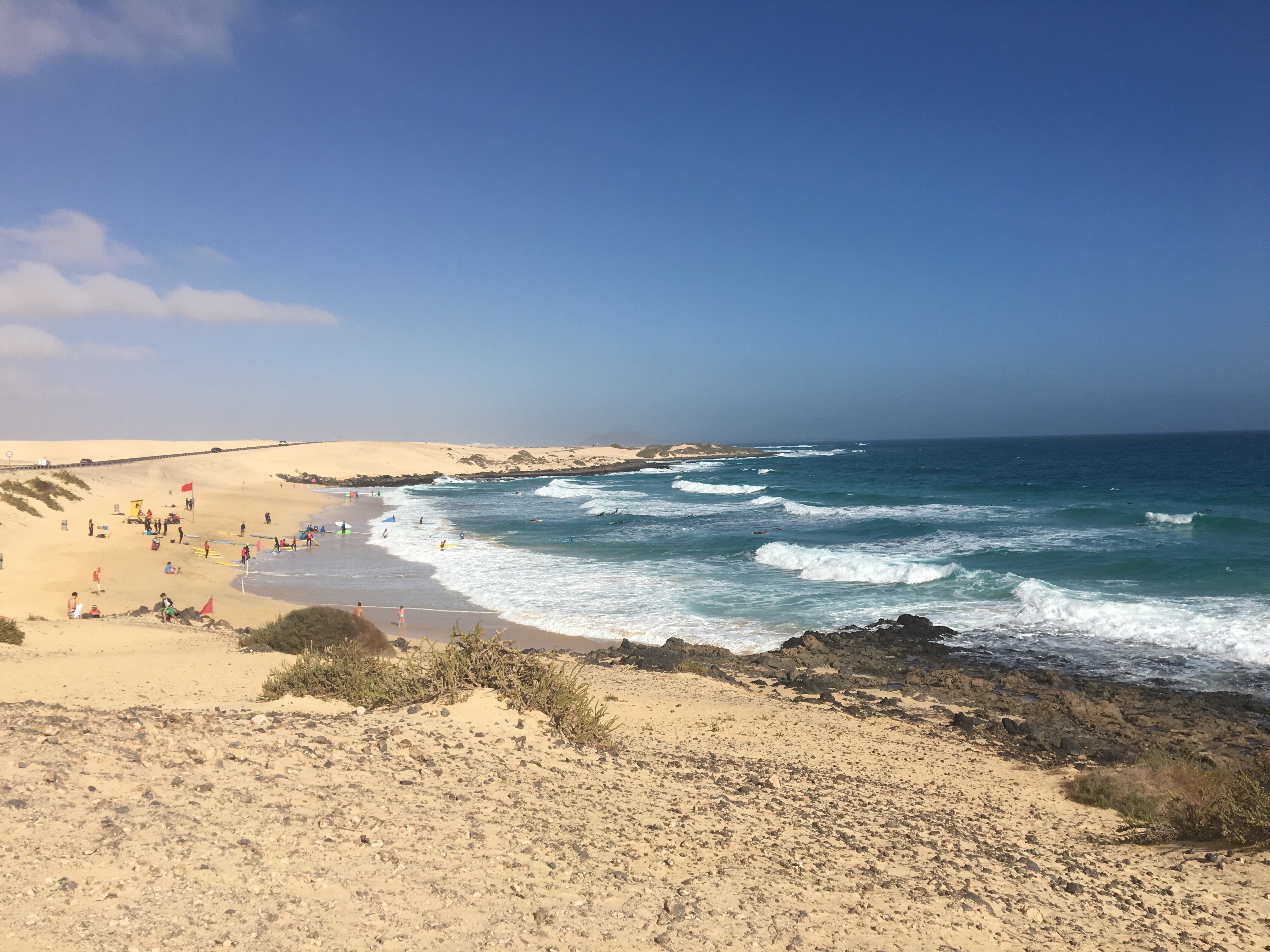
El Moro Beach - Surfers Included

The progress of my Christmas and New Year celebrations has remained much the same ever since I moved down to Dublin. Spend Christmas itself with family, then return to Dublin to see in the New Year with friends. Depending on who’s available, this can either be a party or quiet drinks in someone’s house, or braving the madness of the city on New Year’s Eve. This year though, I did something a bit different.

Continue reading Fuerteventura: New Year in the Sun

Belgium, Not Brussels

Yeah, it’s just a bit picturesque.

Okay, so that’s a little bit of a lie. There is some Brussels in this post. Just not a lot. As the one bit of Belgium that I’m familiar with (apart from a very brief foray to the North Sea at Knokke), I think I’ve written enough about it. This is going to be a post about exploring some of the more distant corners of Belgium instead.

It’s been an odd year for holidays, 2017. Very much in opposition to my usual habit, all my trips so far have been in company and to places that I’ve already visited. Hence, I haven’t really written them up, seeing as I already said most of what I wanted to say the first time around. This trip was also in company, in this case of a Brussels-based friend of mine, but it did take me to new vistas, hence it’s worthy of a post.

Continue reading Belgium, Not Brussels

Luxembourg and Brussels – Familiar Places

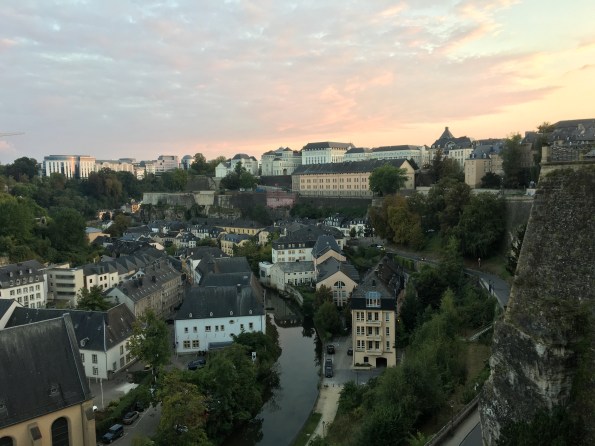
Down there somewhere is where I had my birthday dinner.
The view of the river that surrounds Luxembourg from the old fortress of the Bock.

(Yes, this travel diary is exceptionally out of date at this stage. Such are the perils of following a procrastinating writer.)

I’ve only been to one of these places before, so I’ll focus on the other one. There’ll be a bit about Belgium at the end, but mostly this is about Luxembourg. A word of warning though: I’m writing this under the influence of a day of travel compounded by a 90 minute delay for a Ryanair flight. So take every other word with a grain of salt.

Luxembourg was the third micro-nation I hit on this trip, but it’s on the edge of deserving this status. It’s bigger than most of the European micro-nations put together, and where San Marino and Liechtenstein were small enough that you could see from one side to the other on a clear-ish day, Luxembourg is big enough for its corners to be just as scruffy as those of larger nations.

...that came when I walked down three sets of stairs to a dead end.
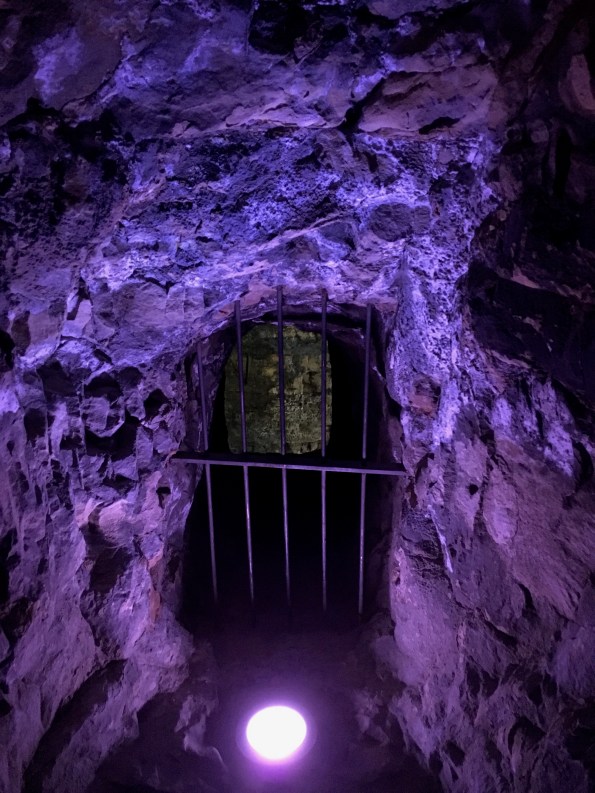
A spooky grating under the mountain. At this stage I wasn’t worried about getting out…

What Luxembourg does have in common with its smaller brethren is that it’s rich. Having sat at the heart of European affairs since the days of the European Coal and Steel Community, the old city is a commendably neat and tidy revamp of a former walled citadel now turned fortress of finance. There are some very expensive, very shiny cars driving around the place, is what I’m trying to say.

Not that you’d recognise the place as a former fortress if you approached it from the west side. Where massive bastions once stood are now broad avenues and neatly tended gardens. It’s only on the eastern side of the city, where the last remnants of the original Bock fortress stand, that you can get an idea of how valuable this place used to be. Founded in the tenth century (there’s a whole legend involving a river mermaid), the Bock commanded a view over the river below, and over the centuries tunnels and storerooms were carved out of the rock below,

You can still wander those passages, and I did so on the first night I arrived. The last tour group was leaving as I arrived, so I had the place more or less to myself for the next hour and half—there are arrows placed in the ground pointing to the exit, but there’s no set path through the narrow passages and the caverns that open out onto views on the valley below. It was only when I became worried they’d close the place with me in it that I started to pay attention to the arrows and found my way out.

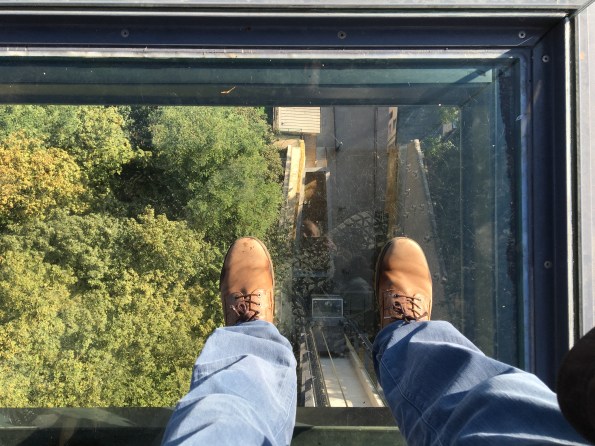
Heights don't bother me much. Drops do.
These photos never show the scale of the drop as much as they should.

Luxembourg in the day is a much neater and more understandable prospect. The national museum covers the thousand-year story of the nation over several floors, the lowest of which are carved into the rock below the city, with massive models demonstrating how Luxembourg was shaped over the centuries. Once, when the House of Luxembourg were kings of the Holy Roman Empire, the fate of nations was decided here. Now the decisions made in council chambers are more abstract but no less weighty.

In the end, Luxembourg felt a little neat and sanitised. Like San Marino, everything has been cleaned and polished, and you have to dive down into the valley to get a better sense of the place. A special mention ought to go to the viewing platform north of the Bock, where you can stand on a glass floor and contemplate the multi-storey drop below.

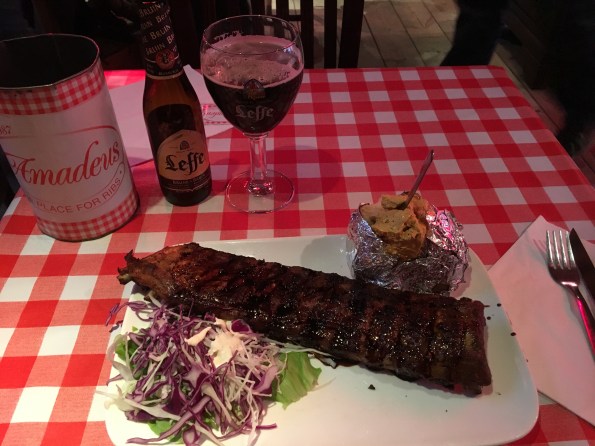
As good a way as any to end the holiday: Endless ribs.
Ribs and beer in Brussels on the last night of the holiday.

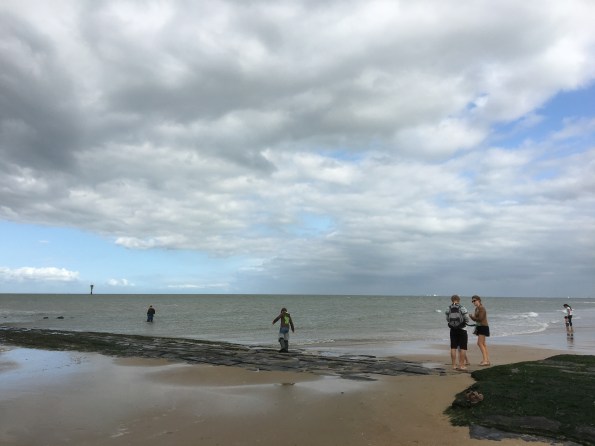
So then, on to Brussels and the end of the trip. I’ve been here multiple times and like both the people and the place. So apart from an evening of a little food and a little drink, I wanted to see if I could look at something further afield. The options were the battlefield at Waterloo (to annoy someone who’ll never read this) or the beach at Knokke, to complete my journey from the Mediterranean to the north sea. Of course, the beach won.

Not that I had much time to spend there. Courtesy of Belgium’s leisurely trains and the extremely long avenue leading from the train terminus to the beach, I had no more time at the water’s edge than it took to take a couple of photos and wet my feet. (In point of fact, I’d misread the timetable and had around half an hour more than I thought, but a few minutes was all I got.)

A fine place to end one's journeys.
The lone and level sands stretch far away…

Which brought the whole journey to an end. What had started in the parched streets of Palermo on the island of Sicily, had taken me north through Italy, across the Alps to Switzerland, on to the familiar city of Brussels, hitting three small nations along the way, came to a close on the sands of the North Sea, caught between tourism and a massive seaport on the horizon. Yes, there would be a journey back to Brussels and on to the airport and from thence to Dublin, but that was it. Another journey ended.

I’ll get around to absorbing it and adding any extra thoughts in a while. For now, thanks for reading and I hope you’ve enjoyed these posts. More detailed descriptions of what I got up to will appear in the Travels section above soon.

Liechtenstein and Zurich – The Alpine Experience

And every steeple that I could climb, I did.
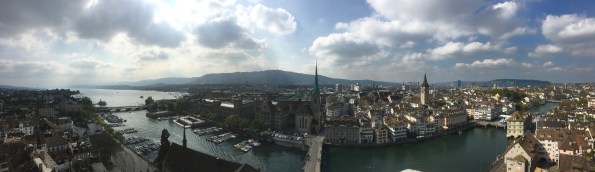
A panorama of Zurich – the Zurichsee is on the left, the Uetliberg on the horizon.

There’s going to be a lot packed into this one, so pay attention. As soon as you leave Milan, headed for Tirano, you’re in the Alps, racing along the shores of Lake Como towards the mountains. To an extent, this doesn’t even feel like Italy anymore, or at least not the Italy I started in, back in Palermo. This is Alpine territory, of high, green meadows and bells ringing in valleys overlooked by mountains that rear up, shouldering their rocky peaks above a mantle of forest.

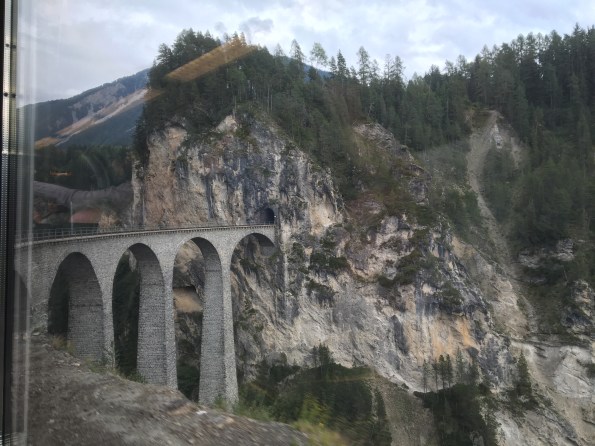
If you like trains at all, I’d recommend the Bernina Express as the way to see the Alps. From comfortable seats before panoramic windows, you’ll have a view of clear mountain streams, those green valleys, viaducts, mountains, glaciers, high lakes, and everything else that the Swiss have spent centuries learning how to build on or through. I saw it in the late summer, when green was the predominant colour, but in the winter it all turns to white and the experience is said to be every bit as impressive.

The Swiss and tunnels: an impressive combination.
One of the viaducts on the Bernina express, emerging from the mountain.

As for what was waiting on the other side, Liechtenstein is an odd little country, with an emphasis on the little. I’d been planning on staying two days, but two things cut that short: First, I saw most of Vaduz in the process of one morning stroll (to give you an idea of scale, the map of the city includes house numbers), and second, it’s stupidly expensive. Which makes sense given that it’s a tax haven of sorts, and it did give me a bit of warning with regard to what Zurich was going to be like, but it was still a shock.

So I spent one night and a few hours there instead, enjoying the clear mountain air and the views, which were only a little spoiled by clouds that cut off the tops of the mountains. Liechtenstein’s tiny territory is bordered by the Rhine and the mountains, and it takes little more than half an hour to cross from one to the other. Perhaps the most fun thing to visit was the football stadium—they’re very proud of the national team here, for all that they’re the ultimate in European minnows. Or at least they were until Gibraltar somehow got a team of their own.

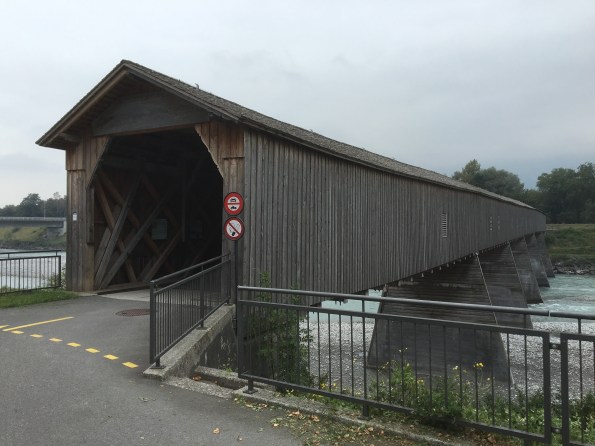
The kind of bridge billy goats might trip-trap across.
An old-school bridge separating Liechtenstein and Switzerland.

Stroll over the bridge across the Rhine and you’re in Switzerland. You don’t even have to do that much if you’re a mobile phone—mine kept swapping between Swiss and Liechtenstein carriers every time I approached the river. When I eventually took the bus out of town, in search of the Sargans Bahnhof where’d I’d get the train to Zurich, this was one reminder of my travelling ways I was glad to leave behind.

In truth, there’s not much culturally to separate the two nations. Maybe the Swiss are a little more uptight, at least on first encountering them. Unlike most places I’ve been, where they’ll switch to English as soon as they figure out where you’re from, the Swiss will assume that you know what you’re doing if you try to speak a language not your own. So be wary if you want to try out your foreign tongues here.

I'd be annoyed too if someone had planted me where dogs could piss on me.
A friendly (?) face encountered on my way up the Uetliberg.

As mentioned, Zurich is expensive. Evidence of this can be seen in the houses that line the waterfront of the Zurichsee and the slopes to the east, and proof can be found every time that feel like going for a drink or eating out. Try to keep that to a minimum if you want your funds to survive a few days here. I’m generally not too proscriptive when it comes to spending money on holidays, but even so I couldn’t justify visiting a restaurant with €40 main courses.

Saving money is possible though: there are 24-hour and 72-hour travel passes, which will speed your way on the many public transport options and a lot of museums. Mine took me on a round trip of the northern half of the Zurichsee, down from the heights of the Uetliberg mountain to the west of the city (some might say it would have been more sensible to take the tram up, then walk down, instead of the other way around), through the excellent Landesmuseum and its exhibits, and then up the eastern slopes of the city too, to where the city zoo sits right next door to the FIFA world headquarters.

(There’s a joke to be made here about amoral creatures with insatiable appetites, trapped in a structure that should never have been built, but I’m sure someone else can construct it better than I could.)

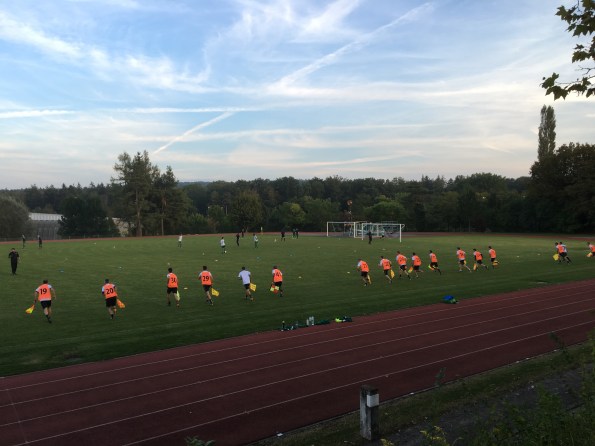
Actually linesmen in training, though that's no less a weird sight.
FIFA officials doing their bribery-denial drills.

In short, if you make a bit of an effort, you can enjoy Zurich on something resembling a sensible budget. If you make the most of the Co-Op supermarkets that are everywhere, you’ll probably even manage much better than I did. It’s worth the effort too. While I loved Liechtenstein for its quiet isolation, I enjoyed Zurich for its reserved honesty. There’s plenty to do and see, and lots of narrow alleys, steep streets, hidden parks and other places to discover. The Landesmuseum exhibit on Swiss history is open, if regretfully so, about how Switzerland’s history of democracy, neutrality and isolationism has had its downsides. If we could be so honest about ourselves in Ireland, it would be a big step forward.

Milan – Cisalpine Gaul or Northern Italy?

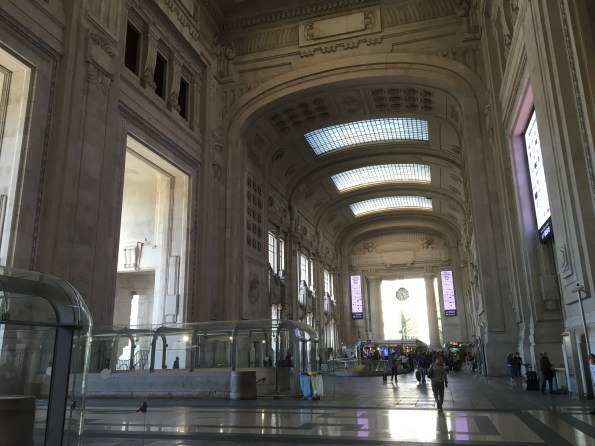
Taking the concept of double-height ceilings to ridiculous extremes.
The cavernous interior of Milan Centrale.

Milan is rich, Milan is big, and Milan wants you to know all about it. The gradual change in Italy that I’d noticed on my northward trek from Palermo to Naples to Rimini came to its natural conclusion in the shadow of the Alps. Milan feels so different to the rest of Italy that I’d encountered that it’s a different brand of Italian entirely: chic, wealthy and engaged with the rest of Europe. The Romans called this area Cisalpine Gaul, connecting it more to France (Transalpine Gaul) than to Italia. That reasoning could still stand.

The unification of Italy under Vittorio Emanuele was an union of states that hadn’t been unified since the time of the Romans. Sicily and Naples were Mediterranean-facing and had been dealing with foreign rulers for centuries. Rome was the Papacy’s domain, and the surrounding Papal States marked a border between north and south. As for the city states of Northern Italy—Genoa, Venice, Florence, Milan, etc.—they managed to maintain on-off independence even as they served as a battleground in the intrigues between France and the Holy Roman Empire.

Northern Italian civic pride played a large part in the Renaissance, after all.
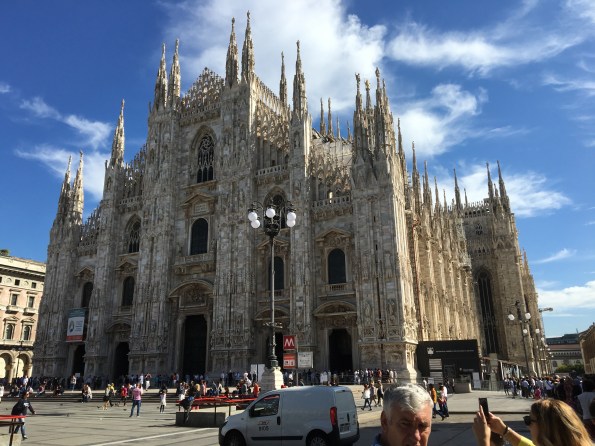
Looking like the world’s most expensive wedding cake.

There’s something of this mingling still at work in Milan. A mix of Italian and Northern influences—a pride in being Milanese and an openness to the outside on terms strictly set out by Milan itself. The famous Galleria Vittorio Emanuele I is the prime example of this: an ultra-chic shopping arcade, dominated by high-fashion outlets, almost all of them Italian. Stand in the middle and you can see the Piazza del Duomo at one end, a statue of Leonardo Da Vinci at another, and a McDonalds’ (exiled to a street across the road) at a third.

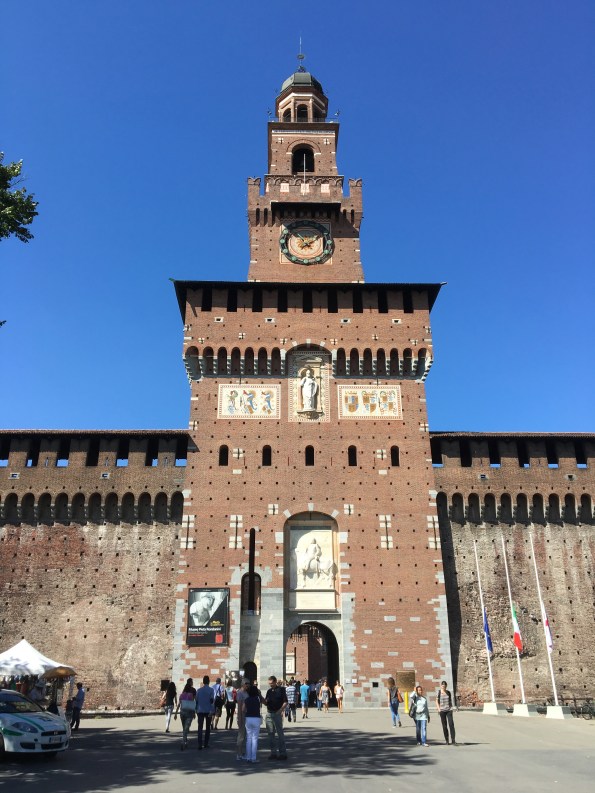
Milan just feels different. At least in the parts of it I walked through, there’s none of the narrow alleys and abandoned or crumbling buildings that I saw further south. Milan is just as old as those cities—the layout of the city still follows the ancient walls, and the city itself is dominated by the Duomo and the gigantic Castel Sforza—but it wears that age more lightly. There’s more modern sheen than there is ancient dust.

At least it was sunny, right?
The main tower of Castle Sforza. Sadly – yes – closed on the day.

Usually, such a polishing of history makes me less sympathetic to a city, but I really liked Milan. There’s something very open and everyday about its blend of Mediterranean sunshine and Northern European business. Unfortunately for me, I’d arrived in Milan on Sunday evening and was spending all of Monday exploring. Which is my one piece of advice for this city: if you have to spend one day here, don’t make it a Monday. Everything is closed.

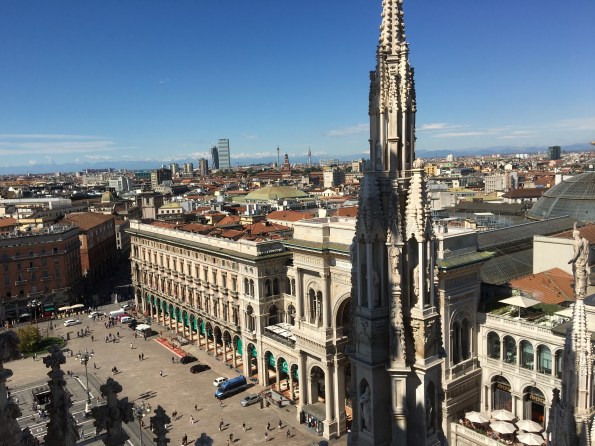
Well, not quite everything. I enjoyed spending time in and around the massive and ornate Duomo, enjoying the pillared interior, which I’m sure was an inspiration for the Great Hall of Moria in the Lord of the Rings movies, and the roof terrace, which I reached after a long walk up some very narrow stairs. From the roof, you could see the Alps clearly in the distance, and it was nice to get a glimpse of the place I’d be heading next.

The climb is worth it. The lift might be, if you don't fancy the climb.
Off in the distance, the Alps await.

Still, there were things that I’d really wanted to see in Milan, and most of those were closed. The archaeological museum and the church and monastery it was sited beside? Closed. The refectory of Santa Maria delle Grazie, which held Leonardo Da Vinci’s Last Supper? Closed. The museums of Castel Sforza? Closed. The Planetarium and Natural History museum in the Giardina Publicca Indro Montanelli? Closed. Alright, so those last two were targets of opportunity as I was enjoying a stroll through the gardens, but you get the point.

Still, even if all you’re getting to do in Milan is to stroll around the city, it’s well worth the visit. Though you should also bear in mind that a lot of the trattorias close between 3pm and 7pm. (Seriously, this was a weird day of missing out on things.) Milan is its own place, and by a distance the least touristy of the cities that I’ve been to on this trip. Come along and spend your money, it says, but if it’s touristy stuff you’re looking for, you’re going to have to search for it. That kind of thing doesn’t really mesh with our self-image.

Rimini and San Marino—Sand and Stone

From any side, conquering San Marino would have been a pain.
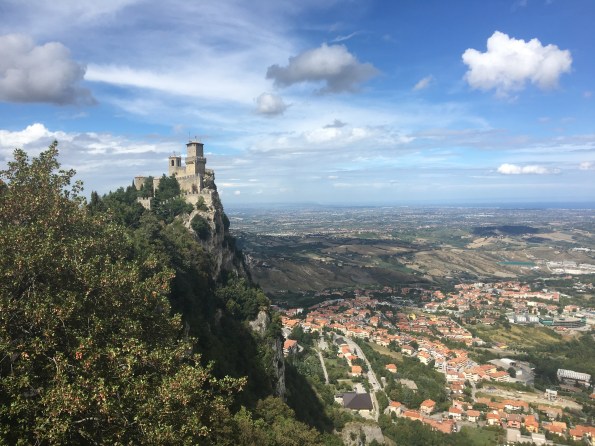
A commanding view of the Italian countryside from the towers of San Marino.

Let’s start with San Marino, as it was the reason that I was in Rimini in the first place, rather than being a bonus added on to a stay in Italy’s Adriatic beach resort. Founded in 301AD, if you believe the local legends, San Marino rests on and around Monte Titano and likes to refer to itself as the “Titanic Republic”. Which probably counts as overcompensating, given that it’s the third smallest nation in Europe (only Vatican City and Monaco are smaller, and those two are essentially just cities).

It’s not like it really needs to compensate for anything, as San Marino offers plenty to stun visitors. Perched on its mountain peak, it commands views across a good chunk of northeastern Italy. Rimini and the Adriatic are easily visible on a clear day, and the valleys of Italy’s more mountainous interior are just as open to viewers from on high. Maintaining your independence across the centuries was undoubtedly made much easier due to being able to see pretty much any threat long before it became a problem.

This actually isn't in the citadel proper, which starts at the First Tower.
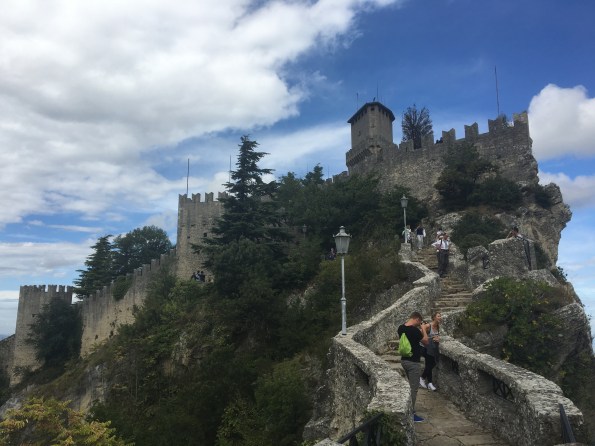
The climb to the First Tower of San Marino.

The first impression of San Marino, just off the tour bus from Rimini, might be a little underwhelming though. This isn’t a picturesque ruin: it’s a working, living city (albeit one heavily weighted towards tourism). The stonework is neatly chiselled and well maintained, and the streets are spotlessly clean. It can all seem a bit quaint and even kitschy. The overabundance of tourist-trap shops doesn’t help, even when half of them also seem to be selling guns.

Step away from the well-groomed northern part of the mountain though and you’ll find more interesting sights. Clean and cobbled streets give way to (well-tended) mountain paths that lead up to and between the three towers that protected San Marino in days gone by. Each of them are well preserved, but their sites and prospects are still breathtaking, especially that of the lonely third tower, a single edifice that rises up on the edge of a cliff, commanding views to the east, south and west.

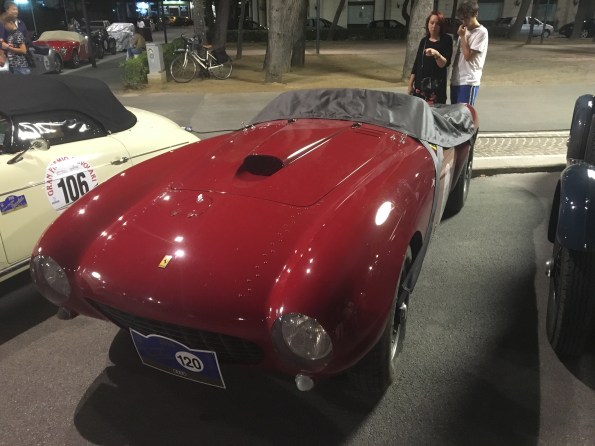
Old-school Ferrari is hard to beat.
An auto-rally in Rimini at night gave a chance to glimpse some gorgeous Italian motors.

As a tick on the list of nations to visit goes, San Marino didn’t disappoint. I just wished that I could have learned more about it. As mentioned, tourism seems to trump all, and the State Museum is a little light on the actual history of San Marino, preferring to load up on local artefacts and fill in the gaps with strange items from foreign lands donated by local grandees. It’s all a little lightweight, and given that the other museums nearby include a Museum of Torture and a Museum of Vampires, detailed history proves thin on the ground.

Oddly, Rimini fares better on that front. I say oddly, because my first experience of Rimini was of a battlefield of a beach, occupied by an army of deckchairs. This place is resort central, and any Italian charm is flattened under the need to welcome and feed as many guests as possible, divest them of their money, and shuffle in the next crowd. Not to my taste (though I did enjoy the chance for an early morning dip in the Adriatic).

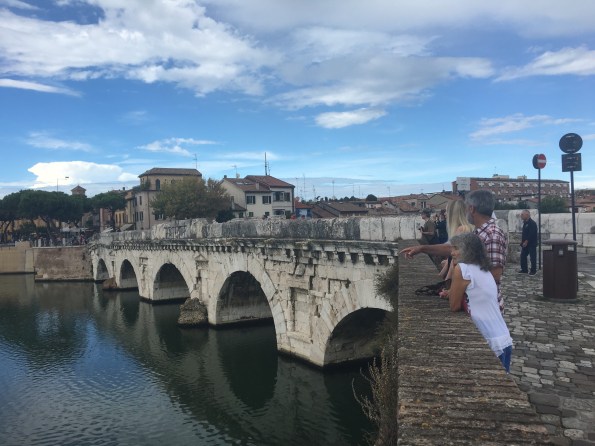
Two thousand years old and still carrying traffic.
He may have been a grumpy sod, but Tiberius built solid bridges.

Venture onto the other side of the (railroad) tracks though, and something different emerges. Rimini was once Ariminum, a coastal town formerly inhabited by the Etruscans and others. Plenty of Roman relics remain, not least in the layout of the compact city centre. It’s not a large place by any means and is likely dwarfed by the beach resort that shares its name, but it’s worth strolling through. For one thing, it has lots of charm in its own right, and for another that stroll might just take you across a 1,995-year-old bridge built by the Emperor Tiberius, which still serves as a (single lane) crossing for cars. How many times in your life are you going to get to walk across something like that?

In short, San Marino is definitely the big draw here and deservedly so. Its mountaintop vistas and winding streets are worth spending a good chunk of a day exploring, though you’re likely to tire of it long before it tires of trying to sell you stuff. Rimini, on the other hand, is worth persevering with: beneath, or rather behind, the trappings of a modern day beach resort is a charming little town with plenty of its own history and culture to root around in. I’m glad I had the chance to do so, and it made me happier about deciding to stay there in the first place.

Naples – Vesuvius and What it Left Behind

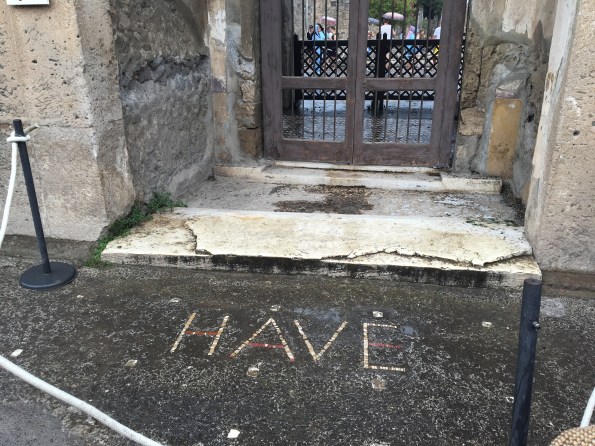
My Latin isn't the best, but even I know this is a greeting.
A Pompeiian welcome mat.

(Apologies for the delay on this one – things have been hectic since I got home. Well, hectic-ish. Next one will be along sooner.)

This is going to be all about Pompeii. Well, almost. This shouldn’t come as much of a surprise to anyone who’s had a look at my bookshelves or knows of my historical preferences. As much as the Romans could be an unpleasant bunch, they had an unrivalled influence on western civilisation, and there’s enough of their writings and edifices that remain to get a pretty strong idea of what life in their time was like.

Pompeii, that most famous relic of the eruption of Vesuvius in 79 A.D., demonstrates both just how much of ancient Rome we have access to and how distant we still are from it. Streets of fast-food vendors, sports stadiums, the mansions of the suburban rich, and brothels in the back alleys of the red light district are all there to be seen. However, so are stepping stones across streets that allowed citizens to keep their feet out of the rivers of sewage that flowed downhill. So while a lot of Rome might have been familiar to us, there’s a lot more that would have given us pause. (More on that later.)

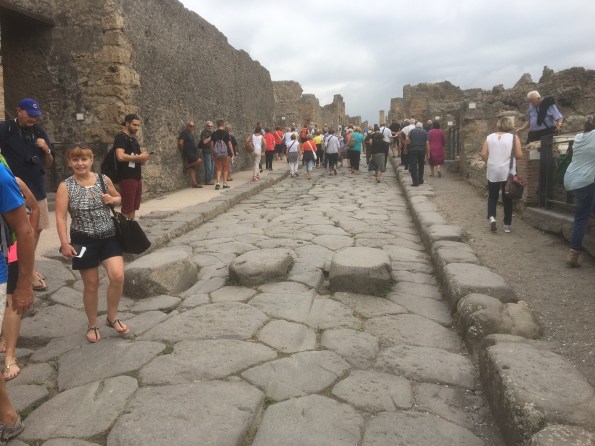
Just a hop, skip and a jump.
This is how you crossed the road in Pompeii without getting your feet dirty.

A guided tour through Pompeii is a good introduction to the city that Vesuvius buried, but you ought to set aside more time to explore afterwards, as no tour is going to do any more than hit some of the highlights. Two of the most impressive parts of the city—the Villa of the Mysteries and the Amphitheatre—lie at diametrically opposite parts of the site, and most tours will stick to the central section instead.

To complete your Pompeiian experience, there are a couple of options. You could visit Herculaneum, the other victim of Vesuvius, which I didn’t do, or you could head to the National Archaeological Museum, which I did. That museum is split between the relics of Pompeii and the Farnese Collection, which is one of the finest gatherings of classical sculpture in the world, outdone only (possibly?) by the Pope’s own collection in the Vatican. At least one of the Farneses was Pope too, so there’s been some cross-pollination.

Also, rock-hard buns.
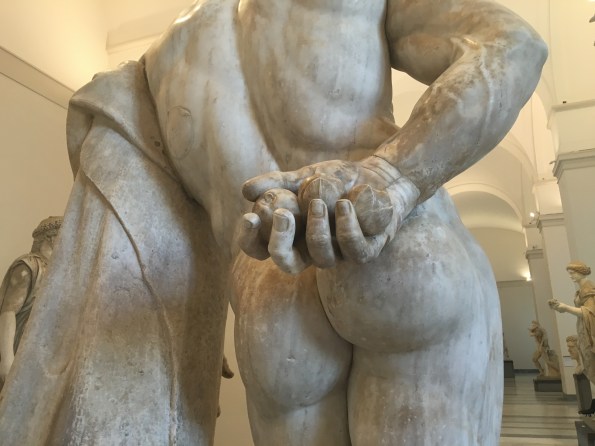
An unusual angle on Herc, with the Apples of the Hesperides hidden away.

That collection certainly shouldn’t be missed, but the Pompeiian relics are just as interesting. The mosaics and frescoes are some of the best you’ll see anywhere, including the famous mosaic of Alexander the Great from the House of the Faun (a copy of it now sits in the original house in Pompeii). Rather more amusing is the collection of Roman erotica that’s tucked away into a corner of the museum, guarded by a warning (in Italian) that kids aged 14 or less maybe should go get their culture somewhere else.

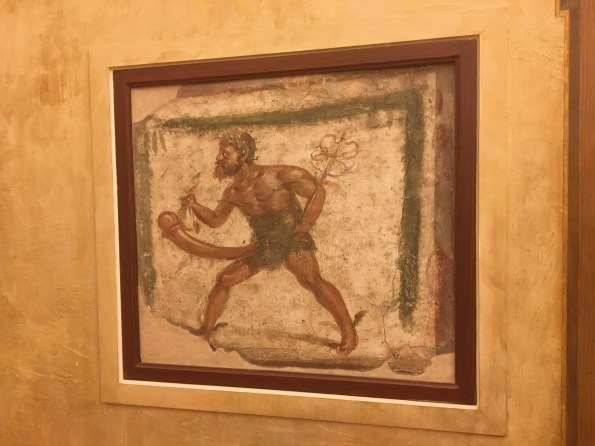
You see, one of the things that the excavation of Pompeii did was to puncture forever the image of Romans as dignified elderly types, delivering fine speeches to other dignified elderly types. Whatever truth there is to that image, the Romans were also open and frank about sex and obsessed with dicks. (all right—phalluses.) Even the moralistic Augustus was said to have his own private book of porn. The museum’s collection of erotica includes a range of frescoes kept away from the general public and some completely explicit sculptures, including a Mercury adorned with multiple penises, Pan having sex with a goat, and a winged dick suspended from a chain. Frankly, after roaming these rooms for a little while, you’ll run out of synonyms for male genitalia and need a breather. Or possibly a cold shower.

Possible a good luck charm, but it's also pretty funny.
This image of Priapus adorned a wall in Pompeii, once upon a time.

Naples, much like Palermo, only really comes alive at night. Once the sun has gone, people crowd the shopping district that runs downhill from the National Archaeological Museum, past the Piazza Dante and along the Via Toledo. Perhaps it was just that it was a Friday night, but it certainly seemed to me like everyone was out and having a good time. At least for as long as the weather held—before the night was through, the night was rent by a particularly impressive storm, with Jupiter tossing around thunderbolts a couple of time every minute.

Luckily for me, I was already safe indoors and away from the torrential rain at that stage, having circled back to my lodgings via the Piazza del Plebiscito and the impressively solid Castel Nuovo. Still, if there’s any fitting way to end a visit to the vicinity of Vesuvius, it’s with a demonstration of the fact that natural forces are to be cowered before whenever they start to throw their weight around.