Category Archives: Travel

From Myth Into History

IMG_3024.JPG
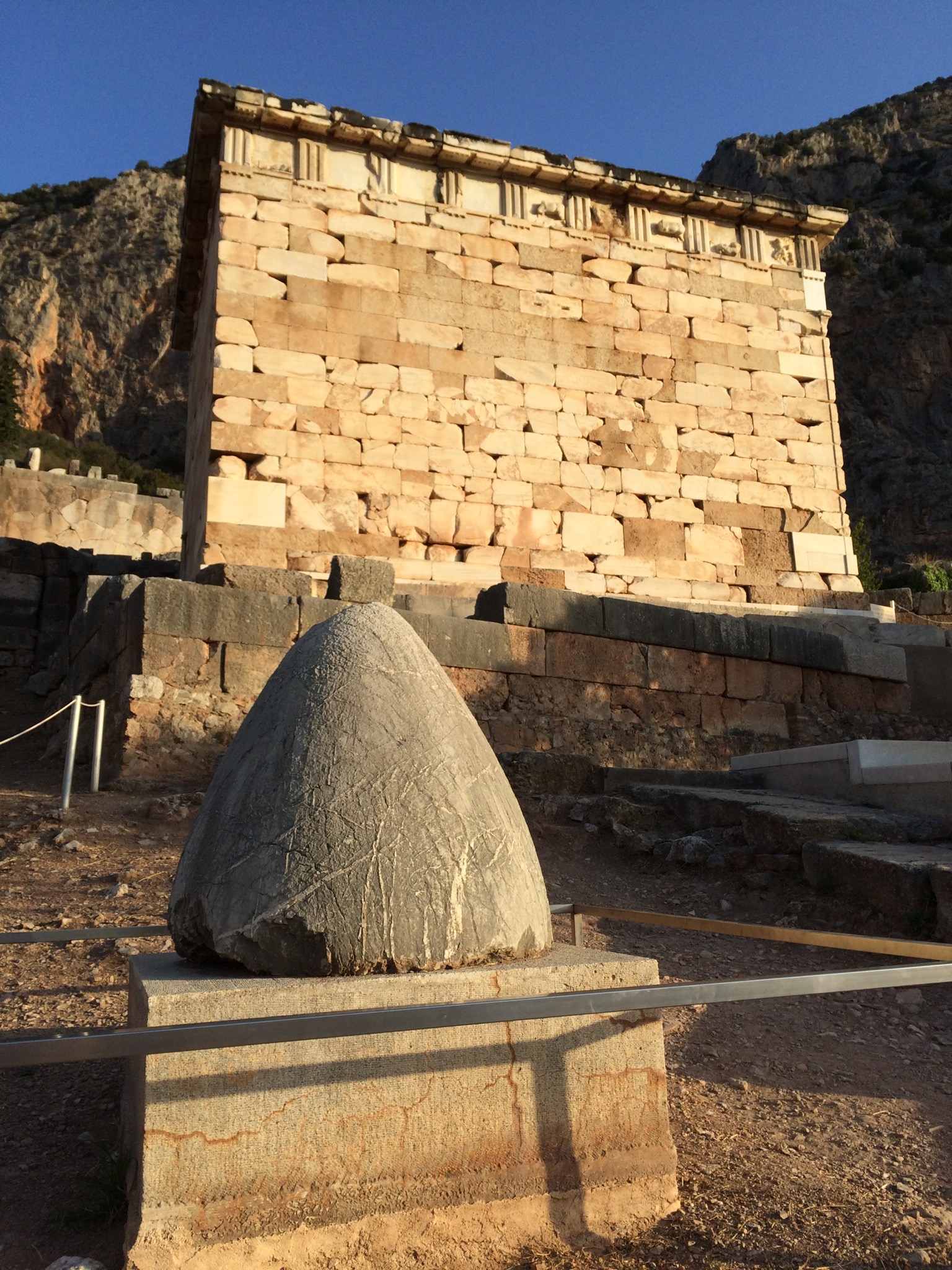
The Omphalos, centre of mythic Greece.
If there’s a place in Greece that stands on the border between myth and history, it’s Delphi. Its origins are lost in legend and folktale, but the fact of its influence and wealth can be seen in the incredible physical remains of the place.
According to one tale, the Omphalos above marks the spot where two eagles that Zeus released from the edge of the world finally met. According to another, it was the stone that Rhea fed to Chronos instead of the infant Zeus, and Delphi is where it fell when Chronos vomited it up.
Neither tale did anything more than burnish the already hallowed reputation of Delphi. The sanctuary of Apollo was where kings and emperors sought out the wisdom of the Sibyl, known as the Pythia, when they wished to know what the future held. When Leonidas of Sparta was told that a king’s blood must water the earth of Thermopylae if Greece was to resist Xerxes’ Persians, he strapped on his shield and went for a walk, taking only 300 bodyguards with him. Or so the story goes.
That the priests of Apollo were able to keep this gig going for centuries can be seen in the fact that the sanctuary was rebuilt at least twice, each time more magnificent than before. Until the Christian Era at last put an end to pagan superstition, Delphi endured. Even now, there’s something special about the place. Perched high in a valley above the Gulf of Corinth, bees still buzz in the trees there, and olives are grown in the soil below, much as they must have been in ancient times.
If you go there yourself, go at dawn or dusk, preferably the former. Sunrise over Delphi is something special, and it’ll keep you out of the worst heat of the day. Walk the same path that pilgrims seeking Apollo’s wisdom once did and savour having the place to yourself before the tour buses arrive.

IMG_3050.JPG
The Tholos of the Santuary of Athena at Delphi.
If I’d stuck to the plan I made yesterday, I’d be mentioning Thebes now, home of legendary Oedipus, that most complex rex, but also Epaminondas and Pelopidas, two very historical figures who broke Sparta’s power at the Battle of Leuctra. Sadly, either the bus didn’t stop there or Alexander the Great did a too-thorough job when he razed it, as I didn’t see anything resembling a city, ancient or otherwise.
Instead, I did a Chicago, passing swiftly through Athens, across the Corinthian isthmus to Nafplio. If Delphi is half myth and half history, Nafplio has only a scrap of myth left to it. There are Mycenean walls beneath one of its fortresses, but the most of the stone here is nailed down to well-understood history. The imposing Fortress of Palmidi, which rears high above the city, is less than three hundred years old, for all that several of its many fortifications have been named for figures of Greek myth and legend.
The climb to Palmidi isn’t for the faint of lung, but the view is worth it. I got to the top just in time to watch the sun going down over the mountains on the far side of the bay and sat there looking at the much older city acropolis below until I was ready to try the stairs again.
All that exertion is done for the day though. As I write this, I have a beer in front of me on a balmy Aegean night. Not long ago, I was strolling along the waterfront enjoying a (real Italian) gelato in the dying light of the day. If that isn’t what a holiday is supposed to be, I’m not sure I want to be part of it.

IMG_3103.JPG
Sunset from the Palmidi fortress.

Everything Echoes

IMG_2962.JPG
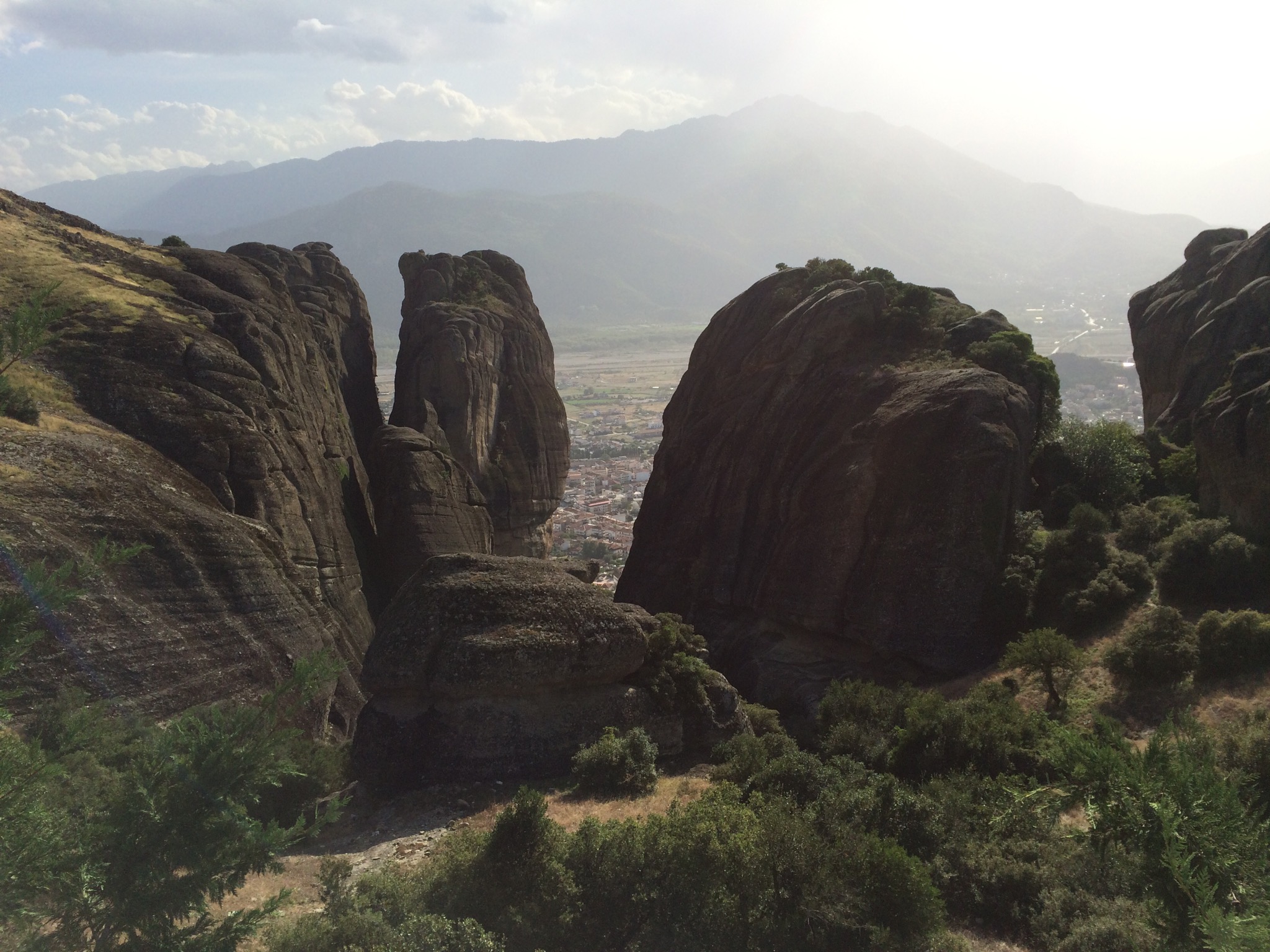
Dawn over Meteora.

Twenty years ago, I was preparing to start college and live away from home for the first time. Sixteen years ago, I was about to interview for a job that, counting promotions, would keep me employed for the next dozen years. Three years ago, I watched the sun rise over Japan during a journey that was a reaction to losing several of the props of the life I’d built for myself and trying to figure out something new. Two years ago, I was beginning a Masters course that was a bigger challenge than anything I’d taken on in years, and one year ago I was completing it successfully. This year, I woke to see sunrise over the pinnacles of Meteora and will go to sleep in Delphi, the centre of the ancient Greek world, in time for sunset.
Draw any straight line through a life and you’re likely to find a similar degree of drama. This particular history sticks in my mind because my birthday and that of two thirds of my family fall within the space of a month at this time of the year. Late September and early October has always been, for me, a time of change and new beginnings. (That school years in Ireland, north and south, also begin at this time of year probably also helped to set this association in stone.)
For today though, I’m not so much starting something new as passing from one thing to another. Walking among other the monasteries of Meteora this morning (as the image above depicts) has been followed by much travelling by bus. Lamia, amid the mountains of central Greece, was my resting place for the past few hours. Unable to make my way to Thermopylae, only twenty kilometres away (sorry dad), I avoided being stuck in the bus station for four hours by heading into town for a stroll and a frappé (a Greek habit that’s proved worth picking up), returning to the station a safe hour before the bus to Delphi left.
Sunset was lost behind the mountains south of Lamia as we followed a road that Xerxes would have given a king’s ransom for. The closest I got to Thermopylae was passing around the wrong side of a mountain, though perhaps not far from the goatherd’s path that betrayed Leonidas and the 300 Spartans (minus two injured “tremblers” but plus their normally ignored helot slaves and allies). From there it was switchback corners up and down mountainsides into the gathering gloom, changing in Amfissa to take on even narrower mountain paths in the dark, heading towards a site of pilgrimage for a thousand years and more.
In Ancient Greece, travellers to Delphi went there seeking answers to what the future might bring. It was a dangerous business though, seeking out prophetic wisdom. Even if they heard what they wanted to, there was no guarantee that their interpretation was the correct one. Not for nothing has the word “Delphic” come to mean “enigmatic to the point of deliberate ambiguity.” (Look up Croesus for an example of the trouble misinterpreting prophecy can get you into.)
The Pythia’s not been in business for centuries though, and I’m not inclined to look for answers from inspired sources. For me, these blog entries have provided answer enough to something that’s been bothering me for a while. I’ve been trying to get back into the habit of writing for a few months but unable to break through a barrier of self-consciousness. What Greece has provided is a chance to get away from habitual surroundings and strip back my tools to the basics. (I have with me a pen and notepad for writing and an iPhone for posting notes and photos.) With less to worry about, I feel more relaxed, and I hope that shows in my writing. Unlike the ancient Greeks, I’ll be arriving in Delphi with no question in dire need of answering.

IMG_3010.JPG
The Maliakos Gulf. Down there, Xerxes’ army once camped. I wasn’t quite so held up.

Up a Rock, Without a Prayer

IMG_2936.JPG
Not bad for a hotel room view.
The first Christian hermits in the Middle East thought that the best way to get close to God was to get as far away from the madding crowd of humanity as they could (some of us may sympathise). Holiness, however, brought fame, and soon those same crowds sought them out. So the hermits erected poles and pillars and retreated up them for years at a time. Anything for a quiet life.
The monks of Meteora, sadly, weren’t taking this approach to its logical extreme when they decided to build their monasteries on top of inaccessible pinnacles of rock. It would have made this post much more coherent if they had. Instead, they were trying to keep out of the way of the Ottoman conquerors of Greece, with whom they weren’t religiously in synch . Whatever their reasons though, the results are spectacular.
Kalambaka, nestled at the base of sheer limestone cliffs (which, yes, people try to climb because some people aren’t happy unless they’ve found a new way of making their lives difficult) is a small town that mostly caters to the tourists coming to gawp at the monasteries of Meteora. My own gawping is taking place towards the end of the gawping season, which means that the town is a little quieter than it might be and a fair bit cooler. (That it gets a lot colder can be seen in the piles of firewood that most houses have set aside for the winter.) Which is definitely a good thing, as a trek up the footpath to the nearest monastery without a bottle of water came close to being a rather bad idea.
The views, though, were well worth it again, and tomorrow morning I’ll be back to do it properly. Already I’m realising that ten days isn’t enough to even scratch the surface of a country like Greece. But a day that can grant you a glimpse of Mount Olympus, a tour through a thousand-year-old church adorned with frescoes on every surface, and the sight of a monastery that can only be reached by a rickety cable car or a stairway carved into a cliff face is a day well spent.

IMG_2957.JPG
A little more Meteora is good for the soul.

Initial Greek Perambulations

IMG_2872.JPG
It was all downhill from here…
If, like me, you harbour illusions about your ability to navigate around a foreign city unaided, Thessaloniki will disabuse you of them. Not so much the newer city, with its straight lines parallel to the dockside, but the older city, in the vicinity of the ancient acropolis and slightly less ancient Byzantine walls.
Here, roads go up and down, intersecting in random fashion, usually one lane wide but sometimes no lanes wide, owing to either parked cars or suddenly turning into stairs instead of a street. And while you’re trying to figure this mess out, the cats of the old city are watching you, aristocratically amused by another human struggling to survive in their domain.
I managed well enough last night, locating my hostel, the exceptionally welcoming Little Big House, and a pleasant place to have a beer in the form of Toixo Toixo. That was limited stuff though, and not long after beginning a day of perambulating this morning, I was reduced to heading vaguely downhill and hoping that I’d run into either the city walls or the sea.
Not that wandering wasn’t fun though, and once I did get my bearings again, there were plenty of places for this historical traveller to see, many of them relating to the little-thought-of Roman Emperor Galerius, who made Thessaloniki the capital of his eastern empire, a status it only held for a little time before Constantine moved the entire business to Byzantium/Constantinople.
Between that and the museums and the White Tower, wherein medieval prisoners were wont to be, well, imprisoned, there has been more than enough walking done today. The time has come to eat, at the Kitchen Bar by the waterside, before figuring out a route back to the Little Big House. If you don’t hear from me in the next ten days, send a search party…
Note: The wifi in the Kitchen Bar was pretty dire, so I’m posting this from the Little Big House. Which wasn’t impossible to find. Not easy, but not impossible either.

IMG_2913.JPG
The White Tower. Once known as the Bloody Tower, before they literally whitewashed it.

Danish Pastry Stopover

IMG_2832.JPG
I’ve been devouring Copenhagen in bite-sized pieces over the past few years. Right now, the piece that I’m devouring comes in the form of a ham and cheese toasty in Kobenhaven Airport. As always seems to be the way with the Danish capital, I’m only here on my way to or from somewhere else. Maybe someday I’ll stick around long enough to see some of the country itself. (I’ll spare you the “Aarhus, in the middle of aarstreet” joke I’ve been working on for the last few days.
This time, I was actually here long enough to stay overnight, in the Generator hostel in the heart of the city. After navigating my way through a Friday night crowd that was notably better dressed and less drunk than their Dublin equivalents (they had to be – lots of them were cycling), I made it to a comfy bunk in a dorm room, if not quite so quickly to sleep, due to a combination of music reverberating through the building and snoring from the bunk below.
The day that followed, I decided to focus on Christiansborg Palace, or rather on the ruins underneath it. It’s honestly a bit of a shame that the ramshackle old castle (a model of which is pictured below) was flattened to make way for a Versailles-aping edifice during Denmark’s golden age of trade, in a particularly expensive form of keeping up with the Joneses. In a turn that the Monty Python troupe would have appreciate though, the new palace burned down not once but twice in the next century and a bit. The third one though, that’s stayed up (so far).
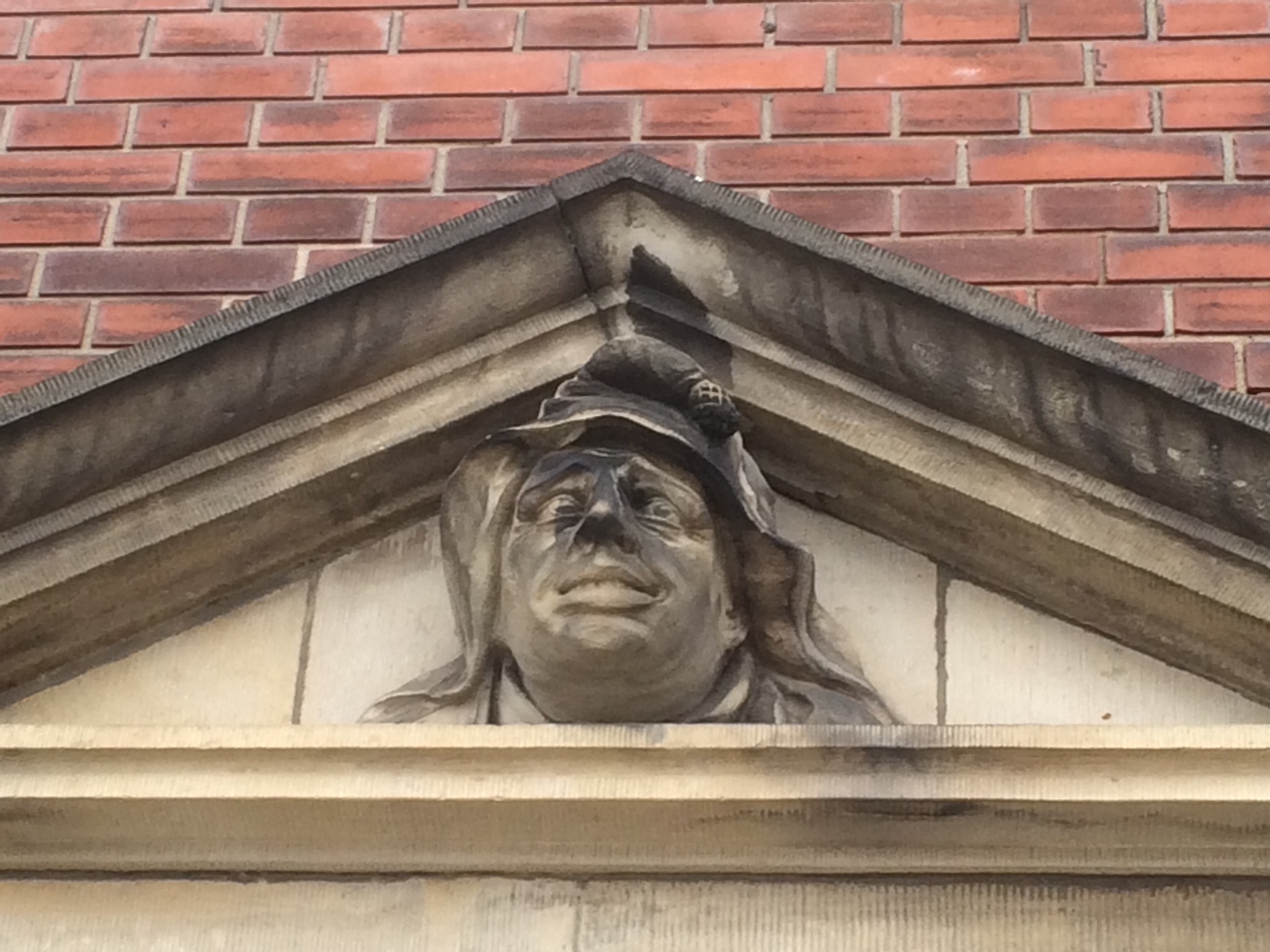
Next to the palace are other sights worthy of your time: the delightfully strange Exchange Building, one of whose gargoyle-like decorations can be seen above, and the Thorvaldsen’s Museum, a celebration of Denmark’s greatest Neoclassical sculptors (and of the few nearby buildings to survive the second burning of Christainsborg intact).
Sadly though, it’s another flying visit for me to this city. The airport, Thessaloniki and Greece are calling. This particular odyssey has a long way to go yet.

IMG_2852.JPG

The Historical Traveller

Mind you, I live in Dublin now, so visiting this is a holiday in itself.
A millennium and a half of history just down the road. But if you can go further, why wouldn’t you?

There’s a certain set of rituals to be undertaken before a long holiday. Eating the last of the perishable food in the house. Considering what clothes to take with you (there may be shorts, and the baring of milky-white leg flesh). Making sure that no one gets left in the lurch at work (inevitably, though, the clock draws the eyes more and more strongly as the end of the last day approaches). Reminding yourself not to forget your passport (which has absolutely no effect on whether or not you do eventually forget it).

I’m in the middle of all of this right now—in two days I leave Dublin for Greece (via Copenhagen for reasons of cheap flights and the prospects of a pleasant layover). On this trip, I’m staying true to one of my main reasons for travelling. There are many things that can drive one to visit distant places—time in the sun, adventure in an exotic locale, a new cultural experience, encounters with natural wonders—and over the years I’ve resorted to them all, either solo or in company. The draw that most informs my list of “must visit” places though? History.

Experiencing history is something like floating on an ocean. There are depths below you, all around, and every so often you can catch glimpses of what lies below. Back at home, familiar sights included a schoolhouse more than a century old, a ruined church more than a thousand years-a-crumbling and a stone circle dating back to the Neolithic period. Being surrounded by all of this as a child made me feel like I could reach out and touch the people who shared my homeland, no matter how separated in time we might be. The same feeling hits me on my holidays too, whether in the Colosseum in Rome, Tycho Brahe’s observatory in Copenhagen or a temple in Kyoto.

Greece has been on my top-ten list of places to visit for a long time. In fact, in the current political climate (which rules Egypt and Iran out) and in the absence of a long sabbatical from work (ruling out much of the southern hemisphere), it’s probably the most desired unvisited destination I have. Ten days won’t be near enough to see everything that I want to see (I’m focusing on the mainland rather than the islands) but they’ll be a packed ten days.

Why Greece? Look back to a childhood dominated by myths and legends for the main clue. To travel around Greece is to step back through time: from Ottoman rule to Byzantine domination, beyond that to the time of Imperial Rome and Macedonian kings, then to classical Athens and archaic Mycenae and Knossos. To return to the ocean metaphor, travelling through Greece is like floating above a wonderful mix of coral reefs and abysses. There’s always going to be something to see, layered everywhere you look. It’s a beautiful country too, full of wild mountains and deep valleys.

My basic plan is to start in the north, near Thessaloniki, and make my way south through the mainland, visiting Delphi, Athens and Mystra before hopping on a ferry to Crete, from where I’ll fly home again. Unlike my last long journey through Russia and beyond, there’s no need to exhaustively plan everything out, so I’m happy to wing it to an extent. That’s another benefit of travelling solo, I suppose: you can indulge your own whims without worrying about the impact they might have on your travelling partner. Of course, the drawback is not being able to share your enthusiasm and experiences, but that just provides a reason to repeat the journey again in the future.

All of which is to say that there should be, before too long, another travelogue appearing under the long-neglected “Travel” tab above. Between now and then, there will be reports from Greece whenever I get the chance to add them (not having planned out my accommodation to the last detail, I have no idea when and where I’m going to have Internet access—again, on the bright side, it’ll be nice to get away from LCD screens for a while).

In the last couple of days, I’ve realised all the things I’m going to be missing while I’m gone: a comics convention, Dublin’s Culture Night, the Ryder Cup and two weeks of rugby, West Brom and Doctor Who. For all that though, it’s been too long since I travelled. The excitement is just starting to kick in now, and it’s a nice, unfamiliar feeling. When I finally head to the airport, it’ll be in my preferred fashion, with a bag on my shoulder, a passport in my pocket and history in my future. I hope, in whatever I come to write about it, I manage to share some of that excitement with you.

A New Beginning

It’s been way too long since I wrote in this blog. My writings have rarely been regular, but recent developments workwise have suppressed the writing impulse to the point where nothing has been appearing for several months. This is clearly unacceptable. So consider this a manifesto for getting back on track.

When I first set up this blog, it was as a receptacle for stray thoughts as I made my way eastwards around the world. (You can go all the way back and check it out if you like.) I also adorned it with some earlier blogging efforts and sprinkled a few of my more favoured attempts at fiction across the top. Further down the line, I began to throw a series of reviews at it, mostly books, cinema and games. Well, I’m still enjoying all of those, but the reviews have dwindled to nothing.

Along the way, there have also been moments of whimsy, political opinions and reflections on the current course of my life. All of this should provide plenty of material to keep the blog mill spinning. Which makes it all the more disappointing that it hasn’t. I still enjoy writing, it’s just that the moments where it previously fitted into my schedule have been shuffled around, and an attempt needs to be made to nail them down again.

There’s plenty to be said for commenting on the state of the world. Politics and the media are in no less surreal a state than they have been for the past few years. The Ferguson affair in the U.S. and the ISIS rearrangement of borders and peoples in the Middle East are raising hackles and some of the weirder excesses of both participants and commentators.

On a more personal level, my reading habit is finally getting back in gear after a few months (hell, call it a year and a bit) where it was hard to find time to fit reading into the rest of my life. Right now I’m rereading Julian May’s “Galactic Milieu” trilogy, having already raced through her “Saga of the Exiles.” May’s one of the best science fiction writers I’ve ever read, and the Saga of the Exiles would make a great TV miniseries in the mode of Game of Thrones. So add that to biweekly cinema excursions courtesy of a Meetup.com group and some PC and iOS game experiments (both good and bad), and there should be plenty of reviews emerging in the near future too.

Lastly, and most excitingly (for me at least), I’m finally planning to head off on a holiday lasting longer than a week. It’s been over two years at this stage, and it’s more than long overdue. The destination is Greece, as longstanding a travel goal as I have, and the itinerary is intended to take in as much beautiful scenery and sites of historical interest as the cradle of western civilisation has to offer.

So look for some brand new travel diaries coming towards the end of September. In the interim, I’ll try and keep the home fires burning by dropping the odd opinion, review and unusual fact into the hopper for general distribution. Possibly not tomorrow’s cinematic outing though. I’m not sure how much I’ll have to say about The Expendables 3.

Flying Solo, One Day More

Not a bad sight to wake up to.
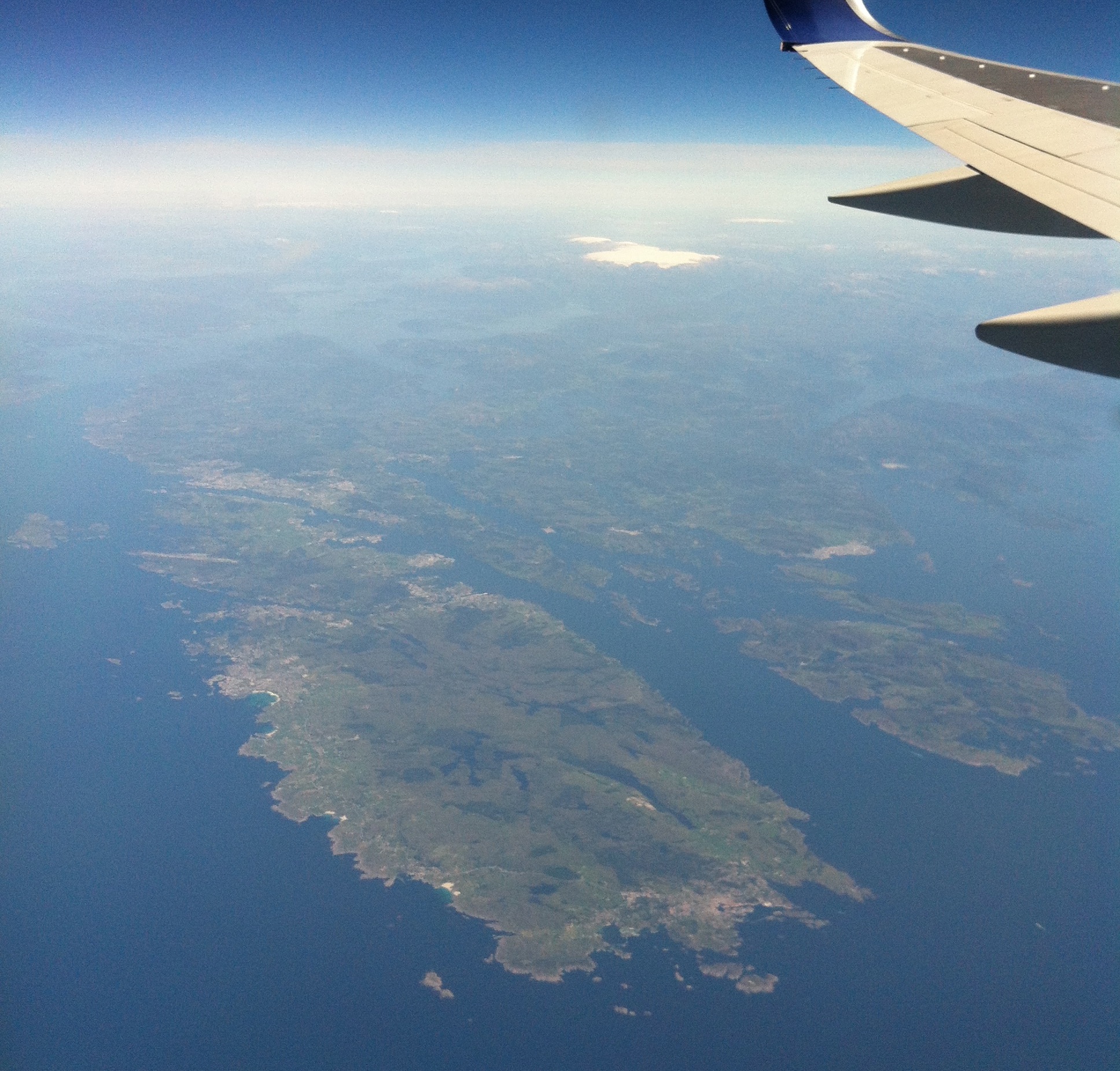
West coast of Norway, complete with glaciers and fjords.

The last day of the holiday is usually the occasion of the shortest report in these records. So it will probably be again, but this holiday was a little unusual. For all that it’s a short break, it’s really three holidays in one: a day trip to Copenhagen to meet some friends, three days in Iceland with another travelling companion, and today: one last solo trip to Copenhagen as I return home. As always seems to be the case when I travel solo, a good portion of the trip involved climbing very tall things.

Dr. P and I would have been up at the crack of dawn in any normal country, but this close to the Arctic Circle in summer, dawn is hard to nail down. The grey clouds had returned overnight though, and sleepy as we were, we had packed and prepared well enough to have time for breakfast before heading down to BSI for the bus to the airport again (the tickets were a promotional gift as part of the previous day’s car hire).

Once again we passed through the lava fields that led to Keflavik, glimpsing the steaming geothermal plant beside the Blue Lagoon, a reminder of where all this had begun. In Keflavik Airport though, there was none of the relaxed vacancy of three mornings previous: the place was jammed. Unsurprising really: Monday morning has the cheapest flights, so everyone was leaving while the price was right.

Having bags to drop, Dr. P joined the queues, whereas I, with my carry-on, browsed the shops and changed my money. We met again before too long—Scandinavian efficiency is the same everywhere—but having already eaten there wasn’t much to do but say our farewells and head to our separate planes. After the briefest period of waiting, I was once more aloft, once more solo and swiftly asleep.

I snoozed for half the flight, timing my waking to coincide with the first view of western Norway. Site of another trip, some years back, this was a view I hadn’t previously enjoyed: the now-clear skies revealed a landscape of deep fjords, rocky mountains and distant glaciers. That and a few episodes of Journey’s End kept me going until we touched down safely in Copenhagen Airport.

Once again, the plan was to spend my four-hour layover in Copenhagen, so I passed swiftly through the airport, hopped on the Metro and into town. It was, if anything, even warmer than it had been on my previous visit, so I needed a plan. Stage one: return to Norreport station and find myself a pastry shop. One caramel-filled, nut-encrusted fløldebolle later, I was ready to go and still making my plan up as I went along.

Second stop: the round tower that once served as Tycho Brahe’s observatory. Even with my luggage in tow, I had no problem making my way to the top and decided I’d well deserved some ice cream as I lounged on the upper parapet, doing some observing of the city myself. It was only about then that I came up with a finalised plan: make my way south across the river to Christianshavn, using up the remainder of my time in the city in exploration and then jumping on the Metro back to the airport.

It all worked out very well, despite the heat and the efforts of city cobbles to destroy my luggage’s wheels. The palace and the stock exchange with its wonderful dragon steeple passed by on my right, and hordes of cyclists passed me on my left. By the time I got to Christianshavn, I had added one last item to the agenda: the spiral tower of the Church of Our Saviour.

This time, I dropped my luggage at the ticket desk, and just as well. To get to the base of the steeple itself, you have to climb 65 metres up steep and narrow wooden steps, dodging tourists going the other way. All this in stifling, non-air-conditioned heat. It didn’t get any less hot once outside either, just sunnier. The steps that corkscrew around the steeple get narrower and narrower as they ascend, so much so that there was a queue to see the very top. Not that anyone can reach it—in the end, the climb is too narrow for anyone to fit. The view, though, is spectacular.

Having worked off my pastry and ice cream in sweat, I descended briskly, picking up my luggage and heading for the Metro. After that, it was pretty smooth sailing, to the airport, through security and onto the plane, pausing only for a hotdog to keep my spirits up. Then, as always, the very last trip of all, into the air and back to Dublin, another journey at an end.

Iceland’s Golden Circle

20130722-220801.jpg
A panorama of Gullfoss. Doesn’t even come close to capturing the feel of it.

Driving in Iceland is an exercise in concentration. Icelanders have long disdained hard shoulders as a crutch for the careless and the weak, and their absence acts as a form of vehicular natural selection. Allow your attention to waver and you’ll end up in a ditch so deep you’ll have to wait for the next ice age to be dug out. Or, if you’re fortunate enough to survive, you’ll be fined for damaging the delicate local vegetation.

Dr. P and I were up respectably early, all set for the final full day in Iceland and a briefly sketched adventure into the wilderness beyond Reykjavik. Being the only one in possession of a driving licence, it was my job to nurse the car (rented from RE:D in the BSI bus terminal) along the roads the led to the various sites along the Golden Circle. Dr. P, meanwhile, was responsible for navigating our way there. A job which primarily consisted of arguing with the Garmin navigation system we were given.

Luckily, the road to our first destination was one of the good ones, and once the Garmin had been cowed into obedience, we were on our way. Þingvellir is a place of coming together and splitting apart. Coming together in that it’s the traditional site of the Icelandic parliament, inaugurated in 930 C.E. Splitting apart in that it’s a dramatic rift valley marking the spot where the North American and Eurasian continental plates are diverging. We enjoyed the scenery in the company of several busloads of tourists and a horde of midges, taking in the high, narrow valley, the law rock where the law speaker would recite the laws of the land, and our first two waterfalls of the day.

We made a quick pit stop nearby for food and drink but tried to get moving quickly so as to catch a march on the tour buses. Next on our itinerary was the geothermal hotspot known as Geysir. Its eponymous waterspout doesn’t get out of bed for anything less than an earthquake these days, but its younger sibling Strokkur is the exhibitionist of the family, sending jets of superheated water skywards every 4-8 minutes. The entire area is worth a look though, consisting as it does of many bubbling pools, a Mars-scape of red volcanic mud and that eggy smell that accompanies hot Icelandic water everywhere. Even the expensive souvenir shop is the best on the Golden Circle, perhaps unsurprisingly given that this is the lunchtime break for most on the route.

However, we eschewed lunch, heading instead to our next destination and getting a lesson in the perils of trusting too much in technology. The Garmin directed us down a narrow road, where we spent about 16km in the company of a fine selection of Icelandic potholes. Oh, and one single-lane trestle bridge. I was driving a small Hyundai, but right then I wished I was in one of the huge 4x4s that are increasingly prevalent the further from Reykjavik you go.

The early morning signs of sunshine had faded by the time we reached Gullfoss, which would turn out to be the highlight of the day. Gullfoss is a massive waterfall that fills an entire valley, crashing into a narrow rift in two cataracts. The last drop sends a massive wall of spray into the air, creating a microclimate of mist and rain. Key to the experience is the fact that you can get right up close to the water, within arms-length of the torrent and at eye level with the upper stream. A little sunshine might have revealed just why this is called the “Golden Falls”, but we had to content ourselves with a distantly glimpsed herd of Icelandic ponies galloping at the edge of our mist-shrouded vision, like a memory of some ancient stampede.

From Gullfoss, we continued on our erratic route around the Golden Circle, dipping briefly into the back roads once more before getting back on smooth tarmac. Our next destination was another waterfall, but there was no one else in the car park when we got there, and the only comment Dr. P and I could muster from the viewing area was that it was quite nice. Coming directly after Gullfoss though, no waterfall was going to fare well, and I can’t even remember this one’s name.

Still, there was one last attraction to see on the Golden Circle, the crater lake Kerið. Less famous than the rest, this is still worth a visit, as you can circle the top and bottom of the collapsed cone. So we did, searching for interesting lumps of rock amid the black, red and purple scoria and then tossing some of them into the crystal clear waters of the lake below. We even had the pleasure of watching a family of three falcons cavorting around the crater, until some tourists coming too close scared them off.

On the road back to Reykjavik, the grey clouds that had dominated our visit finally broke up, letting through blue skies and sunshine. The landscape, which had a rugged beauty already, now became a thing of wonder. We passed through deep valleys and over high ridges, across geothermal hotspots where power plants steamed away the days and past herds of ponies that were as windblown as the grass they fed on. Dr. P did his best to capture it on camera, whereas I relied on my memory to hold onto as much of it as I could.

Back in Reykjavik, we returned the car after a few hiccups (apparently giving back the keys when you return the car is traditional) and headed home to cook dinner (he cooked, I cleaned again). After a post-prandial nap (Dr. P’s jetlag enjoying its final fling) we headed down to the harbour side and the Kex Hostel. The high headland north of Reykjavik was picked out in perfect detail by the setting sun, and a brief stroll past the Sun Voyager was very much warranted. Also warranted were a couple of beers at the Kex Hostel, site of the previous night’s concert and now a lightly populated and quirky bar, serving tasty summer beer not unlike Hooegarden.

Alas, a couple of beers were all we allowed ourselves: our flights the next morning were unconscionably early, and we were both too old and sensible to drink our last hours in Iceland away. The final bus ride to the airport would have to be our farewell.

Doing the Rounds in Reykjavik

20130721-195644.jpg
It’s not all like this, but quite a bit is.

Reykjavik’s architecture is varied. The dominant material is corrugated iron, often painted a wild array of colours to distract from its utilitarian nature, but there are areas of the city where efforts have clearly been made to ignore the local climatic realities and try to be a bit more adventurous. Hallgrímskirkja, for example, is a massive concrete church, and the concert hall is a honeycombed glass confection on the waterfront.

One other thing to notice about Iceland in general is the water: hot water is easy to get on a volcanic island, but one thing that Iceland has in abundance is sulphur, so that hot water comes with a definite smell of rotten eggs. It doesn’t linger, but it’s hard to miss.

On this Saturday, Reykjavik was slower to wake than I was, possibly because I’d been earlier to bed than most of it. In an effort to save money, I was out gathering breakfast essentials, grateful that despite the grey clouds it wasn’t raining. When we were finally fed, we headed out the door, aiming to climb the steeple of Hallgrímskirkja and get the best view in the city. Unfortunately, we timed our arrival to coincide with a morning concert, so the church was put on the backburner.

Instead, we headed down the hill and across the Tjornin pond to the National Museum, where the next two hours were spent examining the history of Iceland. As Dr. P remarked at an end, the problem with Icelandic history is that the Scandinavians are so reasonable. Once the era of settlement and sagas was over, Icelandic history is mostly bereft of major conflicts, progressing to independence without a huge amount of fuss. (Icelandic readers may not agree, but that’s the impression given.) Still, the museum is well laid out and worth a visit.

From the museum, we followed Suðurgata past the Hòlavallagarður cemetery, which is beautifully overgrown, with trees planted not just beside but in many graves. At the end of this walk, we came to the 871±2 museum, where an entire longhouse is preserved (the name refers to the estimated date in which the house itself was built). Even more so than the National Museum, it’s a fascinating recreation of the earliest days of settlement on the island, though seeing the multimedia recreation of the longhouse blue-screen out on when Dr. P tried to use it raised a smile.

871±2 was just around the corner from the harbour, so once again we took a stroll by the water’s edge, dropping in on the flea market there and checking out the Sun Voyager sculpture (a symbolic viking longship) as we did. Then it was back up the hill to the Hallgrímskirkja, where once again we found our entry plans blocked, this time by a shiny vintage Buick the car of choice for the couple getting married within. Luckily, we had to wait no longer than fifteen minutes to effect an entry.

The view from the steeple of the church is easily the best in the city, and on a clear day you can see for miles. Sadly, the day was grey at best, and fuzzy around the edges. Still, it had been worth the wait to get up there, and on getting back to the bottom in the cramped lift, we found a massive queue, suggesting that our timing hadn’t been as bad as all that.

Iceland’s not a cheap place though, so instead of eating out, we did some shopping. Back in the apartment, we divided up the chores in the kind of equitable fashion that has marked our various travels together: Dr. P did the cooking and I did the cleaning. Afterwards, he got to snooze some more while I once again caught up on this writing and the escapades of the rest of the world. Outside, the rain came down heavy for the first time since we’d arrived, but luckily it was just a brief downpour.

There was one last task for the evening. The Kex Hostel was holding a 12-hour concert of indie performers, from noon to midnight. We’d already heard some of it as we strolled around the city. Now we were going to catch the end of it. After a short stroll down Baronstigur, we could follow the sound of music to the yard behind the hostel, where a crowd was gathered, bouncing along to a white-dreadlocked chanteuse belting out indie pop as though her life depended on it.

For the next couple of hours we enjoyed the scene. The crowd seemed to consist of Iceland’s entire population of hipsters, but perhaps they were enjoying themselves too much to qualify for ironic detachment. The highlight was the last act, a Hawaiian-shirted funk band with a full brass section, a bongo player in a fez and a wooly-hatted bandleader. The best way to describe how they sounded is to direct you to the climactic sequence of this video. Seriously funky stuff, and we barely noticed the return of the rain.

Still, at midnight it all had to wrap up, possibly to the relief of nearby residents. We grabbed a consolation pint in Dillon, but an early start kept us from straying too long. Time for exploration, in the manner of the Viking settlers of old…