A bit of a stretch in the title here. The trip I’ve just returned from involved only myself (though I did visit a family of four at the outset), and the primary “5” involved is the number of countries visited: Bulgaria, North Macedonia, Kosovo, Albania, and Montenegro. Two weeks passing the time in a leisurely fashion outside the confines of the European Union, connected by multiple bus trips and border crossings of varying sophistication.
I had two main reasons for taking this trip. First off, four out of the five countries were ones I’d never visited before, and visiting them gets me within touching difference of completing my European scorecard (leaving some exceptions aside until less warlike times arrive). Secondly and more importantly, I’d promised, both eleven years ago and earlier this year, to visit my cousin, whom I grew up next door to, a visit to his family in Bulgaria. Making the second of those promises provided me with the impetus to make the booking and a starting point for the trip as a whole.
Bulgaria is For Family
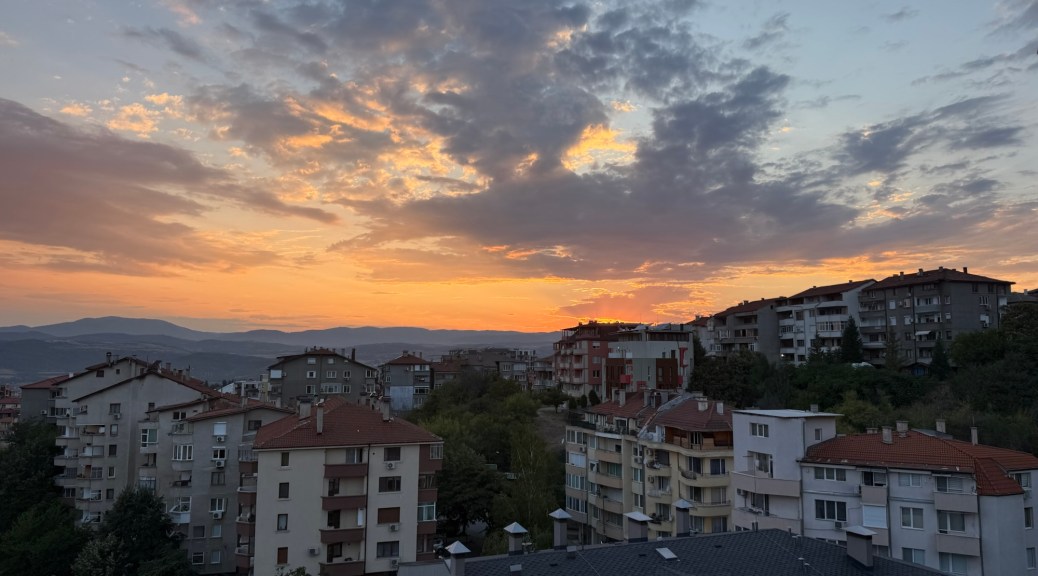
Unlike most of my trips, which focus heavily on capital cities and their attendant museums and attractions, this one started in the town of Blagoevgrad, nestled deep in the valleys of southwest Bulgaria. It’s here that my cousin now lives and where he and his wife arranged for me to be hosted in Kristo Hotel, a rambling, old-fashioned site tucked well back from the main street and featuring decent size if somewhat spartan rooms. Though a balcony with views across the city and a wakeup call in the form of church bells from next door counted for a lot. The weather was gorgeous, even above what had been an worryingly good summer in Ireland, and Blagoevgrad proved compact enough to make walking around and beyond it a pleasure.
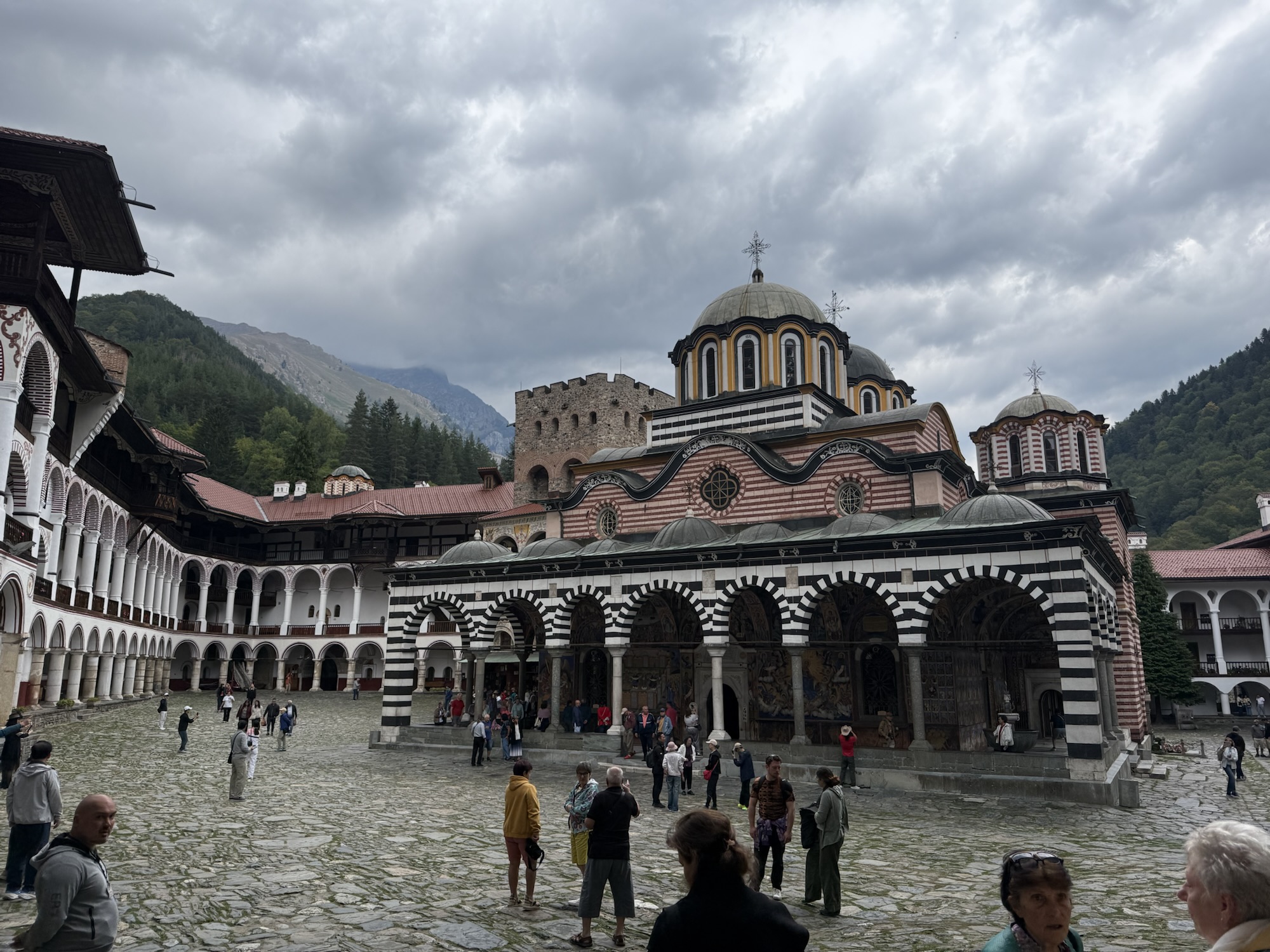
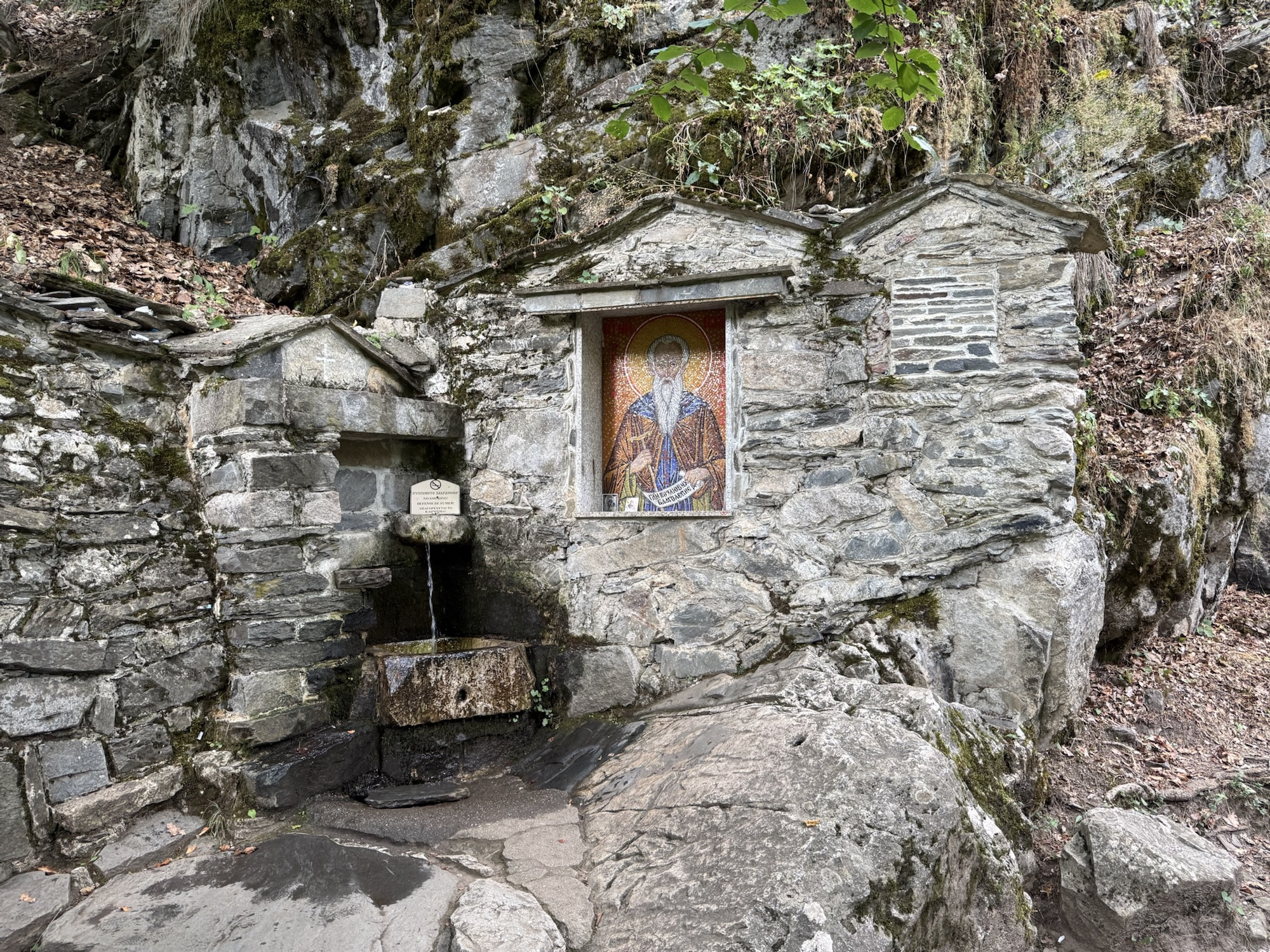
For the three days I spent there, I was shown around some of the best sites in that part of Bulgaria: the recently discovered ruins of Heraclea Sintica, which are still being uncovered. The wine growing region to the east, with Villa Melnik and its estimable vintages deserving a special stop. The town of Melnik itself, tucked into a crumbling valley but full of the rebuilt houses of the trading families who dwelt there for centuries. The magnificent and magnificently decorated Rila Monastery, near which is buried Irish journalist James Bourchier, and above which is its founding saint’s retreat, complete with his dark cave, the passage of which guarantees a pilgrim’s sanctity (just call me Saint Ciaran from now on).
That particular day ended in the high meadows above even the saint’s retreat, where a picnic was the reward for a day of exploration. In fact, the general pleasures of Blagoevgrad and the company of family were as good an advertisement for the country as I could have found. It was easy to stay and hard to leave, but back to Sofia I went, for a bus onwards to Macedonia.
Macedonia Has a Point To Make
Or should I say, North Macedonia. I probably should, since getting to this point in history has been problematic for the nation and those around them. Quarrels with Greece and Bulgaria have kept them out of the EU (according to the various stories I was told), and it was here that I first came across the legend of Marshall Tito, the only man in history who managed to keep the Balkans free of quarrels for any noteworthy length of time. In any case, I landed in Skopje, Macedonia’s capital, late in the day and had little chance to see any of the city other than the building site that surrounded my apartment rental.
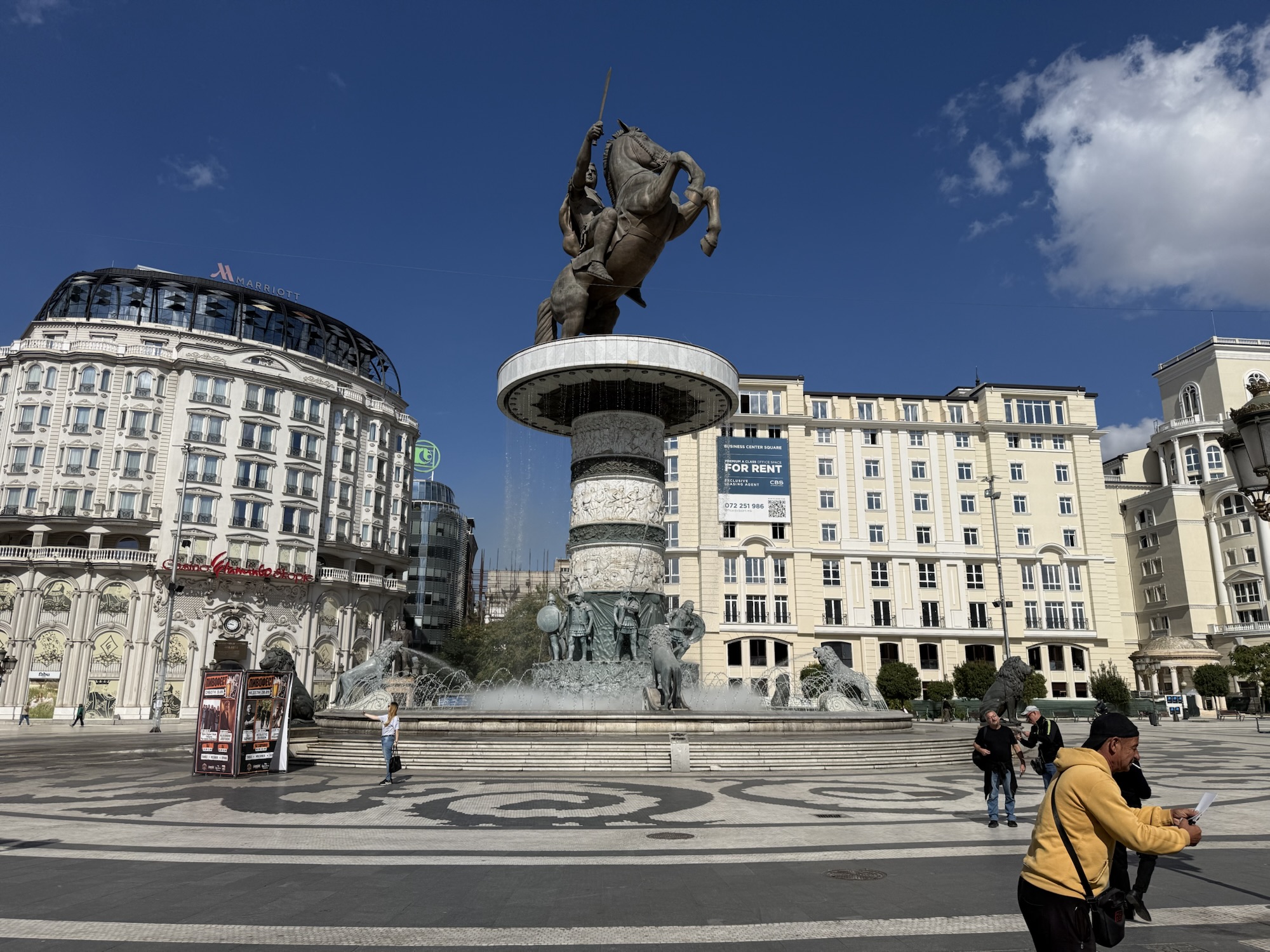
When I did emerge to explore, what I came across were statues. Lots of statues. Wander around the centre of Skopje, especially near the river, and you’ll see statues on every available flat surface, regardless of visibility. Yes, the absurdly oversized equestrian monument to Alexander the Great, which faces his almost equally massive father across the river, steals the show, but he’s surrounded by a cast of thousands in a city determined to make its point.
But it would be a shame to stop at the statues. The citadel looming above the city may be an overgrown, abandoned mess, but the bazaar below is the real thing, with paving stones worn smooth by centuries of footfall and ample opportunities to window shop or sit in a cafe and people watch. I spent plenty of time there, when I wasn’t delving into museums, exploring the city’s history (the devastating earthquake of 1963 is a slice of history likely little known beyond this country), or catching my first glimpses of Mother Theresa’s presence, which would be a recurring theme on this trip. (Although Albanian by heritage, she was born in Skopje, then a part of the Ottoman Empire.)
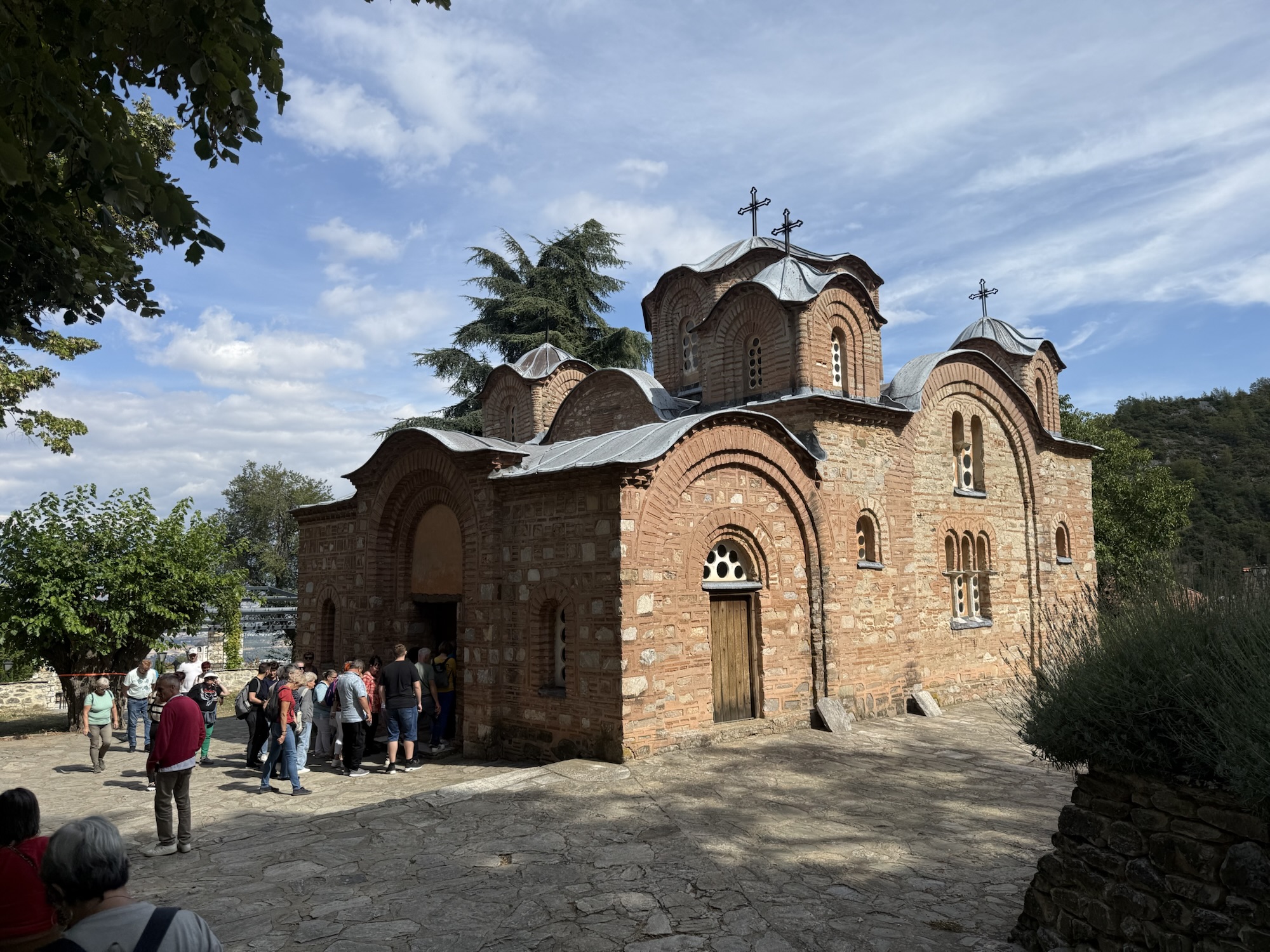
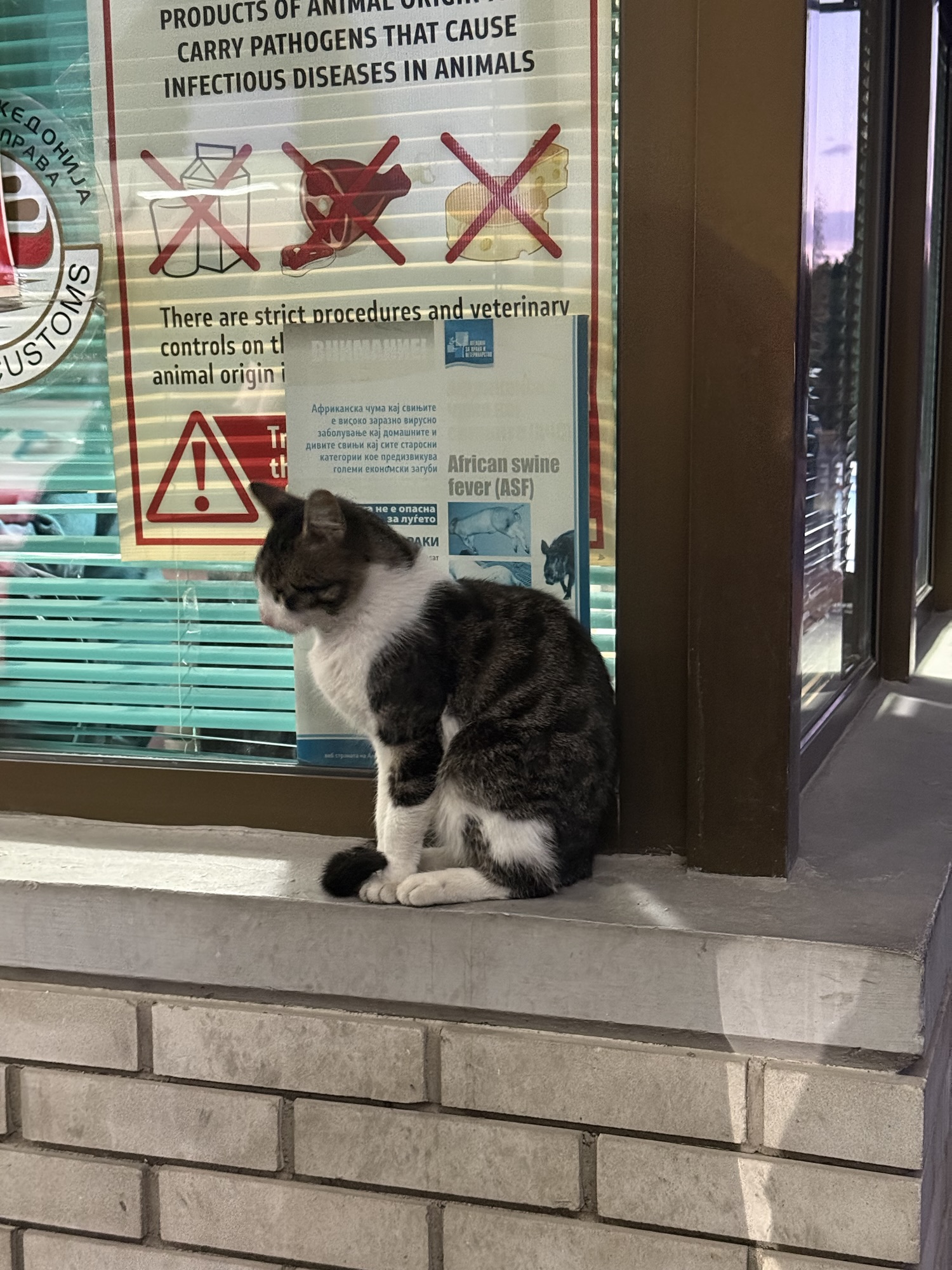
A bus tour, involving a trio of minibuses, took me out of Skopje itself and into the mountains above—Skopje’s horizon is dominated by the bulk of Mount Vodno, with its cross (bigger than Jesus (of Rio) the tour guide said). Matka Canyon featured a boat trip along a reservoir lake to some caves, and around the mountain past some millionaire abodes was an ancient Byzantine chapel with paintings on the lower walls that had survived the greater earthquakes the city endured. The last stop would have been the mountain top, but health and safety held sway, so instead we had an impromptu picnic and a quick lecture on the evils done to Macedonia by its neighbours (as mentioned above) and the virtues of the good Tito.
Kosovo is Still There
Two days for Kosovo, based in Pristina, following a somewhat ad-hoc bus trip across the border from North Macedonia. Arriving from the south seemed wisest, seeing as Serbia to the north is the main dissenting voice when it comes to Kosovo’s nationhood. Kosovo itself consists of one broad valley, forming a wide, fertile plain in the middle of the Balkans. A fine spot for farming, and an even better spot for fighting, the two Battles of Kosovo (1389 and 1448) being key lynchpins in the history of the region. Right now though, the plain is mainly the site of a huge amount of construction work, likely funded by the EU and U.S. following the conflict of the late 1990s.
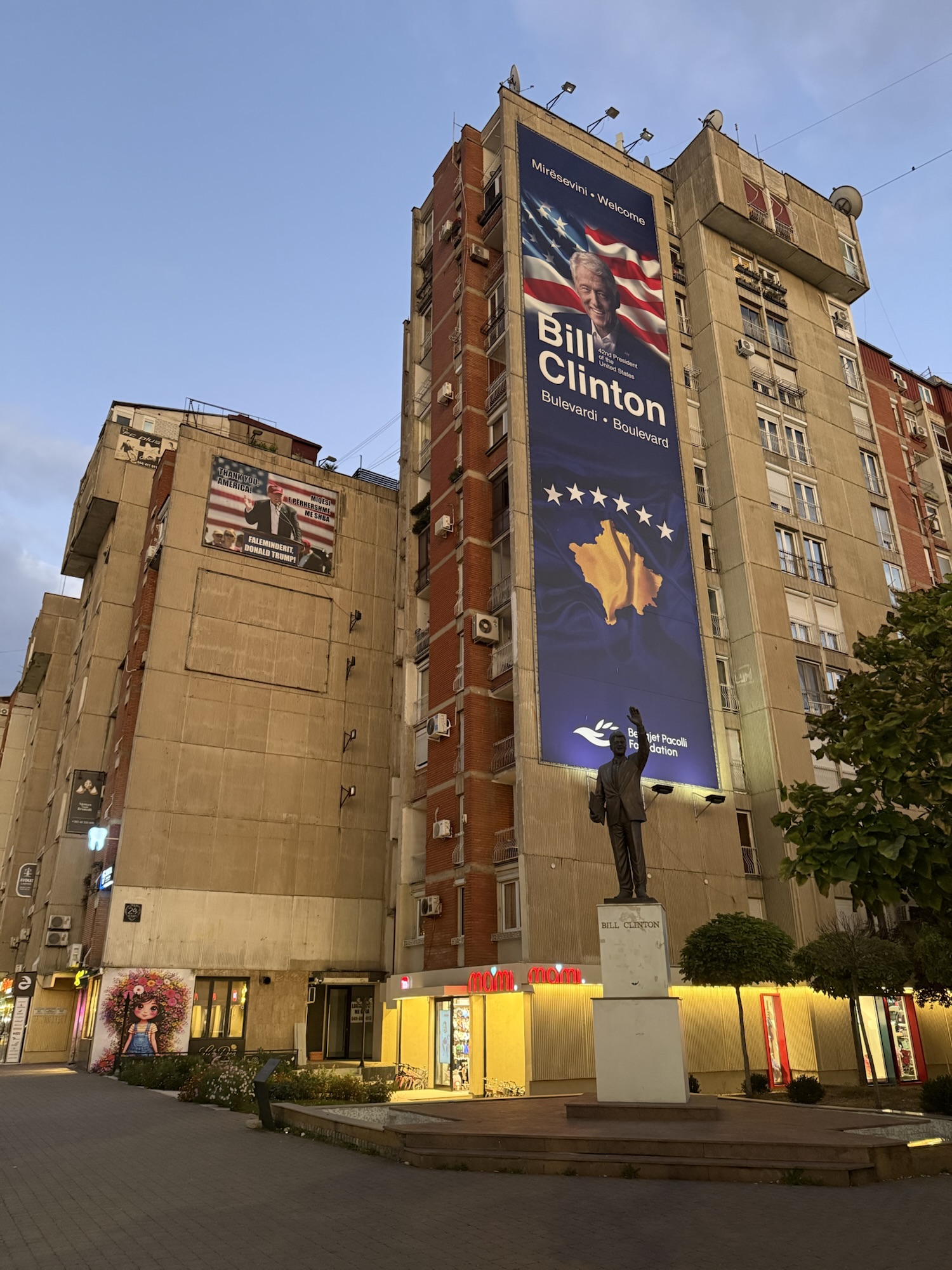
It’s that conflict that has left its mark on Pristina, with memorials to foreign soldiers and Bill Clinton, a seemingly positive image of Trump high up on an office block, and lots of rebuilding and public support for the UÇK (Kosovo Liberation Army) while I was there. There’s not a huge amount for the tourist in the city itself right now, though the central pedestrian promenade makes it a pleasant place to linger. Instead, I jumped on a bus to Prizren for the day, a smaller town in the Kosovo’s southwest, tucked into the hills, with a lung-burstingly steep (your lungs may vary) walk to a castle above and lots more for the tourist, including a few more stops on the Mother Teresa trail and some very pretty old mosques.
Albania is Not Just Tirana
Having had decent luck with my day trips in previous countries, I decided to get ambitious in Albania. The bus from Pristina (passing Prizren, where maybe I should have been based) had passed through steep wooded valleys and picturesque rivers only a little denuded of their waters by the droughts of 2026. So while I liked Tirana itself a lot—it’s a lively city, very walkable—I decided I wanted to see more of the country, following advice I’d been given both online and off. I spent a day exploring Tirana in the heat of late September, then signed up for an all-day bus trip to southern Albania the next day.
It was a trip that delivered in terms of different experiences: first up were the Adriatic resorts of Ksamil and Saranda, where the heat and sunshine forced me to turtle up under hat, shades, and jacket slung over my shoulders while walking around, though I did manage to find a quiet place by the beach to sit in the shade for an hour and enjoy the blue sea and bluer sky. After that, we drove deep into the hills for the highlight of the day: the Blue Eye, a deep-welling spring that rises in the limestone mountains of southern Albania, cooling and watering the valley around it and making it a haven of nature in the midst of the mountains.
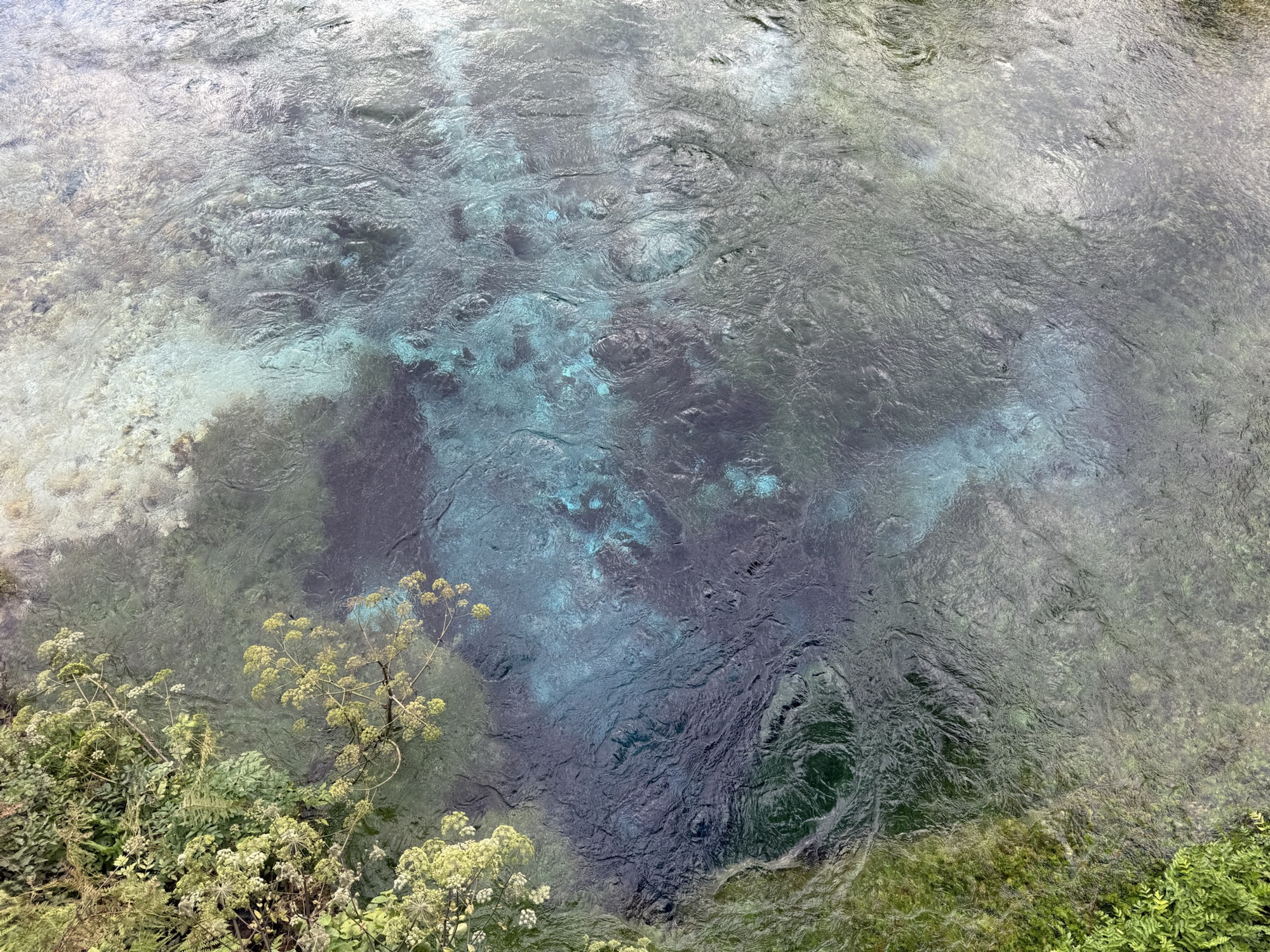
All fun, all a bit exhausting. The day had started before 6am and it ended after 11pm. Whereas Kosovo is small enough to be tackled from a single base, Albania is big enough to need more than one. Tirana has plenty to recommend itself, but there’s a lot more out there to be seen, and if I’m ever back I’d try to see more of the south and east. For now I’ll content myself with the hills and valleys as seen by sunset through tired eyes on the way back.
Montenegro is the End of the Line
I’ll admit that I was pretty tired before I even crossed the border into Montenegro. For the first time on the trip (somewhat disappointingly given that I’d been dancing through non-EU countries all the way), I actually got a stamp in my passport. Something of a rarity in these digital days. The road to Podgorica (formerly known as Titograd, for a recurrence of that theme too) showed that part of Montenegro to be far from the “Black Mountain” of the name, being more of a broad plain stretching from the mountains, around the lakes to the coast. The trip from Tirana was relatively short though, and before long I was settled in my first hotel of the trip, Hotel Kerber, just around the corner from Independence Square.
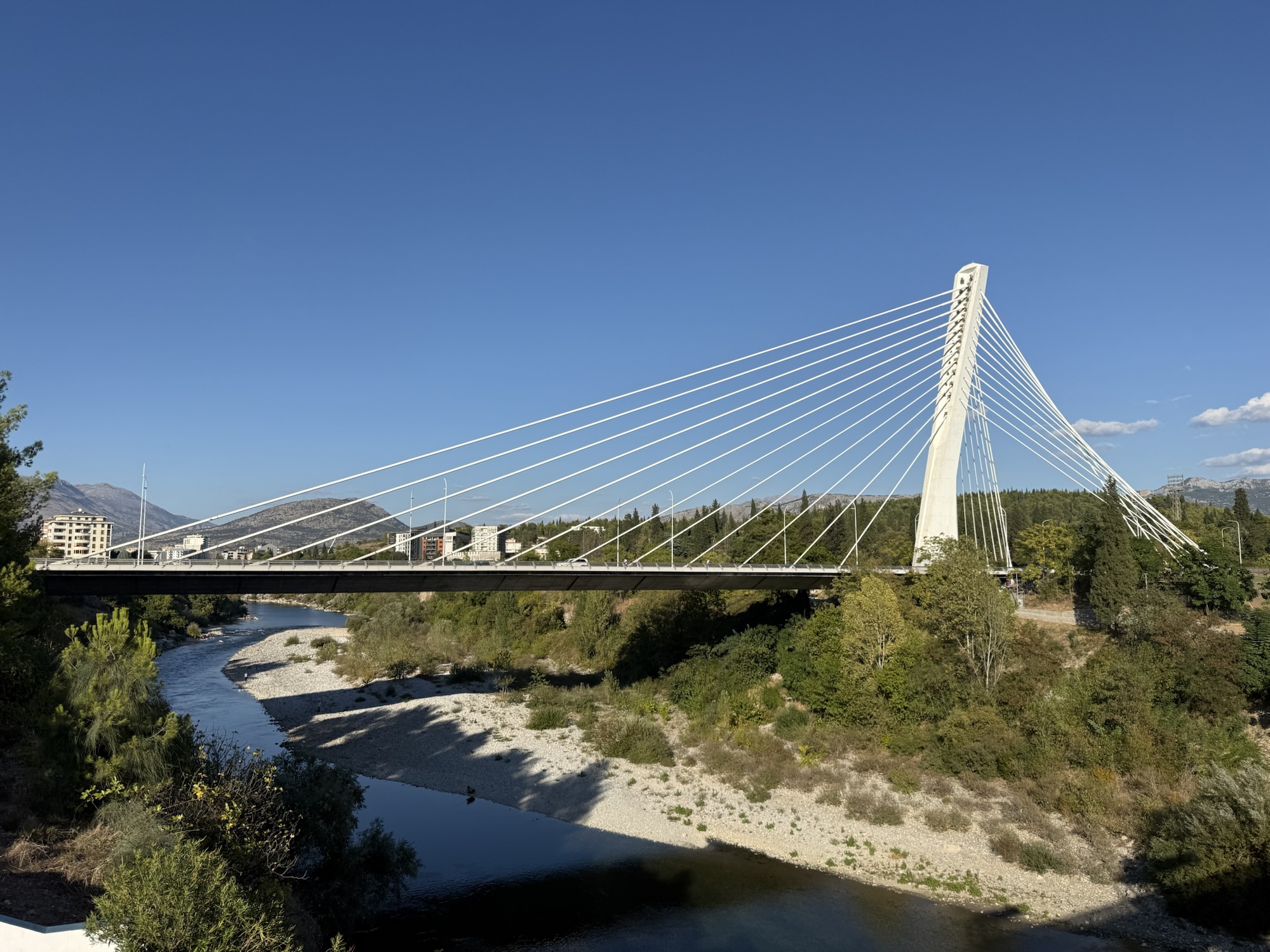
I didn’t plan to take any tours from here, having burned myself out on my Albania excursion, so Podgorica was explored on foot. Luckily it’s well suited for that. A city centre made for walking, with cafes for street side dining, and plenty of parks both near the deep river gorge and to east and west. The park beyond the national stadium just east of the city centre, in particular, makes for a great walk or cycle, being well paved and forested, and signposted with maps for more distant walking and cycling trails to boot. In short, I really enjoyed my time in Podgorica, relaxed and pedestrian as it may have been.
So that was the tale, in shortened form, of my Southern Balkans sojourn. Sweeping from east to west, more or less, and touching the Adriatic Sea before ending quietly in the shadow of the Black Mountain. More detailed notes may be transcribed at the usual place before long, but here and now we call an end.

