No, they don’t go together. That’s kind of the point.
Too much cinema-going leads the brain to make strange connections. You wouldn’t think that Calvary, a small-budget Irish film about a rural priest facing a death threat, would have much in common with The Amazing Spider-Man 2, one of the biggest-budget blockbusters of the year. And yet here we are. They’re the most recent two films I’ve seen, and one thing leaped out at me from both of them: the problem that they have in establishing a tone.
(Spoilers for both movies below, though as few of them as I can get away with.)
When you stare into the abyss … you’ll notice that it’s kinda fuzzy around the edges.
Terry Gilliam scarred my childhood. Not through a too-young exposure to his surreal and occasionally lewd animations on Monty Python’s Flying Circus (my sense of humour is mostly the result of my dad exposing me to recordings of TheGoon Show, again, too young) but rather through his film Time Bandits, one of the greatest and darkest children’s movies ever made. I’m quiet sure that the ending, which I’m not going to spoil, resulted in a few disrupted nights for my parents.
Now he’s back with The Zero Theorem, a new movie following the familiar Gilliam theme of a discontented everyman trying to survive in an at-times sadistically unfriendly dystopia. It’s equal parts Kafka and comic book, and the result is a visual feast that barely conceals the symbolism Gilliam shovels into the mix.
Yes, there’s a connection. No, I’m not spelling it out.
Bungie Software, creators of Halo and the upcoming Destiny, have toyed with the notion of artificial intelligence throughout their games. In particular, they’ve developed the idea of “rampancy”, whereby an AI becomes increasingly self-aware, intelligent and uncontrolled. It wasn’t a concept I was expecting to come across in Spike Jonze’s Her, though it turns out to be central.
Until relatively recently, Dublin had no IMAX cinemas. These days it has two, one in Cineworld, one in the Odeon at the Point. Hollywood releasing movies created with IMAX in mind is another relatively recent development—when the format was first introduced, it was filled with short novelty films, often in 3D. Well, full 3D IMAX films are here now, and Gravity is their standard bearer.
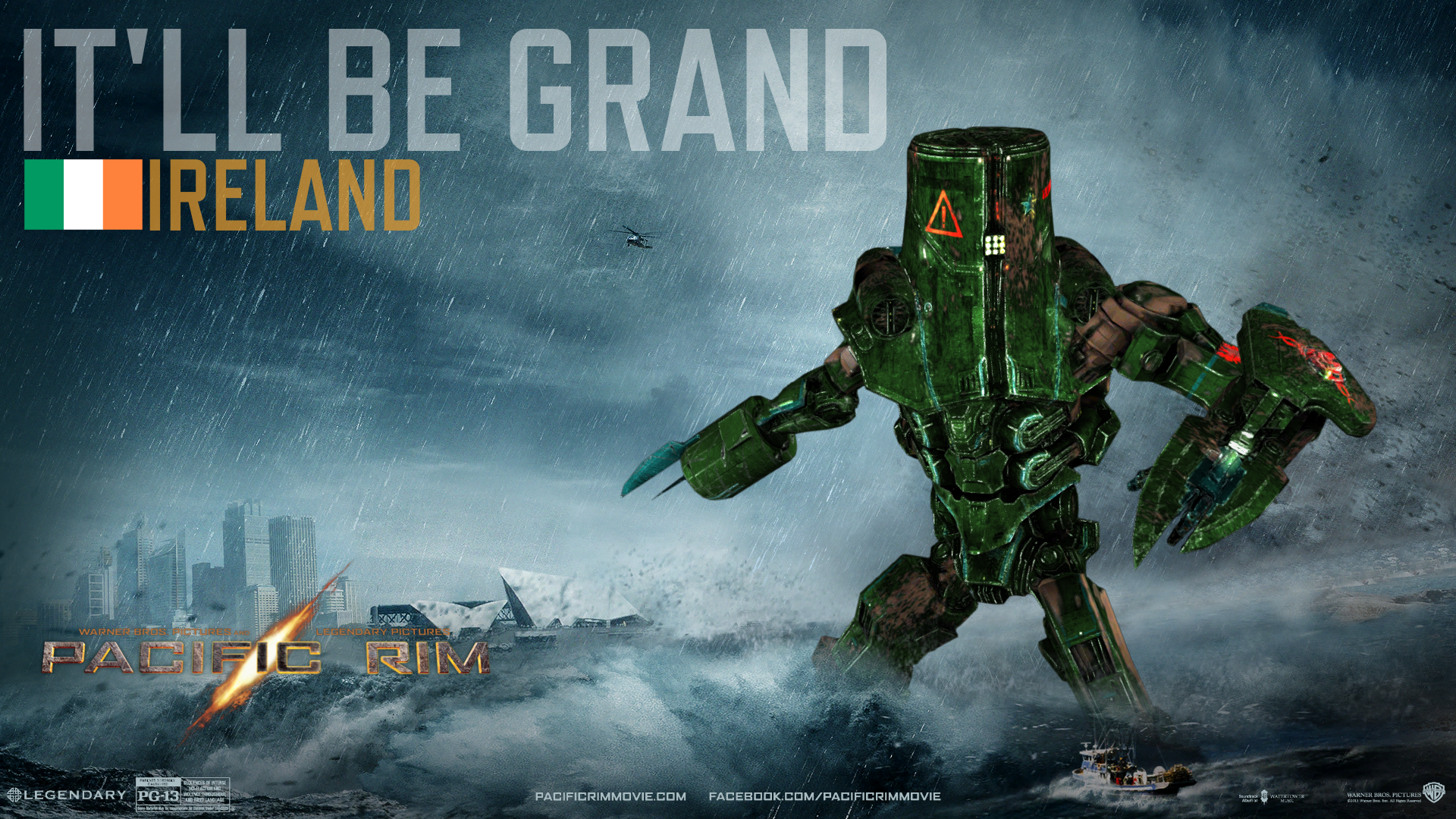
First things first: Pacific Rim is a movie about 25-storey-tall mechanoids smacking the protoplasm out of genetically engineered, city-destroying monstrosities. It is, therefore, immune to criticism on at least one level. If that’s your kind of thing, you should probably go watch it in the cinema. If it isn’t, you shouldn’t. That said, there’s a difference between criticism and critique.
This isn’t going to be a review, more a pondering of some points of design and storytelling. However, there will be spoilers, so it’s all below the cut.
When Fellowship of the Ring came out in 2001, it was something very special. I’d been waiting for it for years, and I watched it with friends who had been waiting just as long, one of whom was only a few hours off a flight from San Francisco to Dublin. Inevitably, the release of The Hobbit wasn’t going to get the same degree of anticipation. But does it deserve the amount of opprobrium being thrown at it? (Including by some of those selfsame friends…)
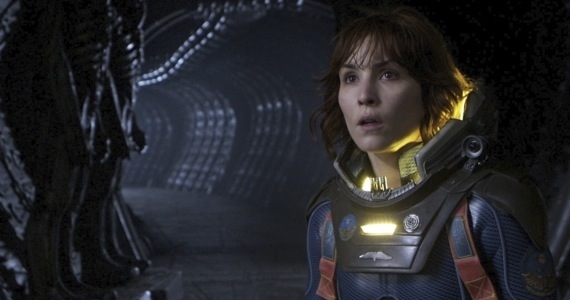
Ridley Scott’s reputation as a director was built on two science fiction classics: Alien and Blade Runner. The most recent phase of his career began with a Hollywood blockbuster: Gladiator. With Prometheus, he makes a long-awaited return to science fiction, and all three of the above-mentioned films inform what he’s created with his latest offering.
Spoilers Below – I went into the film knowing as little as I could about it. That may have informed my reaction somewhat.
Spoilers: Not just a way of life; also a catchphrase.
I have a strong attachment to my many books, but every so often I do lend them out. When I do, I often sell that loan by saying what makes it worth recommending: characters, plot, setting, etc. What I don’t do is say anything along the lines of “Well, it’s the tale of a group of small folk who come into possession of a evil magic ring, and they have to travel across half the world, accompanied by allies from different races, in a quest to destroy it.” Not that I’d be giving away all of “The Lord of the Rings” by doing so, but I’d be depriving the loanee of some of the joy of discovery.
So why do movie studios seem determined to go a lot further in spoiling their wares ahead of time?
Last night I had the pleasure of watching “The Cabin in the Woods,” the new film from the fertile brains of Buffy alumni Drew Goddard and Joss Whedon. Partly due to the long gap between its filming and release, but mostly due to the creators’ determination to keep as much of it as possible under wraps, I managed to go into the cinema knowing very little of what it was about. This was a very good thing, and I’ll say no more about that film other than that it’s not so much as slasher movie as a movie about slasher movies (and manages to be a lot more fun than its meta-horror precursor Scream).
However, it’s getting harder and harder to avoid learning most of what a film has to offer long before its release. I already know more about Whedon’s next movie, The Avengers (or Avengers Assemble if you don’t live in the U.S.) than I’d prefer, and I’ve resorted to sticking my fingers in my ears and shutting my eyes to avoid seeing trailers for Ridley Scott’s forthcoming Prometheus.
I do accept a portion of the blame for this. Anyone who trawls the internet habitually can at any moment be enticed by a rumour, press release or teaser trailer. On the other hand, movie studios are always eager to attract more attention for their releases, and media outlets are just as eager to scoop their rivals with the latest unrevealed details of films just over the horizon. The only thing standing in the way of a tidal wave of spoilers is a common awareness that revealing everything ahead of time defeats the purpose of marketing the film in the first place.
It’s good to be surprised by a film. When a trailer shows clips from a film’s climax, or an article leaks details of the plot, then the person thus spoiled loses something. The best movies bear repeated viewing, but there’s a reason why we feel envious of those about to experience something exceptional for the first time. (This is also the case for other forms of entertainment: witness the recent tortured efforts to discuss the ending of Mass Effect 3 without actually talking about it.)
After years of being a happy consumer of rumours and spoilers, I’ve become a convert to the art of avoidance. I’ll happily watch trailers for, and read about, movies I’ve never heard of in the hope of finding something worth watching, but if it’s something I’m already looking forward to, it goes on my interdicted list. I’d definitely recommend it as a habit to get into. If nothing else, it offers a chance to enjoy a movie twice over: once for the new experience and once again to appreciate the artistry with which it was put together.
Lara Pulver proves the more dangerous of the two recent Irene Adlers.
It’s Sherlock Season at the moment. The second installment in Guy Ritchie’s Downey Jr-&-Law driven comeback arrived on cinema screens over the Christmas period, and on New Year’s Day, the BBC debuted the second series of its modern-day updating of the Arthur Conan Doyle tales, starring Benedict Cumberbatch and Martin Freeman. As a long-time Sherlock fan (when it comes to the classic interpretations, I’m a Jeremy Brett man), this double header definitely added to my festive cheer. However, there was one feature of both offerings that raised a doubtful eyebrow.
Spoilers below for those of you who haven’t watched either slice of Holmes (and they’re both worth taking your time to see).
Irene Adler, like Professor Moriarty (with whom she’s associated in both the cinematic and televisual Holmes offerings), looms a lot larger in the Holmes mythos than her brief appearance in Conan Doyle’s tales would suggest. She appears in a single story, “A Scandal in Bohemia,” and is referred to in just four others. Nonetheless, the idea of the woman who matched wits with Holmes and won has fascinated fans and writers of derivative works ever since.
Which makes it just a little odd that both the most recent Holmes offerings veer away from the idea of her being Holmes’ equal. The first Ritchie movie had her as Moriarty’s catspaw, and the second reduced her to a damsel in distress before swiftly killing her off for little reason other than to provide Holmes with an axe to grind against Moriarty himself. In the BBC version, she matches wits well with Holmes before being undone and reduced again to a damsel in distress, whom Holmes this time saves.
A feature of both the recent versions of Adler is that she is undone by her own affection for Holmes. This is a long way from the Conan Doyle story, where all the affection and admiration is on Holmes’ part, with Adler in love with and set to marry another man. The transition towards something closer to a genuine romance between the characters seems to do Adler a disservice, as Holmes ends up the dominant partner both times out.
This may be inevitable – Holmes is the central figure, after all – but there could be something else at work here. Both Ritchie and Steven Moffatt, the co-creator of the BBC series with Mark Gatiss, have made the relationship between Holmes and John Watson the central point of their versions. No mere foils for the mercurial and manic Holmes, the Watsons of Jude Law and Martin Freeman are close to equal partners, emotionally if not intellectually, avoiding the bumbling caricature that Watson often became in other adaptations. In both cases, the depiction of the relationship between Holmes and Watson is a major part of why these versions work so well.
What that seems to mean, though, is that there’s no room for a romance with Adler. To have her become a victim in both cases seems a shame to me, given that she’s a character with a lot of potential (and the only strong female in the Holmes canon). Ritchie’s casual disposal of her seems much more of a waste, and in somewhat poor taste, whereas Moffat’s decision to have her thoroughly defeated and then rescued seems more a result of confusion as to what to do with her.
Perhaps Conan Doyle had it right: Adler was notable because she won and because she entranced Holmes with her intelligence and honour. To try to bring her closer into the orbit of Holmes-Watson is to ruin her.