Category Archives: Travel

Palermo – Out on its Own

Rooftops that would work well in an Assassins' Creed game.
Looking north from the Teatro Massimo, with Monte Pellegrino in the distance.

My first experience of Palermo and Sicily was the sparkling blue of the Tyrrenhian Sea contrasting with the terracotta dust of late-summer/early-autumn. Sicily, which I’d heard so much about but never seen, was rocky in its northwestern corner, with steep peaks rising straight out of the sea, and Palermo itself sprawled across a shallow valley caught between several of those peaks.

It’s not an easy city to get to grips with, because it doesn’t have a strongly defined centre. Instead, there are a few streets running north-south and one key one that runs east-west. Stray too far from any of these and you might find yourself among run-down quarters with narrow alleys full of street vendors’ stalls, rows of apartment blocks that can be either new or crumbling relics of ages past, or parched gardens that offer some shade in the heat that lingers on after the departed summer.
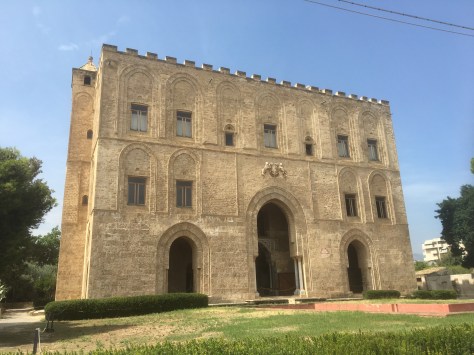
Let's face it, when you move into a new place, it's the pleasure gardens you go for.
Would that its pleasure gardens were still in as good a shape.

There’s no metro in Palermo, and the only tram I saw actually runs from the non-central train station to an outlying shopping centre, so if you’re going to explore, it’ll have to be on foot. (Forget about wheeled transport unless you’re willing to wait on buses or take your life in your hand on a moped. In fact, the very existence of mopeds requires pedestrians to be either vigilant or accepting of potential disaster.) I like exploration by foot though, so that suits me pretty well.

As far as another habit of mine goes—that of climbing on top of tall buildings to get a better idea of the city I’m in—there are some good options, albeit none too tall. The first and preferable is the Teatro Massimo, Europe’s third-largest opera house. Take the excellent tour around the opera house itself and pay the extra to get up to the terrace. Courtesy of a slow elevator and some steep steps you’ll get to enjoy the best view of the city. Mostly unobstructed, it’s the best way to get a feel for how Palermo has spread out to occupy the space available.
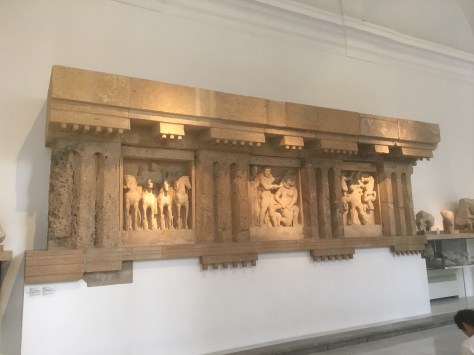
The Greeks liked settling anywhere they had access to marble and chisels.
An ancient carving from the Greek colony of Selinunte on Sicily’s south coast.

Palermo Cathedral offers the next best thing when it comes to viewing the city, but the cathedral’s towers get in the way of the view, and the narrower space up there can get a bit more crowded. It is a good bit cheaper though, and as a bonus you also get access to the royal tombs that the cathedral holds (Sicily had its own kings up until Italy’s unification) and the crypt beneath, which contains relics dating back to the Norman occupation of the 12th century. Or possibly even earlier, given the Cardinals’ habit of re-using convenient sarcophagi.

The crypt is a good place to get a feel for how old Sicilian habitation has been and how many different groups have claimed it over the centuries. From the original inhabitants to the Phoenician and Greek settlers, to the following Carthaginians and Romans, who waged their first Punic War over the island, through the Arabs and the Normans to the European dynasties who fought over the island until Italy put its boot down, there are layers of warfare, trade, and settlement everywhere you look.
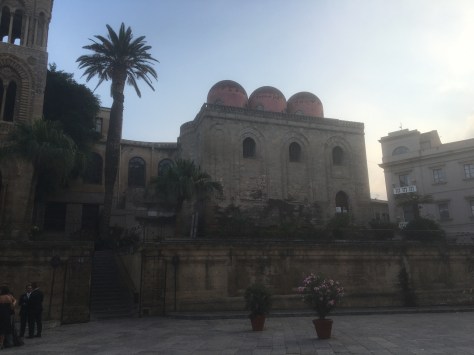
More than a little Arab in the design, mind you.
The Norman Chapel of Chiesa de Santa Cataldo.

Getting an explanation of all of this history is a little more difficult. The Archaeological Museum is mostly closed for renovations at the moment, with only one out of three floors open. That one floor is free to visit though, and it’s a really well presented exploration of some of Sicily’s earliest history, with a particular focus on the Greek city of Selinunte. It’s really well laid out and explained, and as the rest of the museum opens up, it’ll be even more worth your time.

Palermo, then, is hard to get to grips with but worth the effort. If I had more time, it would be a great place to start an exploration of the island from. As it was, I didn’t get a chance to break out of the city, though the two days I had there were filled as far as I was able with the aid of two feet and a handy map. There’s great food to be had (especially seafood) and sights to see, but when my time was done, it was the Palermo Centrale train station that drew me, with the promise of a bed that would carry me east to Messina and across the straits to the mainland, to visit Naples, Pompeii and Vesuvius next.
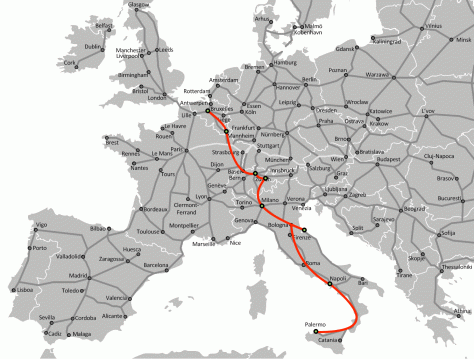
From South to North

At the very least, it looks like a straight line. (Damn you San Marino!)
This is probably one of the more sensible-looking travel routes I’ve ever devised.

As mentioned in my previous post, I’m once again taking time off from local affairs this September and heading for less familiar climes. Moreover, so as not to break with tradition, I’m not just travelling to, I’m travelling through. Hitting all sorts of nations and cities that I’ve never been to before.

This excursion feels a little different from previous years though. This time there’s no strong theme, as there was in my Eastern European journey last year, or my exploration of Greece the year before. Instead, there’s just a direction: south to north, from the Mediterranean to the North Sea. Or as close to the North Sea as I can manage. If there’s a binding theme at all, it’s one of filling gaps in my collection of nations; visiting places that I haven’t been to, or even near to.

As I said, it feels a little off-kilter, as though the series of mostly train-based journeys that I’ve been on since Norway, back in 2009, is coming to an end. The two or three further European trips that are percolating in my head don’t suit train-based shenanigans nearly as well, and the continents further afield that await my bootprints are even less amenable to sticking to the iron rails.

It may just be time for me to stretch my conception of what a travelling holiday might be. No bad thing that—I’ve gotten a lot out of rail (and sea) travel, but this holiday will stretch the balance between exploring and watching the landscape speed by about as far as it’s likely to go.

As for this trip, there’ll be plenty to keep myself occupied (and not just making sure that I catch the next connection). I’ll be kicking off in Italy, which is familiar enough in itself, albeit in a part of it that I’ve never been to before: Palermo, Sicily. An island that’s been the site of contention ever since the Greeks and the Phoenicians first started looking crosswise at each other, it’s a long way south of any part of Italy (Rome) that I’ve been in before, and it’ll feed my lust for history nicely.

An overnight train (the only one of this trip) will take me across Sicily and the Straits of Messina (loading the train onto a boat in the process, which I’ll likely sleep through) and on through the night to Naples. Which is worthy of a visit in itself, even if it weren’t for the presence of Vesuvius and the ruins of Pompeii in close attendance. I won’t miss out on those, I can assure you. It’s no accident that the overnight train will drop me off beside the Circumvesuviana line to the ruins at a time when the tour groups have yet to have their breakfast. Should I be able to drag myself away from this long-awaited visit to the preserved ruins of ancient Rome, I’ll see as much of Naples as I can in the time remaining.

Onwards then from Naples and one of the more awkward routes of the trip. North through and past Rome to Bologna, then an almost-180-degree reversal to head south east to the Adriatic coast and Rimini. Why stop here? Well, Rimini itself and the nearby beaches are said to be well worth the visit, but that’s less my style than the small nation-state only a short bus ride away. San Marino has been happily independent for a very long time, and for all that it’s tiny in comparison to the Italian nation that enfolds it, it should be well worth a visit in its own right.

After Rimini and San Marino have had their fill of me, it’s north again, this time to Milan. I came close here last year with a layover in nearby Bergamo, but Milan is the big dog of northern Italian cities, nestled in under the Alps, and it should be interesting to compare it to the more southerly Italian locations that I’ll have passed through to get there. However, for the most part it’s a breathing space before tackling the mountains.

If any day is going to mark my complete over-commitment to the rail theme, this one will. Three nations, three trains (and a bus), and as many mountains as you may care to shake a stick at. From Milan to Tirano, there to catch the Bernina Express that’ll see me safely over the Alps, through some of the most fabulous scenery to be had in Europe. That will deposit me in Chur in Switzerland, from whence a train to Sargans and a bus to Vaduz will drop me in a nation almost as small as San Marino: Liechtenstein.

This is where the nature of the trip and the problems with it ought to become apparent: I’m on a one-way trip to Checklist-ville. Last year I visited ten countries, but I had just over three weeks in which to do so, which meant I averaged out at around two days in each. This time, I’ve got a little less than 12 days to cross Europe from south to north, and in way too many places I’ll be there no longer than it takes to have a look around. At least in Liechtenstein, where an afternoon stroll is enough to take you across the country from west to east, I’ll see a good percentage of it before I go.

Switzerland’s efficient public transport system will shuttle me back from Vaduz, across the border and on to Zurich. Given that my major Swiss influences extend to Heidi, William Tell and one of the Asterix books, it’s fair to say that I have little or no idea of what to expect here. However it turns out, given that Switzerland is one of the world’s most heavily armed countries, I will at least be on my very best behaviour.

From Zurich, it’s all downhill on the home stretch of this trip. Specifically downhill towards Mulhouse in France on a TGV, then onwards to my next destination, Europe’s biggest mini-nation. Luxembourg is a giant compared to San Marino or Liechtenstein, even if it’s trapped between France, Belgium and Germany, and it’s been at the heart of the European Union ever since its founding. I have been told by someone who ought to know that there’s nothing there to see there, but I feel that in these dark times of Brexit and Grexit, it’s probably sensible to visit the beating heart of the Euro Illuminati and make sure that I’m not on their “naughty” list.

After all, Luxembourg is just three hours on the train from my very final stop, which is the even more EU-centric capital of Belgium—Brussels. A place I’ve become all too familiar with over the past year and a bit, and there’s no more friendly or relaxed city to spend a last evening in before a late night flight back to Dublin. I’ll do my best to take a day-trip out to the North Sea before I leave, but the allure of beer and waffles may prove too strong.

For now though, I’m just engaged in pre-packing routines, printing out my train tickets (e-tickets are great, but it pays to have a backup), and double-checking everything else. Inevitably I’m going to forget something, as is always the way of holidays, but with all the travelling to be done, it’s not likely to be anything that I’ll miss much.

Eastern Europe Odyssey: Roundup

It's painful to resist on Ryanair in particular.
Long-legged though I may be, it’s hard to resist a window seat.

So, I’ve been back home for a few days, and after a lot of running around, I’ve finally gotten settled, enough so that I can sit down and think about the journey that I’ve just been on. I’ve been taking trips like this for a little while. What’s changed, what hasn’t, and what have I learned for the future?

Timing: This was probably the tightest trip in terms of timing since I was in Norway five years ago. With ten countries fitted into just over three weeks, some cities got no more than a single night at the expense of places like Berlin that got three. It wasn’t perfectly organised, and a fumble in miscounting the days meant that I ended up missing out Sofia altogether. Still, I quite liked the rhythm of having two days in a place: one to see the city itself, and one for a day trip to somewhere nearby. In some places where I stayed longer, time dragged a little more. That might be something to remember for the future. (Bear in mind, that I’ve developed a dislike of sitting still in recent years. My pace of solo travel might not suit everyone else.)

Rail is the Way: I still love rail travel, and for this trip it took me all around Europe, with only two deviations – the boat trip down the Danube from Vienna to Bratislava and the bus trip from Sofia to Veliko Tarnovo. The most expensive tickets were those in Poland and Germany, which I booked in advance, whereas the trips I took as I went further south and east were cheaper and usually booked at the station. There usually weren’t any problems finding space on overnight trains, and you get to meet all sorts of interesting people when you’re sharing a compartment. Though travellers at the peak of the high season would probably find things a little trickier than I did.

Luggage: I think I shaved things close to as minimal as I could on this trip, toting a medium-sized backpack instead of a full-sized rucksack. As it was, I needed to add a shoulder bag that allowed me to keep some daily essentials with me when I left the main bag behind for a few hours. Over the course of the whole trip, I only needed a single laundry day to keep me in clean clothes, so things went well on that front. The lack of luggage space did mean that I was restricted in bringing things back, but my usual collection of fridge magnets fitted nicely.

Accommodation: As in my last trip to Greece, I mixed B&Bs, hotels and hostels, booking them a day or two in advance on my phone. Again, it all worked out well, and the variety was one of the high points of the trip. Hostels are great for meeting people and having a space to chill out, whereas B&Bs and hotels can be cosier and offer some respite for your humble introvert and a decent shower. The last place I stayed in, the Hotel Cosmos in Chisinau, Moldova, was a former Soviet tower that had only patchily been updated to modern standards – just enough to be comfortable while keeping that weirdly appealing ’80s vibe of the original building.

Technology:  Once again, I relied on my iPhone alone. This worked as well as it did in Greece, if not better. Wifi has become completely ubiquitous – even in Moldova I never had any problem finding a place with a signal. This has both good and bad sides: booking accommodation remained easy, and TripAdvisor kept me informed about things worth seeing locally, but there’s no longer a lack of internet to provide a crutch to enable disconnection, if that’s what you’re looking for. You’ll have to rely on willpower alone, or escape to the sticks. Battery life can be an issue, albeit one that can be alleviated with planning. My external battery pack worked nicely, though I couldn’t charge it and the phone at the same time – a dual-port USB adapter might complete the travel kit.

Footwear: I might just have got the balance on this one right this time. I’ve always preferred a sturdy pair of shoes that you can wear both in the city and on the trail over a pair of boots that are only suited to the wilderness. Previously, I’d brought some flip-flops for sunnier weather but found them neither comfortable nor very useful. So this time I picked up a pair of sturdy sandals, which proved a fine backup for the shoes. And no, I didn’t wear them with socks (though if it was cold enough, I probably would).

History: I love digging into the history of places, which usually means museums, but most cities also express their history through their culture and architecture. Bucharest in Romania, with its wealth of gorgeous architecture, is completely different from Chisinau, capital of the neighbouring Moldova, which is Soviet almost everywhere you look. Yet both nations share a culture, and their histories and future are tied as tightly together as those of Ireland and Britain. To travel through so many different nations is to get a real feel of how the changing fortunes of history have affected them all in different ways. Common elements abound, like World War II and the Holocaust, but Serbia has its own experience of history both recent and distant, completely different from those of a nation like Poland. One frustration for me was the language support in museums – it got tougher to find English-language offerings the further south and east I went.

Travel Guides: Phone apps versus traditional books is the choice here. I managed to get an Eastern Europe Lonely Planet book that covered all my stops except Berlin and Vienna, but it had the twin problems of being bulky and a couple of years old. In the other corner, TripAdvisor allowed me to download city guides for major cities, but these had fairly basic navigation functions and didn’t cover minor destinations, such as Chisinau and Veliko Tarnovo. So neither option is perfect yet, though paper’s bulk and the fact that apps are updated suggests that a little more work on finding the best option on the latter front could be well worth it.

Exploration vs Checklist: The one big issue with this trip was that in fitting so many different destinations into only three weeks, there was a danger of turning it into a process of ticking boxes. Most of the cities I went to were capitals, and in many cases I didn’t have time to explore beyond the city limits. Still, there are always going to be limits to any holiday – you can never get to truly experience a place without living there. As long as I’m okay with missing out on some things, there’s nothing wrong with this way of travelling. And, as mentioned above, the two-day rhythm of city and day trip turned out to be a pretty good one.

Future Trips: My next holiday might not be in Europe, but I’ll be doing this again at some stage. Three holidays in particular suggest themselves – a European Fringe Tour from Finland south through the Baltic states and Belarus to Ukraine, a Balkans Tour starting in Venice and ending in Albania, and a Statelets Tour covering as many of the minor states and principalities as I can hit. If I can do all three of those, the only European nation I won’t have been to is Cyprus. And a weekend away in the sun should cover that. Checklisting, maybe, but as an excuse to dust off my travel shoes, it’s proved a pretty handy one to date.

Bergamo: Italian Addendum

Not that I had a choice, mind you. The stairs were out.
I’d say the climb was worth it, but I used the lift.

The vagaries of modern-day cut-price flying being what they are, you will, on occasion, find yourself with hours to waste on a layover in some spot halfway between a distant departure point and home. That being the case, there are probably worse places to spend said hours in than Italy, and more specifically Bergamo. Having been dropped off by WizzAir (comfy and punctual) and having 13 hours before hopping onboard Ryanair (cramped and delayed), I was pretty happy to be no more than a short bus ride away from the medieval Citta Alta, with its massive walls and narrow streets.

Not that the Citta Alta is the highest place in the vicinity. It occupies a high point south of the Alps, overlooking the plains of Lombardy, but San Vigilo Castle stands guard from an ever higher point just to the west. There’s not much there to be seen now, but the views are quite spectacular, even on a misty day. If you’re not inclined to explore and climb your way to the top, there’s a funicular railway that’ll take you to the heights, but you’ll miss out on cobbled streets and horse chestnuts that pop and drop around you as you pass beneath. (That last one might be time-of-year dependent.)

I still don't know what the testicle heraldry is about. Also, three?
Chapel Colleoni in the foreground, basilica in the back. Inside there’s less to choose between them.

As pleasant as it is to sit in San Vigilo and enjoy the view, the Citta Alta is the main draw, and it’s worth your time to descend. Possessed by the Venetians for more than 350 years, Bergamo was their western outpost against the rival great Northern Italian power and was massively fortified as a result. The Venetian walls still surround the Citta Alta, and the winged lions of St Mark, symbol of the Venetian Republic, still stand guard over the fortified gates. Yet Bergamo itself is far older than the Venetian occupation and there are buildings in the Citta Alta that are closer to 1,000 years old than 500.

Perhaps the most impressive is the Basilica di Santa Maria Maggiore. Dating to 1137 but built on the site of a 7th-century religious edifice, it’s not so imposing on the outside as the Cappella Colleoni, the massive tomb of the condottiere Bartolomeo Colleoni annexed to it, but the interior is spectacular, with tapestries and frescoes adorning that walls and further frescoes and other adornments stretching all the way to the roof. Not that the Cappella Colleoni should be missed either – it’s a masterwork in its own right, and Colleoni’s heraldic symbol of three testicles on the gates have been rubbed to a shine by tourists and locals seeking some of his luck.

A brief visit, a fond farewell.
One of the Venetian “lion gates”, with an elevated walkway approaching it.

The museums are nothing to sneeze at either – I didn’t make it to the art galleries lying outside the eastern gate, but the Piazza della Citadella contains both the Archaeological Museum and the Museum of Natural Science. The former has some fine relics of the millennia of habitation in the area, from the palaeolithic through the Celts and Romans to more recent times. The latter sprawls all around the piazza and has an impressive section on other cultures. Closer to the Basilica, the Torre campanaria di città alta or old bell tower is worth climbing, and its attached museum has a fine interactive section on the medieval history of Bergamo itself. Don’t expect much in the way of non-Italian language help though.

Beyond all of the attractions though, the beauty of Bergamo lies in the ability to wander the narrow streets of the Citta Alta freely, medieval buildings towering to either side and cobbles packed tight under your feet. Enjoy a gelato, or perhaps a beer or wine, and find a place to sit and soak in the atmosphere. And then, when the hours have spun past at last, descend though one of the Venetian gates into the Citta bassa and make your way to the airport. The final flight on that cut-price carrier may depress your spirits, but it won’t erase those hours stolen in the Lombard sunshine.

Chisinau: A Sort of Homecoming


Though I wouldn't ask him for the loan of a fiver.
A friendly face to welcome you to the National Museum.
 
Familiarities abound in Moldova. A small, agriculturally blessed nation, dominated by larger neighbours and currently wracked by a banking crisis that has revealed cronyism and corruption in the highest levels of business and government? It’s like I’ve returned to Ireland three days early. Add to that my overnight arrival in a former Trans-Siberian carriage, and there were multiple layers of déjà-vu to be had.

To be sure, Moldova’s situation is a lot more perilous than Ireland’s. If there was a boom here before the current crisis, it didn’t reach very far beyond the capital, and not even that far within it. And given the choice between Romania and Russia or the U.K. and the EU as dominant neighbours, I know which ones I’d opt for. (Though maybe swapping Romania for the U.K. wouldn’t be too bad. Can we arrange that?)


Though calling it a restaurant is a bit of a stretch.
The decor outside my hotel’s restaurant.
 
Chisinau, the capital, was more or less levelled in World War II, so Soviet Grim is the main flavour of architecture on offer, enlivened here and there by the neon, glass and advertising hoardings of late-arriving capitalism. Day to day life continues in the face of an economic straitjacket, but streetside second-hand clothing markets and museums that turn the lights on when you enter a room and off when you leave are evidence of a national frugality that’s as much a necessity as it is innate.

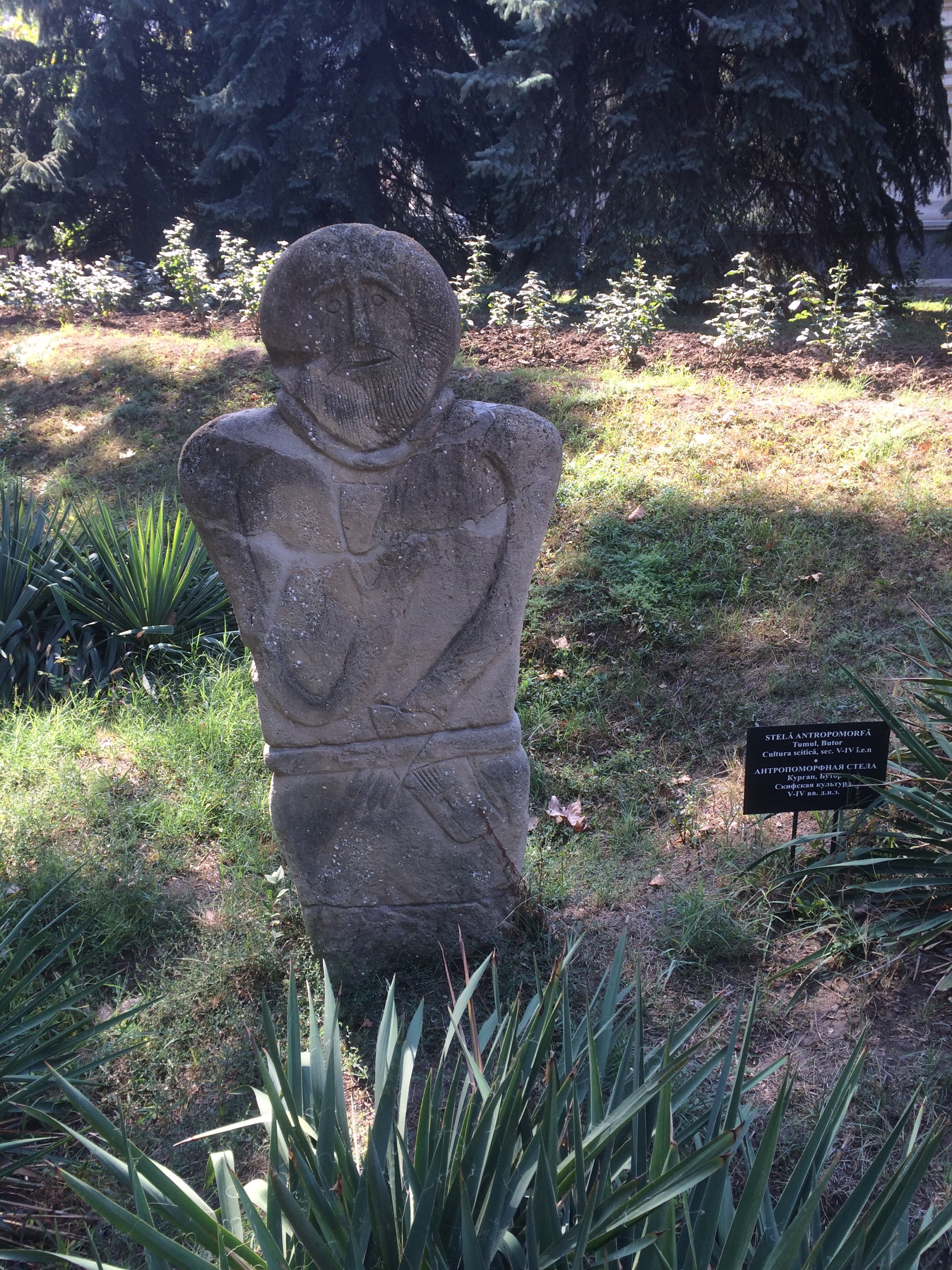
Outside Chisinau, there are rolling hills of grain and grapes – this is another land between two rivers, the Prut and the Dniester, and it’s just as fertile as the first Mesopotamia. That very richness, along with its position to the north of the Black Sea, has meant that armies have rolled back and forth across it since time immemorial: from the Scythians, Sarmatians, and Dacians all the way to the Ottomans, Nazis, and Russians. The Romans never made it so far, but their trade goods did, as museum finds show.


Also more sun than was really good for me.
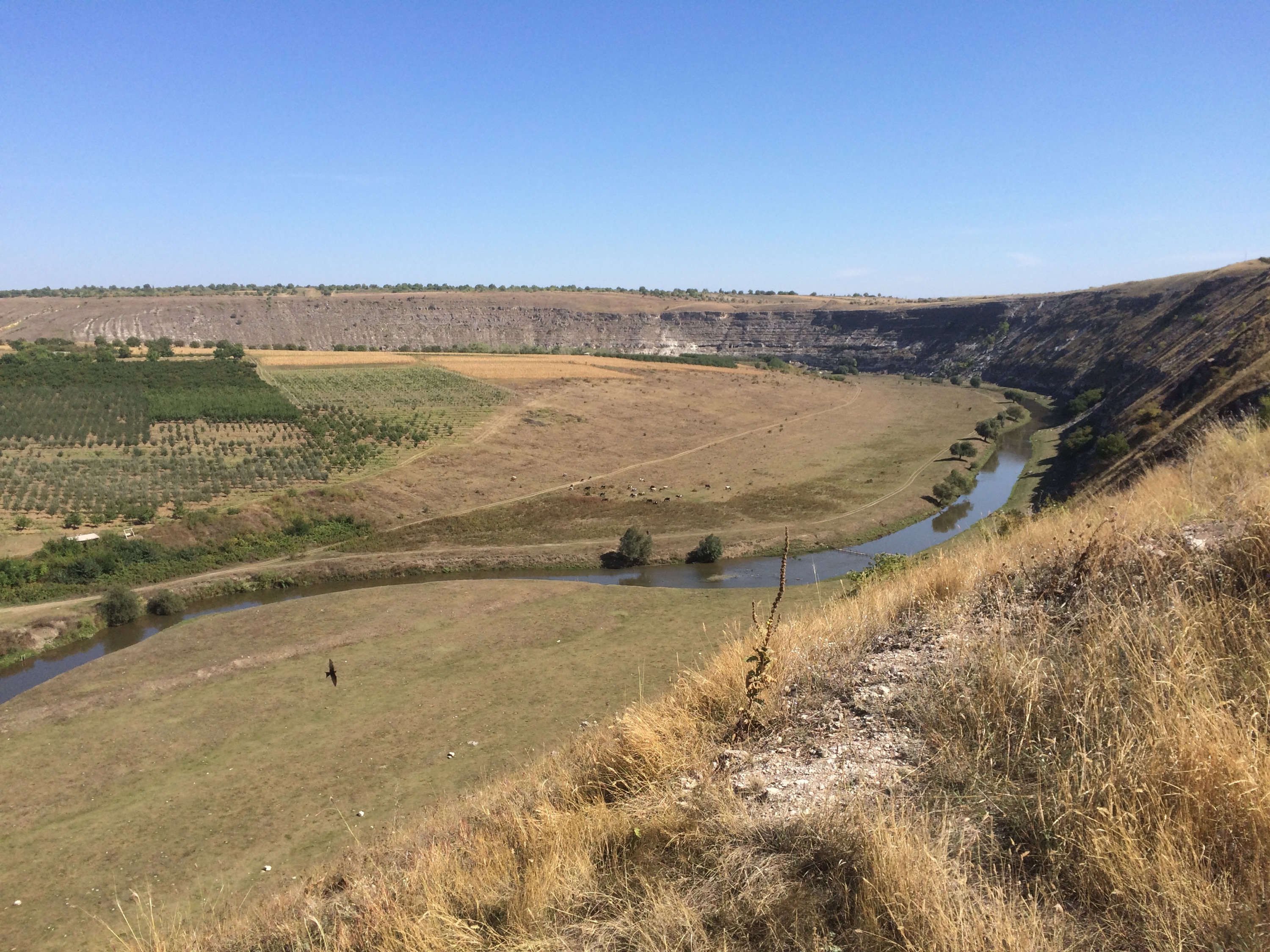
The valley of Orheiul Vechi – a long walk either above or below.
 
The Russians are still here, in fact. Physically in the breakaway Transdniestr region, but in spirit elsewhere. Decades of Soviet rule is a hard thing to throw off, and while Moldova mostly looks to the west and Romania these days, Russia can be seen everywhere you look. In my hotel as much as anywhere – a former Soviet edifice, it had enjoyed a facelift in places, but the phones, lifts and food were recognisable from my time on the Trans-Siberian. I’ve already mentioned the Trans-Siberian retiree rail carriage that brought me into the country, on which the bedding for the overnight berths may well have survived the fall of the Berlin Wall, but there was yet more: the Military History Museum was more of a Soviet Military Surplus Museum, with a garden full of artillery and armoured transports.

I was here too briefly to get a good feel for the country, but I did manage to visit Orheiul Vechi, a bowl-shaped valley enclosing a winding river, where monks long ago carved out dwelling places for themselves from the limestone cliffs. The caves are spectacular, once the wedding parties that sometimes use them clear out, but the view from the rim of the valley is even more so. From here you can see many of the things that signify Moldova: agricultural riches, the remnants of ancient and overrun fortifications, quiet villages with working wells, and a monastery on a hilltop. Visiting there meant that I missed the Milesti Minci wine cellars (housed in miles of limestone caverns), but it proved a perfect counterpoint to Chisinau.

Unusually, I’m writing this while I’m still in the country, on a bus heading for the airport. A long flight awaits, with a half-day layover in Bergamo, Italy (from where I post this). So ahead of that, thank you to those who’ve been following this travelogue, and I’ll be back with a summary article some time soon.

Bucharest: Sum of Many Parts


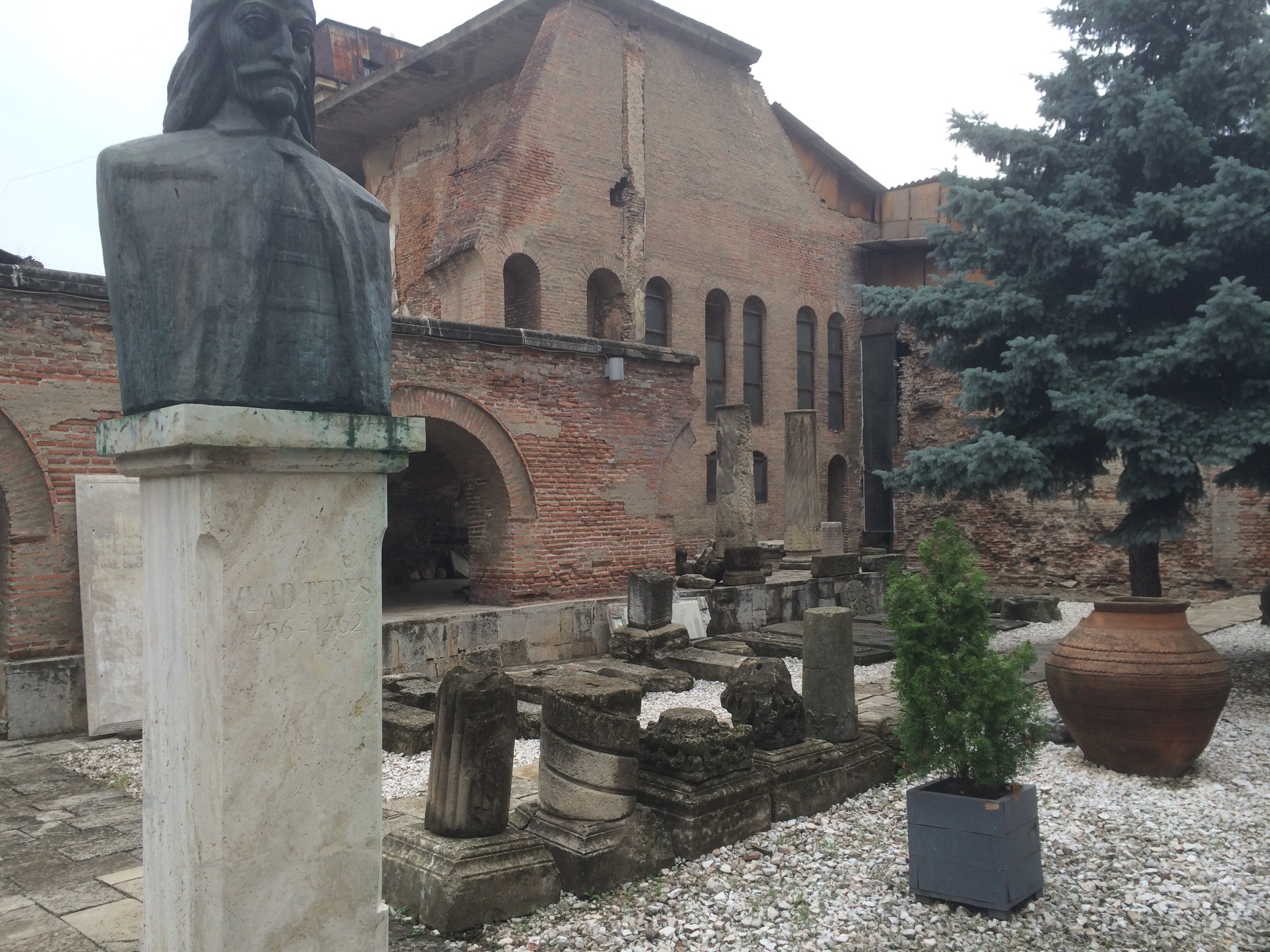
But he has little to do with Bucharest. Go north for more on him.
The obvious suspect: Vlad Tepes and his palace.
 
Romania feels like something of an outlier. In the midst of countries with Slavic languages, written in Cyrillic script, its Romance language owes more to French and uses the Latin alphabet. This oddness is a little difficult to explain, even at a historical stretch: the province of Dacia, lying beyond the Danube, was one of the longest-lasting conquests of Trajan, Rome’s greatest military emperor, and for some reason that association has stuck, for all that Rome and its successor states vanished long ago.

What is immediately obvious as you walk around Bucharest is that the Soviet era was a dreadful wrong turn for the city. There are many examples of absolutely gorgeous architecture – western styles given native Romanian twists – that have spent the decades since World War II, when the Romanians were on the side of the Axis, elegantly crumbling. As they crumbled, massive Soviet edifices sprang up, some of them featureless and uninspiring, others blank copies of Parisian grandeur, such as the monumental Parliamentary Palace, the second-largest administrative building in the world after the Pentagon.


Though for my money, thr Vittorio Emanuel monument in Rome is still more of an eyesore.
Photos can’t capture just how huge and out of place this is.
 
Nicolae Ceacescu’s dictatorship attempted to turn Bucharest into a metropolis and only managed to gather far too many people together, turning a city that had shown signs of becoming the Paris of Eastern Europe into a sprawling space that you could spend all day trekking around. There’s so much to see here and so much to fall for, but the omnipresent feeling that it’s still trying to recover from Ceaucescu and the economic turmoil that followed his ouster and execution.

Escaping isn’t all that hard though, and it proves well worth it. Less than two hours on the train brings you to the foothills of the Carpathians and the town of Sinaia, where the Romanian king Carol I once held court at Peles Castle. Navigate through the tour groups that cram every corridor and you’ll find a mix of German, Italian and Romanian decor to enjoy, as well as rooms as richly appointed as any to be found in Europe. Though given the amount of love lavished on this one building created for the benefit of a single family, the extravagances of royalty become a little harder to support.


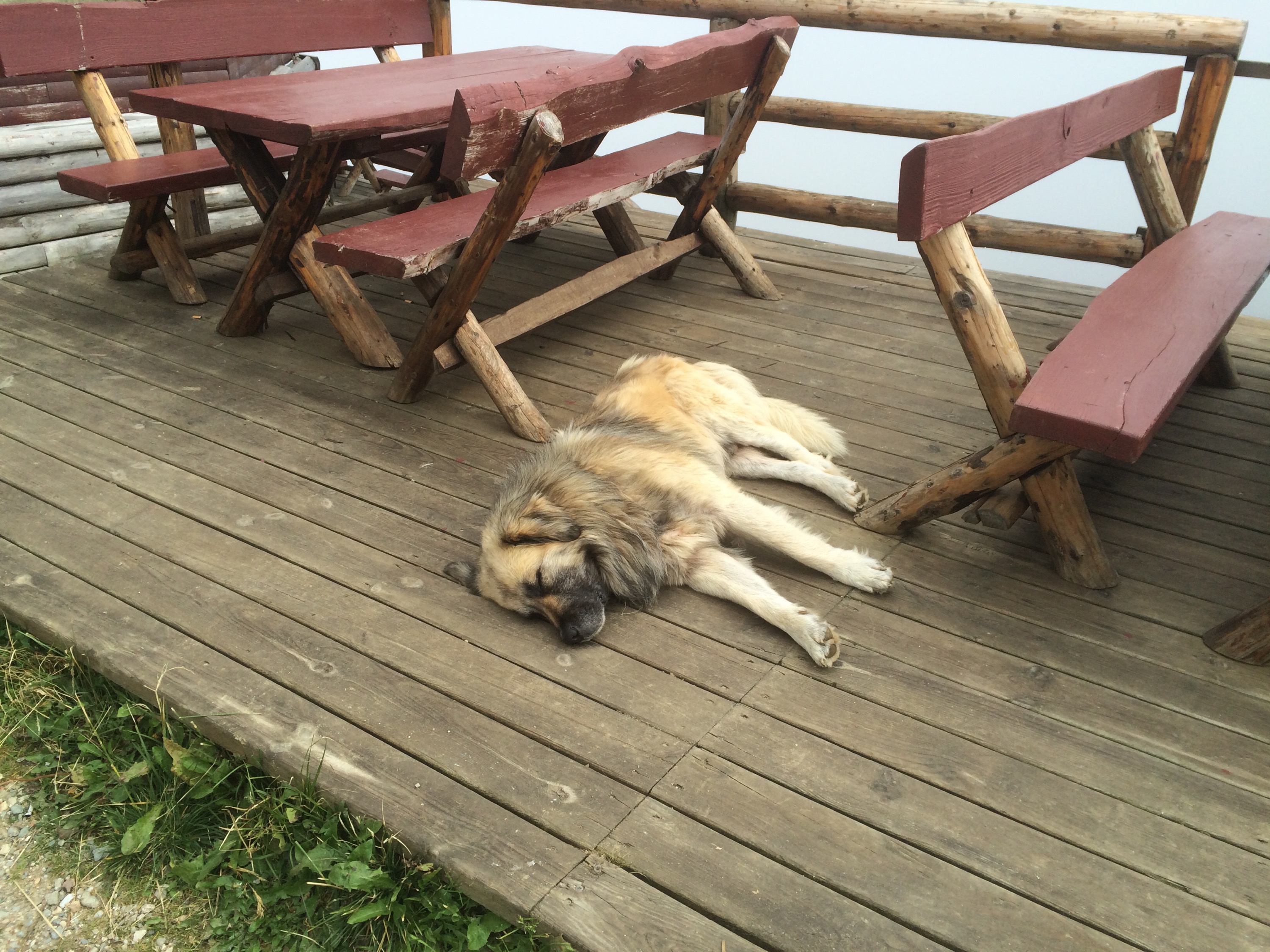
Assuming the lazy sod could rouse itself enough to rescue anyone.
Huge fuzzy dogs – much needed on mountains.
 
Thankfully, Sinaia offers one of the best ways to escape: a cable car gondola to 2,000m up in the mountains above. There, if the cloud cover is kind, you’ll be able to view the valley below and others as well, and get an idea of how it all fits together. And if the cloud cover isn’t kind, you’ll at least have massive dozing mastiffs and sheepskin wraps to keep you warm while you sip your hot chocolate.

But Bucharest on the Danube plain remains the draw and the hope of the nation. Crumbling that old architecture may be (and the city’s Old Town is tacky enough to outdo Dublin’s Temple Bar), but there are signs aplenty of a desire to preserve just what made the city special and to incorporate it into the new spaces springing up as those Soviet monuments crumble in their turn. Should the future be kind to Romania, and it navigate the space between Russia and the EU with care, there could yet be a golden age here, and this lovely city be even more worth visiting than it already is.

Veliko Tārnovo: Ancient and Mighty


I miss Terry Pratchett.
There’s a lot of flat ground in Veliko Tarnovo: most of it vertical.
 
I had planned to spend more time in Bulgaria, but things didn’t work out that way. A combination of a delayed train from Belgrade, some awful weather and a miscalculation on my part meant that I had to miss out Sofia entirely. Instead, courtesy of an overly helpful train station attendant, I ended up jumping on a bus that took me straight to the ancient Bulgarian capital of Veliko Tărnovo, through mist-shrouded mountains and broad valleys to an ancient place of power. I’d rather have taken the train, but given that I found out next day that the local train station was kaput, this was clearly a good idea.

Not that things got any easier once I got to Veliko Tărnovo. If it reminds me of anywhere, it’s Delphi in Greece. Both towns are packed tightly onto a mountainside, using steps as much as streets to facilitate movement. Yet whereas Delphi was meant as a destination, a special place that pilgrims had to trek to reach, Veliko Tărnovo was meant as a defensive bastion, an impregnable fortress, defended by walls, rivers and high cliffs.


...not far from the
The old royal palace at Veliko Tarnovo
 
As culmination of my fortress-hopping on this trip go, I couldn’t have asked for more than Tsarevets Fortress. Occupying an entire bend of the local river and accessible only via a narrow bridge that still hosts a gatehouse with an impressively spiky portcullis, it’s a commanding sight, even if most of it has now decayed and crumbled. The parts of it that have been restored – the church on the highest peak and several of the outer towers – show just how imposing it must have been. It helps that one of the towers has been left stocked with (nailed down) arms and armour, so you can see how the Bulgar guards in medieval times would have been able to do their duty.

I don’t really have too much to say about the Bulgarian people, sadly, due to my limited time here, other than that they seem as friendly as any I’ve come across. Though something that is notable about Veliko Tărnovo is its cats. They’re everywhere and they’re tiny – I thought the first one I saw was a kitten, but no, they were all that size, and when I sat down to dinner that evening, there were a host of them in attendance, first yowling for scraps and later just sitting under my chair, making themselves comfortable.


On the bright side, it was easy to walk/swim downhill.
I left town along with several thousand gallons of water.
 
I suppose that a place like Veliko Tărnovo, where the ground is as much vertical as it is horizontal, is better suited to cats than to humans. Whereas we trudge up and down or get into cars barely small enough to navigate narrow and winding streets, they can scamper this way and that, find places in the sun to rest, and disappear out of sight whenever they choose. They certainly seemed to have the run of the place – the few dogs that I saw were a cowed and defeated lot.

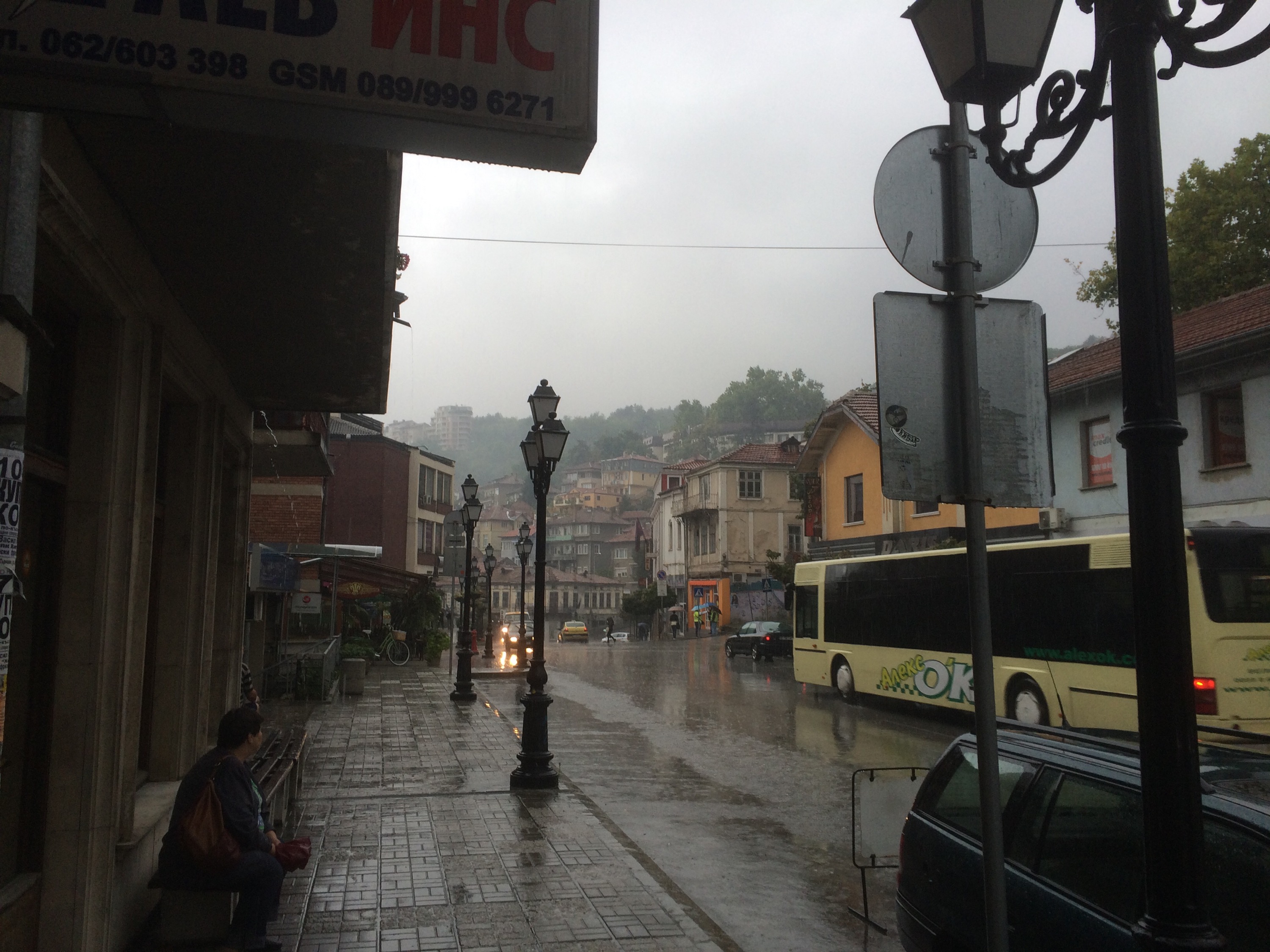
However, the cats couldn’t have been any happier than I was with the weather on the morning of my last day. It was pouring in a way I hadn’t seen at all on this trip, and it didn’t look inclined to let up. I was even driven so far as to have to purchase an umbrella. The rain certainly accented the Soviet tinges of the town – the gloomy ticket office where I got a train ticket for the connection at Gorno and the Gallery where I spent half an hour in the half-light perusing some weird and evocative Bulgarian art. (Eventually someone remembered to turn on the lights, which came to life with a sound like a flock of birds taking off.) Eventually though, I was washed downhill to the closed-for-repairs train station, where I was able to get a bus to Gorno. And as I write this, I’m on a train to Bucharest, awaiting the Danube and my next nation: Romania.

Belgrade: Frontier Town


Built by the Ottomans, who were fond of hangong people from it.
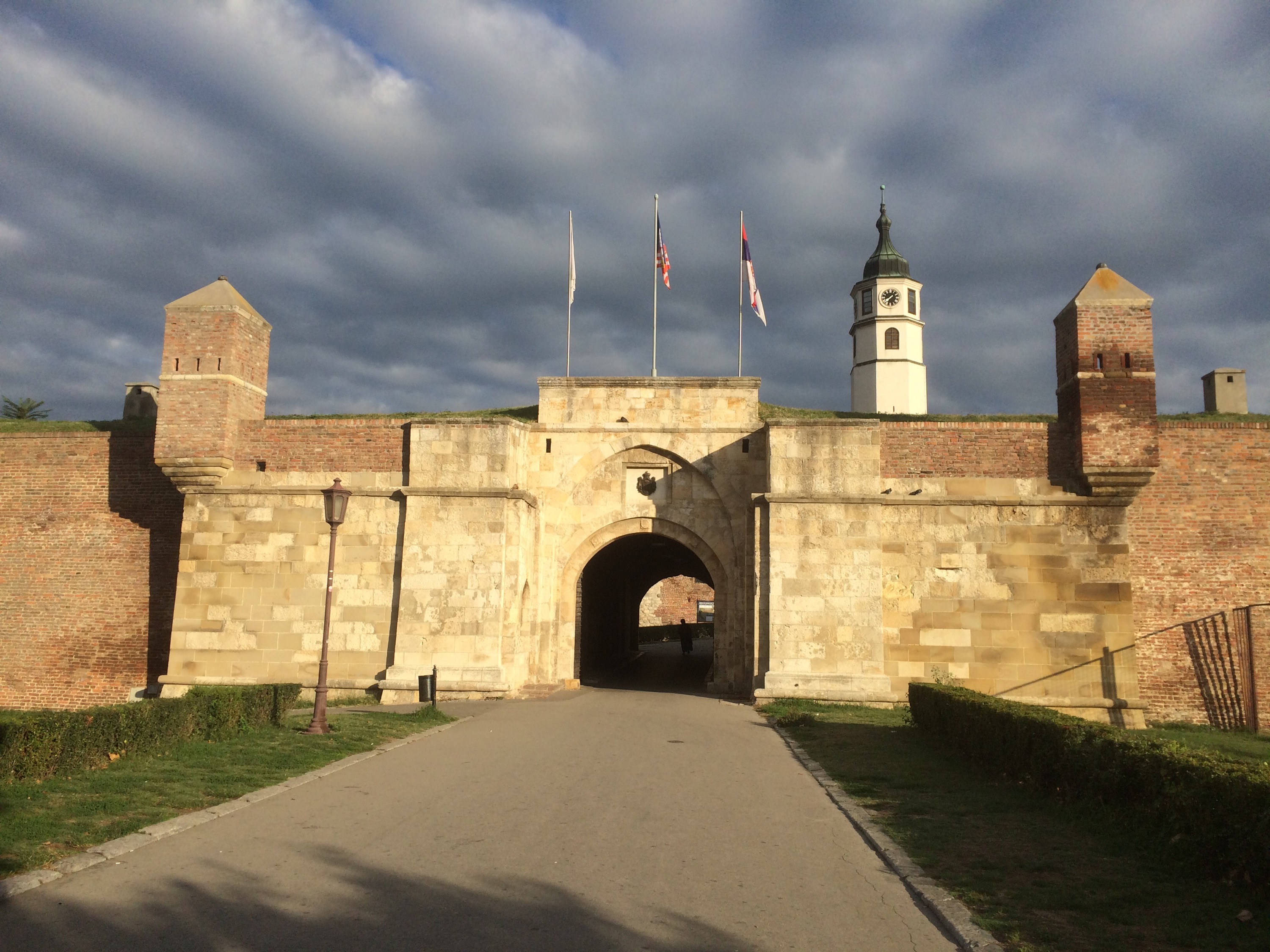
The Stamboul Gate at Kalemegdan
 
There’s something a touch wild about Belgrade. The mighty Kalemegdan Fortress perches on a rock overlooking the place where the Danube meets the Sava River. Much occupied and much conquered, it has seen Celts, Thracians, Illyrians, Romans, Avars, Byzantines, Slavs and Ottmans come and go over the years. In all of Europe there may be places more fought-over, but none so recent: the Ministry of Defence building still stands ruined, destroyed by NATO bombs in the 1990s.

Kalemegdan is just the most visible sign of this frontier mentality. For Romans, the Danube was the dividing line between the civilised world and the barbarian sphere, from whence strange tribes would occasionally emerge to threaten and then perhaps join with Rome. With nomadism as a way of life now mostly disappeared, that doesn’t seem to happen as much any more, but there are still forces that will lead people to travel vast distances: I saw more refugees in Belgrade than I did in Budapest, clustered around the train and bus stations.
 

One of the towers that isnt leaning like a drunk.
The Danube as seen from Smederevo’s Corner Tower
 
When the Danube was both frontier and highway, controlling it was vital. Kalemegdan played a part in that, but the even larger (if less well preserved) Smederevo Fortress a few miles down the road served the same purpose. It’s unusual among the fortifications that I’ve seen in this part of the world in that it’s not built on a hill but instead on the banks of the Danube itself. This lack of a solid rock foundation may explain why some of its walls and towers tilt alarmingly far from the vertical – the forces of time and tide tear down everything that is built sooner or later.

Back in Kalemegdan though, the Museum of Military History offers a fine collection of tanks and artillery outside (packed into the fort’s defensive ditches alongside tennis and basketball courts) and a potted history of Serbia’s story told through war. Very little of what is told is set out in English, but the multiple maps of the area with arrows heading this way and that make it quite clear: armies have been marching hither and thither across Serbia for as long as records have been kept.
 

Looks like a gathering of steampunk jedi.
Not every frontier in Serbia is war-related. Fun and games at the Tesla Museum.
 
Upstairs in the museum, things get more interesting, as the story turns to World War II, Yugoslavia and Tito. Serbia, of course, was once at the heart of Yugoslavia, back when the map of Eastern Europe looked a lot simpler than it does now. As with the rest of Eastern Europe, Yugoslavia fell under the Soviet Sphere of influence, but it forged a path of its own under the guidance of Josep Broz Tito.

I don’t know enough about the man to judge him, but he’s obviously still revered in these parts, and what I do know is fascinating. Famously, after he’d fallen out with Stalin, he endured several assassination attempts before sending a tetchy message: “Stop sending assassins. I’ve already caught three. If you don’t stop, I’ll send one myself and I won’t have to send another.” True or not, it’s become part of the national folklore, and the museum, especially in the latter half, builds to the reveal of a shrine to Tito.

There’s an addendum, of course. Those NATO airstrikes still rankle, and the museum makes clear whom it thinks the aggressors were, mapping the countries to blame right beside the fragments of an F-117 stealth fighter-bomber shot down over Serbia. Wars become history just as quickly here as they do anywhere else.

Budapest: Roamin’ Ruins

On the inside it feels surprisingly modern.
Not ruined, but Roman.

Okay, so it’s a misleading title. But I can’t resist the occasional bit of wordplay. Travel broadens the mind, after all, and many different kinds of whimsy can creep in there. 

Budpaest is an old city – or at least parts of it are. Most famously, it’s the combination of two cities, lying on either side of the Danube: sleepy Buda and buzzing Pest. So when my train finally pulled into Budapest-Keleti train station, it should come as no surprise that I opted to head to neither, instead aiming for the even older Obuda, north of Buda, built around the old Roman settlement of Aquincum.

So there you have ruins, along with the roamin’/Roman to justify the headline. For Aquincum is well worth a visit to anyone with an interest in Eternal Rome. It may not offer the snapshot of life as it was that Pompeii does, but a lot of effort has been made to depict the way of life in this Roman frontier town, just across the Danube from the seemingly endless stream of “barbarian” peoples whom Rome first absorbed and then gave way to.

Mostly worth a visit because it's clear you're not meant to.
Dank, unlit and smelling strongly of wee.

Buda has its own sights, of course, though I wouldn’t call either of the two main ones ruins. Castle Hill, occupied by Budapest Castle and the Matthias Church (named after the original Raven King) is worth exploring, though in the latter case at least, heavy reconstruction and redecoration work has left the place looking a little too fresh and tourist friendly. As always, it pays to poke around and explore every corner, to turn up surprised like an unlit corridor leading to a seemingly forgotten chamber beneath the earth.

South of Castle Hill stands Gellert Hill, a steeper and more taxing climb, albeit very much still worth it. For atop the hill stands the Citadella, an Austro-Hungarian fortification that was obsolete before it was finished, and the Liberty Monument, which stands as it did in Soviet times, albeit with all specific references to the Soviets removed. Brutally putting down rebellions wins few friends. The Citadella was closed by the time I got there, but that wasn’t much of a loss – the hill commands a view of the entire sweep of the Danube, laying all of Buda and Pest out before you.

One suspects Hungary of holding a grudge.
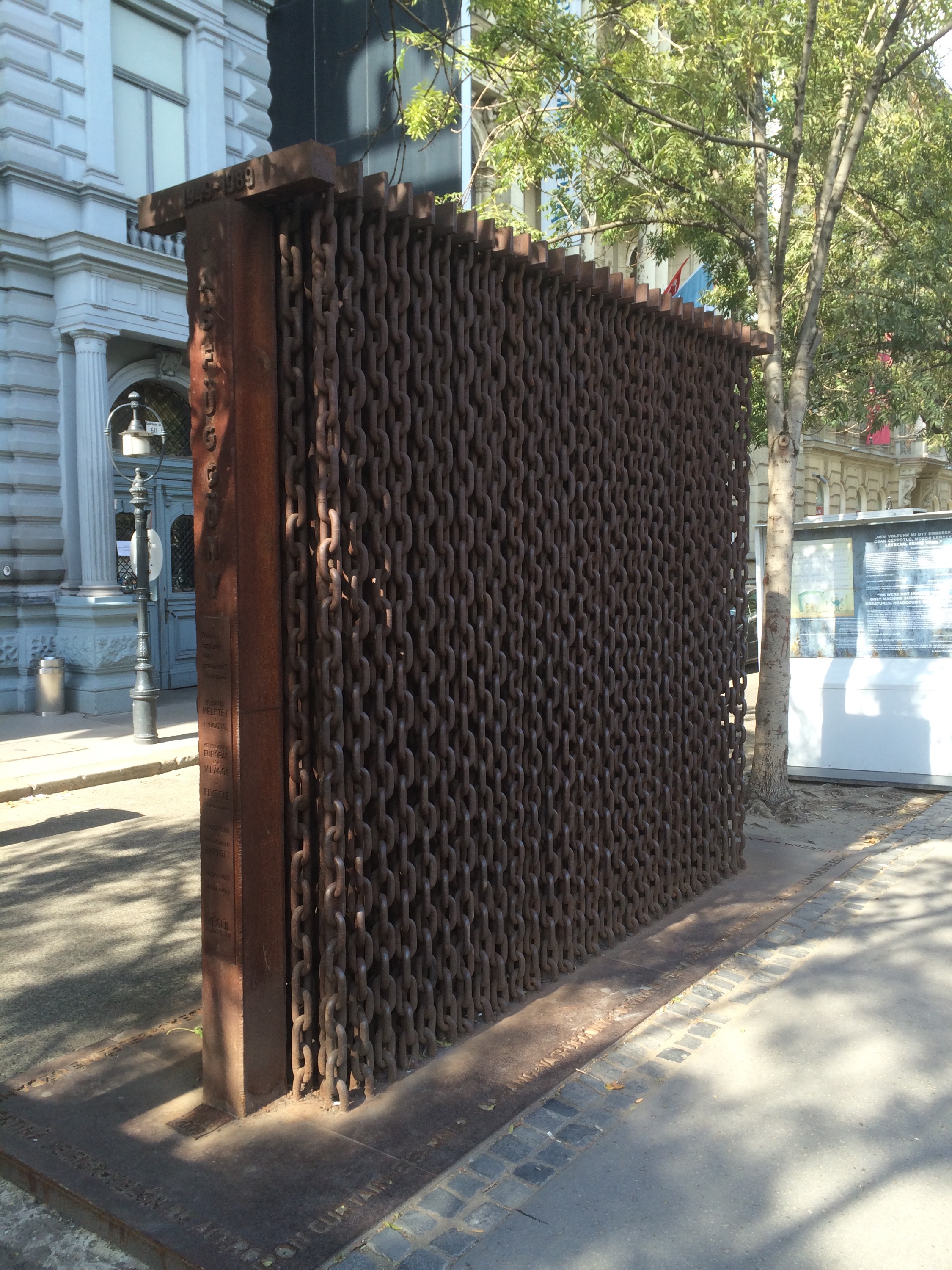
An Iron Curtain. Metaphors are for wusses.

If Buda and Obuda have laid claim to most of the history, Pest is left with the lion’s share of the life. History here is of the more recent type, and the life that’s to be found is of the natural-, human- and night- types. Natural life in the various parks and green spaces in Pest and neighbouring Margaret Island, human life on every street and especially in the huge Szechenyi Thermal Baths, which weren’t short of both tourist and local bodies on an otherwise quiet Monday. As for night life, I was usually too tired to check, but the activity around my hostel suggested there was plenty of it.

For all its divisions, Budapest seems to be a pretty unified city. It’s interesting to compare it to Vienna and Bratislava on the theme of identity: in comparison to the former’s comfort and the latter’s questing, Budapest was stuffed with reminders of a shared Magyar heritage, separate from influences both East and West. It felt a little like an effort from above to set the cultural narrative, which is always a tricky thing to do. And, as could be seen in the refugee tents still visible at Budapest-Keleti, of little benefit to anyone not fortunate enough to fall into the cultural group in question.

Bratislava: Can’t Hide It


I suspect that Soviet architects were either very imaginative or very bored.
Not actually Bratislava Castle. Wouldn’t it be awesome if it was though?
 
Just an hour and a half down the Danube from Vienna, Bratislava feels like it’s half a world away. The western imperial solidity of the latter city gives way to a mishmash of old and new, Soviet straight lines rubbing shoulders with of Austro-Hungarian fripperies and the first intrusions of modern glass and steel housing department stores with all-too familiar names.

All of this is crammed into one of the smaller cities that I’ve visited to date, and it makes it hard to get a grip on Bratislava or, by extension, Slovakia itself. A relatively young country, having split off from Czechoslovakia, it still seems to be figuring itself out, an adolescent nation more sure of what it’s not than what it is.


When you need to dig a well, you don't stop until you hit water.
85m deep, all the way down to the Danube.
 
That’s probably reading too much into my visit to the capital, which is in the western corner of the nation, but there are hints here and there.

Bratislava Castle, standing on a rocky peak that dominates the Danube, burned down in the 19th century and was restored in the Soviet era. It’s a restoration that left the interior feeling rather empty, albeit with fascinating nooks and crannies like the 85m-deep castle well and the Crown Tower. The exhibitions it houses help to express some sense of Slovak identity too. First on the efforts of Slovaks to seek autonomy under Austria-Hungary, but more importantly on the legacy of Great Moravia, a brief-lived post-Roman nation that dominated this part of Europe for a few generations until the arrival of the Magyars and the beginning of Hungary to the south. Forging a collective identity requires identifying a shared heritage.


Should have just gone for it and figured something out. Sigh
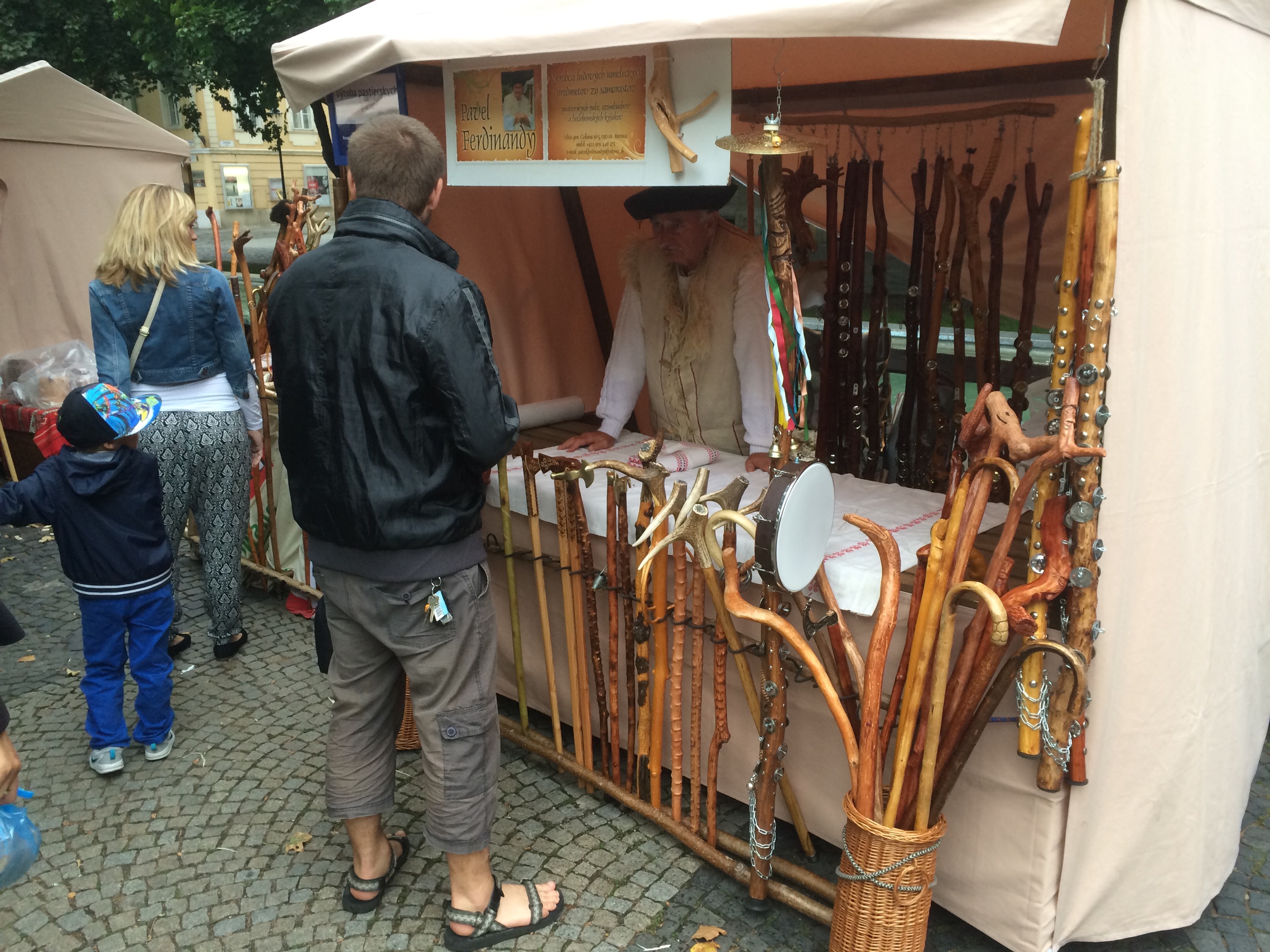
I really wanted one of these walking sticks but was afraid of having to leave it behind at the end of the trip.
 
Back down in the Old City, that identity was being worked out through what seemed to be a weekend of festivals and events. Traditional crafts and trades on display in a thronged main square, traditional dancers hammering the boards on a nearby stage, and Eco- and fitness-festivals further out. It’s probably an accident of the weekend that I was there, but it seemed that this wasn’t really for the sake of tourism. There was engagement and activity everywhere, and a vibrancy that reminded me of Berlin, albeit on a much smaller scale – filling in the gaps of a multipart history and turning it into something whole.

I stayed longer than planned in Bratislava, and I’m glad that I did. Of all the countries that I’ve hit on this trip so far, Slovakia is the one I’d most like to return to. There’s an openness about the people and something very fresh about the culture. And given that Bratislava makes up such a small part of one corner of the nation, there’s bound to be a great deal more to discover. Still, the railroad goes ever on, and I continue to follow it – next up, more Danubian encounters with Budapest and Hungary.