All posts by cerandor

Budapest: Roamin’ Ruins

On the inside it feels surprisingly modern.
Not ruined, but Roman.

Okay, so it’s a misleading title. But I can’t resist the occasional bit of wordplay. Travel broadens the mind, after all, and many different kinds of whimsy can creep in there. 

Budpaest is an old city – or at least parts of it are. Most famously, it’s the combination of two cities, lying on either side of the Danube: sleepy Buda and buzzing Pest. So when my train finally pulled into Budapest-Keleti train station, it should come as no surprise that I opted to head to neither, instead aiming for the even older Obuda, north of Buda, built around the old Roman settlement of Aquincum.

So there you have ruins, along with the roamin’/Roman to justify the headline. For Aquincum is well worth a visit to anyone with an interest in Eternal Rome. It may not offer the snapshot of life as it was that Pompeii does, but a lot of effort has been made to depict the way of life in this Roman frontier town, just across the Danube from the seemingly endless stream of “barbarian” peoples whom Rome first absorbed and then gave way to.

Mostly worth a visit because it's clear you're not meant to.
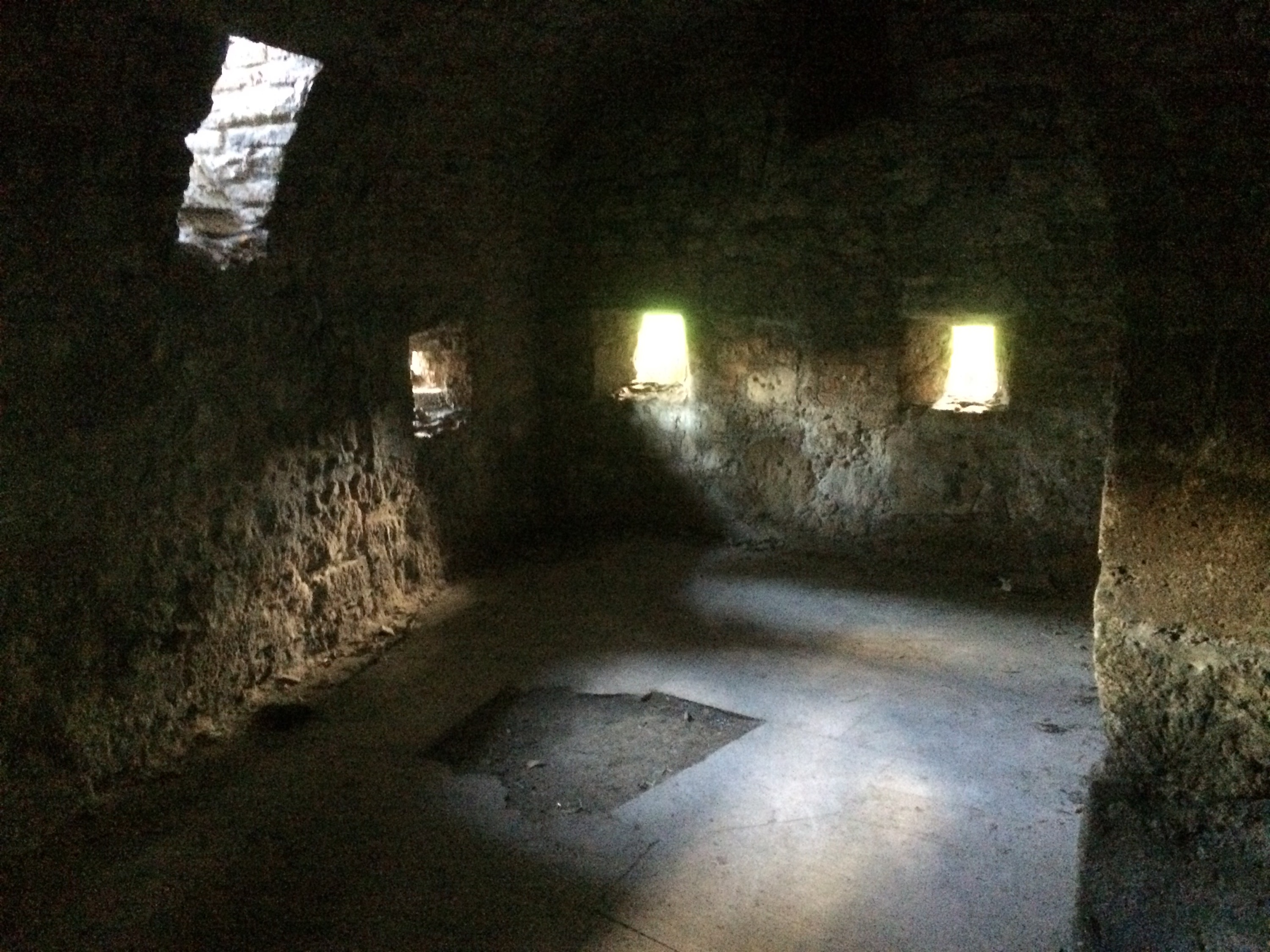
Dank, unlit and smelling strongly of wee.

Buda has its own sights, of course, though I wouldn’t call either of the two main ones ruins. Castle Hill, occupied by Budapest Castle and the Matthias Church (named after the original Raven King) is worth exploring, though in the latter case at least, heavy reconstruction and redecoration work has left the place looking a little too fresh and tourist friendly. As always, it pays to poke around and explore every corner, to turn up surprised like an unlit corridor leading to a seemingly forgotten chamber beneath the earth.

South of Castle Hill stands Gellert Hill, a steeper and more taxing climb, albeit very much still worth it. For atop the hill stands the Citadella, an Austro-Hungarian fortification that was obsolete before it was finished, and the Liberty Monument, which stands as it did in Soviet times, albeit with all specific references to the Soviets removed. Brutally putting down rebellions wins few friends. The Citadella was closed by the time I got there, but that wasn’t much of a loss – the hill commands a view of the entire sweep of the Danube, laying all of Buda and Pest out before you.

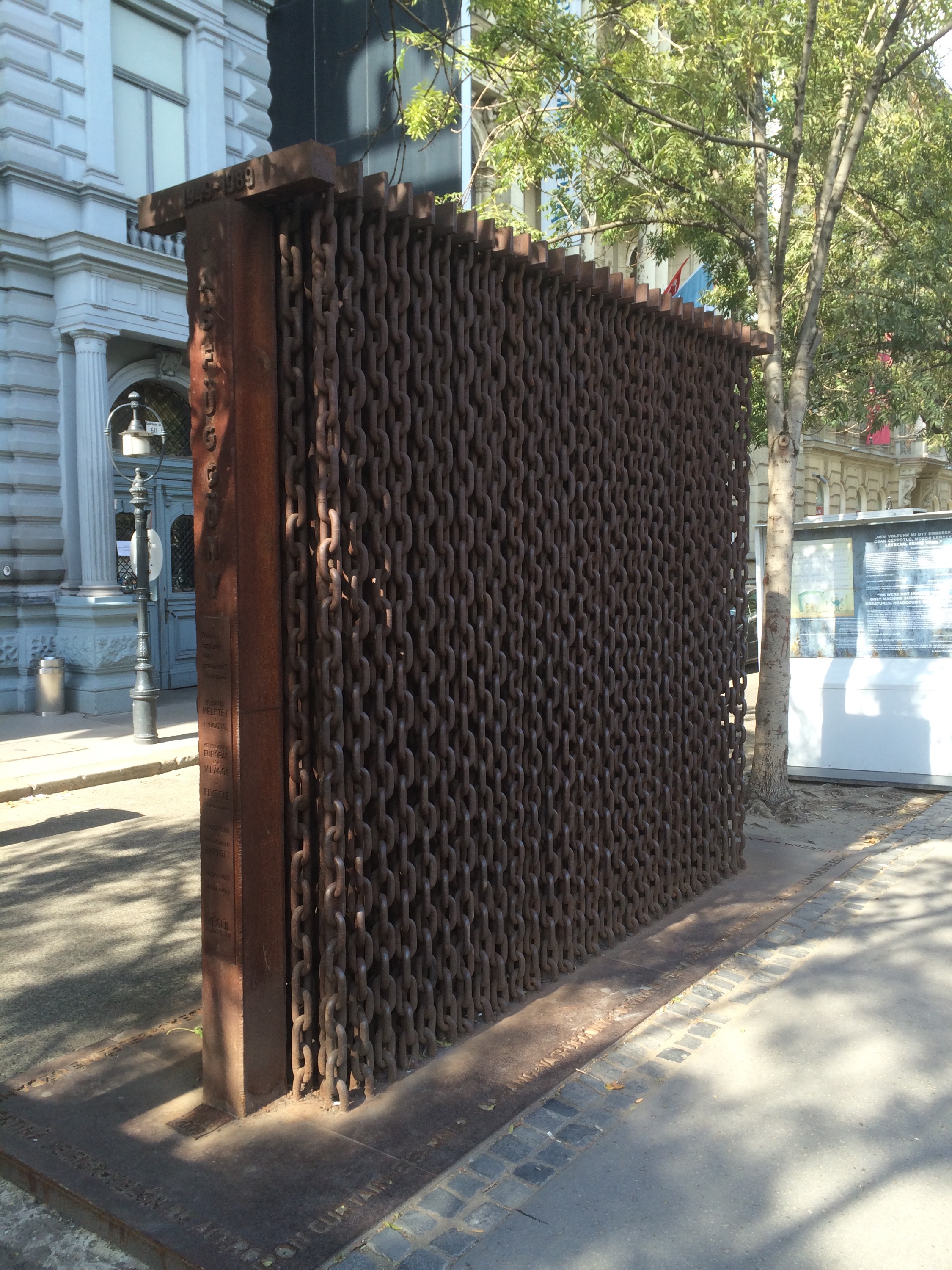
One suspects Hungary of holding a grudge.
An Iron Curtain. Metaphors are for wusses.

If Buda and Obuda have laid claim to most of the history, Pest is left with the lion’s share of the life. History here is of the more recent type, and the life that’s to be found is of the natural-, human- and night- types. Natural life in the various parks and green spaces in Pest and neighbouring Margaret Island, human life on every street and especially in the huge Szechenyi Thermal Baths, which weren’t short of both tourist and local bodies on an otherwise quiet Monday. As for night life, I was usually too tired to check, but the activity around my hostel suggested there was plenty of it.

For all its divisions, Budapest seems to be a pretty unified city. It’s interesting to compare it to Vienna and Bratislava on the theme of identity: in comparison to the former’s comfort and the latter’s questing, Budapest was stuffed with reminders of a shared Magyar heritage, separate from influences both East and West. It felt a little like an effort from above to set the cultural narrative, which is always a tricky thing to do. And, as could be seen in the refugee tents still visible at Budapest-Keleti, of little benefit to anyone not fortunate enough to fall into the cultural group in question.

Bratislava: Can’t Hide It


I suspect that Soviet architects were either very imaginative or very bored.
Not actually Bratislava Castle. Wouldn’t it be awesome if it was though?
 
Just an hour and a half down the Danube from Vienna, Bratislava feels like it’s half a world away. The western imperial solidity of the latter city gives way to a mishmash of old and new, Soviet straight lines rubbing shoulders with of Austro-Hungarian fripperies and the first intrusions of modern glass and steel housing department stores with all-too familiar names.

All of this is crammed into one of the smaller cities that I’ve visited to date, and it makes it hard to get a grip on Bratislava or, by extension, Slovakia itself. A relatively young country, having split off from Czechoslovakia, it still seems to be figuring itself out, an adolescent nation more sure of what it’s not than what it is.


When you need to dig a well, you don't stop until you hit water.
85m deep, all the way down to the Danube.
 
That’s probably reading too much into my visit to the capital, which is in the western corner of the nation, but there are hints here and there.

Bratislava Castle, standing on a rocky peak that dominates the Danube, burned down in the 19th century and was restored in the Soviet era. It’s a restoration that left the interior feeling rather empty, albeit with fascinating nooks and crannies like the 85m-deep castle well and the Crown Tower. The exhibitions it houses help to express some sense of Slovak identity too. First on the efforts of Slovaks to seek autonomy under Austria-Hungary, but more importantly on the legacy of Great Moravia, a brief-lived post-Roman nation that dominated this part of Europe for a few generations until the arrival of the Magyars and the beginning of Hungary to the south. Forging a collective identity requires identifying a shared heritage.


Should have just gone for it and figured something out. Sigh
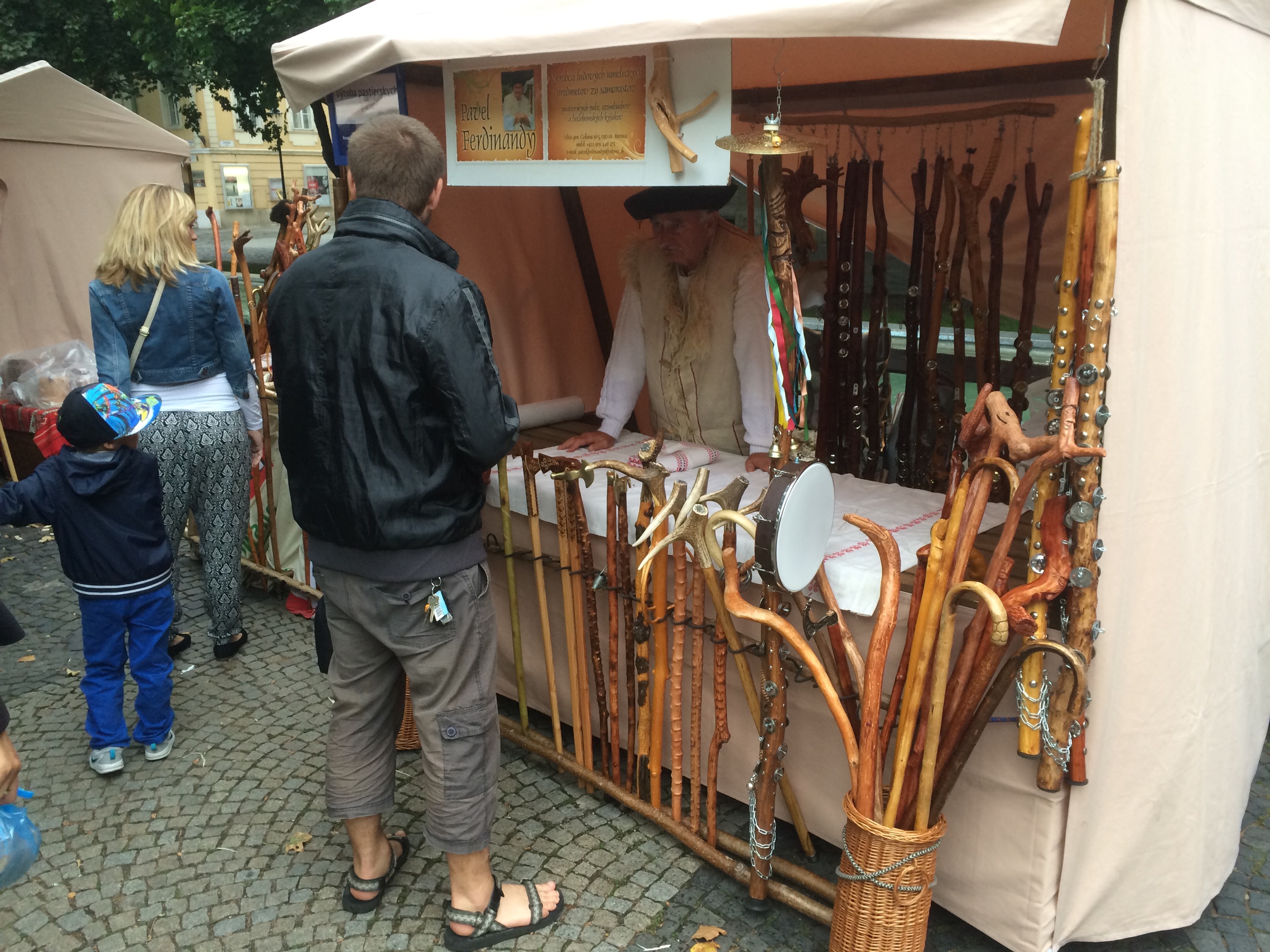
I really wanted one of these walking sticks but was afraid of having to leave it behind at the end of the trip.
 
Back down in the Old City, that identity was being worked out through what seemed to be a weekend of festivals and events. Traditional crafts and trades on display in a thronged main square, traditional dancers hammering the boards on a nearby stage, and Eco- and fitness-festivals further out. It’s probably an accident of the weekend that I was there, but it seemed that this wasn’t really for the sake of tourism. There was engagement and activity everywhere, and a vibrancy that reminded me of Berlin, albeit on a much smaller scale – filling in the gaps of a multipart history and turning it into something whole.

I stayed longer than planned in Bratislava, and I’m glad that I did. Of all the countries that I’ve hit on this trip so far, Slovakia is the one I’d most like to return to. There’s an openness about the people and something very fresh about the culture. And given that Bratislava makes up such a small part of one corner of the nation, there’s bound to be a great deal more to discover. Still, the railroad goes ever on, and I continue to follow it – next up, more Danubian encounters with Budapest and Hungary.

Vienna: Imperial Phase

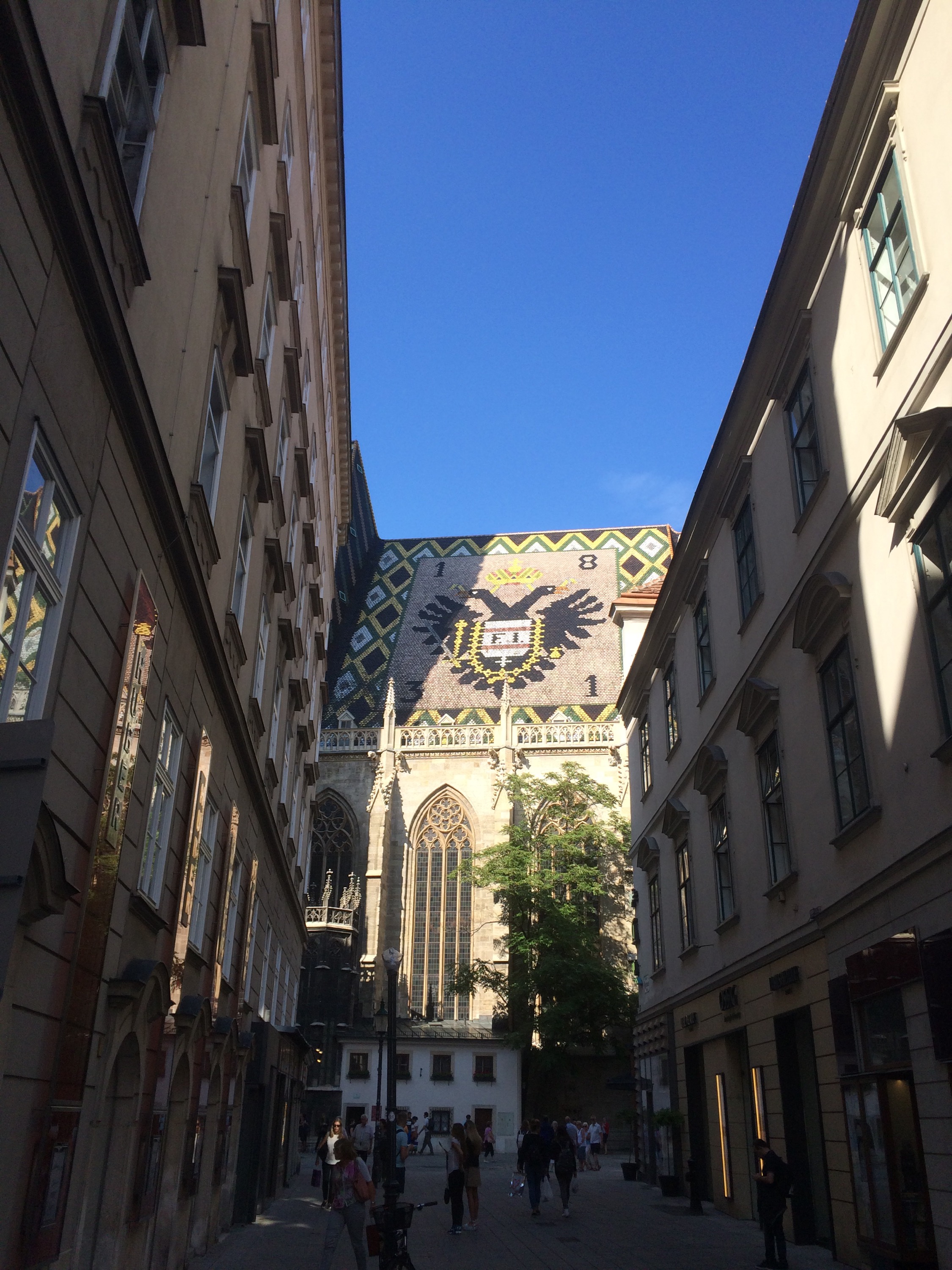
Double-headed eagles are all the rage among emperors.
What’s the point of having a cathedral if you can’t stick your emblem on its roof?

It occurred to me as I was wandering around Vienna that I’ve managed to hit most of the imperial capitals of Europe. Rome, obviously, but Istanbul has the unusual claim of being the capital of two empires. As for more modern empires, there’s London, Paris, Berlin and Moscow. Further down the list, Athens counts for the brief era of Athenian power, as does Stockholm from the Swedish short golden age of martial might, pre-Peter the Great of Russia, who moved Russia’s seat of power from Moscow to St. Petersburg. Even Copenhagen squeezes in for the Kallmar Union – am I missing any? (As near as I can tell, I need Madrid and Lisbon to complete the set.)

Unlike Berlin, which had a wonderfully cosmopolitan identity crisis, Vienna knows that it’s an imperial capital. Though as capital of the Holy Roman/Austro-Hungarian Empire, it has a bit of competition: if we go all the way back to Charlemagne, there would probably be more imperial capitals than I would have time to list. Nonetheless, Vienna knows what it is and was, and its architecture practically shouts out “Hey, we used to have all the power in these parts.”

The best example that I saw of this was in the twin Kunsthistoriches Museum and Natural History Museum. Both are suspended halfway between being modern museums and reminding visitors of how they started: as the collection houses of Emperors, designed to show of their patrons’ power and sagacity through the display of works of art and historical and natural curios of every type that could be found.


You have to love the old-style stick everything in glass cases approach.
One of the mineral rooms at the Natural History Museum
  
Marcus Aurelius looks askance at his wayward son. Septimus Severus looks bored.
Emperors in an Imperial setting.
 

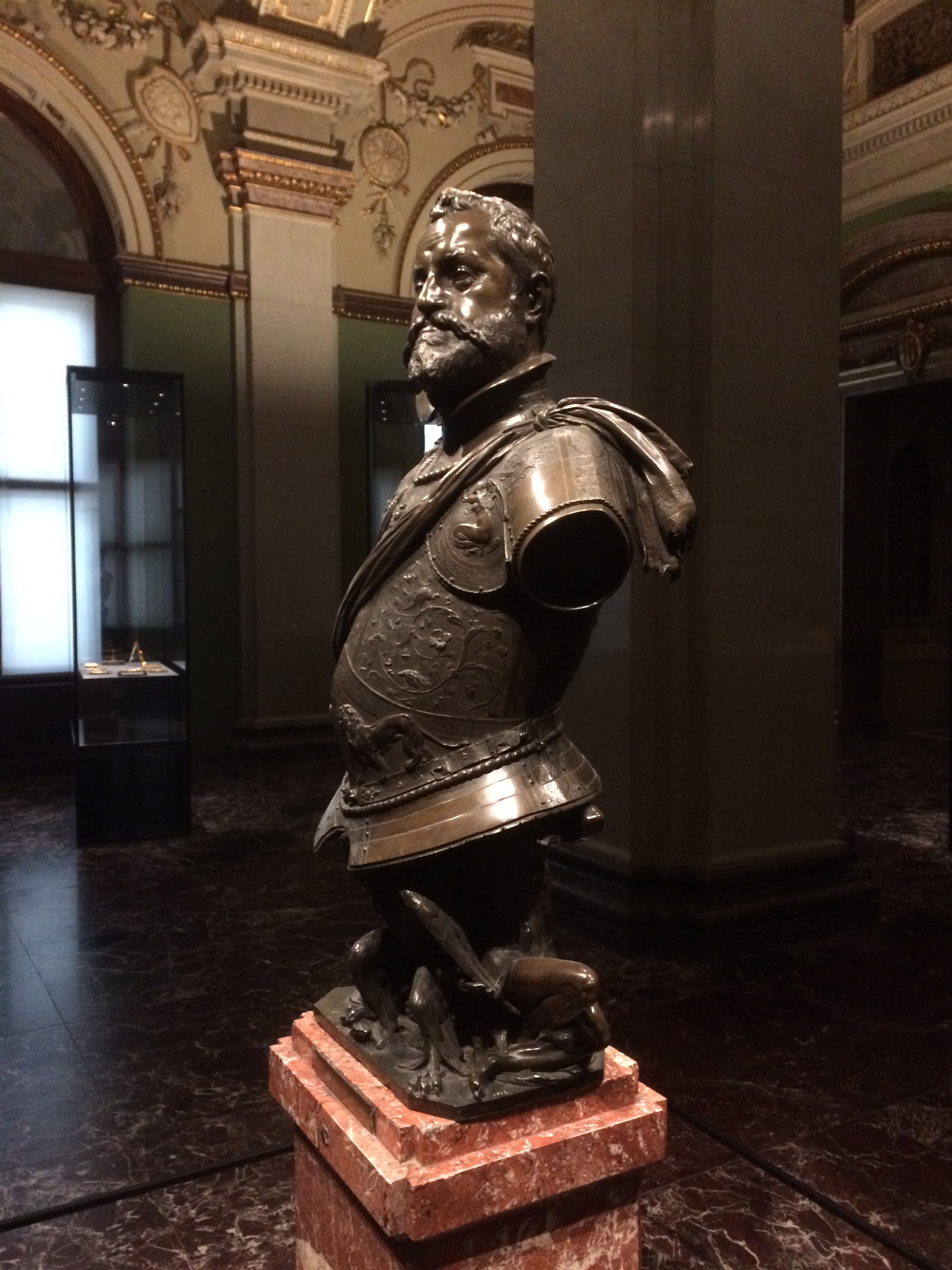
As museums go, they’re a lot of fun to walk around, and while these ones weren’t looted as badly as their counterparts in Berlin, the Natural History Museum in particular suffers from the fact that the Austro-Hungarian Empire was a relatively minor imperial player compared to France and Britain from the Age of the Enlightenment onwards (its array of taxidermy is startling though). As for the Kunsthistoriches Museum, it’s a delight to wander around, as there’s been an effort made to attach the works of art there to the rulers who commissioned or collected them, meaning that they help to tell the strange and twisted story of the Habsburgs and their ever-increasing jawline.

In the end, the chins outgrew the beards, sadly.
A beard hides all ills in a manly fashion.

The combination of old-fashioned and modern approaches helps these museums to stand out from the crowd. It works for the city as a whole too. Vienna feels relaxed and confident, and very western in a way that might not be the case today if its once-famous, now vanished walls hadn’t been quite so impregnable. History has treated the city pretty gently, and visitors to the city have reason to be grateful for that. 

Prague: City of a Thousand Photo Opportunities


Just a couple of in-spiring towers.
Charles Bridge, somewhere near sunset.
 
My preferred method of exploring a city is to start walking and only change direction whenever I see something more interesting down another street. Were I to try that in Prague, I would end up walking in spirals, or in an endlessly zig zag pattern. In Prague, there’s always something more interesting around the corner. This is a city that’s as close as any I’ve seen to the clichéd fantasy medieval metropolis.

There are the endlessly winding cobbled streets, with tiled rooftops packed so tightly overhead that guilds of thieves could conduct entire wars up there with no one below being any the wiser, save for the occasional corpse-cobble impact incident. There’s a town hall with an overly ornate astronomical clock, complete with clockwork mannequins. (The story goes that the designer was blinded once he finished so he wouldn’t go on to make a better one.)


The mannequin show is fun, but surprisingly minimalist.
Other clocks are available, and probably easier to read.
 
There are legends and stories galore surrounding the city, from poor old Jan Hus, who put too much trust in princes, to the golem that once stalked the Jewish quarter. Best of all, there’s the Defenestration of Prague, which manages to use one of my favourite words in its title. (Seriously – how much more fun is it to say “defenestration” than “thrown out of a window”?)

There’s a centuries-old bridge lined with statues of saints and divinities, across a river that’s home to an entire flotilla of swans. There’s not one but two hilltop citadels overlooking the city. Prasky Hrad, with its Gormenghast-like scale and complexity, and the over-the-top gothicness of St. Vitus’s Cathedral, gets all the press, but I’m partial to the more ancient Vyšehrad, which is mostly a shell these days, but is lovely to wander through and offers great views of the Vlatva River and Prague itself.


And this is the commanding view the rulers thought they could do better than.
The Vlatva, looking south from Vyšehrad.
 
There’s even a hill hard by the city that’s swathed in an encroaching forest and hides not only a monastery with an ancient library but also a wizard’s tower that peeks through the treetops and has a labyrinth at its base.

All right, so the tower is a copy of the Eiffel Tower and the labyrinth is a maze of mirrors, but wizards are noted for their lack of originality. I doubt the average medieval inhabitant of Prague would have quibbled over the details before reaching for the nearest pitchfork and joining the local mob.

It’s a city for losing yourself in, then, as I’ve done for the past few days, the high point of which was when I found a store selling replica Viking arms and armour. For a good five minutes, I considered attiring myself in a manner befitting a Norse adventurer and taking ship down the Danube to the Black Sea and seeking service as a Varangian Guard in Miklagard/Constantinople.

Sadly, dreams of adventure and fantastic vistas founder when they hit the hard rocks of reality. Even as I’m enjoying my travels throughout Europe, a group of far more desperate travellers are trying to head in the opposite direction. The “tide” of refugees entering Europe is much in the news at the moment, often to heartbreaking effect, and while I’m currently on my way to Vienna, my plan is to be in Budapest, the current flashpoint of the crisis, in three days.

That may change, but even if it doesn’t, it forces me to think about why I’m travelling – this experience of cities and nations I’ve never been to before. How much worth does my indulgence hold against the desperate need of others, exemplified in the huddled form of a small boy washed up on a lonely beach? Are they comparable? Or even relatable? And what can I do?

I only have the beginnings of answers for any of those questions. I doubt that one traveller can make much of a difference, or learn everything he’d need to in the space of the two weeks I have remaining. The one thing I do know is that if I close my eyes, I’ll learn nothing. So I’ll keep travelling and see what answers I can find.

Berlin: Whose City is it Anyway?


As governmental buildings go, it's up there.
Ich bin ein Deutschen volke.
 
Berlin: Whose City is it Anyway?My hotel in Berlin had a confused personality. The chain was Russian, one I’d stayed with before in Vladivostok, but the core of the hotel lay in an old West Berlin building, just around the corner from the bombed-out Kaiser Wilhelm cathedral. The rest of the hotel was jammed into two more recently converted buildings, resulting in a predictable mess – floors that didn’t connect with each other, corridors that zigzagged back and forth, and terrible wifi reception.

It wasn’t a bad hotel though, not least because of its central location near the Berlin Zoo, and in its confusion it proved a fitting introduction to Berlin itself.

That Berlin lacks a unifying identity shouldn’t be that surprising. It was only twenty five years ago that the Berlin Wall, which split the city into two, was taken down. Further back, the city was divided into four, with zones of West Berlin administrated by the French, British and Americans. The period in which Berlin was the capital of a unified German nation/empire was a short one by European standards: prior to that, it was the capital of Prussia, which was as concerned with Russia, Sweden, Poland and Lithuania as it was with the rest of what would one day become Germany.

So while the Berlin of today is German, it’s very cosmopolitan in terms of what being German means, something that its recent history has only added to. This is a city that has a monument to the Soviet soldiers who died in the Battle of Berlin at the end of WWII. I’ve been trying to think of another city that commemorates its conquerors and occupiers and haven’t come up with one.

Amid the current panic over migrants flooding into Eastern Europe (something I imagine I’ll hear a lot more about over the next fortnight), it doesn’t surprise me to hear Angela Merkel calling for restraint and humanity in dealing with displaced migrants. As much as Ireland and other smaller EU nations might chafe at the weight of German influence in Europe, Germans had to come to terms with their role in WWII and, not without pain and hesitation, seem to have grasped the central lesson of human fallibility quite well. (Yes, the German economy is also better positioned than most to absorb migrants, and given that Merkel is calling for shared responsibility, I’m not claiming an altruistic outlook for her.)

The two locals who helped me find my way around the city were both originally from elsewhere – a Bulgarian and a Swede. They’re now part of a Berlin melting pot that fits well with a city standing on the border between East and West. Though plenty of traces of recent divisions remain, that border is becoming blurred as building works continue and people move back and forth. Were it not for preserved monuments and a modest line of bricks running through pavements across the city, it would be hard to guess just where the Berlin Wall once stood.

As for a German Berlin, it’s there if you look for it. The Victory Column in Tiergarten is adorned with mosaics reflecting the history and coming together of the German people. (The column itself has been moved three times though.) The museums on Museum Island contain both relics from German history and relics that Germany collected during its brief imperial phase. (And the curators can’t quite resist leaving grumpy signs complaining that the Soviets took all of the best and most portable stuff in 1945 and refuse to give it back.) And the Reichstag still has the words “Dem Deutschen Volke” engraved on its facade. Though given Germany’s role in Europe and the willingness of people from everywhere to come and participate, the definition of “Deutschen Volke” is now likely more universal than the original engravers intended.

Whenever I mentioned travelling in Europe in the past, or when I mentioned not having been to Berlin, the response was always the same: “You have to go.” Well, now I’ve been, and while the hype may have been excessive, the experience was worthwhile. Three days was nowhere near enough time to experience this sprawling, multifaceted, scarred and vibrant city. I already have a list of things to do for the next time I come back (probably not until after 2019, when the Pergamon Museum finally finishes its renovation). In the meantime, I’ve got the memories and the new experiences as the train heads south through sun-kissed forests and fields of grain, through Dresden and Bad Schandau, into the Elbe valley of forested limestone cliffs, heading for Prague.

The Weight of History


in the distance you can see the chimneys that are all that remains of barrack upon barrack.
The beautiful weather added a surreal edge to the experience.
 
Auschwitz exerts a gravity of its own. You can travel to Kraków without visiting it, but you’ll remain aware of it, the many signs advertising tours tugging at you, reminding you of the black hole of history, lurking just beyond the horizon.

A friend of mine told me, when I mentioned that I intended to visit the concentration camp, that they couldn’t bear to do so. I can understand that. I’m not the most sensitive person, but even I can’t help but feel unease at the incomprehensible nature of what happened there. Still, I wanted to go, to be part of the effort to remember and not forget, and so I did.

(Apologies is some of the below is upsetting.)

That the visit was on the warmest, sunniest day I’d experienced in years was somewhat incongruous. In fact, the whole start of the tour, around the original Auschwitz I camp, felt a little off at first. To sanitised, too carefully restored and preserved, too occupied by tour groups. I was beginning to wonder if I was missing something. Then we reached the room full of human hair.

In one of the restored barracks buildings, fully half of a long room was taken up by a mass of human hair, taken from the scalps of the dead, with traces of Zyklon B still detectable when the Soviets liberated the camp. In further rooms were the dead’s belongings: eyeglasses, coats, suitcases with names written on them, shoes, children’s shoes. As much as anything else, the weight of these objects lay in the fact that they were the only remaining scraps of evidence that the Nazis hadn’t gotten around to destroying or using

We had been meant to see these first – a long queue meant that our guide took us around those more sanitised buildings first. Like some of the concentration camp victims, I was lulled into a false sense of security, feeling that seventy years since the camp was liberated had deprived it of its power to shock. Preserved behind glass though it may be, it still reaches out.

A mile or two down the road from Auschwitz I is Auchwitz-Birkenau. Dreadful as it was, Auschwitz I was in effect a trial run – Auschwitz-Birkenau is an order of magnitude larger and was the place that the Nazis applied industrialised methods and an inhuman level of detachment to their “final solution.” Here, though they tried to burn and demolish the traces of what they’d done, can still be seen the ruins of the crematoria and the shells of the barracks that housed the dying and the doomed.

Auschwitz I retains the indelible image of all that the Nazis took from their victims. Auschwitz-Birkenau demonstrates the scale to which they brought that collective sin. Moreover, it’s the decaying nature of Auschwitz-Birkenau that lends a final reminder of reality: this is not a preserved exhibit in a museum. This is a place where more than a million people were murdered. It needs to be remembered and I’m glad I visited, though that visit will stay with me.

If there was one thing that I missed, it was some sense of why this happened. Auschwitz preserved the “how,” but it makes less effort at showing how a nation can slide so irrevocably into horror. How centuries of looking down on Jews and other “others” curdled into contempt and hatred. How political leaders could take that hatred and bind it to a “solution” that led step by step to Auschwitz-Birkenau.

At a time when Europe and the U.S. are convulsed with fear of immigrants, and when our politicians are advocating ever more draconian measures to deal with this problem, we need to remember where that path leads. We already have them in camps, after all. We are hearing calls for them to work for their keep, to earn the right to live among their betters. It’s a reasonable proposal, isn’t it? It always is, at the start.

Eastern European Odyssey

I do like the idea that on reaching Bucharest, I'll be able to divide into three...
Follow the Lime Green Railroad to the Wonderful Wizard of Uncertain Destinations…

So, I’m doing it again. One year after Greece, four years after the Trans-Siberian and six years after Norway, I’m once more taking an August-September travelling holiday, hitting a bunch of new (to me) locations. Once again, rail is the medium for my peregrinations, and this time the locale is as much of the former Soviet Bloc as I can fit into three weeks. (No, I’m not visiting Belarus as part of this trip, and as much as I’d like to drop in on Ukraine, it might be better to leave that for later too.)

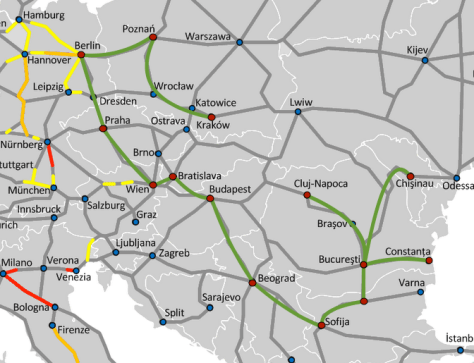
That map above gives the general outline of the trip: Krakow, Poznan (briefly), Berlin, Prague, Vienna, Bratislava (briefly), Budapest, Belgrade, Sofia, Veliko Tarnovo, Bucharest, and then … options. This is one of those trips where the early stages have been nailed down and booked, whereas the latter ones are more reliant on train availability and everything that goes before. Which, even though it might rub my obsessive compulsive tendencies the wrong way, is still appealing. Not knowing exactly where I’m going to wind up probably won’t do my mother’s blood pressure any favours, but I’m happy enough to keep a loose leash on the days ahead.

One of the nicest of things about this trip is that I’ve never been to most of the countries I’ll be visiting—the only ones I’ll be returning to are Germany and Austria, and even there, Berlin or Vienna will be entirely new. In fact, once this trip is over, the only European nations remaining unchecked will be fall into three groups: the Russian fringe (Finland, Latvia, Lithuania, Belarus, Ukraine, and maybe Moldova), the Balkans (Slovenia, Croatia, Montenegro, Bosnia and Herzegovina, Albania, Kosovo, and Macedonia), and a scattering of others (Switzerland, Portugal and most of the microstates—Andorra, Liechtenstein, Luxembourg, San Marino, and Monaco). Which brings me close enough to a complete collection to prompt a few more holiday ideas at least.

For now though, an Eastern European Odyssey is the order of the day. Preparations have been made, maps have been consulted, and tickets have been booked where possible. And as many considerations as I can consider have been considered.


Rail Travel: As mentioned, rail is the way to go here, and the resource worth relying on is The Man in Seat 61. It’s served me well in the past and it did here too, though booking tickets beyond Vienna has proved less useful than just showing up at the station in person. Sleeper services will be taken of wherever possible, and there might be a brief river trip between Vienna and Bratislava if the Danube isn’t too drought-stricken. When I get to Bulgaria and Romania though, my timetable will be at its most flexible. It’s just a pleasant coincidence that my options will be opening up as Europe reaches its most alluring.

Accommodation: The open nature of the latter end of my travels means that I can’t book too far ahead, but even if I could, I’m going to be taking a leaf out of my Greek odyssey: stick to booking a day or two ahead of time, using the Booking.com and AirB&B apps on my phone. Sleeper services are to be preferred, but hostels and B&Bs are just as valuable, mostly for their showers and laundry facilities. If I’m travelling light, cleaning my clothes will be a necessity at some stage.

Flights: Normally, the two things I’d book first would be my flights there and back. Well, I’m flying into Kraków to kick things off, but where I’ll be flying back from? That’s still undecided. I’d like to visit Moldova (because why not, when you have the chance?) but flights back from there are at least twice as expensive as from neighbouring Romania. So we’ll see. I have a ticket tracker running using the Kayak app, and the sudden availability of a cheap option may well determine how and where my journey ends.

Technology: Technology-light is the rule of the day. As in Greece, nothing more than my phone is to be brought. Even my new Pebble Time is getting dropped in favour of a Timex Weekender with a battery that lasts five years instead of five days. This will make it a little tricky to update the Travel section of this site as I go, but I’ll do my best. Those long train journeys will definitely give me time, at the very least. Still, my poor old iPhone 5S is suffering from geriatric battery syndrome these days, so one more piece of tech is needed. I’ve bought myself an Anker Astro E7 external battery, and having tested it for the past week, I’ve deemed it good. At the cost of a little extra weight to my backpack, I should be able to keep my loyal iPhone, and more importantly its camera and booking capabilities, running for as long as I need them.

Reading Material: This is an issue. Travelling light rules out carrying more than two books, and with one of those slots taken up by a Lonely Planet guidebook, that leaves little wiggle room. A friend has loaned me an ageing Sony eReader, but that runs up against both the low-tech rule and my personal preferences. I might rely on second-hand bookstores instead, or just read on my iPhone. (The latter option might seem a poor one, but I’ve read the Bible and War and Peace on my phone before, so it is an option. Maybe Moby Dick this time…)

Writing Material: Of course, without reading to take up my travelling time, and assuming that staring out the window can only occupy one for so long, writing will have the field to itself. So pens, some ink refills, and a notepad or two will be packed. How much I’ll get to write (beyond the requisite journal of my travels) remains uncertain, but the idea of letting my brain wander on the Danube plain is a huge draw. Even when I’m not strolling the city streets, there’s be imaginative highways and byways to explore.

Missing: What will I be missing while I’m gone? Well, not a huge amount. As the next category shows, the timing of this trip has worked out rather well. The start of the Pro12 rugby season and a few pre-World Cup friendlies is about the height of my sporting interests. Missing the Irish Craft Beer Festival stings a bit though. As for work, it’s been packed away for the next few weeks, and when it comes to keeping an eye on the state of the Internet, that’s something I could do with less of.

Returning: On the other hand, within a week of my return, I’ll have the return of Doctor Who, the start of the Rugby World Cup, a new niece to be a godfather to, and one of those birthdays with a “0” at the end of it. So I’d better be well rested when I take off from somewhere near the Black Sea (presumably). Because I’ll be hitting the ground running.

Let’s Try This One More (Pebble) Time

The optional watch face mimics the Apple Watch, which I didn't realise until I was using it.
Authentically scuffed Pebble Time: model’s own.

Depending on who you believe, the wearables revolution is underway, has not yet started, or has already failed. While I don’t wholly agree with any of those viewpoints, the fact that I’m now on my second smartwatch does suggest that I don’t agree with the last.

Those who follow this blog and are aware of my devotion to the Cult of Mac may be surprised to learn that my new toy isn’t an Apple Watch. Those who follow this blog in slightly closer detail might be able to guess what it is: a Pebble Time. Several years ago, in one of my early Kickstarter forays, I stumped up for a first-generation Pebble smartwatch, which adorned my wrist for all of a month or two.

Its short lifespan wasn’t down to the fact that it was a bad product. Beyond being a first-generation device (part of my reason for eschewing the Apple option this time) with somewhat dodgy Bluetooth wireless and limited functionality, its only major flaw was that it was uncomfortable to wear for long periods of time. Unfortunately, that’s also why it was in my pocket instead of on my wrist during a fateful bus journey, and the fact that it fell out of the pocket somewhere was entirely my fault, not the watch’s.

But enough of my ongoing habit of losing things (which seems to come in waves – whenever I lose one thing, I known that at least two more will vanish in the short-term future), what of the Pebble Time? Well, the first thing to note is that it’s much more comfortable to wear, with a slightly curved back to the watch body and a much improved rubber strap. While I’ve had to take it off for comfort reasons a few times, this has been the result of sweating due to exertion, not general day-to-day use.

So score one for the Pebble Time there. In addition, the straps now include easy-release clips that, while not as clever as the Apple Watch’s high-end version, allow access to a full range of standard-gauge watch straps.

In fact, the Pebble Time is a solid version 2.0 in a lot of ways. A colour e-ink screen replaces its monochrome predecessor, the Bluetooth connection seems much more solid, the vibration function is hard to miss, and the build quality overall seems much better, with buttons that avoid feeling too spongy despite being plastic. My gunmetal grey version has picked up a few scratches after a month or two of use, but stumping up a little more money for the Pebble Time Steel could gain you an even more polished experience.

In use, the Pebble Time is easy to figure out. Hit the single button on the left of the watch to navigate backwards to the home (watchface) screen. Hit the centre right button to dive into and select menu options and the buttons above and below it to navigate up and down through lists. Changing settings, accessing apps, changing watchfaces, etc. are trivial tasks. To actually install apps or watchfaces, you’ll need the companion smartphone app, but once installed, they can connect to the phone via a Bluetooth connection for extra processing power. Pebble’s own app store, accessible via the smartphone app, makes installing new apps easy, but finding the app you want can be tricky, as the browsing experience feels a little haphazard.

As with any smartwatch, the Pebble Time is reliant on its connection to a smartphone. Lacking that, it can tell you the time and offer access to any standalone apps that you’ve installed, and not much more. A connected smartphone offers instant access to weather, music, and more advanced apps. For example, I’ve installed the Tripadvisor app, which can point me towards nearby restaurants or attractions, should I so desire. It’s limited, but the interface is responsive and fun to use.

In fact, fun is a good description of the Pebble Time overall. The Pebble team seem to have put a lot of thought into making their device as easy to use and enjoyable to own as possible. For example, there’s no need to install an app to use the Pebble Time as an external display for Runkeeper’s smartphone app—it happens automatically. This good user experience is further helped by the Pebble Time’s battery life, which will stretch out to five days. Changing your watchface to one that displays the battery level will help you keep an eye on that, but it’s far ahead of the Apple or Android watches in this regard at least.

Some commentators have raised concerns that transferring notification from the phone to the wrist just makes us even more tied to that “always on” mentality. The reality has proven very different: an initial flood of notifications trained me to turn off any that weren’t vital. Moreover, even though vibrations on your wrist make notifications hard to miss, it’s it’s far quicker and easier to dismiss those notifications by glancing at summaries of them on a watchface than by digging your phone out of your pocket or purse to see what they are. Yes, notifications probably aren’t wholly a good thing, but if you’re going to opt in, this is the way to go.

I haven’t tested the limits of what I can do with the Pebble Time yet, having only installed a couple of apps and watchfaces. Though far less powerful than the Apple Watch or its Android competitors, the Pebble Time offers plenty of variety in terms of what it can already do. Everything that I have experienced with it so far has made me pretty happy with my purchase. The cluttered app store is the only minor fly in the ointment, whereas everything else is pleasingly smooth.

You Are The Product

(With invisible close buttons.)
Our grim, multicolour, flashing future.

One of the quieter announcements that Apple made during its WorldWide Developers Conference recently was that its forthcoming MacOS and iOS updates will give developers the ability to create “Content Blockers” for its mobile and desktop Safari browsers. While the exact content blocked is up to the developer (you could block the Daily Mail if you want—and you really should), no one is under any illusions as to the target of this feature: ads.

Ad blockers already exist as extensions to most existing browsers, but the majority of users probably don’t avail of them, especially in the mobile sphere. Apple’s decision to push this feature and the reaction to its quiet announcement says a lot about the current state of the mobile web and the dominant role that ads have come to play in it.

Faster computers, mobile phones and broadband have contributed to a smoother experience online, but this has helped to hide the fact that the vast majority of what we download is ads and spyware. Blocking out most of that would massively speed up browsing and have the simultaneous benefit of cutting down on the amount of activity tracked online.

As pleasant an outcome as this sounds though, there’s a downside: online advertising pays the bills for many of the sites we enjoy, some of them from smaller content providers. Killing off that revenue stream would likely kill off a lot of the richness and the niche content that the web provides. It’s not like the people running these sites are preying on you through the ads either—they’re often stuck in a system that they don’t like, making do as well as they can.

The power blocs behind online advertising inform the nature of the system and the conflict that Apple is wading into. Facebook and Google ensure that web users have access to a wealth of content for free by harvesting their data and selling it, funnelling a portion of the proceeds back to the content creators in order to keep the whole thing going. This is the system that’s driven the growth of the web to date, but it’s far from perfect, and web site bloat is just one of the symptoms.

Whatever your thoughts on Apple—you won’t look at the comments on any Apple article on a non-Apple site for long before you find mentions of ‘iSheep’ or ‘Apple fanboys’—the fact is that Apple’s profit model is completely different from that of the web titans. Apple’s iAds platform is distinctly small scale, and its money comes from the sale of hardware instead. Providing an improved user experience is vital to enhancing the sale of that hardware, and enabling the creation of content blockers achieves that.

Safari is a minority browser on desktop machines, but it’s a major player on the mobile web, and iOS users are a lucrative market. So while this initiative isn’t going to bring down the current financial underpinnings of the mobile web, it’s a definite shot across Google’s bows. (Less so Facebook, which has a closed ecosystem of its own that it can profit from.) For users, it raises the question: are we happy to receive things for free, with the understanding that we’re being sold in return, or are we going to accept that we should pay for the things we value?

There’s an interesting parallel to be seen in the U.K., where the Tory government is once again taking the knives to the public broadcaster, the BBC. U.K. TV viewers have long been accustomed to paying a TV licence, and in return they’ve gained a globally renowned service that entertains, educates, and informs. Of course, a publicly funded broadcaster has a head start over its private sector rivals, and in the view of the Tories, that’s unfair competition. Speaking as someone who was raised on a diet of BBC television, I’d call the licence fee a small price to pay, but the future that the private sector envisions could look a lot like YouTube: ostensibly free to use but scattered with pop-up ads and laden with user tracking.

When we’re offered something free, it’s convenient to overlook the fine print. We’re okay with being the product as long as it’s not thrown back in our face. It would be nice to think that users’ desire for speed and convenience would eventually find a balance with providers’ need for compensation. But while Apple’s intervention might be to our benefit, Apple doesn’t fund web content, only content provided through its own app store ecosystem. So if its ad blocking does gain traction, either we’re going to have to learn to pay for our content or some of those content providers are going to go under.

Flawed Heroes, Edgar Wright and the Incorruptible Ant-Man

Which one won?
The grand “what might have been.” The eternal tale of how life is. Image from here.

Director Edgar Wright’s departure from Marvel Studios’ Ant-Man before it was due to start filming will keep film critics and academics in coin for years. Wright, one of the most creative and inventive directors around, had worked for several years on the film and retains both executive producer and screewnwriter credits on the final feature. However, for all that Ant-Man retains some of the hallmarks of Wright’s work, it’s not one of his films. For better or worse, his replacement as writer and director, Peyton Reed, has made it his own. Continue reading Flawed Heroes, Edgar Wright and the Incorruptible Ant-Man